






Židovský hřbitov v Koryčanech Jewish cemetery
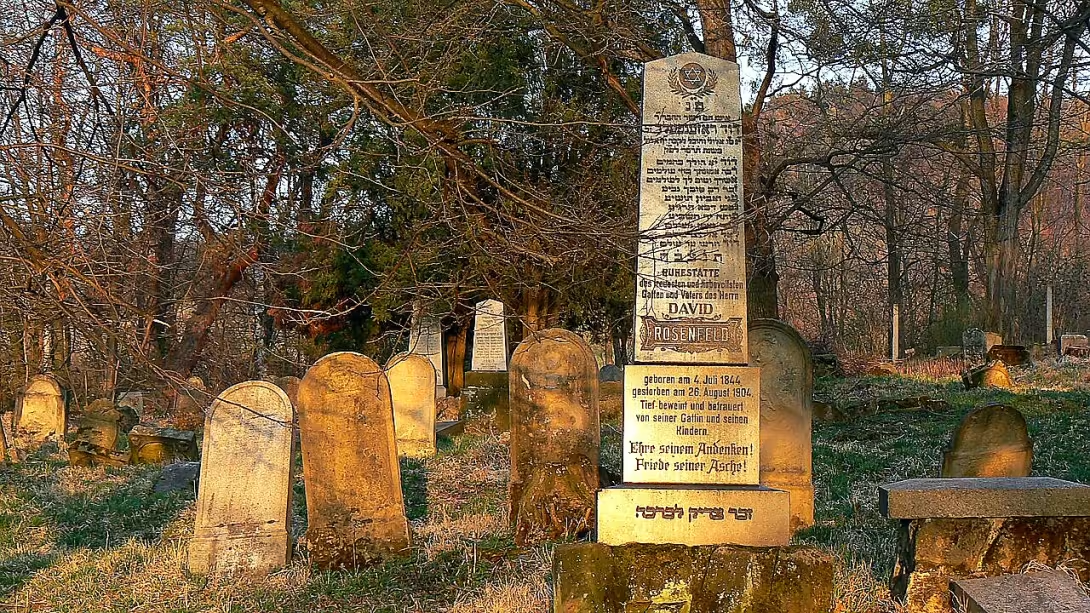
Židovský hřbitov v Koryčanech is among the best preserved Jewish necropolis in Moravia. It is situated in a quiet location about four hundred metres northeast of Koryčanská Square. Founded in the first half of the seventeenth century, he served the local Jewish village and is protected as a cultural monument.
There were about two hundred and thirty tombstones on an area over three thousand square meters, the oldest from 1674, and the remains of the wall of the former morgue. The cemetery was probably built in connection with the existence of the Jewish community in Korychan, dating back to before the Thirty Years' War. Jewish communities in Moravia were stable at the time, but their life was often limited and dependent on local estates.
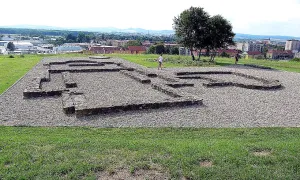
It corresponds architecturally to a typical 17th century Jewish cemetery. The preserved tombstones with Hebrew inscriptions and symbols reflect Jewish traditions. The remains of the morgue used to prepare bodies before burial are one of the few preserved building elements. The materials and style correspond to the common Jewish cemetery of the time.
After the demise of the Koryan Jewish community in 1890, the village in Kyjov took over the care of the cemetery. She took care of him until World War II when he survived, which is extraordinary. Many Jewish necropolis in Moravia were destroyed or damaged during the occupation.
Another interesting thing is that the cemetery served not only local citizens, but also Jews from surrounding communities. There was a synagogue in the area that was destroyed and now no longer exists. She stood at the street of Cihelné and was part of a local Jewish community.
Today, the cemetery is open to the public and protected as a cultural monument. The preserved tombstones and remains of the morgue are a valuable source of information about the life and traditions of the local Jewish community. This is a unique monument to the history of Jewish life in Moravia. Visiting this place offers the opportunity to meet one of the few preserved Jewish necropolis that survived in unchanged form.
Then and now
Drag the slider to compare how the landmark may have looked when it was built with the view today.
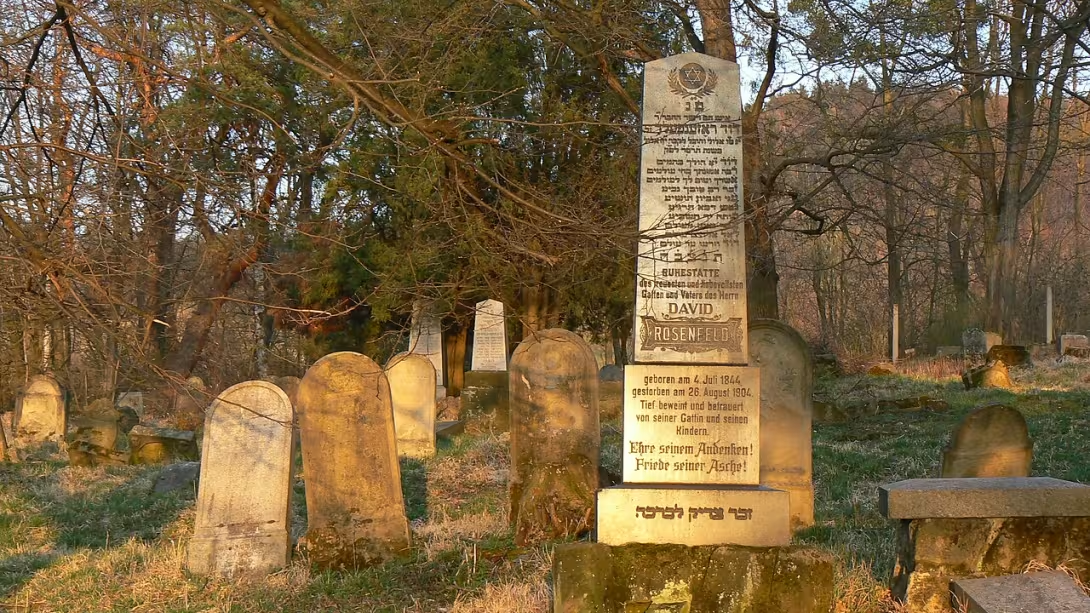
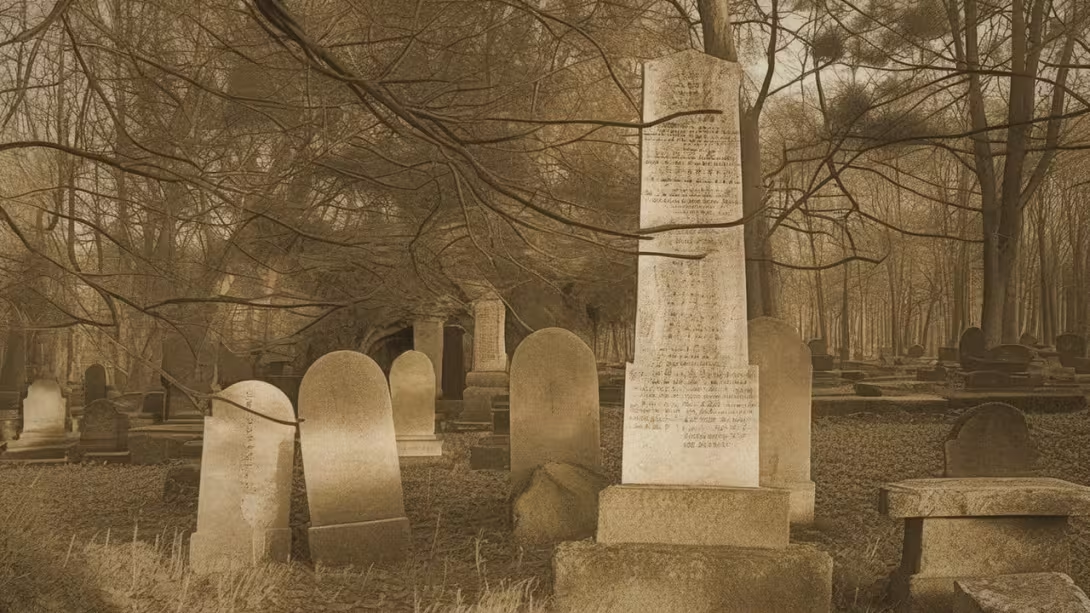
The historical appearance on the left is an AI-generated visualisation and serves as inspiration only.
Historical milestones
- 1623
- The creation of a cemetery in the first half of the 17th century.
- 1674
- The oldest preserved tombstone in the cemetery.
- 1890
- The demise of the Koryan Jewish community and the subsequent decline of the cemetery care.
- before 1939
- Taking care of the cemetery by Jewish village in Kyjov.
Architectural development
The cemetery was founded as a Jewish cemetery in a typical location outside the settlement. The remains of the masonry of the former morgue were preserved, which was used to prepare bodies before burial. Materials and style correspond to the common Jewish cemetery in Moravia. No significant architectural changes are documented.
Historical events
- 1623
- The creation of a cemetery in the first half of the 17th century, probably in connection with the existence of a local Jewish community.
- 1890
- The demise of the Koryan Jewish community on the basis of the then law.
- before 1939
- Taking care of the cemetery by Jewish village in Kyjov.
Points of interest
- The cemetery is one of the best preserved Jewish burial grounds in Moravia.
- There were about two hundred and thirty tombstones on an area over three thousand square meters, the oldest from 1674.
The remains of the morgue, where the bodies were prepared before the burial, are one of the few preserved building elements.
- The cemetery survived World War II, while many other Jewish necropolis in Moravia was destroyed or damaged.
- He served not only local Jews, but also residents of the surrounding villages.
Guide
Show guide text
This text was created by artificial intelligence and has not been editorially reviewed. It may contain inaccuracies.
Audio Guide - Židovský hřbitov v Koryčanech
---
Welcome, dear visitors! You're standing in front of one of the oldest and most preserved Jewish burial sites in our territory. Around you lie still, where hundreds of years of history and silence take turns. Look at what lies ahead.
On this area, which is over 3,000 square meters, there are about two hundred and thirty tombstones, known as matrices. The oldest of these dates back to 16 hundred seventy-four. Each of them is a witness of centuries when the people who lived here were lying there, working and leaving traces of their existence behind. Notice how they stick above the ground of some of them - their shape and decoration are often unique, sometimes decorated with reliefs or letters that remind us of their original inhabitants.
Let's move on to what's been created here. The Jewish cemetery was founded in the first half of the seventeenth century, when many people from the Jewish community lived and worked there. This cemetery was intended for those who were accepted here as members of this group. By the time the Jewish community in Koryčany died at 18: 90, the Jewish community in Kyjov had already taken care of this place. That means the cemetery was a monument to the past at the time, but they still cared for it.
Now pay attention to what you can see here. The cemetery is protected as a cultural monument, which means it is important to protect and respect it. You can see the remains of the older condition around you, which was designed to prepare the body before the burial - the so-called morgue. These remains are one of the few preserved elements that remind us of how funeral ceremonies were held here centuries ago.
The interesting thing is that this cemetery is one of the few that has been preserved in such good condition in Moravia. This means that here you can see not only the tombstones, but also how people rested here centuries ago. Each of them is like a small stone in history that helps us better understand how so many people have lived here.
If you like, look around the cemetery. The atmosphere here is very quiet and comfortable, ideal for relaxation and reflection. You can rest here and think about the importance of this cemetery for those who were buried here. The peace and quiet here are like the remnant of their spirit that is still waiting.
Remember, this cemetery is not only a historical monument, but also a place where they meet for centuries. If you are interested, you can visit other parts of the city Koryčany, where other interesting places are located. May you enjoy it, may you enjoy this peaceful and historically rich space.
Thank you for your visit and we wish this moment to bring you some insight and peace. If you like it here, do not hesitate to come back and explore other secrets of this place. Let the memories of the past bring you a quiet smile.
Tips for visitors
Best time to visit
The best time to visit is in spring or autumn, when the weather is pleasant and the cemetery is not too crowded. Sunny morning or afternoon with mild shadow is ideal for walking. In summer it is better to avoid the midday hours when it can be very hot in the cemetery. There is a quiet atmosphere in the cemetery, so it is advisable to visit it at a time when it is not too busy.
Parking and transport
The cemetery is available by car, parking is available in the town square or nearby. The location can also be reached by public transport, but the current connection needs to be verified in the traffic search engine. The cemetery is about 400 metres away from the square, which is possible to walk along a quiet path.
What to take with you
Take comfortable shoes and clothes to visit the cemetery, because it is an outdoor area with various terrain sections. It is also recommended to take a map or mobile application with navigation to help you navigate more easily. If you want to take photos, take a camera or smartphone with sufficient storage space. It is also advisable to have something to write in the cemetery if you want to record the attractions you will like.
Photography - best places and light
The best places for photography are quiet parts of the cemetery, where there are old tombstones and trees that create interesting compositions. It is recommended to take pictures with scattered light such as morning or afternoon when the sun is not directly above the head. Old tombstones are often interesting in historical terms, so focus on them. It is also appropriate to photograph with natural background, such as trees or old walls surrounding the cemetery.
What to visit in the area (within 30 minutes)
In the vicinity of the cemetery is located the square of Koryčanská, where there are other historical buildings. Here you can see the surroundings of the former synagogue, which stood by the street Cihelny. If you have more time, you can go to Kyjov, which is about ten kilometers away. Kyjov has a rich Jewish history and offers other interesting places to explore.
Tips for families with children
A visit to the cemetery may be interesting for children if you explain its history and meaning. You can show them old tombstones and tell them stories about them. There is enough space around the cemetery for small walks and exploring. If you go to Kyjov, you can visit the local museum, which often offers interactive exhibitions suitable for children. It's always good to have some activities to entertain children, such as painting or puzzles.
Businesses nearby
Do you run a restaurant, accommodation, shop, museum, rental, wellness or other visitor service near this monument? Show yourself directly to the people heading to it — this is how they will see you in the app and on the web:
Nearby
- Hlavní náměstí obce Koryčany, kde se nachází další historické budovy.
- Bývalá synagoga, která stála při ulici Cihelny, dnes již neexistuje.
- Město s významnou židovskou historií, kde se nacházela židovská obec, která se o hřbitov starala před druhou světovou válkou.
Accommodation nearby
Trips and activities nearby
Guided tours, tickets and activities nearby from GetYourGuide
Affiliate link: if you buy from the partner, we may receive a commission. The price for you does not change.
Search tours and activities →Themed route
Thematic cruise route: Jewish cemetery and historical monuments Koryčan
1.Židovský hřbitov v Koryčanech
Type: Historical monument
This cemetery is one of the oldest Jewish burial grounds in the Czech Republic. It is important to understand the history of the Jewish community in the region and contains inscriptions that suggest a rich past.
2. Koryčanská Square
Type: Historical center of the village
This main square is the heart of the Koryčan and offers an overview of historical buildings that reflect the architectural history of the city. Visit him to understand the development of the village and its cultural heritage.
3. Former Synagogue in Korychan
Type: Historical site (demolished)
Even though it no longer exists, the former synagogue standing at Cihelna Street is an important part of the Jewish history of the city. Her memory resembles the past and influence of the Jewish community on the region.
This route offers a view into the historical context of the Koryčan, focusing on their Jewish community. Visit these places for a deeper understanding of the local heritage and its importance.
Seasonal recommendations
Spring: During the spring season, Židovský hřbitov v Koryčanech is transformed into a cozy base for visitors, when flowering shrubs and trees are flexible with their first leaves. The sun illuminates the tombs with a softer light, creating a calm atmosphere suitable for reflection and view of history. Visitors should come clothes together in light of mild temperatures, perhaps with an umbrella in hand due to sudden rain. The best time to visit is usually in the afternoon when the crowd decreases and you can enjoy a quiet moment.
Summer: The Židovský hřbitov v Koryčanech summer offers a flood of sunlight that illuminates old tombstones and creates a pleasant atmosphere. The height of the trees provides shelter from the strong sun, making the corridor to the cemetery more comfortable. Visitors should come early in the morning or late in the afternoon to avoid the peaks of the day and heavy heat. Don't forget the sun cream and sufficient water because the summer weather can be very dry.
Autumn: In autumn, Židovský hřbitov v Koryčanech is transformed into a golden paradise with tree leaves that fall and form a colorful carpet on the road. The sun sets earlier, creating a melancholy but comfortable light suitable for a peaceful walk. Visitors should come clothes together in view of cooler temperatures and the possibility of rain, because autumn weather can be variable. The best time to visit is usually in the afternoon when the crowd decreases and you can enjoy a quiet moment.
Winter: Winter visit to the Jewish cemetery in Korychan offers unique views, where the country is covered with snow sheets and trees without leaves. The sun lights the tombs brighter in days with fewer clouds, creating a quiet and peaceful atmosphere. Visitors should come clothes together with warm clothes such as fur jackets or hats, and be prepared for shorter opening times due to winter weather. The best time to visit is usually in the afternoon when the crowd decreases and you can enjoy a quiet moment under the winter sky.
Visualizations and artistic views


The visualisations are generated by artificial intelligence and serve as inspiration.
Photos from the area
Real photos taken near the monument


Zdroj a licence jsou uvedeny u každého snímku.
Tips from visitors
No tips yet. Be the first!
Log in and add your tip.
Sources and literature
Photos: P.matel / Public domain — Wikimedia Commons. The author and licence also appear when you hover over the image.
Faktickým podkladem tohoto textu byl článek na Wikipedii, jehož autory jsou přispěvatelé Wikipedie. Článek je dostupný pod licencí CC BY-SA 4.0.
Location on the map
Příběhy a pověsti
Legendy, pověsti a příběhy spjaté s touto památkou
Fotografie návštěvníků
Zatím žádné fotografie. Buďte první, kdo přidá fotografii z návštěvy!
Log in a přidejte svou fotografii nebo hodnoťte.
Za ověřenou návštěvu v aplikaci získáte víc bodů — poznáme podle GPS, že jste na místě.
Reviews and comments