



Židovský hřbitov v Ošelíně Jewish cemetery
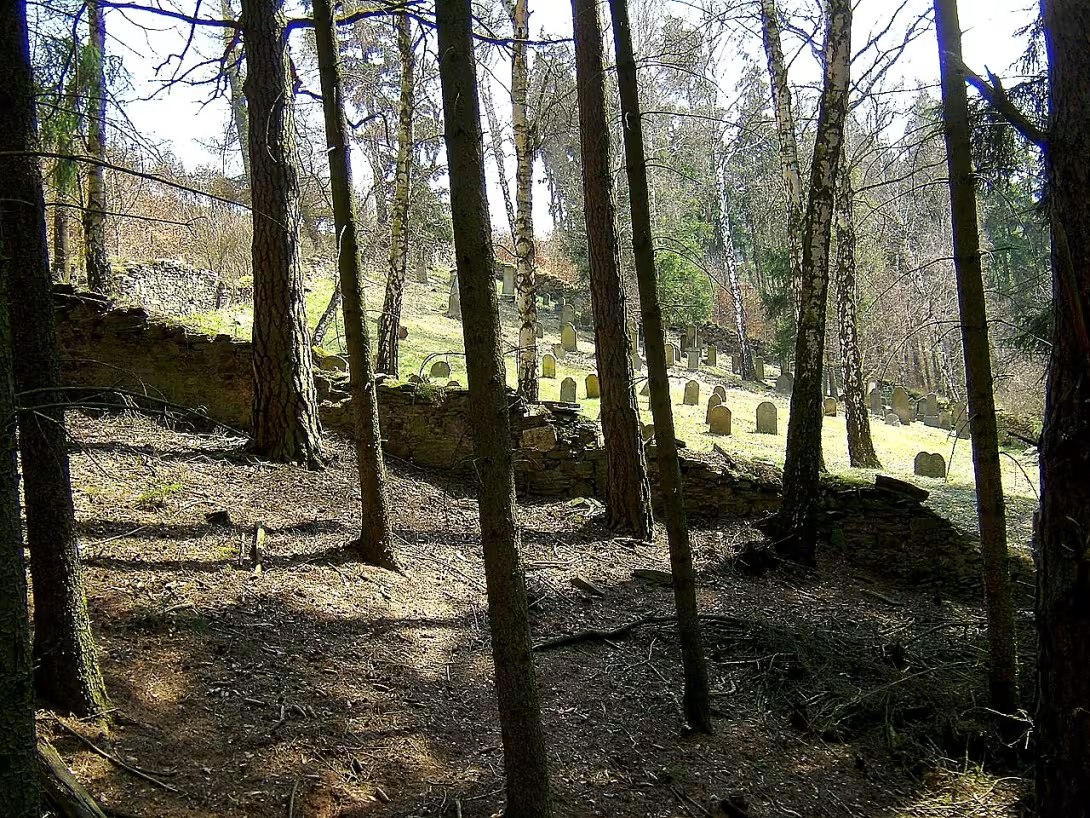
Židovský hřbitov v Ošelíně lies on a wooded slope above the river Šarka, northwest of the village of Řebří. It is one of the oldest Jewish burial sites in southern Bohemia. It was founded in the 17th century as the first Jewish cemetery area around Řebří and its surroundings. Protected as a cultural monument of the Czech Republic.
The area is surrounded by the remains of a stone wall that refers to the original Baroque architecture. The oldest tombstones come from the 18th century, indicating the gradual expansion of the cemetery.
The creation of the cemetery relates to the development of Jewish communities in the Czech countries at the time. At that time, the Jews settled mainly in areas of advanced trade and craft, where they contributed to economic development. The Jewish burial ground in Oshelin was thus created as part of a wider network of Jewish communities, which were important centers of community life.
The cemetery was originally a part of the village of Řebří, later connected with Oshelin. Its importance lies in regional culture and long tradition.
The Baroque architecture of the cemetery is typical of the 17th century. The original building was built of stone, and the wall surrounding it was probably built when it was founded. The oldest readable tombstone dates back to 1742, which proves the long-term sustainability of the cemetery.
In the past, the cemetery was probably owned by a local Jewish community. It was maintained during the workshop in 2003. In 2007 it was declared a cultural monument, thus gaining additional protection. Information boards and publications with the names of persons buried are a rare source of documentation.
Today, the cemetery is open to the public. It is part of a region with a rich Jewish history and protected as a cultural monument. It is worth paying attention not only to the cemetery itself but also to the surrounding countryside. Information about the history and names of buried persons helps to better understand the importance of this place.
Židovský hřbitov v Ošelíně is an important monument that reminds the history of the Jewish community in southern Bohemia. Its protection as a cultural monument shows the importance of preserving historical monuments for regional identity. The site offers the opportunity to become acquainted with the past and cultural heritage.
Then and now
Drag the slider to compare how the landmark may have looked when it was built with the view today.
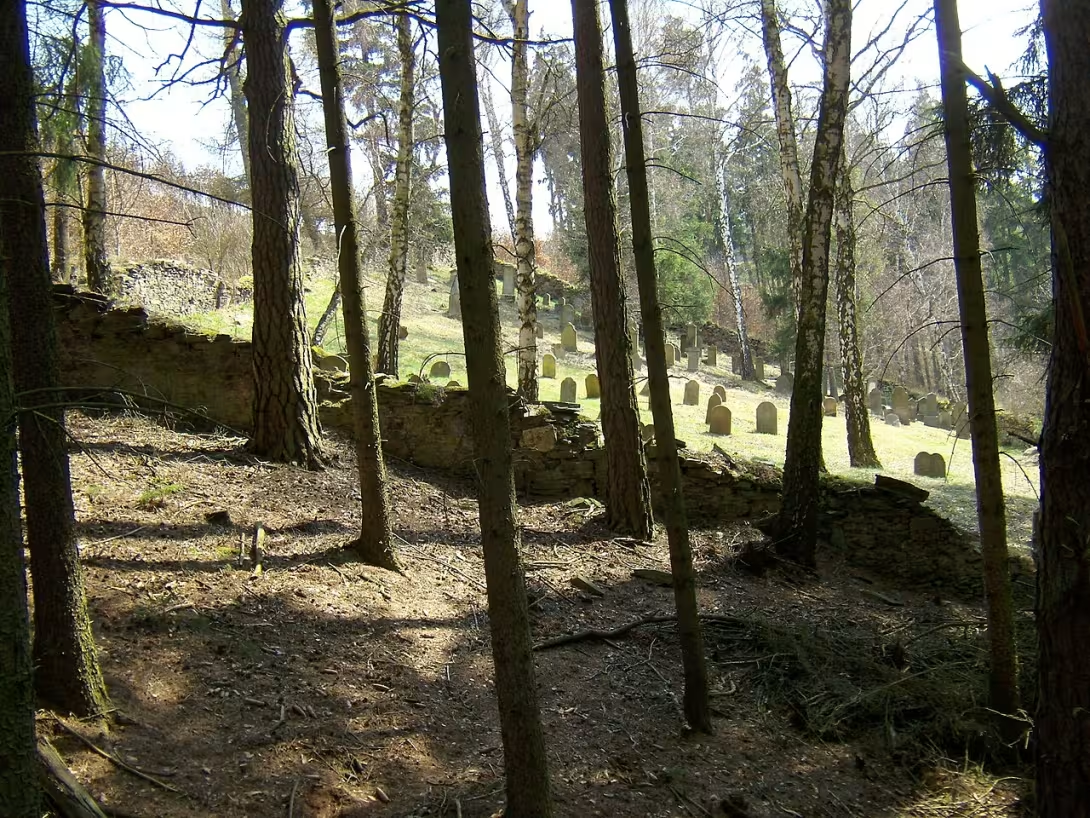
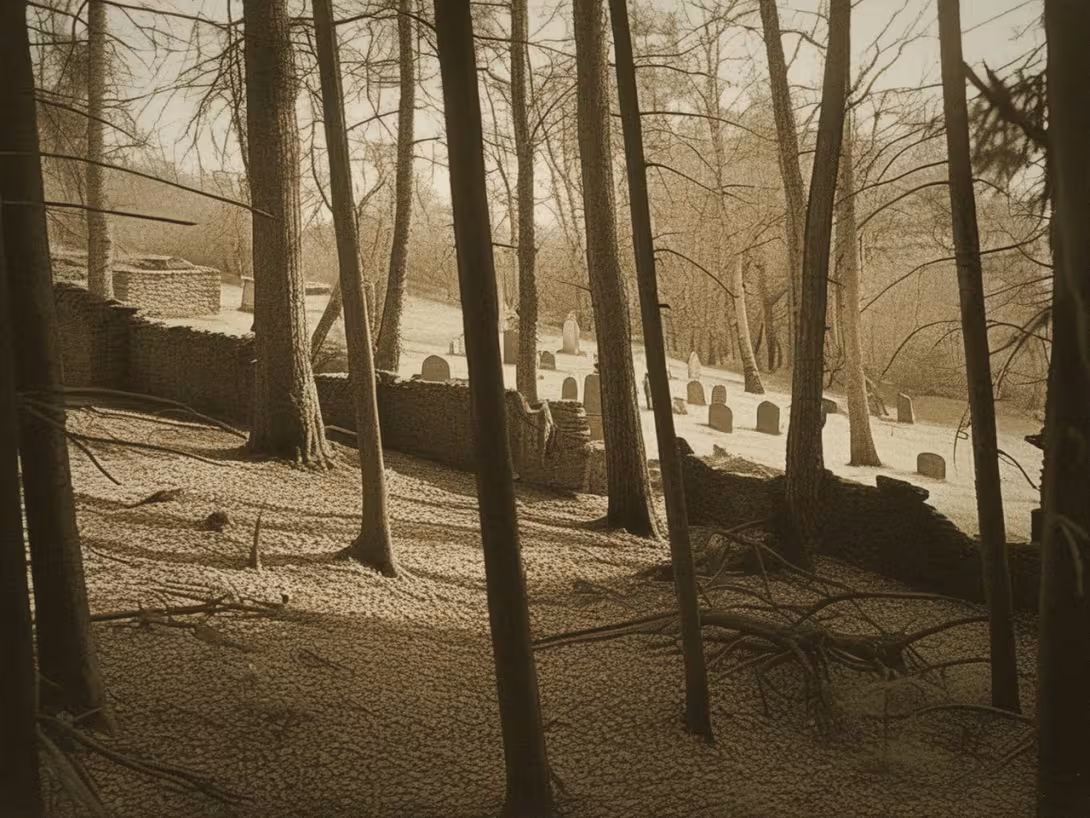
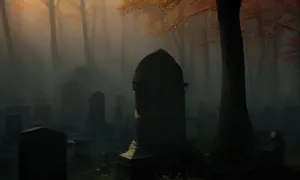
The historical appearance on the left is an AI-generated visualisation and serves as inspiration only.
Historical milestones
- around 1660
- The establishment of the first Jewish burial site in the vicinity of Řebří and its surroundings as part of the developing Jewish community in southern Bohemia
- 1742
- The oldest readable tombstone in the cemetery in Oshelin has been revealed, indicating the long-term sustainability of the cemetery
- around the 17th century
- The original Baroque architecture of the cemetery, including the stone wall, was built
- 18th century
- The oldest known tombstones in the cemetery come from this century, indicating the gradual expansion of the cemetery
- first half of the 20th century
- The cemetery was probably part of the joint ownership of the local Jewish community
- 2003
- First maintenance action of the cemetery during the workshop
- 2007
- The cemetery was declared a cultural monument of the Czech Republic and gained further protection
Architectural development
The cemetery was built of stone and its original state corresponds to the baroque style, which appeared in this area in the 17th century. The wall was probably built at the time of the foundation, later repaired and maintained. The oldest tombstones come from the 18th century, indicating the gradual expansion of the cemetery.
Historical events
- 1660
- The establishment of the Jewish cemetery as the first monument in the area, intended for funerals of the Jewish community around Řebří and Oshelin
- 2003
- Maintenance and repair of the cemetery during the workshop organized especially for the preservation of the monument
- 2007
- Announcement of the cemetery for cultural monument of the Czech Republic
Points of interest
- It lies on a wooded slope above the river Šarka, northwest of the village of Řebří.
- It was founded in the seventies of the eighteenth century as the first Jewish burial ground around Řebří and its surroundings.
- The oldest readable tombstone dates back to '72.
In the past, he was probably owned by a local Jewish community.
In the year two thousand seven hundred and seven it was declared a cultural monument.
Guide
Show guide text
This text was created by artificial intelligence and has not been editorially reviewed. It may contain inaccuracies.
Welcome to the place where the silence of the forest meets the echo of ancient history. You're standing right in front of the threshold of space, which is more than just another part of the forest. It is a place of rest, a place of memories and a place that requires your attention and quiet respect. Look around you and feel the atmosphere surrounding you. You're on a wooded slope that's sloping down to the Sarka stream. You may hear a distant murmur of water that is quietly pouring through the valley beneath your feet. Feel the colder air that sticks to these stacks and how light shines through the trees and throws shadows on the ground. In front of you is a Jewish cemetery in Oshelin, a space that is firmly connected to this soil and to the people who once lived here.
Let us now return together in time to understand why this place even exists here. This cemetery is not just a random cluster of rocks in the woods. Its roots go deep into the seventeenth century, namely the year sixteen hundred and sixty. At that time, the Jewish community began to form and develop in southern Bohemia, which needed its own sacred place to cross over. This space was originally part of the village of Řebří, but over the centuries his fate was firmly connected to the nearby Oshelin. Imagine that time when this area was full of life, when people moved between these forests and villages, and when faith and tradition were an inseparable part of everyday existence. This cemetery was a pillar for the local Jewish community, which built its identity here and its place in the world.
Now pay attention to what you see right in front of you and what you can see when you look closely. Even though the time and constant struggle of nature with human work have done so, you can still see the remains of the stone wall. This wall was not just a simple interface; It was the border between the world of the living and the world of those who had already left. Note its structures as stone shapes try to resist moisture and frost. The whole architecture of this place bears traces of Baroque style, which was very significant at the time of its creation and expansion. The Baroque spirit manifests itself in some seriousness and in how these stone creatures try to express their importance. When you walk between the tombstones, feel their shapes and how they take turns. The cemetery was not built at once, but it expanded gradually as the community that needed it grew. Every new stone brought new shapes and new ways to show respect for the dead.
You may now be asking who it was all about. Even though the names of specific personalities in these records do not directly present themselves, we have to realize that every stone you see here represents someone who was part of something much bigger. They were people who worked here, who believed here and who shaped the face of southern Bohemia. They were neighbors, family members, and people whose lives were linked to the rhythm of this country and the proximity of the Sarka stream. Even though we may not know their names, their presence is still felt in this place. They are part of the history of this region, which in the past was rich in Jewish culture and tradition. Each tombstone is a silent witness to their existence and their efforts to preserve their identity within a wider society.
If you want to find something that really interests you and makes you think, focus on the oldest details. Notice the tombstones that look like they already connected to the forest. One of them, the oldest, which is still possibly readable today, dates back to the 1970s. This shows us how long this cemetery has traveled and how long it has served as a place of peace. There's something fascinating about it that, despite all the variability in the world, this place has been preserved. It's also a place that requires care. In the year two thousand and three there was even a special event where a group of people came to help maintain this space. This quest to preserve the memory shows how much people value this heritage. Thanks to this, this space is today protected as a cultural monument of the Czech Republic, which gives it another layer of importance and importance.
Now I'm not gonna hold you back any longer. I invite you to go on your own research slowly and with great courage. Take a walk between the tombstones, see the silence that exists here, and listen to the noise of trees. Look at the details of the stone walls, how nature tries to bring these traces of human activity into itself. Let yourself be carried away by the atmosphere of this place and try to imagine the times that were there. Thank you for taking this short journey through time and for paying attention to this silent witness to history. I wish you a peaceful and thoughtful tour in this beautiful, forest corner.
Tips for visitors
The visit to the Jewish cemetery in Oshelin is best in the period from May to September, when the weather is pleasant and nature is blooming around. In winter, the local landscape is quieter, but sunny days are less frequent. We recommend visiting the pre-noon hours when the temperature is pleasant and visitors are less numerous.
The location is available by car from the surrounding area. We recommend checking the current connections and paths before visiting.
To visit the cemetery it is advisable to take quiet clothes, comfortable shoes and plenty of water. Since the cemetery is situated on a wooded slope, the local climate may be wet. It is also good to have a small daily lunch or a meal item with you, because there are no refreshments stalls nearby. It is also important to take sunscreen if you are going on sunny days.
In the cemetery there are suitable places for shooting especially tombs with historically interesting inscriptions and architectural details. The best light for photography is in the morning or afternoon hours when the light is softer and less contrast. It is important to respect the rules of photography in the cemetery - the photography of living people is forbidden, and the photography of the tombs is permitted if you do not violate the privacy of other visitors. '} {' what to visit in the vicinity (within 30 minutes of the place) ':' In the vicinity of the Jewish cemetery in Oshelin is worth visiting the historical residence of Svojšín, which is approximately 5 kilometres away. Svojšín was previously part of the Jewish village and offers interesting historical monuments and architecture. Near Řebří and Oshelin you can visit natural beauties such as the forests and valleys of the river Šarka, where there is the possibility of walking and observing nature.
For families with children it is advisable to visit the cemetery at a time when the weather is pleasant and choose a short walk along the wooded slope. Children can enjoy a quiet environment and observe natural scenery. It is possible to relax in selected places of the forest or valley. You should also explain to children the importance of the cemetery and its history in order to understand the importance of this place for history and culture.
Frequently asked questions
Can the monument be visited?
Cemeteries and graves are usually accessible; please respect the dignity of the place. We have not verified the opening hours of this cemetery.
Where is the monument?
Location: Plzeňský kraj. The map on this page shows the exact spot.
Why is the monument protected?
It is listed in the Central List of Cultural Monuments of the Czech Republic as a cultural monument (register no. 1728658167).
Businesses nearby
Do you run a restaurant, accommodation, shop, museum, rental, wellness or other visitor service near this monument? Show yourself directly to the people heading to it — this is how they will see you in the app and on the web:
Events nearby
Zdroj akcí: otevřená data měst a obcí ČR (Národní katalog otevřených dat) a kalendář akcí Národního památkového ústavu.
Nearby
V okolí se nachází přírodní krajina s lesy a údolími, například potok Šárka. V blízkosti se nachází také vesnice Řebří a Ošelín, kde žilo historicky významné židovské obyvatelstvo. V 5 km vzdálenosti se nachází například historické sídlo Svojšín, které bylo součástí židovské obce.
Accommodation nearby
Themed route
1.Židovský hřbitov v Ošelíně Memorial and burial ground - A unique example of a Jewish burial ground with preserved tombstones and historical symbols. It is a testament to the life and tradition of a local Jewish community that has lived here for centuries.
2. Scar stream Natural way - a quiet valley with forest vegetation, ideal for walking and observing local nature. Its flow connects the surrounding villages and gives the landscape a peaceful atmosphere.
3. Beet village Historical settlement - A small village with traditions associated with Jewish settlement, where the traces of the former neighbourhood with Oshelin were preserved. The original rural architecture can be monitored here.
4. Svoshín Castle and former Jewish residence - Historical house, which belonged to the Jewish village and served as an important centre for the local Jewish population. Today it is a monument with preserved elements of Jewish life.
5. Oshelin - Jewish Quarter Streets and houses - Remains of original Jewish houses and streets that remind you of the rich history of the village. Walk around them reveals traces of the past and lifestyle of the inhabitants.
Seasonal recommendations
Spring In the spring months, the Jewish cemetery in Oshelin will turn into a quiet place where nature wakes up and the sun's rays penetrate the trees. Blossoming trees and green grass create a soft, almost mysterious atmosphere, while the mild wind brings the scent of wet earth. The morning and afternoon lighting is pleasant, without direct sun, which could interfere with reading the inscriptions. It is recommended to visit the cemetery at a time when there are fewer visitors - i.e. off weekends and holidays, when people often look for quiet places for walks. It is suitable for clothing that protects against cold morning and evening temperatures, but also from sudden rain. The best time is early in the morning when peace and light are still soft, or late in the afternoon when heat becomes pleasant.
Summer In the summer months, abundant sunlight comes to the cemetery, creating sharp shadows between the tombstones and causing strong contrasts. Warm days and dry weather can make some parts of the cemetery seem dry and dusty, while in the shade of the trees there is pleasant cooling. In the main summer season the cemetery is visited by more tourists looking for interesting places to visit. It is recommended to come early in the morning to avoid the largest crowds and direct sun. Suitable is light but at the same time protective clothing that covers from the sun, and plenty of water. If you choose to visit at noon, choose the shady places near the trees where the temperature is more pleasant.
Autumn Autumn brings golden and red shades of leaves to the Jewish cemetery in Oshelín, which are slowly hurled by the wind and create a colourful carpet on the ground. Colder air and short days create a quiet, almost nostalgic atmosphere where light turns into soft, scattered rays. In this period the cemetery is more peaceful because visitors focus more on autumn walks in nature. It is recommended to visit when the weather is stable - i.e. not too wet or windy. Suitable is warm but not too thick clothes that protect against cold wind. The best time is this afternoon, when the sun still shines enough, but the temperature is not too low.
Winter In winter, the Jewish cemetery in Oshelin will turn into a quiet, almost fairy-tale place where the snow cover covers tombstones and trees and creates silver shine. Freezing air and short days cause light to fall low and create long shadows that give the place a mysterious atmosphere. It is recommended to come at a time when the day is longest - i.e. around noon, when the light is sufficient for inspection. Suitable is warm but comfortable clothes that protect against frost and snow, as well as shoes with good adhesion surface. If the cemetery is covered with snow, it is good to wear even light snow-resistant shoes to avoid sliding.
Visualizations and artistic views


The visualisations are generated by artificial intelligence and serve as inspiration.
Photos from the area
Real photos taken near the monument

Zdroj a licence jsou uvedeny u každého snímku.
Tips from visitors
No tips yet. Be the first!
Log in and add your tip.
Sources and literature
Photos: Krabat77 / CC BY-SA 3.0 — Wikimedia Commons. The author and licence also appear when you hover over the image.
Faktickým podkladem tohoto textu byl článek na Wikipedii, jehož autory jsou přispěvatelé Wikipedie. Článek je dostupný pod licencí CC BY-SA 4.0.
Location on the map
More monuments – Plzeňský kraj
Show all in the region


Příběhy a pověsti
Legendy, pověsti a příběhy spjaté s touto památkou
Fotografie návštěvníků
Zatím žádné fotografie. Buďte první, kdo přidá fotografii z návštěvy!
Log in a přidejte svou fotografii nebo hodnoťte.
Za ověřenou návštěvu v aplikaci získáte víc bodů — poznáme podle GPS, že jste na místě.
Reviews and comments