






Židovský hřbitov ve Stráži Jewish cemetery
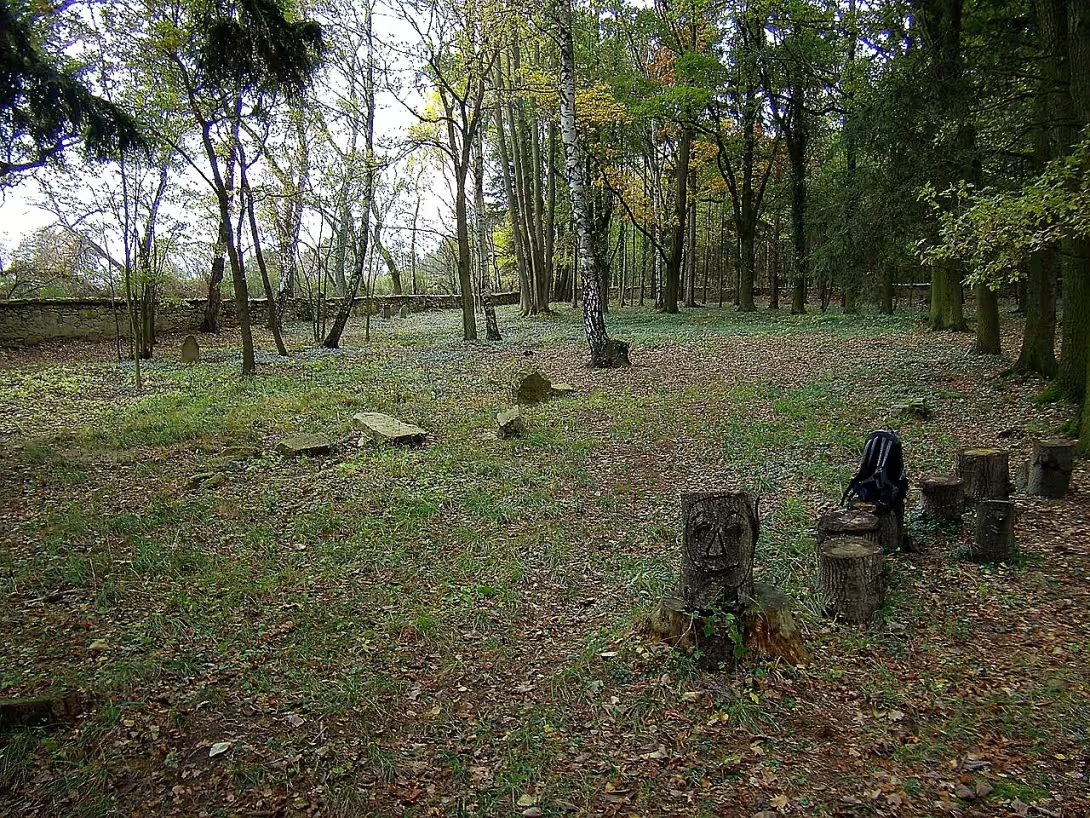
Židovský hřbitov ve Stráži is a cultural monument of the Czech Republic, situated in the forest north of the town Stráž. According to some sources it was established in 1330. Its importance lies primarily in the old part of the complex, where numerous graves are reserved for Levites and Cohanites, which is exceptional in this area.
There is little information about the oldest history of the cemetery, but historical records indicate its creation in 1330. The oldest legible tombstone in the complex dates back to 1601.
The area has preserved a fenced wall and pillars of the entrance which are in good condition.
The cemetery is owned by the city Stráž. In 1923-1928, the last repairs were made prior to the period of war damage. During the Nazi occupation, the site was brutally damaged and some historically rare tombstones were used as building material. The village used to have Old and New Synagogue from the first half of the 18th century. In the second one, services were held until 1938 when the Nazis burned it down. After 1950, the rest of the building was torn down.
After a period of decline, when there were approximately 50 tombstones in the 1970s, and in 2007 there were only under 20 tombstones left, there was a partial recovery. In 2009, the German Aktion Sühnezeichen association took care of it. In this activity, some still lost tombstones were found, increasing the number of tombstones and their fragments to 34.
The cemetery lies in the forest landscape. It is accessible from the field road to the Sovereign near the tourist path led by a green mark towards the north towards the Bor. It can also be followed by the blue and white marks of the learning path, which leads around the complex to Síměr.
This object is an important witness to the history of Jewish communities in the region. It is advisable to visit it for a tour of preserved elements of the historical area and an understanding of the fate of the local people.
Then and now
Drag the slider to compare how the landmark may have looked when it was built with the view today.
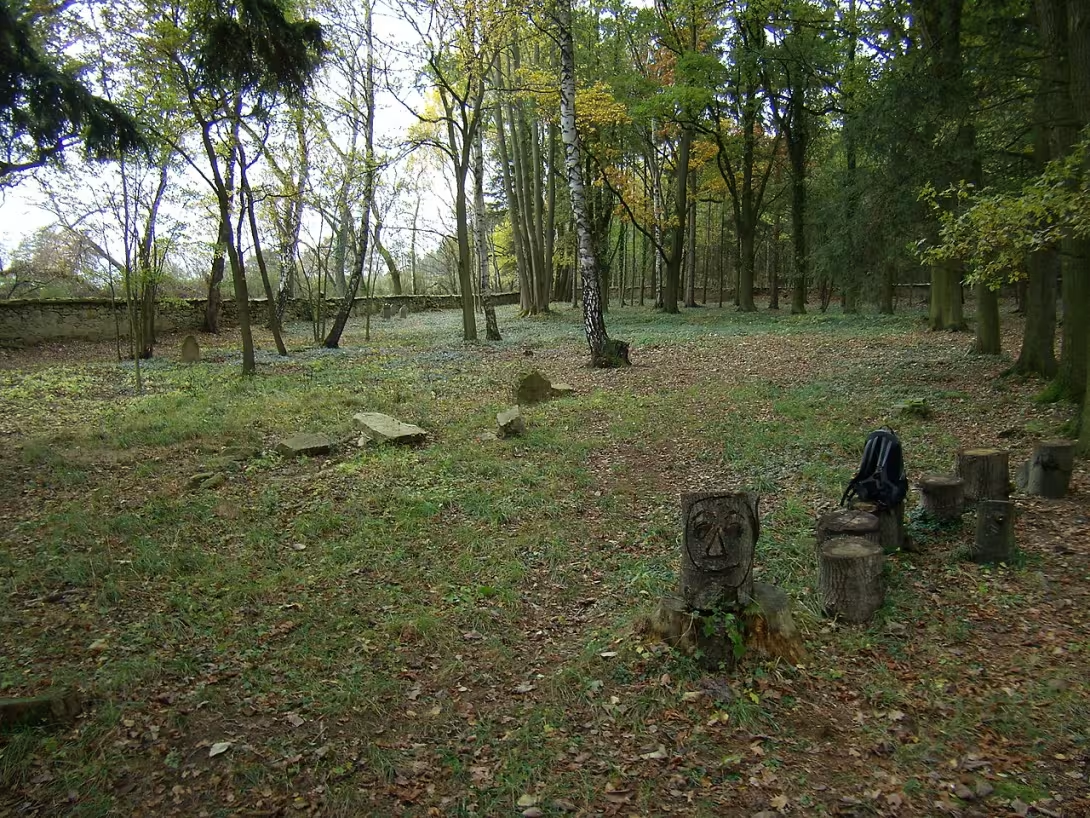
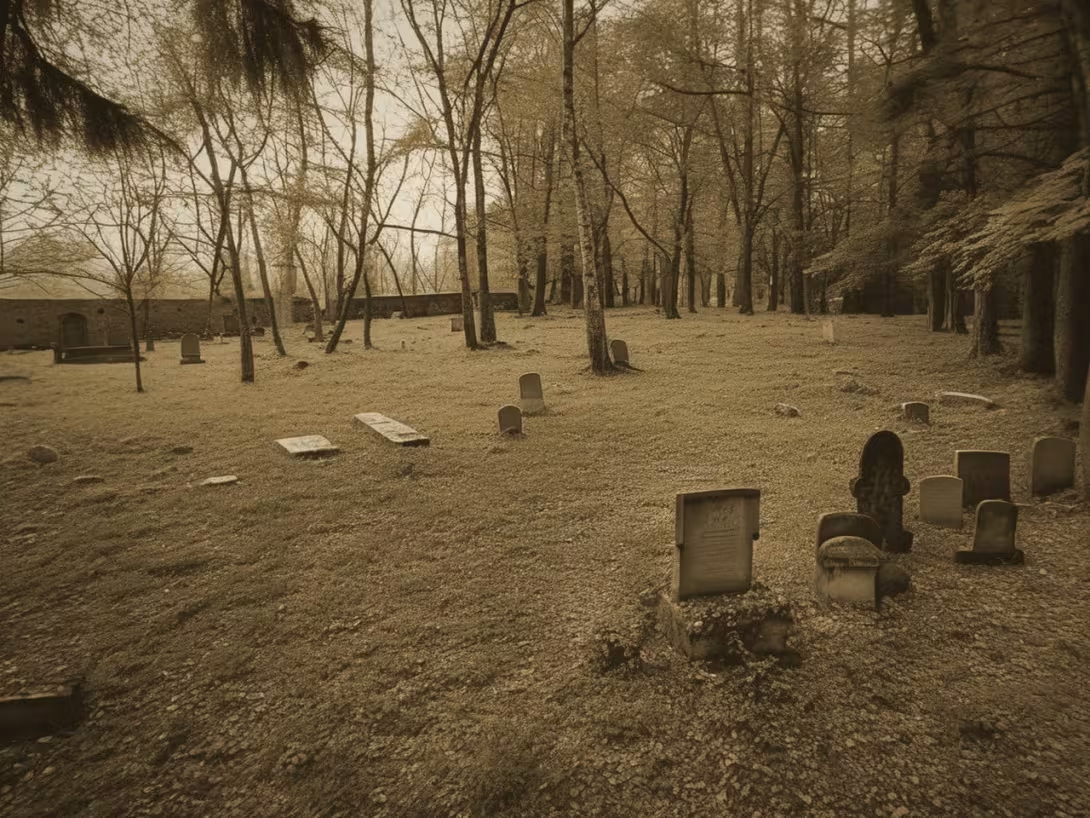
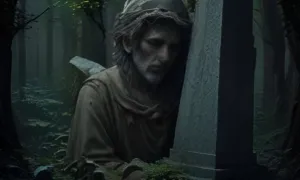
The historical appearance on the left is an AI-generated visualisation and serves as inspiration only.
Historical milestones
- 1330
- Establishment of a cemetery according to some sources
- 1601
- Date of the oldest readable tombstone
- 1923-1928
- Last repairs of the cemetery
- 2009
- Partial restoration of the cemetery by the German association
Architectural development
The area has preserved a fenced wall and pillars of the entrance which are in good condition. After the period of destruction and the use of tombstones as building material, the number of stones erected was increased to 34 thanks to the restoration.
Historical events
In 1923-1928, the last repairs to the cemetery took place before the period of war destruction. The site was partially restored in 2009 thanks to Aktion Sühnezeichen.
Owners
city of Stráž
Points of interest
- According to some sources, the cemetery was established in 1330. - There are a series of graves reserved for Levites and Cohanites, which is exceptional in this area. - The oldest readable tombstone in the complex dates back to 1601. - During the Nazi occupation, the compound was brutally damaged and some of the rare tombstones were used as building materials. - In 2009, Aktion Sühnezeichen's German association found lost tombstones, increasing the number of tombstones erected to 34.
Guide
Show guide text
This text was created by artificial intelligence and has not been editorially reviewed. It may contain inaccuracies.
Welcome to the Jewish cemetery in Stráži. Stop for a moment, take a breath and feel the silence of this place. You are standing right now in the forest north of the city of Stráž, in a space where nature intersects with human history in a deep and humble embrace. In front of you is a complex that is not just a set of tombstones, but an open book about the fate of people who were once part of this landscape. The first impression of this place is often similar. There is a strange calm that you perceive because the cemetery is surrounded by trees. The forest here acts as a natural protector that separates the world of the living from the world of the dead and, at the same time, connects these two worlds gently.
Let us now look together at how this place was created and what its historical context is. Židovský hřbitov ve Stráži is really a fascinating monument because its roots go very deep into the past. According to some historical sources, this complex was founded in 1330. Imagine how many centuries there were alternating seasons, how many generations came here with the latest and how many stories remained sealed in these stones. Although the exact date of establishment may not be supported today by every document, the very existence of such an old cemetery suggests that the Jewish community had a long and stable tradition in this area. Today the whole complex is protected as a cultural monument of the Czech Republic and is located in the ownership of the village, which ensures that future generations can perceive the spirit of this place.
Now, when you slowly start looking around the premises, pay attention to what you see around you. The architecture of the Jewish cemetery is not about magnificent palaces or decorative gates, but about symbols and order. Notice the tombstones protruding from the ground. They're silent witnesses of time. If you get a chance, look for the oldest among them, who is still readable. It's from 1601. It is fascinating to think that this particular stone has been standing here for more than 400 years. Feel its surface, its patina, and the way in which time slowly cut it. It is these details that tell us about the craftsmanship of the then stonemakers and the respect with which the deceased were placed in the country.
When you go further, I suggest you focus on one very specific feature at the end of this cemetery. Note that in its older part, the graves are not completely randomly distributed. Special rows of graves for Levites and Cohanites are reserved here. For some, it can only be a detail in the arrangement, but in the Jewish tradition, these groups have profound significance. The Kohanites were descendants of the priest Aaron, and the Levites came from the tribe of Levi. They had special ritualistic and religious roles in the community. The fact that separate space has been reserved for them here is indeed rare in this area and makes the cemetery in Stráži place with high religious and historical value. It is evidence of strict observance of traditions and a hierarchy that existed in the Jewish community even in the aftersleep.
Unfortunately, the history of this place is not just about tradition and peace. Every stone here bears traces of tragedy. If you notice carefully, you may see empty spaces or tombstones that look incomplete. This is a reminder of the dark period of Nazi occupation. During this time, the site was severely damaged. What is most painful in this place is the fact that some precious tombstones were not just destroyed, but were used as building materials. Imagine the contrast between the sacrament of the cemetery and the brutal indifference of the occupants, for which these monuments were just ordinary stones. This wound to the identity of the site remained visible even after decades. It's a memento that encourages us to think about how fragile memory is and how easily it can be destroyed by hate.
However, the story of the cemetery in Stráži doesn't end in destruction. After World War II, it began to think about how to save this place. The last major repairs took place between 1923 and 1928 before the darkest era came, and in the newer times, the outsiders were also involved in saving the site. A very important milestone was 2009, when the cemetery was partially restored thanks to the help of the German association. It is a beautiful symbol of reconciliation and joint responsibility for the preservation of cultural heritage that goes beyond the borders of the states. Thanks to this cooperation, we can today stand in this forest and in relative peace to study a history that could otherwise be completely forgotten.
Now that you know the basic fates of this place, I suggest you stop for a moment and think quietly about everything you've heard. Židovský hřbitov ve Stráži is not only a monument to historians, but it is a place for anyone who seeks to connect with the past. It's a place where faith, tradition, pain, and hope of recovery meet. Notice how the trees above you are snorting and how the light has passed through the leaves, touching the old stones. At this point, you have become part of the history of this place, because by visiting you, you are again giving these forgotten people a voice.
Imagine the people who rest here. They were businessmen, craftsmen, parents and children. Every one of them had their lives, their dreams and their sorrows. Although we don't know the names of most of them, their presence here is still felt. That's what lies the secret and the magic of this cemetery. It's not just a list of dates and names, but an atmosphere surrounding you.
I ask you to examine the rest of the premises in peace and respect. Go through a series of graves, see the texts on the tombstones, if they are still legible, and be guided by the silence of the guardian forest. Take your time. Let this place bind you with its peace and help you find a moment of inner silence.
Thank you for spending this time with us at the Jewish cemetery in Stráži. We hope that this encounter with history has enriched you and that you are leaving with a sense of respect for those who rest here. We wish you a pleasant continuation in your discovery and goodbye.
Tips for visitors
For the best experience, we recommend a visit in spring or autumn months, where the forest area offers a calm atmosphere and natural light to explore the finders.
The monument can be reached by car and public transport; please check the current connection and parking possibilities near the village before travelling in the search engine.
Take comfortable shoes and repellent to the forest landscape. For photography are ideal places between tombstones in the morning light, which highlights the texture of stone beautifully.
In the area you can use the tourist path leading to Bor. For families with children walking through the forest is a great opportunity to discover nature, but it is necessary to count on uneven terrain.
Businesses nearby
Do you run a restaurant, accommodation, shop, museum, rental, wellness or other visitor service near this monument? Show yourself directly to the people heading to it — this is how they will see you in the app and on the web:
Events nearby

Zdroj akcí: otevřená data měst a obcí ČR (Národní katalog otevřených dat) a kalendář akcí Národního památkového ústavu.
Nearby
The cemetery lies in the forest landscape by the tourist path leading to Bor. The village used to have Old and New Synagogue, but they were destroyed.
Accommodation nearby
Themed route
Thematic cruise route: Židovský hřbitov ve Stráži and its historical monuments
1. Židovský hřbitov ve Stráži (cemetery) * Type: * Historical landmark * Why is it worth visiting: * This cemetery is one of the oldest and most valuable Jewish burial sites in Bohemia. Located in the forest landscape, it offers quiet surroundings for visitors who want to familiarize themselves with the history of the Jewish community in Stráži.
2. Tourist path to Bor * Type: * Tourist trail * Why is it worth a visit: * The trail leading from the cemetery to Boru is ideal for those who want to explore the surrounding forests in beautiful nature. This trail offers a comfortable walk and the opportunity to enjoy a quiet rest in a shadowy environment.
3. Place of the former Old and New Synagogue * Type: * Historical site * Why is it worth visiting: * Although synagogues themselves do not exist, their history is an important part of Stráže's past. Visitors can think here about the rich cultural and religious tradition of Jewish people who were an important part of the community in this location.
4. Ambient forest walks * Type: * Natural experience * Why is it worth visiting: * Forests around Stráže offers ideal possibilities for relaxing and exploring nature. Walking on these forest trails are especially suitable for nature lovers who seek a peaceful rest away from urban noise.
This route offers a combination of historical and natural experiences that allow visitors to explore the heritage of the Jewish community in Stráži and the beauty of the surrounding environment.
Seasonal recommendations
In spring the cemetery comes alive thanks to the awakening nature and fresh green. The soft spring light hits the tombstones gently, creating a sense of hope and peace. We recommend wearing layers of clothing because the weather is usually variable in this period. An ideal visit in the morning is when the air is the cleanest.
The summer season brings dense greenery and intense sunlight that creates sharp shadows under the trees. The atmosphere is simple and quiet, even though it's hot outside. Due to the main summer season and higher attendance, it is best to arrive very early in the morning. Don't forget light clothes and plenty of fluids.
Autumn is a time of melancholy and deep reflection when the surroundings are colored in golden and brown shades. Falling leaves and morning fog give the place a mysterious touch. It is practical to wear moisture resistant shoes and a light wind jacket. The best time to visit is late afternoon when the sun paints the stones in warm tones.
In winter there is absolute silence and strict cleanliness, especially if the cemetery covers a layer of snow. The bare branches of trees and grey skies emphasize the historical value and loneliness of the monument. It is necessary to have warm clothes and firm shoes. Due to the shorter day and limited opening time, we recommend planning the arrival in the morning.
Visualizations and artistic views


The visualisations are generated by artificial intelligence and serve as inspiration.
Tips from visitors
No tips yet. Be the first!
Log in and add your tip.
Sources and literature
Fotografie: Krabat77 / CC BY-SA 3.0 — Wikimedia Commons. The author and licence also appear when you hover over the image.
Faktickým podkladem tohoto textu byl článek na Wikipedii, jehož autory jsou přispěvatelé Wikipedie. Článek je dostupný pod licencí CC BY-SA 4.0.
Location on the map
More monuments – Stráž
Show all in the municipality
Příběhy a pověsti
Legendy, pověsti a příběhy spjaté s touto památkou
Fotografie návštěvníků
Zatím žádné fotografie. Buďte první, kdo přidá fotografii z návštěvy!
Přihlaste se a přidejte svou fotografii nebo hodnoťte.
Za ověřenou návštěvu v aplikaci získáte víc bodů — poznáme podle GPS, že jste na místě.
Reviews and comments