



Židovský hřbitov ve Větrném Jeníkově Jewish cemetery
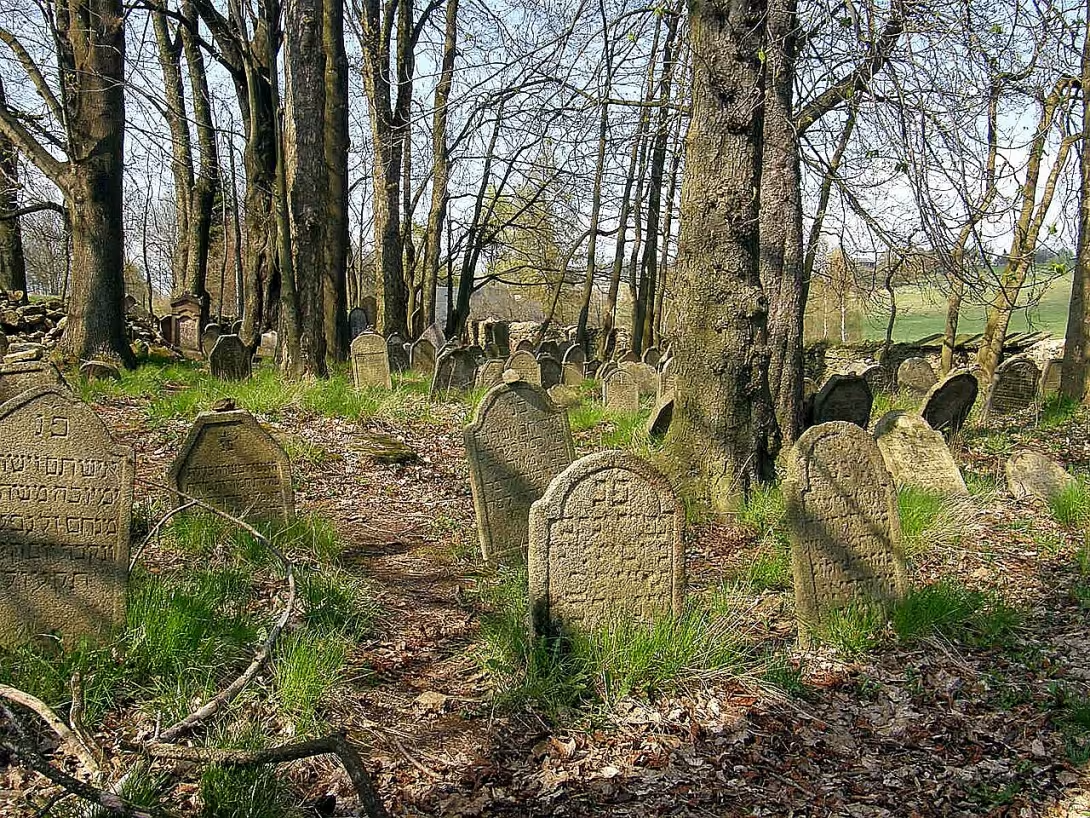
Židovský hřbitov ve Větrném Jeníkově is an ancient monument located about 1.5 kilometers south of the local town, in a draw between the fields near the Jirinsky creek. Founded probably in the first half of the 17th century, it represents one of the oldest preserved Jewish cemeteries in the region. There are about 250 tombstones on an area of 943 metres, the oldest of which dates back to 1652, suggesting a long tradition of Jewish community in the surroundings. Its importance lies not only in the historical context, but also in a preserved architectural remnant that reflects the way the people were buried.
The creation of the Jewish community in Windy Jeníkov is connected with the expelled Jewish Jews who settled here around the mid-15th century. This group became the basis of a local Jewish village, but it had already disappeared in the 1930s. According to the local chronicle, the undertaker in the cemetery was always a miller from the Lower Mill, lying in the neighbourhood. The Jewish cemetery was used not only by local Jews, but also by residents of the area, which shows its regional importance.
The architecture of the cemetery is simple and natural. Originally built from local stone blocks and masonry, the remains of a passable morgue in the centre of the complex indicate the original structure. Access is open, but the original wall is broken down, which makes it difficult to keep an eye on the entire area. Materials and construction reflect practical needs at the time, without significant architectural elements.
The cemetery was used until the end of the Jewish community when its function ceased. Interestingly enough, the undertaker was always a miller from the Lower Mill, suggesting a long-term connection between the village and the burial site. Accessibility and preservation of tombstones make this object an interesting destination for historically curious visitors.
Today, the Jewish cemetery in Windy Jeník is freely accessible, allowing visitors to familiarise themselves with this historical remnant. Its importance lies in showing the past of the Jewish community in the region and in preserved building elements that preserve the memory of the past. Visiting this cemetery is an option for those who want to explore the history and traditions of local communities.
Then and now
Drag the slider to compare how the landmark may have looked when it was built with the view today.
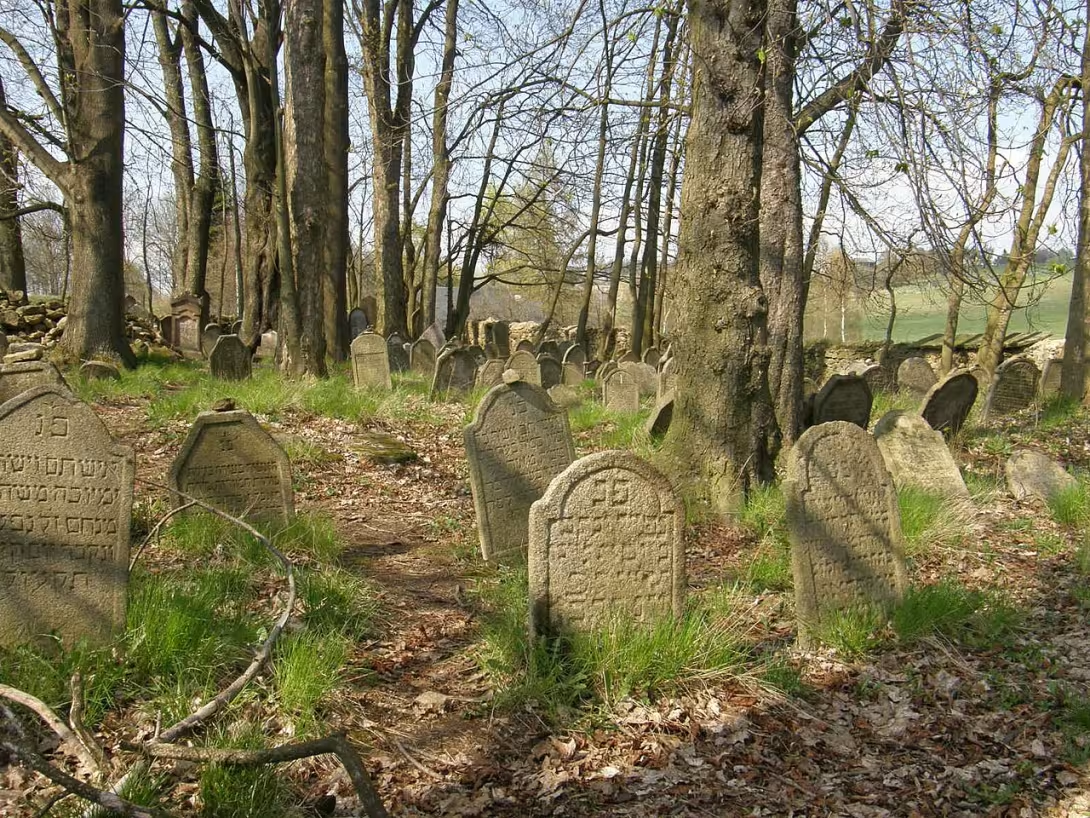
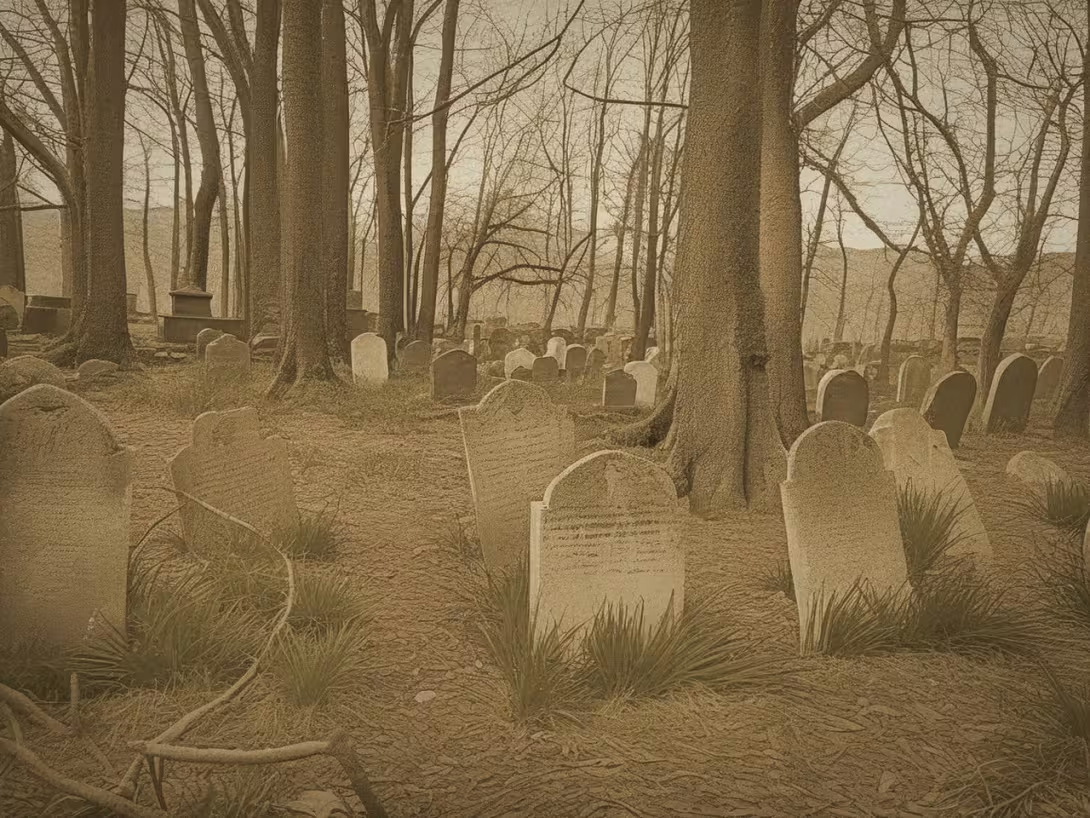
The historical appearance on the left is an AI-generated visualisation and serves as inspiration only.
Historical milestones
- around 1450
- Establishment of expelled Jewish Jews and foundation of the local Jewish community
- 1652
- The oldest preserved tombstone in the cemetery
- first half of the 17th century
- Establishment of Jewish cemetery
- first half of the 18th century
- Original building of local stones and masonry with walking morgue
- first half of the 20th century
- The destruction of the Jewish village and the end of the use of the cemetery
- end of the 20th century
- Conservation of the cemetery as historical monuments and free access for the public
Architectural development
The cemetery was built in a natural environment without significant building modifications. The materials were local stone blocks and masonry. The remains of the passable morgue indicate an original architectural structure that was later damaged.
Historical events
- first half of the 15th century
- The creation of the Jewish community in Windy Jeník from the expelled Jewish Jews
- first half of the 17th century
- The establishment of a Jewish cemetery, probably the oldest preserved tomb in the area
- 1930s
- The end of the Jewish community in Windy Jeníkov
Points of interest
- It is located in a tie between the fields by the creek, about 1.5 kilometers from the village.
- The oldest tombstone dates back to 1652.
- There was always a miller in the cemetery from the local mill as a grave man.
The cemetery was also used by the inhabitants of the area, which shows its importance for the entire area.
- Originally built from local stones and masonry, with remains of an old passable morgue.
Guide
Show guide text
This text was created by artificial intelligence and has not been editorially reviewed. It may contain inaccuracies.
Welcome to the Jewish cemetery in Windy Jeník - a place where time remained almost still. You stand before a small but deeply symbolic place that has long served as a final rest for the people who lived here, worked and prayed. Around you lies a quiet area between the fields, just a few hundred meters from the village, near a quietly flowing stream. Notice how tombstones, mostly modest and simple, resist time - some for centuries, others even 300 years. This cemetery is not just a cluster of stones, but a witness to the life, faith and fate of the people who were buried here with respect and love.
Let's see how this place came into being and why it's so important to this day. The Jewish village in Windy Jeníkov dates back to the mid-fifteenth century when Jews were driven here from nearby Jihlava. Those who stayed have established their home and their own cemetery over time. It probably originated in the first half of the seventeenth century - the first preserved tombstone dates back to 1652, which is the only written evidence for us today that people were already resting there. The cemetery served not only the locals, but also the inhabitants of the wide area, which shows how important it was for the Jewish communities in this country.
Now pay attention to what you see before you. The area in front of you is approximately nine hundred square meters, where there are approximately two hundred and fifty tombstones. Notice that most of them are built from local stones and walls as they were used to at that time. In the middle of the cemetery, the remains of the passable morgue were preserved - the places where they prepared the deceased for the final journey. This building was originally part of the cemetery and served as a protection against the weather. The mortuary was built from local materials, just like most tombstones, which gives the whole place an authentic and modest character.
Stop for a moment and imagine what life here was like. Each tombstone has its own history - names, dates and sometimes short inscriptions that reveal the fate of the people who rest here. Note that there was always a miller from the local mill grave in this cemetery. This was a custom that shows how closely this community was tied to its surroundings. A miller who worked daily with flour and water became the guardian of the last resting place in the evening. Such details remind us that in the past, people have been the same as us - fulfilling duties, but also feelings.
And now something that might surprise you. This cemetery was used until the first half of the twentieth century when the Jewish village in Windy Jeníkov died. After World War II, no one was buried here, and the place was forgotten. It was only at the end of the last century that it was decided to become a protected monument and to be freely accessible to the public. Today you can stay here for a while and think and feel the fate of people who have come here from different corners of the world.
Take another look at the tombstones before leaving. Some are almost completely overgrown with grass, others stand firm as if they were waiting for a visit. Notice how nature and memory mingle here - trees that grow between rocks, and winds that bring in sounds from surrounding fields. This cemetery is not only a place of sadness, but also peace and respect. It's a place where the past meets the present, and where everyone can find a moment of silence.
Thank you for taking the time to visit this special place. If you are interested in the history of Jewish communities in this country, you can also look at the local museum or see the other monuments they hide in the surroundings. Whether you decide to take another trip or just stay here a while longer, believe this cemetery has left you something that will not be easily erased from your memory. Whether it's a sense of respect, the sound of the wind between the tombstones, or just the peace that exists here - it's all part of why it's worth coming here. See you next time.
Tips for visitors
It is convenient to visit the Jewish cemetery between April and September, when the weather is pleasant and can enjoy a day walk without fear of rain. In winter the place is quieter, but sunny days are less frequent. It is also recommended to visit in the morning when light is pleasant and visitors are less numerous.
The morning between 9:00 and 11:00, when there is the most light and fewer people.
The location is available by car from the local town of Windy Jeníkov. Public transport is available from nearby cities, but the exact connection will be found on official information.
When visiting a Jewish cemetery, it is advisable to wear high-quality shoes on long feet, because the soil can be moist and disunited. It is also good to have water, sun protection (sunglasses, sunscreen) and a small daily lunch. It is also appropriate to take cleaning products because the cemetery soil can be dusty. Children can take small toys or books for reading.
The old stone walls and walls that form the border of the cemetery are also interesting. The best light for photography is in the morning or in the evening when the light is softer and less contrast.
Photography is allowed, but privacy and peace in the cemetery must be respected. Photography of living persons without their consent and damaging tombstones or other monuments is not allowed.
The Mill pond is a beautiful water body, which is part of the natural environment. Around it you can walk and watch the birds that live here. It is advisable to take a walk around the pond because there are plenty of places to relax and observe nature.
A walk around the pond, bird watching and the possibility to buy fish on the local fishing market, which can take place here at some times of the year.
The Jirina stream forms a pleasant border between the field areas and the cemetery area. Around it it is possible to walk and observe natural beauty. It is also appropriate to observe how the stream flows and how its flow changes depending on the weather.
Walk along the stream, observing the plants and animals that occur here, and the opportunity to take to buy fresh vegetables or fruits from local fields.
Children can see the tombstones and learn about the history of the place. You can explain to them why the cemetery was founded and what significant figures are buried here. It is advisable for children to choose only a few interesting tombstones and to explore their history with them.
Families with children can enjoy a walk around the Mill pond. Children can observe the birds and fish that live here. You can also take small boxes and collect interesting natural objects that occur here.
The cemetery is a quiet place where children can relax and relax. You can relax together on the local benches and see the surroundings. Children can also play in small playplaces that are around the cemetery.
Frequently asked questions
Can the monument be visited?
Cemeteries and graves are usually accessible; please respect the dignity of the place. We have not verified the opening hours of this cemetery.
Where is the monument?
Location: Větrný Jeníkov, Kraj Vysočina. The map on this page shows the exact spot.
Why is the monument protected?
It is listed in the Central List of Cultural Monuments of the Czech Republic as a cultural monument (register no. 1000141845).
Businesses nearby
Do you run a restaurant, accommodation, shop, museum, rental, wellness or other visitor service near this monument? Show yourself directly to the people heading to it — this is how they will see you in the app and on the web:
Nearby
V okolí se nachází Mlýnský rybník (asi 400 metrů od hřbitova), který je součástí krajinného rázu. V blízkosti se nachází také Jiřinský potok, který tvoří hranici mezi polními plochami a hřbitovním areálem.
Accommodation nearby
Themed route
Thematic cruise route: Židovský hřbitov ve Větrném Jeníkově and its surroundings
1. Židovský hřbitov ve Větrném Jeníkově - historical monument It is a unique preserved cemetery with a rich history of the Jewish community. The visit offers the opportunity to get acquainted with traditional tombstones and learn about the life of the local people. The place is quiet and suitable for thought.
2. Mill pond - natural beauty Approximately 400 metres from the cemetery is a picturesque Mlýn pond, which complements the landscape. It is ideal for a short walk or rest by the water. The surrounding area is pleasant and offers the possibility to observe local flora and fauna.
3. Jiřín stream - natural boundary The stream forms a natural boundary between the field areas and the cemetery area. The visit here may be interesting for water flow observation and its impact on the surrounding environment. It's an opportunity for a short walk along the water.
Seasonal recommendations
Spring: In the spring period, the Jewish cemetery in Windy Jeníkov is revived by flowers that color the surrounding landscape and provide a place of joy. The sunny days bring a warm atmosphere where the fragrance of flowering trees mingles with the historical familiar cemetery. Visitors should choose clothes suitable for mild temperatures and bring protective sunglasses because the spring sun can be strong. The best time to visit is an early afternoon when the crowd is shrinking and you can enjoy a quiet walk.
Summer: In the air season, the Jewish cemetery in Windy Jeník offers the visitors a warm and luminous atmosphere where nature is in full strength. Long sun days allow you to explore the memory for a long time, but can be accompanied by strong temperatures and a crowd of tourists. Visitors should bring protective sun ties or hats and enough drinking water to avoid fatigue and dehydration. The best time to visit is in the early morning or late afternoon when the temperature drops slightly.
Autumn: In the autumn period, the Jewish cemetery in Windy Jeník's visitors offers a calm and slightly cool atmosphere where tree leaves turn into golden and red shades. Short days require an early start time to fully explore the sights before setting the sun. Visitors should bring warm clothes and perhaps an umbrella, because autumn weather can suddenly be variable. The best time to visit is early afternoon, when the temperature is still within acceptable limits.
Winter: In the winter, the Jewish cemetery in Windy Jeník offers a quiet and quiet environment where it is covered with snow or dust. Freezing weather requires warm clothes and wind protection for a comfortable visit. The best time to visit is early afternoon when the sun still lights up the room and the temperature is slightly higher than in the noon hours.
Visualizations and artistic views


The visualisations are generated by artificial intelligence and serve as inspiration.
Photos from the area
Real photos taken near the monument

Zdroj a licence jsou uvedeny u každého snímku.
Tips from visitors
No tips yet. Be the first!
Log in and add your tip.
Sources and literature
Photos: Filo cz / CC BY-SA 3.0 — Wikimedia Commons. The author and licence also appear when you hover over the image.
Faktickým podkladem tohoto textu byl článek na Wikipedii, jehož autory jsou přispěvatelé Wikipedie. Článek je dostupný pod licencí CC BY-SA 4.0.
Location on the map


Příběhy a pověsti
Legendy, pověsti a příběhy spjaté s touto památkou

Fotografie návštěvníků
Zatím žádné fotografie. Buďte první, kdo přidá fotografii z návštěvy!
Log in a přidejte svou fotografii nebo hodnoťte.
Za ověřenou návštěvu v aplikaci získáte víc bodů — poznáme podle GPS, že jste na místě.
Reviews and comments