






Židovský obecní dům Building
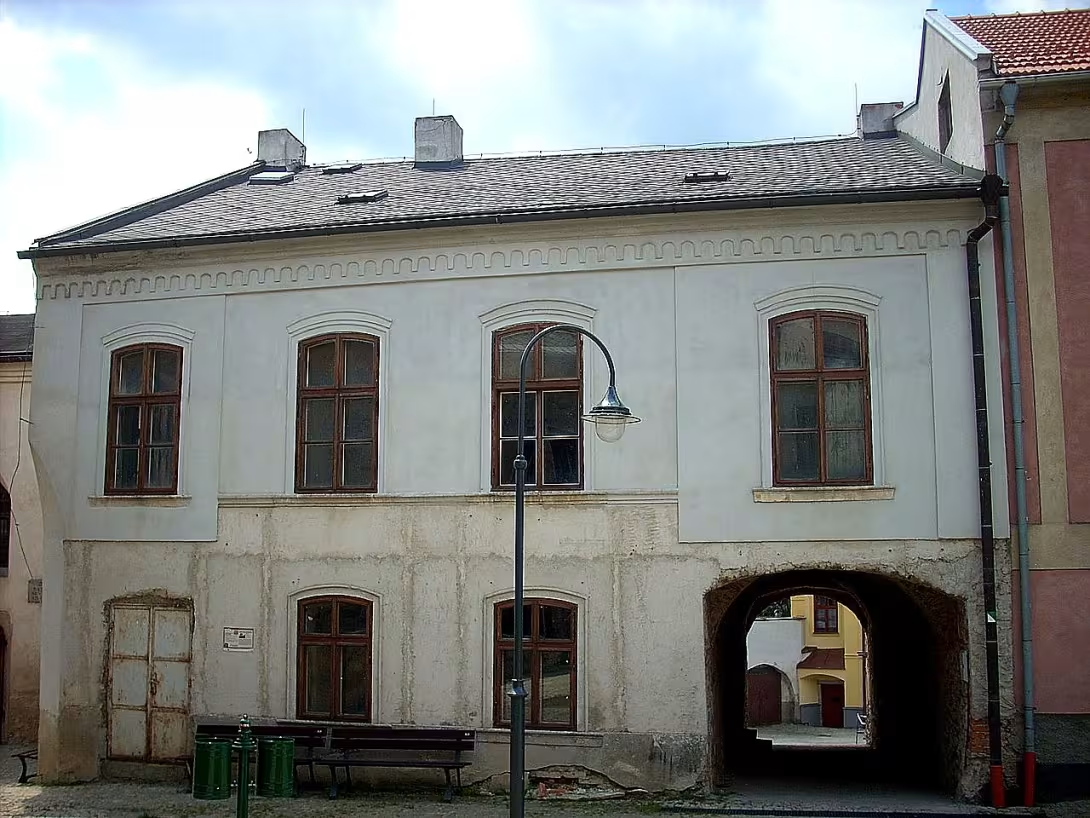
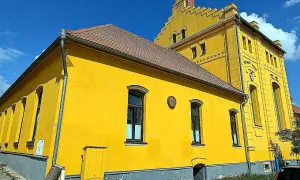
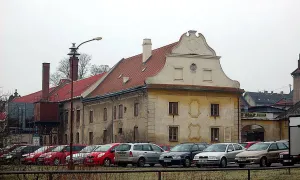
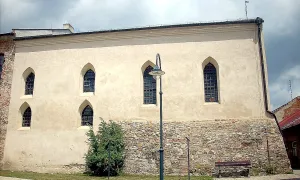
Židovský obecní dům in Polná, located on Charles Square no. 541, is a cultural monument of the Czech Republic and one of the most important historical objects of the village. This building, built in Baroque style with elements of romantic history, is remarkable by its rich history and architectural features that reflect the living conditions of the Jewish community in the region. The house boasts a major exhibition dedicated to the hilsneriad and permanent exposure to the urban ghetto, which attracts people interested in history and culture.
The house was built as part of a single storey building in 1717. Originally he served not only as a rabbi's seat, but also as a municipal house with business. On the ground floor there was a ritual bath and other premises intended for Jewish religious practices. After the fire in 1863, which affected the whole village, the ground floor of the house was purchased by the municipalities for 530 gold and has since been permanently owned by the municipality.
Architectural Židovský obecní dům is characterized by baroque elements which were later modified in the spirit of romantic historism. After the fire in 1863, the building was repaired several times and in 2014 it was reconstructed into a form as close as possible to its original state. During the reconstruction the winter prayer hall was restored with the original Aaron and the benches as well as the original painting.
The property has undergone several changes. Originally belonged to the Jewish community, which was based here from its inception until the fire in 1863. After this incident, the ground floor was purchased by the municipality, which meant a permanent transfer of ownership. Among the important people connected to the house were Rabbi David Alt, who was active between 1913 and 1920, and later came here Rabbi Richard Feder from Cologne.
An important event in the history of the house is the hilsneriad to which the main exhibition is dedicated. This event, linked to the Leopold Hillner case, was one of the first mass anti-Semitic campaigns in the 20th century and had a significant impact on the Jewish community in Czechoslovakia. Another interesting thing is the ritual bath underground, which shows the rich tradition of Jewish religious practices.
Today, Židovský obecní dům is open to the public and serves as a museum offering valuable information about the history of the Jewish community and their living conditions. His current status is a result of a successful reconstruction, for which he was awarded in 2013 as the best example of the restoration of cultural monuments for 2013. For visitors, the house is not only an historic place, but also an inspiring space that offers a deep insight into the past and an educational opportunity.
Židovský obecní dům in Polná is therefore not only a monument to architecture, but also a witness to historical events that shaped the living conditions and rights of the Jewish population. His visit offers a unique view of the history of the region and recalls the importance of remembering and recognising the past.
Historical milestones
- 2013
- The house was selected as the best example of the restoration of cultural monuments for 2013.
Architectural development
Originally a Baroque building with facades prepared in the spirit of romantic historism. After the fire it was repaired and reconstructed several times, while the winter prayer room, original painting and remains of the original interior were restored.
Historical events
- 1717
- The house was created as part of a one-story building.
- 1863
- After a big fire, the village bought the ground floor for 530 gold pieces.
- 2014
- The house was renovated to a similar original.
Owners
Originally belonged to the Jewish community, after a big fire in 1863, the ground floor was purchased by municipalities for 530 gold ones and has since been in its permanent possession.
Points of interest
- Židovský obecní dům is a cultural monument of the Czech Republic and one of the most important historical objects of the village Polné. - This building built in Baroque style with elements of romantic history is remarkable by its rich history and architectural features that reflect the living conditions of the Jewish community in the region. - The house is proud of the main exhibition dedicated to the hilsneriad and the permanent exhibition of the urban ghetto, which attracts interested people about history and culture. - After the fire in 1863, the building was repaired several times and in 2014 it was reconstructed into a form as close as possible to its original state. - Today Židovský obecní dům in Polní is accessible to the public and serves as a museum offering valuable information about the history of the Jewish community and their living conditions.
Guide
Show guide text
This text was created by artificial intelligence and has not been editorially reviewed. It may contain inaccuracies.
Welcome to Polna. You are standing in front of a building which is an essential part of this square and at the same time one of the most important historical points of the entire village. Looking at this Židovský obecní dům will immediately bring you to reflect on the rich past that took place in these walls. Feel the atmosphere of a place that has been the center of life for the local community for centuries. You are standing in Charles Square, in the heart of the city, and it is this house that makes up its historic pillar.
Let us now look together at why this building is so special. This house wasn't just an ordinary house for living. It was a space where the spiritual and the everyday, quite practical were connected. He served as a rabbi's seat, which gave him high weight and importance throughout the Jewish community. At the same time, however, there was also trade, which means that people were constantly moving around, there was exchange of goods and information. So it was a house that breathed life into the neighborhood. This dual role, as a place for community leaders and as a place for ordinary human interests, makes it a fascinating witness to history.
Now pay attention to the very form of the building that is surrounding you. If you look at her face, you can see an interesting combination of styles. There is a visible influence of the Baroque, which gives the construction some dignity and curves, but at the same time you will find elements of romantic historism. These connections of styles create a unique character that reflects the contemporary perception of beauty and the need to express history through architecture. Although at first sight it may seem to be just a beautiful building, its appearance is deeply linked to the kind of life that lived in this place.
It is important to mention how much this object is cared for and the current time. This house is not just an old object that just stands there. It is a cultural monument of the Czech Republic, which gives it special status and protection. And you know what's really amazing about that? In 2013 this house was selected as the best example of the restoration of cultural monuments throughout the region Vysočina. This tells us how accurately and with respect for history this building has been restored. When you look at her current state, you see the result of the excellent work that was intended to preserve the soul of this place for future generations.
But in order to understand the whole secret of this place, we also need to look at the people who left their mark. The history of this house is closely linked to specific names that carry stories of whole generations and fates. Important figures that connect to this place and its history include David Alt and Richard Feder, for example. Even though you may not know their names, they mean a great deal to this place and its history. These are the people whose presence here was shaped by a significant part of the local identity.
Now I want to invite you to go deeper into this story. The building is not just looking from the outside, but it offers a rich inner world. Once you enter, prepare to split your path into two main parts. On the ground floor, you will have an exhibition dedicated to the urbanism of the Jewish quarter. You can learn here how this area was organized, how the streets looked and how people moved in this space. It is a journey to understand what the city looked like in the past and how this whole part of the Polna was structured.
However, if you decide to continue to the floor, you will have a completely different experience. There you will find the main exposition which is dedicated to the hilsneriad. It is a thematic focus that will lead you into other aspects of life and traditions that were crucial to this community. So these two different building levels allow you to see history from different perspectives - from a wider view of the city and its structure to a more detailed view of specific cultural and social phenomena.
It's fascinating how this one house can carry so many layers. It's a place where architecture, human destinies, and an effort to preserve memory meet. It is a place that has been able to last centuries and today serves as a teacher. The perception of this place takes time and peace, but the reward for it is huge.
I hope this brief introduction has prepared you for all that awaits you inside. Get carried away by the atmosphere, look at the details and try to find a piece of that ancient reality in every corner. Polná and this house have a lot to tell you if you're willing to listen. I wish you a pleasant tour and many interesting experiences in discovering this hidden treasure. Enjoy your journey through history.
Tips for visitors
The best time to visit the Jewish Municipal House in Polna is autumn or spring, when the weather is quieter and fewer tourists. This time of year is ideal for exploring historical details of the building without obstacles to strong sunlight.
Parking in Polná is not a problem as there are parking near the center. For those travelling by public transport, the place is well accessible by buses and trains from nearby cities. The current connection information can be found in the online search engine.
When you visit, remember handbags, sunglasses and suitable shoes because walking on the city streets can be long. If you plan to spend the whole day in Polna, it's good to bring a bottle and blankets.
The photos of the building are best taken in the morning or evening when the light is not too strong. The best places for photos include Charles Square and the surrounding streets, which offer different views of the historic building.
In the vicinity of the Jewish Municipal House there are other interesting places such as monuments and museums in Polná. For families with children it is suitable to visit local parks where children can enjoy leisure time.
Businesses nearby
Do you run a restaurant, accommodation, shop, museum, rental, wellness or other visitor service near this monument? Show yourself directly to the people heading to it — this is how they will see you in the app and on the web:
Nearby
🏰 Historic sites (69)
- Bedřiška Kratochvílová 0.1 km
- Emma Poláčková 0.1 km
- Otto Poláček 0.1 km
- František Aufrecht 0.1 km
- Gertruda Poláčkova 0.1 km
- Morový sloup 0.2 km
- padlým synům Polenska 0.3 km
- Božena Němcová 0.6 km
- Zámek Polná 0.6 km
- Symbolický hrob Anežky Hrůzové 1.3 km
- Uranový důl Brzkov 5.8 km
- Obětem I.světové války 8.7 km
- Josef Toufar 9.0 km
- páter Josef Toufar 9.0 km
- Zámek Štoky 9.8 km
- Památník padlým 9.8 km
- Jan Žižka 9.9 km
- Padlí sovětští vojáci 9.9 km
- Karel Havlíček Borovský 9.9 km
- sv. Jan Nepomucký 10.0 km
🍽️ Restaurants and dining (200)
- Penzion U Hilsnera 0.1 km
- Měšťanský pivovar Polná 0.2 km web
- Zámecký restaurant 0.6 km
- Hospoda Věznice 3.9 km
- Brzkov, kulturní dům 4.6 km
- Na zatáčce 5.0 km
- Kavárna Na statku 5.6 km U Staré školy 201/1 737 772 751
- U Vítků 6.0 km
- Na Rampě 6.0 km
- U Janečka 6.2 km
- Hotel Rytířsko 6.5 km *+420 567 277599 web
- Hostinec 7.4 km
- Hospoda U klempíře 8.7 km
- Restaurant u Jana Žižky 9.6 km +420569484297
- Restaurace Hasičsky hotel 9.7 km Husova 385 +420775150650 web
- Občerstvení u Trati 9.8 km
- Stará hospoda 9.8 km
- Pivnice - vinárna 9.8 km
- U Pepína 9.9 km
- Myslivna Štoky 10.2 km
🏨 Accommodation (27)
- Sepan and Misha home 5.9 km
- Tři Věžičky 8.6 km
- ATC Pávov 9.8 km
- Penzion 324 9.8 km
- B4 9.9 km
- B3 9.9 km
- B2 9.9 km
- B1 9.9 km
- B5 9.9 km
- Motel Pávov 10.2 km +420 773 555 911 web
- Hanesův mlýn 11.5 km web
- Penzion Šacberk 11.6 km +420 777 192525
- Atlet 13.0 km
- Alzheimer centrum 13.3 km web
- kemp Koupaliště Sázava 13.6 km web
- Gustav Mahler 13.6 km
- Penzion Jostovka 13.7 km
- Na Hradbách 13.7 km
- Savorsky 13.7 km Komenského 11
- Grandhotel Garni 13.7 km Husova 1 +420 567 121 011 web
🚲 Rentals and sport (24)
- Koupaliště Přibyslav 10.5 km
- Koupaliště Luka nad Jihlavou 11.7 km web
- Koupaliště Luka nad Jihlavou 11.8 km web
- TJ Sokol Bedřichov 11.9 km
- Pinecklub 12.3 km +420 606 729 304 web
- Cyklo Point 12.7 km
- Decathlon 12.9 km Brněnská 4971/74 +420 561 114 001
- Kastar 13.0 km +420 566624336 web
- Sportisimo 13.4 km
- SH Teniscentrum 13.5 km
- SH Teniscentrum 13.5 km
- Sportovně relaxační centrum Český Mlýn 13.7 km web
- Sport 2000 13.8 km Masarykovo náměstí 49
- Hervis 13.8 km web
- Adidas 13.8 km
- Velosport HB 13.9 km Benešova 14 +420567301296 web
- Moravia 13.9 km Jiráskova 2430/94 +420 567 308 924 web
- Hipp cycles 14.0 km
- KOLOFIX 14.0 km Brtnická 2531 800010101 web
- Školní hřiště 14.2 km
🥾 Hiking and nature (162)
- Homole 1.1 km
- Prašivec 2.5 km
- Věčný vrch 3.8 km
- studánka Na Kralovicích 4.3 km
- Lýkovcová studánka 4.7 km
- Datlová studánka 5.4 km web
- Petrova studánka 5.4 km
- Žižkův kopec 5.9 km
- Fořtova studánka 6.0 km
- Zahradníkův kopec 6.3 km
- Březová výšina 6.8 km
- Skálek 7.5 km
- Blažkov 7.8 km
- Černá studánka 8.0 km
- Sádek 8.2 km
- PP Rychtářský rybník 8.4 km
- zemská hranice 8.9 km
- Karlswald 9.0 km
- Zmoliška 9.0 km
- pramen Balinky 9.2 km
Accommodation nearby
Themed route
Entrance hall and facade - Architecture. The first meeting with the building that shows the historical style and importance of the Jewish choir in Polná.
Internal exhibition - Exhibition. A tour of rooms and halls, where you can find rare items and information about the life of local residents.
Tanks - Outdoor space. Space for relaxation and detailed observation of the architecture of the house from the inner area.
Seasonal recommendations
Spring brings to the surroundings Polish freshness and the first green leaves that complement the appearance of the building for a new life. Light is soft and pleasant in this period, which allows you to observe in detail the state of the house without sharp shadows. It is ideal to visit the place in the morning when the air is the cleanest. Prepare several layers of clothing because the weather can quickly change between cold and heat.
In the summer months the surroundings are full of life and sun, which gives the monument a bright and bright look. The atmosphere is very lively, but due to high temperatures, the building may be hot. I suggest you come as soon as possible in the morning to avoid the biggest crowds and unpleasant midday heat. Dress in light and breathable substances and do not forget drinking mode.
Autumn turns the surroundings into a colorful world of golden and brown shades, which gives the monument a calm and slightly nostalgic mood. Morning fog can create a very interesting and mysterious atmosphere around the house. The best time to visit is in the afternoon when the sun shines low and the colors are the most distinctive. Due to wet air and falling leaves, wear a warmer jacket and stronger shoes.
Zimą house is very dignified and peaceful, especially if the landscape is covered with snow. The days are short and the light has a very specific, cold character. There are the least visitors in this period, so you can enjoy the memory in almost complete privacy. It is necessary to have very warm clothes and to check the opening hours before travelling, which can be limited in cold months.
Visualizations and artistic views

The visualisations are generated by artificial intelligence and serve as inspiration.
Photos from the area
Real photos taken near the monument


Zdroj a licence jsou uvedeny u každého snímku.
Tips from visitors
No tips yet. Be the first!
Log in and add your tip.
Sources and literature
Photos: Schuminka janička / CC BY 3.0 — Wikimedia Commons. The author and licence also appear when you hover over the image.
Faktickým podkladem tohoto textu byl článek na Wikipedii, jehož autory jsou přispěvatelé Wikipedie. Článek je dostupný pod licencí CC BY-SA 4.0.
Location on the map
Příběhy a pověsti
Legendy, pověsti a příběhy spjaté s touto památkou
Fotografie návštěvníků
Zatím žádné fotografie. Buďte první, kdo přidá fotografii z návštěvy!
Log in a přidejte svou fotografii nebo hodnoťte.
Za ověřenou návštěvu v aplikaci získáte víc bodů — poznáme podle GPS, že jste na místě.
Reviews and comments