



Žleby Castle
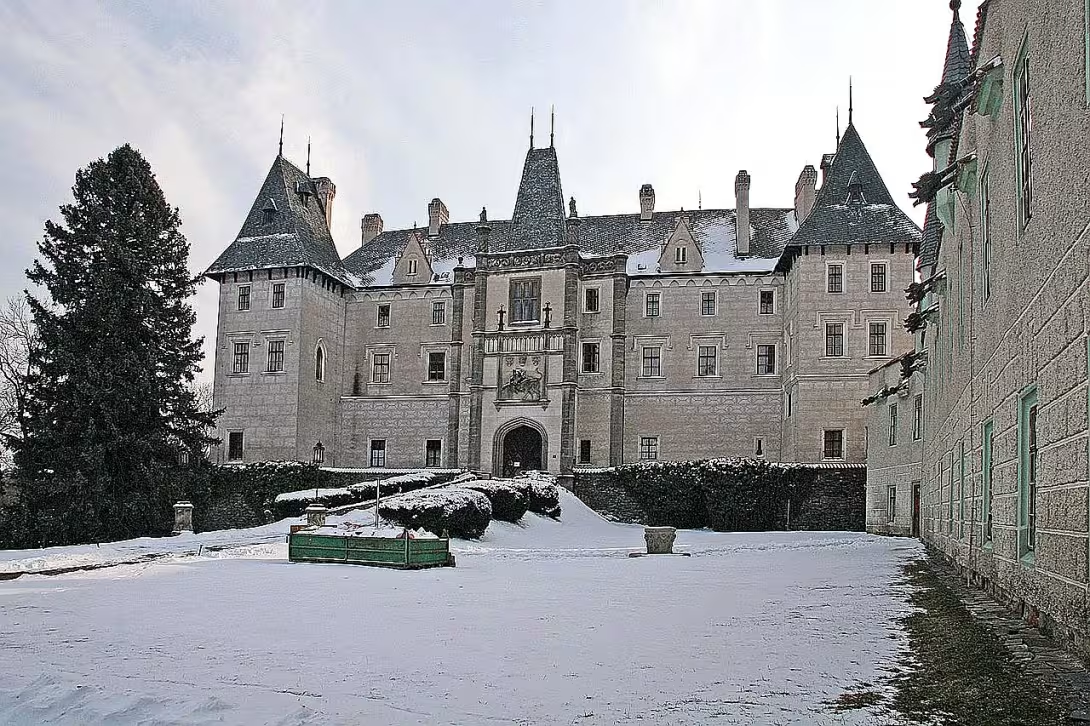
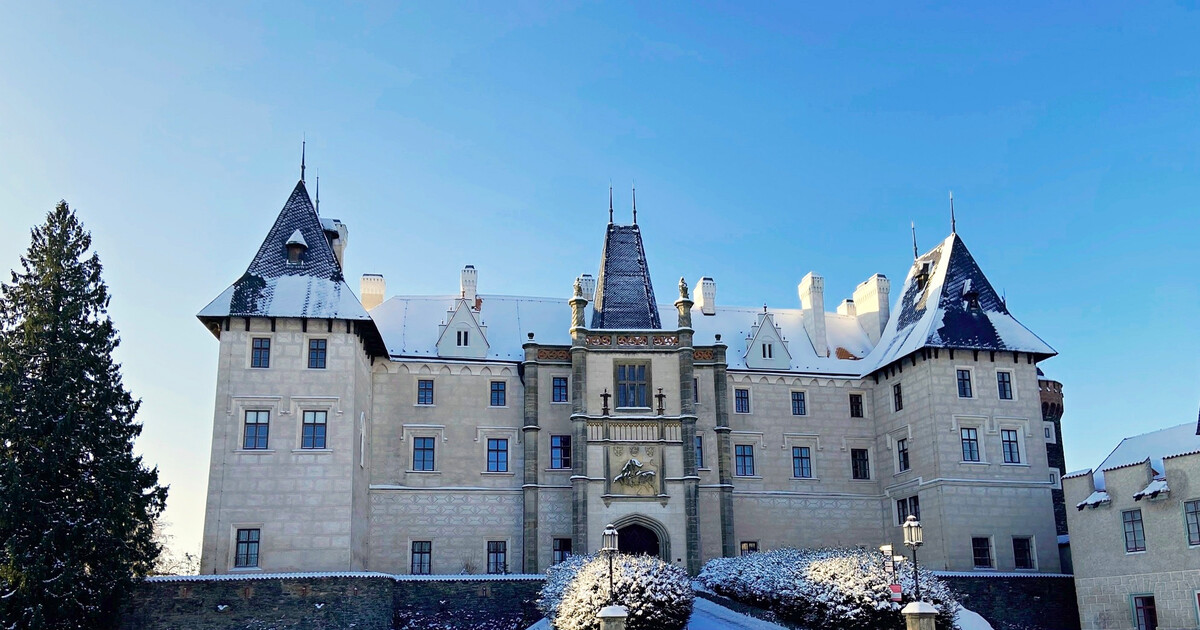
Žleby stands on the island of the middle part of the village of the same name. Since 2002, the castle has held the status of a national cultural monument and managed by the National Heritage Institute. The public is accessible from April to October.
The castle was founded in the 13th century by Lichtenburg. The first written mention is found in 1289, when Jindřich of Lichtenburg owned it, and his descendants gradually received the addition of Žlebský of Lichtenburg. The castle grew gradually from a noble family, which had already been divided into individual branches in the late Middle Ages and gradually lost its property.
The turning point in the history of the castle was 1356, when the Czech king bought it and the Roman Emperor Karel IV. Castle became a royal property and was repeatedly stopped in subsequent centuries as collateral in financial transactions to various noble families. During the Hussite wars Žleby experienced difficult times - the Hussites conquered it twice. First they took it from the royal hands in 1421, then the more radical Hussite forces regained it in 1427 and partially defeated it.
During the second half of the sixteenth century, many noble families took place in the possession of the castle. It was only Elizabeth of Nestajov who acquired Žleby into inheritance and thus ensured its further development. At the end of the sixteenth century, the castle underwent a substantial reconstruction from the late Gothic style to the Renaissance castle. His owners were important aristocratic families such as the Chernines of Chudenice, Trček of Lipa and Kaiserstein. From a certain point he became the property of the House of Auerspergs, which he owned until the end of World War II.
The Auerspergs left their own national in the castle. In the middle of the eighteenth century, they did a baroque reconstruction that significantly changed his appearance. More important for today's form, however, was that in the second half of the nineteenth century they carried out a romantic reconstruction in a neo-gothic style. It is this style that creates the face of the Žlebas as we see it today - it highlights the historical roots of the castle in Gothic and complements it with the romantic sentimentality of the Victorian era.
The preserved form of the castle thus reflects its rich history over over six centuries. Majestically, it rises on the island above Doubrava, and every layer of its construction speaks of the period that shaped it - from goth to renaissance and baroque to romantic conception of the past. The National Monument Institute appreciates its building as well as its историческog meanings, which is why it carefully guards it in a limited season and brings it closer to those interested.
Then and now
Drag the slider to compare how the landmark may have looked when it was built with the view today.
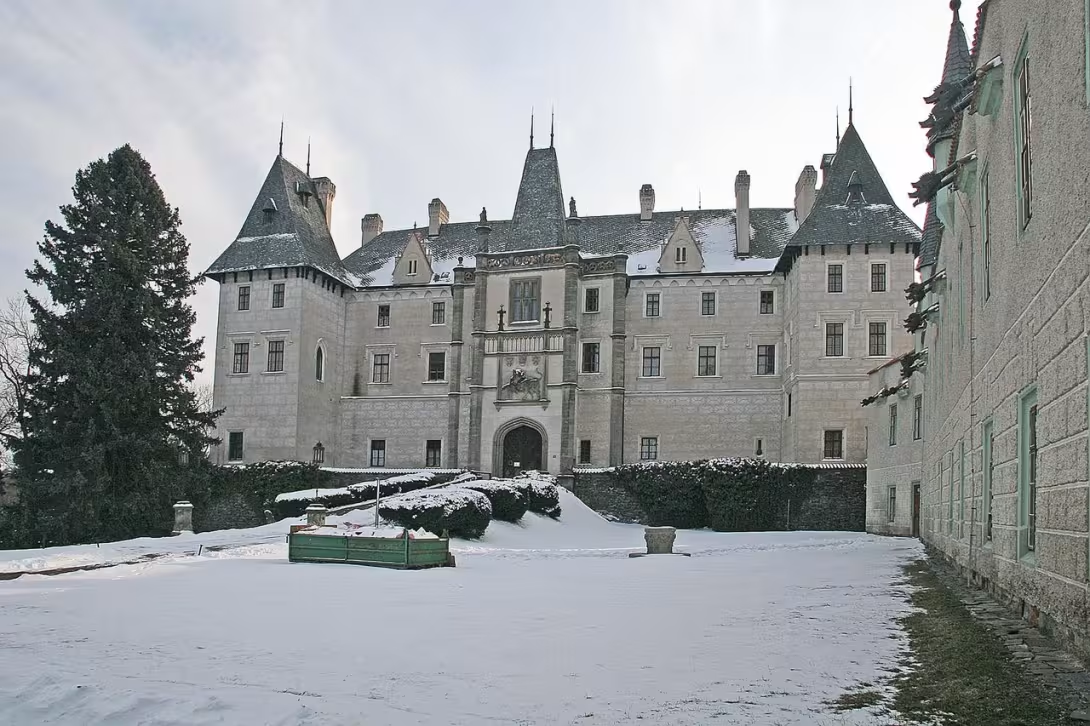
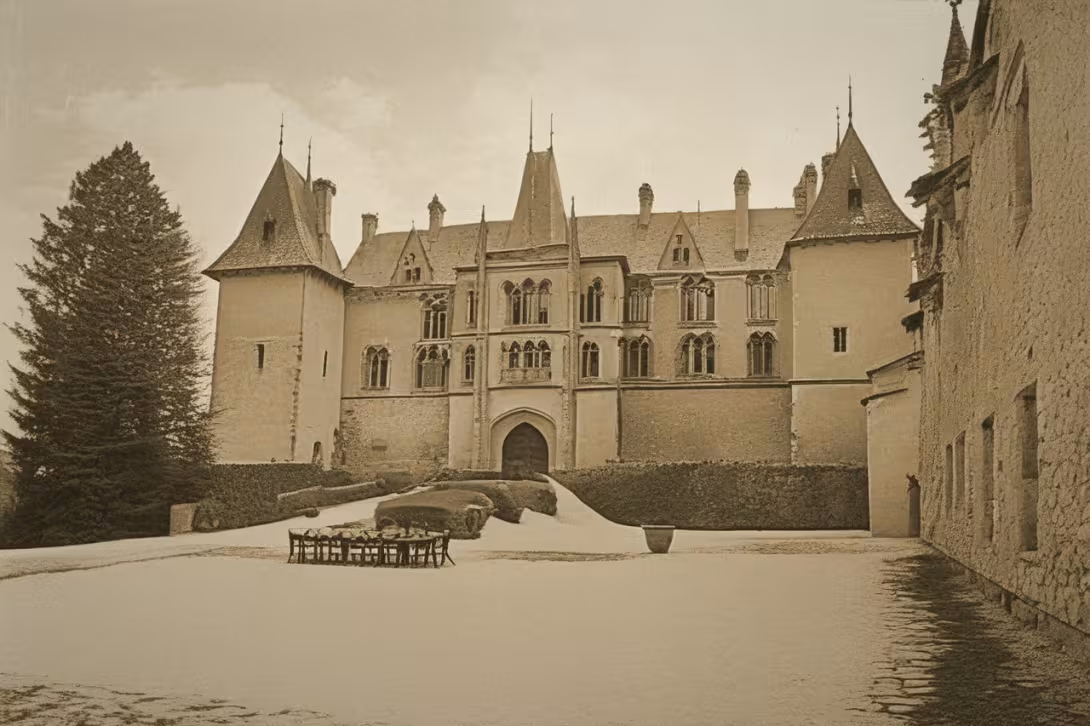
The historical appearance on the left is an AI-generated visualisation and serves as inspiration only.
Historical milestones
- 1289
- First indirect written mention of the castle.
- 1356
- The purchase of the castle by Emperor Charles IV.
- 1427
- Conquering and breaking the castle of the Hussite.
- 1849
- The launch of a romantic neo-gothic reconstruction according to architect František Schmoranz.
Architectural development
The original Gothic castle was converted into a Renaissance castle at the end of the 16th century. After the middle of the 18th century there was a Baroque treatment. The final romantic form in the neo-gothic style was won by the castle in the 19th century as owners of Auerspergs.
Historical events
The first indirect written mention of the castle dates back to 1289. In 1356 the castle was bought by Emperor Karel IV. during Hussite wars the castle was twice conquered and in 1427 it was destroyed.
Owners
Lichtenburg, Karel IV., Chernines of Chudenice, Lípa Trček, Kaiserstein, Auersperg.
Points of interest
- The castle is on an island surrounded by the middle of the Doubrava River. Since 2002, the castle has the status of a national cultural monument. - During the Hussite wars the castle was conquered twice and in 1427 it was partly destroyed. - At the end of the sixteenth century, the castle was converted from late Gothic style into a Renaissance castle. - The current form of the castle was determined by a romantic neo-gothic reconstruction from the second half of the nineteenth century.
Guide
This guide is narrated by a synthetic voice generated by artificial intelligence.
Show guide text
This text was created by artificial intelligence and has not been editorially reviewed. It may contain inaccuracies.
Žleby is a castle in the municipality of the same name, roughly seven kilometers east of Čáslavi. It stands on a promontory surrounded by a meander of the Doubravy River, in the middle of the village. Since 2002 it has been protected as a national cultural monument and is managed by the National Heritage Institute.
The origins date back to the thirteenth century, when the Lichtenburks founded a Gothic castle here. It was built on the orders of Smil of Lichtenburg, or perhaps his son Henry. The first indirect mention comes from 1289, when Henry's son Hynek is referred to as the lord of Žleby. Some of his descendants then began to call themselves the Žlebský of Lichtenburg.
In 1356, Agnes of Landštejn sold Žleby for 3,300 groschen to Emperor Charles the Fourth. She stipulated that she would use the castle and estate until her death. She also undertook not to cut wood beyond her own needs and not to appoint another castellan without the emperor's knowledge.
The castle thus became royal property and the crown pawned it as needed. One of its holders, Markvart of Vartenberg, joined the rebellion against King Wenceslaus the Fourth. The royal army therefore besieged and captured Žleby. Castellans and pledged lords then alternated at the castle. Among them was the royal captain Stephen of Opočna, who was murdered in 1397 at Karlštejn.
During the Hussite Wars the castle fell twice. First it was besieged by the Prague army and the garrison concluded an agreement to surrender on April 25, 1421. Later the castle was held by Hašek of Valdštejn and Dětenic. Although he was a Hussite, he belonged to the moderate noble faction that sought agreement with King Sigismund. More radical Hussites therefore besieged Žleby again in 1427, captured it and destroyed it.
Until the second half of the sixteenth century, the castle changed hands many times. Then Elizabeth of Nestajov acquired it into hereditary ownership. By the end of the sixteenth century, the late Gothic castle was rebuilt as a Renaissance chateau. It belonged successively to the Černín of Chudenice, the Trčka of Lípa, the Kaiserstejn, and finally the Auersperg families. After the middle of the eighteenth century they remodeled it in Baroque style.
The castle's present appearance arose in the second half of the nineteenth century. The Auerspergs then romantically rebuilt it in the Neo-Gothic style. The castle remained their property until the end of the Second World War.
Tips for visitors
The best time to visit is a weekday in the morning when you avoid weekend crowds and tour interiors with rich collections of weapons and furniture will be more common. The castle is surrounded by an extensive park that offers a pleasant shade in the spring and summer months.
You can reach the village Žleby comfortably by car, parking is provided near the premises. If you prefer public transport, the place is available by train and bus; We recommend that you verify the specific connection and follow-up in the current traffic connection search engine.
Take with you comfortable shoes suitable for use in historical areas and in the adjacent castle park. If you are planning photography, the best lighting conditions for capturing the exterior of the castle above the Doubrava River are during the golden watch, shortly after sunrise or before sunset.
The Žleby Castle is an ideal destination for families with children who appreciate not only a tour of the castle halls, but also walks in the surrounding nature near the Doubrava River. Special tours are available for children, which are adapted to their age and interests.
In the immediate vicinity of the castle there is a picturesque village Žleby in the district Kutná Hora. A walk along the Doubrava River offers beautiful views of historical architecture and is an excellent addition to visiting the castle itself.
Frequently asked questions
Can the monument be visited?
Yes. We verified the opening hours or admission on the official website (5. 9. 2026); you will find them in the visitor information on this page. Please double-check with the operator before you travel.
What are the opening hours and admission?
Details verified on the official website (5. 9. 2026) are listed in the visitor information on this page. Official website: https://www.zamek-zleby.cz/
Where is the monument?
Location: Žleby, Středočeský kraj. The map on this page shows the exact spot.
Why is the monument protected?
It is listed in the Central List of Cultural Monuments of the Czech Republic as a national cultural monument (register no. 241).
For kids
The castle Žleby looks like a fairy tale castle - it has turrets, battlements and Gothic arches. But beware: it is not a medieval castle! This is how they rebuilt it in the 19th century, because it was fashionable to make locks look like old castles.
Inside there are beautiful halls with furniture, paintings and tapestries from the time the nobles Auersperg lived here. It's like a museum of noble life - everything in place, as if the lords had only left yesterday.
Businesses nearby
Do you run a restaurant, accommodation, shop, museum, rental, wellness or other visitor service near this monument? Show yourself directly to the people heading to it — this is how they will see you in the app and on the web:
Natáčelo se zde
- Královský slib (2001) film
- Nejkrásnější hádanka (2007) film
Zdroj: Wikidata (vlastnost „místo natáčení“) · Všechna filmová místa
Events nearby
Zdroj akcí: otevřená data měst a obcí ČR (Národní katalog otevřených dat) a kalendář akcí Národního památkového ústavu.
Nearby
The castle is located in the village Žleby in the district of Kutná Hora, near the river Doubrava.
Accommodation nearby
Trips and activities nearby
Guided tours, tickets and activities nearby from GetYourGuide
Affiliate link: if you buy from the partner, we may receive a commission. The price for you does not change.
Search tours and activities →Themed route
1. Castle Žleby (Memorial) - A tour of historical interiors and exhibitions. You'll find interesting information about the history of this mansion. 2. Castle Station (Monument Area) - Architectural space with unique details. It's the perfect place to observe the building up close. 3. Park near the castle (The immediate area) - Walk in the green surroundings of the monument. It offers quiet and beautiful views of the building. 4. Doubrava River (Natural interest) - Malleable flow near the castle. Provides a pleasant environment for ending the trip.
Seasonal recommendations
Spring: In spring, the castle park wakes up, trees grow and air smells of wet soil. Long evenings make it possible to see in a pleasant light when the sun shines through fresh leaves. The atmosphere is calm, the visitors are less than in the summer, but the weather is variable. I recommend you wear a light jacket with a hood and tight shoes because the roads can be muddy. The best time is the morning, when the area is still empty and the light is sharp. Watch the forecast, spring showers come fast.
Summer: In summer, the castle is surrounded by lush greenery, the castle garden blooms and the courtyard has a lively atmosphere. The sun shines into the interiors, but inside it is pleasant cold. The main season means crowds, so come right after opening, or later in the afternoon. Light clothes, headgear and plenty of drinks are necessary, a thin windbreaker is useful in the shady parts of the park. The best time is a weekday early in the morning, when you avoid the greatest strain and make the tour without pressure.
Autumn: In autumn the park will turn into gold and red tones, low sun creates long shadows and fog from the morning gives the place a mysterious mood. The leaves are rustling, and the air is clear. Visitors are running low, so you'll enjoy the tour in peace. I recommend warmer layers, preferably sweater and waterproof jacket, because the weather is erratic. The ideal time is the late afternoon, when the sun shines through the trees and illuminates the castle facade. But check your opening hours, it's getting shorter in the fall.
Winter: In winter, the castle acts romantically, exposed branches of trees reveal architecture, and the possible snow cover amplifies the fairytale atmosphere. Interiors with heated rooms offer shelter from frost, but days are short and opening hours are significantly limited. Dress in warm layers, remember the hat, scarf and gloves, because the tour includes outdoor areas. The best time is the morning when daylight is the strongest. In advent time, there is a magical atmosphere, but count on some parts to be inaccessible.
Visualizations and artistic views


The visualisations are generated by artificial intelligence and serve as inspiration.
Photos from the area
Real photos taken near the monument


Zdroj a licence jsou uvedeny u každého snímku.
Atmosphere of the place
This atmospheric visualisation of the place and period was generated by artificial intelligence. It is not real footage of the location.
Tips from visitors
No tips yet. Be the first!
Log in and add your tip.
Sources and literature
Photos: Prazak / CC BY 2.5 — Wikimedia Commons. The author and licence also appear when you hover over the image.
Faktickým podkladem tohoto textu byl článek na Wikipedii, jehož autory jsou přispěvatelé Wikipedie. Článek je dostupný pod licencí CC BY-SA 4.0.
Location on the map






Příběhy a pověsti
Legendy, pověsti a příběhy spjaté s touto památkou
Fotografie návštěvníků
Zatím žádné fotografie. Buďte první, kdo přidá fotografii z návštěvy!
Log in a přidejte svou fotografii nebo hodnoťte.
Za ověřenou návštěvu v aplikaci získáte víc bodů — poznáme podle GPS, že jste na místě.
Reviews and comments