



Zrcadlárna Rabštejn Abrasive plant
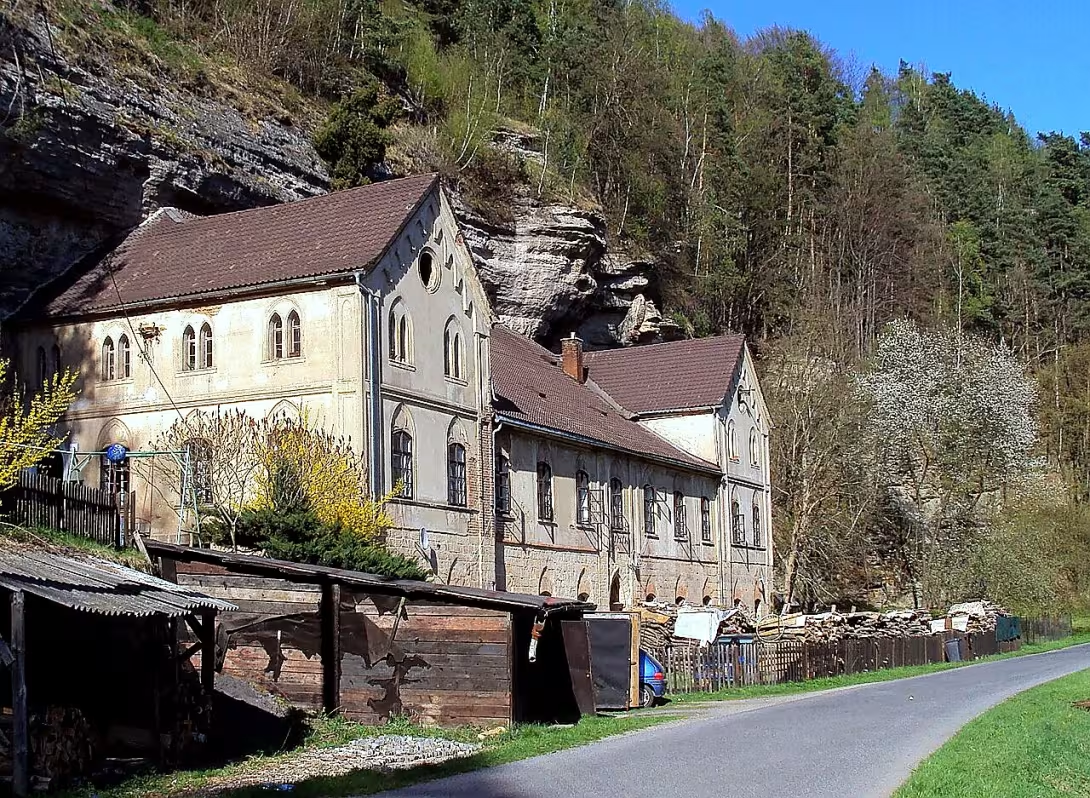
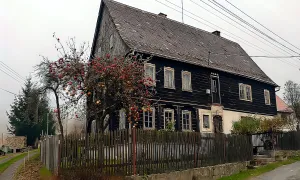
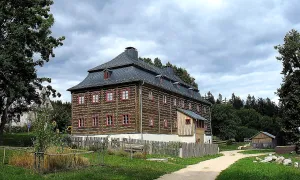
The former mirror factory Rabstejn, also called Rabstejnská, is a 19th-century neo-gothic building built on the bank of the Svitavka River in Lindava, in the district of Česká Lípa in the Liberec Region. This object represents an important example of the 19th century technical and manufacturing architecture. It is appropriately integrated into the surrounding sandstone landscape and registered as a cultural monument on the Central List of Real Cultural Monuments of the Czech Republic.
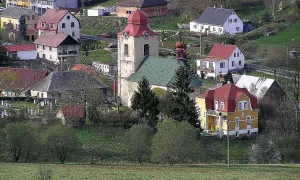
The area is located in a confined area in the Velenice Valley in the Příkovské hill area between the villages of Svitava and Velenice. The surrounding landscape consists of sandstone rock walls and the flow of the river Svitavka, which is the left-hand presence of the Ploučnice spring in the Lusatian mountains. The building itself is practically supported by a steep sandstone rock wall, which was German called Fuchsschwanzfelsen or Fox tail.
In the middle of the nineteenth century, strong processes of industrialization and development of factory production took place in Czech countries. At the same time, Europe was in the post-revolutionary period of 1848, when modern civil society and the development of technical disciplines were consolidated. In this historical context, in 1854, the owner of the Karel Kinský Manor had the Rabštejn Mirror Hall built as another skating hall in order. Rod Kinsky used to run several mirrors here. The oldest of them had the Count Josef Jan Maxmilián Kinský built from 1756 to 1767. The so-called Venetian mirrors, which were exported from the Czech Republic to the world through Venetian traders, were also produced in the ice-skating shops at the Slápský estate.
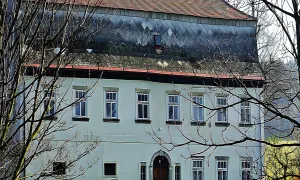
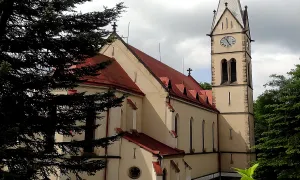
The building is built on a rectangular plan and combines the walls with the spaces carved directly into the adjacent sandstone massif. The central part of the building is single-storey with a counter roof covered with brown bags, while the side shield facade is two storey with saddle roofs. The front wall is seven-axis on the ground floor and on the first floor. The windows are two-piece and two-wing, divided into six fields. Architecturally, the pseudo-gothic windows on the second floor of the side wings, which are finished with broken arches in the upper part, excel.
Part of the complex was a sophisticated system of underground tunnels, canals and drives carved into sandstone. These spaces were brought to the plants by water from Svitavka. In addition, sand from local underground quarry, located around the valley, was used to sharpen mirrors. After the completion of the Rabstejn Mirror, the water drive was modified and extended by about five hundred metres long surface trough, which led to another rock tunnel leading directly to the new facility.
The operation of the two cranberries, Rabstejn and Elder Velenická, continued until the Great Depression in the 1930s when it was completed. During World War II, the buildings were empty and not used for war production, which took place to a limited extent in nearby underground areas carved in sandstone massif. Later, the building was used for living. Since January 2021 the protected building has been owned by the Prague company Spiegelfabrik Rabstein s. r. o., founded in June 2020. On top of the sandstone walls above the mirrors there is a large observation platform with a stone bench, on which a staircase is carved in a narrow gap between the rocks.
This technical monument object resembles the craft and industrial tradition of the region associated with the Kinsky family and unique processing of mirrors in the sandstone landscape. The visit to Velenice Valley offers a view of the history of 19th century industrial architecture and the discovery of preserved remains of water management.
Historical milestones
- 1854
- Construction of the Rabstejn Mirror House by the owner of the Charles Kinský estate.
- 1930
- The cessation of the operation of the ice mill due to the Great Depression.
- 2020
- The establishment of Spiegelfabrik Rabstein s r. o., which became the owner of a protected building.
Architectural development
The construction combines the walls on a rectangular plan and the spaces carved directly into the sandstone rock. The central part of the building is single storey with counter roof, while the side shield facade is two storey with saddle roofs. Architecturally, the pseudo-gothic windows on the second floor of the side wings, which are finished with broken arches in the upper part, excel.
Historical events
In 1854, the owner of the estate Karel Kinský had the Rabstejn Mirror Hall built. In the period of the Great Depression in the 1930s, the operation of the ice mill was terminated. During World War II, the buildings were empty and not used to make war.
Owners
Rod Kinský, later private subjects and since 2020 Prague firm Spiegelfabrik Rabstein s r. o.
Points of interest
- The construction is a neo-Gothic object from the nineteenth century and is located on the bank of the river Svitavka in Lindava. - The building is practically backed by a steep sandstone rock wall, which was formerly called Fox Tail. - The mirror shop was built in 1854 by the owner of the Karel Kinský Manor as another ice-skating plant in order. - The complex included an ingenious system of underground tunnels, canals and drives carved into sandstone, which brought water to the grinders. - Sand from local underground quarries around the valley was used to sharpen mirrors.
Guide
Show guide text
This text was created by artificial intelligence and has not been editorially reviewed. It may contain inaccuracies.
Welcome to the audio guide. You are standing in front of a valuable historical monument, which is the former Rabstejn Mirror Hall, sometimes also called the Rabstejn Mirror Hall. It is an extraordinary building built in a neo-gothic style, which you now have right in front of you on the bank of the river Svitavka in the picturesque village Lindava. If you look around you, you'll be immediately interested in the confined space in which this ancient compound is located. You're standing in the impressive Velenica Valley, and the building is literally leaning on a steep sandstone rock wall. It is a view that carries inside the power of human work and the harsh beauty of the surrounding nature.
Let us now immerse ourselves in the past and look at how and why this fascinating place was created. The year is eighteen hundred fifty-four. The owner of the local estate Karel Kinský then decides to take a big step and has this building built as a new ice-skating plant. The area full of rocks and flowing river provided great conditions for industrial production at the time, and so the construction began to write its history here, which was about to play an important role in the life of the whole region. The House of Kinski, whether it was Karl Kinski or later Josef Jan Maximilian Kinsky, is deeply connected to this region and it was their decision that gave rise to this unique witness of the old days.
Now pay attention to the architecture itself. Look before you at the facade of the building and perceive the atmosphere that this monument radiates. This is an important and very valuable example of 19th-century technical and manufacturing architecture. Notice how the building blends with the surrounding environment. Part of the local production space was not constructed in a classical way from bricks or stone, but was carved directly in the adjacent sandstone massif. At the time, people had to make huge efforts to tame the rock and adapt it to their working needs. It is this connection of human work with natural rock that gives the whole building its unmistakable character.
If we continue to tell our story on the timeline, we're getting to the moments that have changed the fate of this place forever. For decades, there has been lively labor, craftsmen sharpened and formed, but every chapter has its end. The great economic crisis, which has hit society hard, has also hit Lindava here. In the year one thousand nine hundred thirty, the operation of the ice mill was definitively terminated. The machines went silent, the workers left and the building was abandoned at the end of time. For decades, the memory was lost and her story seemed to be over for good.
And yet, the history of this place is not over. We will now move on in time to the recent past, namely the year two thousand twenty. A limited liability company called Spiegelfabrik Rabstein was then established. This company has become the proud owner of this monument-protected building and has taken on the difficult task of giving this decrepit jewel new hope. Thanks to this, the building is protected today and you can stand before the corrected witness of the past.
If you look at that steep sandstone rock wall that the building is leaning on, know that people in the past called it Fox Tail. This interesting local name gives the whole place even greater charm and mystery. Imagine the old times when workers came to work under this rock wall, listening to the roar of the river Svitavka and working in spaces that were partly hidden in the very heart of sandstone rock.
I hope this short walk in history has been interesting for you. Take one more look at the entire building, feel the genius loci of this valley and let the atmosphere of the old times take hold. When you continue to explore the surroundings of Lindava and Velenica Valley, remember the people who once worked here and left behind this unique technical monument. Thank you for your attention, I bid you farewell and wish you a beautiful rest of the day full of other discoveries.
Tips for visitors
The best time to visit the Rabstejn Mirror is in the morning when the sun's rays illuminate the sandstone rock walls and the level of the Svitavka river. It is recommended to set off in dry weather so that the road in the valley is well-run.
Bring with you fixed shoes suitable for unequal natural terrain, drinking, snacks and waterproof clothes.
For photography it offers the best shots around the shores of the river Svitavka and views of the neo-gothic building set in the confined area of sandstone rocks, ideal light is early morning.
In the vicinity of the 30-minute journey you can discover the natural beauty of the Velenice Valley in the Trekovska hill town between Svitava and Velenice, the flow of the river Svitavka, which originates in the Lusatian mountains, and surrounding sandstone rock walls.
Frequently asked questions
Can the monument be visited?
We have not verified whether this monument is accessible. Please ask the owner or operator, or the local municipal office.
Where is the monument?
Location: Lindava, Liberecký kraj. The map on this page shows the exact spot.
Why is the monument protected?
It is listed in the Central List of Cultural Monuments of the Czech Republic as a cultural monument (register no. 1000138969).
Businesses nearby
Do you run a restaurant, accommodation, shop, museum, rental, wellness or other visitor service near this monument? Show yourself directly to the people heading to it — this is how they will see you in the app and on the web:
Events nearby
Zdroj akcí: otevřená data měst a obcí ČR (Národní katalog otevřených dat) a kalendář akcí Národního památkového ústavu.
Nearby
Areál se nachází ve Velenickém údolí v Cvikovské pahorkatině mezi vesnicemi Svitava a Velenice. Okolitou krajinu tvoří pískovcové skalní stěny a tok řeky Svitavky, která je levostranným přítokem Ploučnice pramenícím v Lužických horách.
Accommodation nearby
Trips and activities nearby
Guided tours, tickets and activities nearby from GetYourGuide
Affiliate link: if you buy from the partner, we may receive a commission. The price for you does not change.
Search tours and activities →Themed route
I propose a thematic cruise route around the village Lindava.
1.Zrcadlárna Rabštejn Type: Other monument Why is it worth visiting: The main destination is located in sandstone rock walls, where you discover mysterious underground spatial works in nature. It offers an extraordinary experience linking human creativity to the surrounding environment.
2. Velenice Valley Type: Natural area Why is it worth a visit: The valley consists of impressive sandstone rock walls and passes through the river Svitavka. The place offers a beautiful natural scenery of the Exercise hill.
3. Svitava village Type: Location Why is it worth a visit: This village lies in the immediate vicinity of the main destination and forms a natural point in the landscape that flows through the river Svitavka spring in the Lusatian mountains.
4. Villages Velenice Type: Location Why is it worth a visit: The neighbouring village located in the Velenica Valley region is drawn by a strenuous region where sandstone rock walls meet the water flow of the left-hand tributary.
Seasonal recommendations
Spring awakens the surrounding nature in the village Lindava into fresh green and attracts to walks along the river Ploučnice. After a long winter, the light penetrates the newly storming trees and creates interesting light beams on historical walls. The atmosphere here is very calm and meditative, because the tourist season is only beginning. For the Spring trip, take firm waterproof shoes, because forest roads can still be wet after melting snow. You will meet only a few visitors here, so you will enjoy the tour in complete silence. The best time to arrive is in the morning, when the morning herpes gives the whole place an unrepeatable spell.
Summer brings lush vegetation and shady corners around the building provide pleasant cooling in front of hot sunlight. The sun stands high in the sky and its sharp rays penetrate inside through the window pane, creating significant contrasts of light and shadow. The atmosphere is more lively thanks to the vacationers discovering the beauty of the Lusatian Mountains. In the main summer season, it is worth going on a journey first thing in the morning to avoid the midday heat and afternoon crowds of tourists. Put on light breathtaking clothes and don't forget the headgear and the supply of drinking water to nature.
Autumn turns the landscape into a colorful mosaic of shades of yellow, red and brown. The low sun spells long shadows and the whole area acts very melancholy and romantically, which is especially appreciated by lovers of autumn photography. During this period it is often cloudy and the wound is hazy, which increases the mysterious nature of the old building. The practical advice is to put on a warmer sweater and windbreaker, because dry weather can be unpleasant. On weekends, a little more people are coming here admiring the falling leaves, which is why it is best for a quiet visit to choose a weekday around noon.
Winter offers a completely different experience where the landscape is often covered with snow and surrounding forests rest in deep silence. The light reflected from the snow cover illuminates otherwise dark corners and creates a clean, fairy tale scenery. The atmosphere is completely calm, disturbed only by the crunch of snow under your feet. For the winter visit you absolutely need very warm winter clothes, hat, gloves and fixed shoes with anti-slip soles. The day is very short, so plan your arrival for the early afternoon so you can go through the whole area in broad daylight.
Visualizations and artistic views


The visualisations are generated by artificial intelligence and serve as inspiration.
Photos from the area
Real photos taken near the monument


Zdroj a licence jsou uvedeny u každého snímku.
Tips from visitors
No tips yet. Be the first!
Log in and add your tip.
Sources and literature
Photos: Zákupák / Public domain — Wikimedia Commons. The author and licence also appear when you hover over the image.
Faktickým podkladem tohoto textu byl článek na Wikipedii, jehož autory jsou přispěvatelé Wikipedie. Článek je dostupný pod licencí CC BY-SA 4.0.
Location on the map
Příběhy a pověsti
Legendy, pověsti a příběhy spjaté s touto památkou
Fotografie návštěvníků
Zatím žádné fotografie. Buďte první, kdo přidá fotografii z návštěvy!
Log in a přidejte svou fotografii nebo hodnoťte.
Za ověřenou návštěvu v aplikaci získáte víc bodů — poznáme podle GPS, že jste na místě.
Reviews and comments