






zřícenina kostela sv. Markéty Ruin
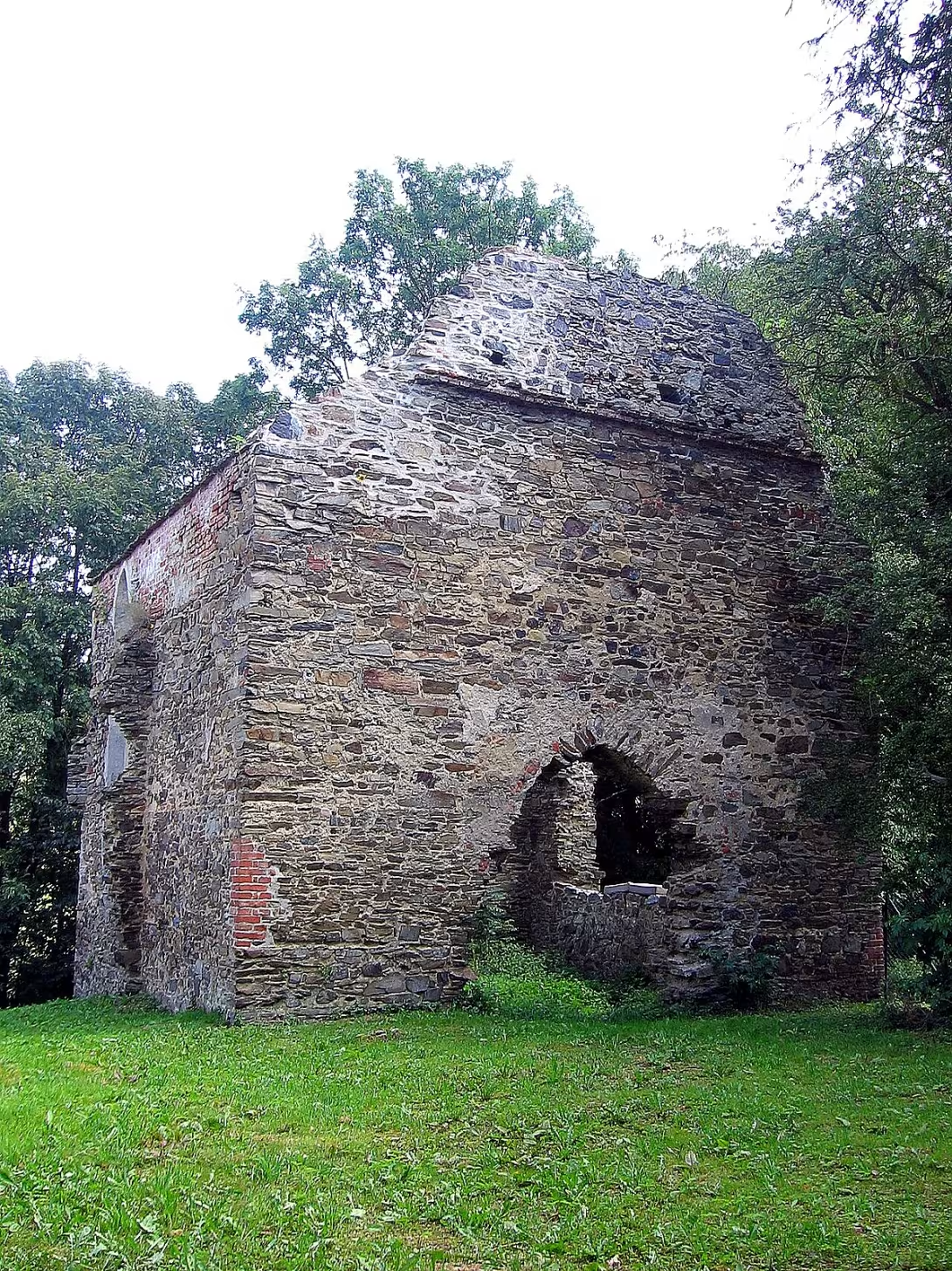
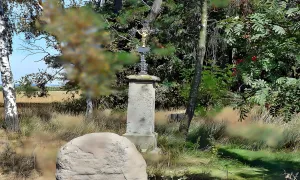
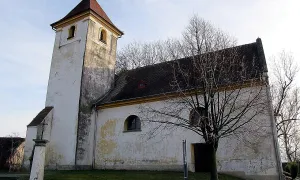
The Church of St. Margaret's ruins, located in Poleň within Klatovy District of Plzeňský Region, exemplify Gothic architectural skill from the early 14th century. Initially a chapel for the local cemetery, it is notable for its rare vaulted nave supported by a central pillar—a feature uncommon in rural churches of that era. Today, only fragments of its perimeter walls and buttresses remain.
First documented in 1357 as a chapel, the Church of St. Margaret was significant within the community. Situated near the village center in a protected zone, it is close to the parish church of All Saints. During the 14th century, Bohemia was part of the Holy Roman Empire and experienced notable Gothic architectural development, influenced by the Catholic Church's growing role.
Architecturally, the church featured a single-nave structure oriented towards liturgical practices with a distinctive five-sided presbytery. The nave was vaulted on a central pillar, highlighting its unique design for rural churches at that time. The presbytery was separated from the nave by a stepped triumphal arch and covered with one field of cross-ribbed vaulting supported by fleur-de-lis consoles, emphasizing its Gothic style.
Throughout history, Poleň experienced various changes in ownership and administration. In the 15th century, Břeněk z Ronšperka was noted as a lord of the area. By the 16th and 17th centuries, families like the Nebílovských z Drahobuze, Chlumčanských z Přestavlk, and others from Klenové held sway over Poleň. In 1711, Poleň was incorporated into the Chudenického panství.
A key event in the church's history occurred in 1786 when Joseph II decreed its closure as part of broader ecclesiastical reforms. The church was sold to Poleň's parish priest for 24 zlatých and 42 krejcarů, leading to its gradual decline. This sale marked a turning point after which the structure began to deteriorate.
Today, visitors can explore the remnants of this historical site, appreciating its architectural significance despite its dilapidated state. The ruins offer insight into the Gothic style's adaptation in rural settings and reflect the broader historical context of 14th-century Bohemia. While only fragments remain, these vestiges provide a tangible connection to the past, making it a worthwhile destination for those interested in history and architecture.
The Church of St. Margaret stands as a poignant reminder of the region's rich cultural heritage. Its ruins invite visitors to reflect on the passage of time and the enduring legacy of Gothic architecture in rural Bohemia. Exploring this site offers not only historical insight but also an opportunity to appreciate the craftsmanship and dedication that shaped its construction centuries ago.
Then and now
Drag the slider to compare how the landmark may have looked when it was built with the view today.
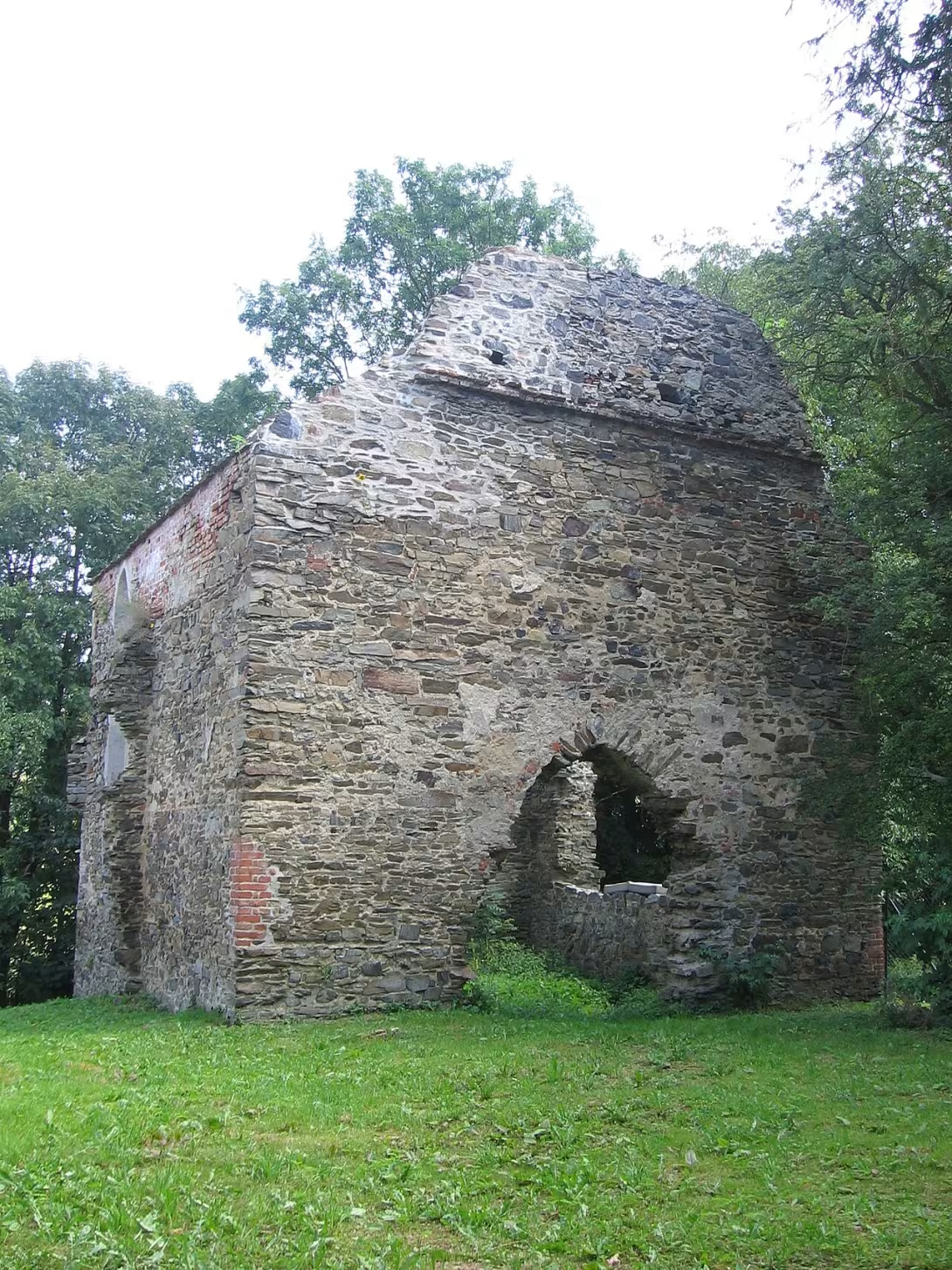

The historical appearance on the left is an AI-generated visualisation and serves as inspiration only.
Historical milestones
- c. 1300
- Founding of the Church of St. Margaret in early Gothic style.
- 1357
- First documentation as a chapel.
- 15th century
- Břeněk z Ronšperka was the lord of the area.
- 1711
- Poleň incorporated into the Chudenické estate.
- 1786
- The church closed based on a decree by Joseph II.
Architectural development
The church originally featured a single-nave, oriented structure with a five-sided presbytery. The nave was vaulted on a central pillar, an uncommon feature for rural churches in the 14th century. The presbytery was separated from the nave by a stepped triumphal arch and covered with one field of cross-ribbed vaulting supported by fleur-de-lis consoles.
Historical events
1357: First documented mention as a chapel.
1786: Church was closed and sold to Poleň's parish priest by decree of Joseph II.
Points of interest
- The Church of St. Margaret's unique design featured a vaulted nave supported by a central pillar, a rarity for rural churches in the 14th century, highlighting an advanced understanding of Gothic architecture even in less prominent areas.
- Despite its initial importance as a chapel within the local community, the church was sold off for just 24 zlatých and 42 krejcarů in 1786 due to Joseph II's ecclesiastical reforms, illustrating how political changes could drastically affect religious sites.
- The church’s five-sided presbytery with cross-ribbed vaulting supported by fleur-de-lis consoles is a distinctive feature that showcases the intricate Gothic design elements adapted for rural settings, reflecting broader architectural trends in Bohemia during that era.
- Throughout its history, Poleň and the Church of St. Margaret were under various noble families' control, such as the Nebílovských z Drahobuze and Chlumčanských z Přestavlk, indicating a complex feudal system with shifting allegiances impacting local landmarks.
- The church's proximity to the parish church of All Saints situates it within a network of religious sites that were central to community life in 14th-century Bohemia, emphasizing its role beyond just a burial chapel.
Guide
This guide is narrated by a synthetic voice generated by artificial intelligence.
Show guide text
This text was created by artificial intelligence and has not been editorially reviewed. It may contain inaccuracies.
Welcome! You are standing before the ruins of St. Margaret's Church, an important historical monument in the village of Poleň, in the Plzeň Region. The church, built in early Gothic style, was constructed in the first half of the 14th century.
Let us move forward in time and see who was behind the creation of this church and why. The first written mention of St. Margaret's Church dates back to 1357. At that time, the church was used as a chapel for the local cemetery.
Now pay attention to the architecture of the church. A distinctive feature of St. Margaret's Church is its unique design in artistic solutions. It is a church with a barrel-vaulted nave supported by a central pillar. This solution is a rarity for churches in agricultural areas of the 14th century, indicating advanced knowledge of Gothic architecture even in less significant regions.
In the 15th century, Břeněk z Ronšperka was the lord of the area. In 1711, Poleň became part of the Chudenice estate. St. Margaret's Church was closed in 1786 based on a decree by Joseph II.
Notice that St. Margaret's Church has a unique architectural structure that is exceptional even for its time. Although you are now standing before ruins, you can still learn more about the history and atmosphere of this place.
Tips for visitors
The best time to visit the ruins of St. Margaret's Church is during late spring or early autumn, when the weather is pleasant for exploring outdoor sites. These seasons offer mild temperatures and beautiful natural surroundings, enhancing your experience as you walk through the historic landscape near Poleň village center.
When planning your visit, consider bringing comfortable walking shoes, as you'll likely be exploring on uneven terrain around the ruins. A hat and sunscreen are recommended for protection against the sun, especially during peak daylight hours. Additionally, carrying water is essential to stay hydrated throughout your exploration of the site.
Photography enthusiasts will find several spots around the ruins ideal for capturing stunning images, particularly during the golden hour when the light is soft and warm. The contrast between the ancient stones and the surrounding rural landscape can create dramatic effects. Be mindful of lighting conditions, as overcast days may provide diffused light that highlights textures.
For those interested in exploring nearby attractions within a 30-minute drive, consider visiting the parish church of All Saints located close to Poleň. This site offers additional historical and architectural insights into the region's heritage. Families with children might enjoy the scenic rural landscapes around these sites, providing opportunities for leisurely walks or picnics.
Frequently asked questions
Can the monument be visited?
This is a ruin. Such sites are often freely accessible, but some can only be visited with a guide or are closed for safety reasons. We have not verified the current situation – take care and respect any restrictions.
Where is the monument?
Location: Poleň, Plzeňský kraj. The map on this page shows the exact spot.
Why is the monument protected?
It is listed in the Central List of Cultural Monuments of the Czech Republic as a cultural monument. It is protected as part of a larger listed ensemble.
Businesses nearby
Do you run a restaurant, accommodation, shop, museum, rental, wellness or other visitor service near this monument? Show yourself directly to the people heading to it — this is how they will see you in the app and on the web:
Events nearby
Zdroj akcí: otevřená data měst a obcí ČR (Národní katalog otevřených dat) a kalendář akcí Národního památkového ústavu.
Nearby
The ruins are situated near the village center within a protected zone, close to the parish church of All Saints. The surrounding landscape includes typical rural features of the region.
Accommodation nearby
Themed route
Tematická výletní trasa: Poleň a okolí
1. Zřícenina kostela sv. Markéty (hlavní cíl) Zřícenina kostela sv. Markéty je pozoruhodnou památkou středověké architektury. Nachází se v centru obce Poleň a nabízí jedinečnou příležitost prohlédnout si pozůstatky historického kostela. Její zřícenina je výsledkem poškození, které způsobil požár v 17. století.
2. Fara Fara, nacházející se nedaleko zříceniny kostela, představuje další zajímavou památku v této oblasti. Její historie je úzce spjata s kostelem a nabízí další pohled na historii obce Poleň.
3. Kostel Všech svatých Kostel Všech svatých, nacházející se v centru obce, je dominantou místní krajiny. Jeho historie sahá do středověku a představuje cennou památku sakrální architektury.
Seasonal recommendations
Jaro
Spring is the ideal time to visit the ruins of St. Margaret's Church when nature around the church evokes a sense of life and fullness. Blooming flowers and green foliage create a beautiful contrast with the historic site. The atmosphere is relaxed and calm, perfect for strolling and observing nature.
We recommend visiting the church during the spring season in the morning or late afternoon when there are fewer people.
Léto
During the main summer season, the ruins of St. Margaret's Church are a very popular destination. Tourists and families with children come to explore the historic site and enjoy the sunny weather.
We recommend arriving at the site earlier than larger groups so you can see the church and its surroundings without unnecessary crowds.
Podzim
In autumn, the ruins of St. Margaret's Church are surrounded by beautiful colorful nature as tree leaves turn into stunning colors. The atmosphere is calm and serene, ideal for strolling and observing nature.
We recommend visiting the church during the autumn season in the morning or late afternoon when there are fewer people.
Zima
In winter, the ruins of St. Margaret's Church are closed due to inclement weather, but if you enjoy snowy views and a tranquil atmosphere, it is an ideal opportunity to visit the church.
Visualizations and artistic views


The visualisations are generated by artificial intelligence and serve as inspiration.
Photos from the area
Real photos taken near the monument

Zdroj a licence jsou uvedeny u každého snímku.
Tips from visitors
No tips yet. Be the first!
Log in and add your tip.
Sources and literature
Photos: Jik jik / CC BY-SA 3.0 — Wikimedia Commons. The author and licence also appear when you hover over the image.
Faktickým podkladem tohoto textu byl článek na Wikipedii, jehož autory jsou přispěvatelé Wikipedie. Článek je dostupný pod licencí CC BY-SA 4.0.
Location on the map

Příběhy a pověsti
Legendy, pověsti a příběhy spjaté s touto památkou
Fotografie návštěvníků
Zatím žádné fotografie. Buďte první, kdo přidá fotografii z návštěvy!
Log in a přidejte svou fotografii nebo hodnoťte.
Za ověřenou návštěvu v aplikaci získáte víc bodů — poznáme podle GPS, že jste na místě.
Reviews and comments