



Zvonice (Hojkov) Belfry
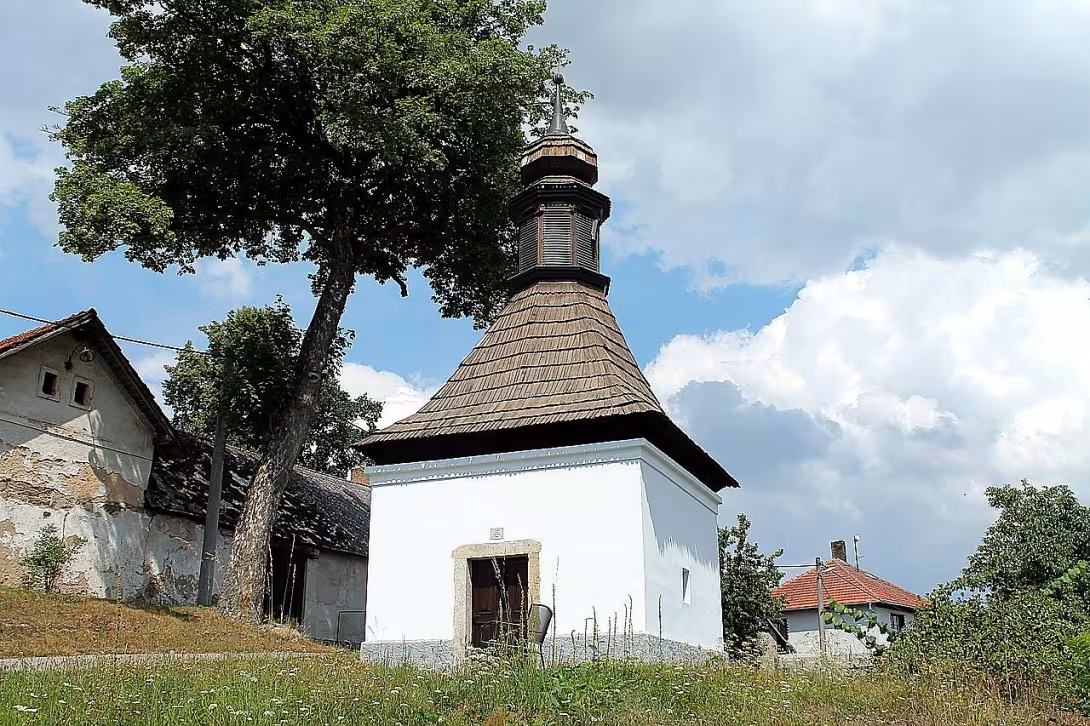
The bell tower in Hojkov, a small village in Jihlava district, is one of the valuable examples of folk architecture Highlands. Built in the early nineteenth century as a typical baroque-inspired bell tower, it was used to call for mass or to warn against danger. Today, it is protected as a cultural monument and retains its original appearance with a needle roof ending with lantern and onion.
The construction was created at a time when rural communities maintained the tradition of small sacral architecture, although the Baroque style had already receded. The exact date of construction is unknown, but according to stylistic elements it dates back to the first half of the century. The bell tower was created on the initiative of local residents who needed a place to hang the bell to communicate with the surrounding villages and to announce important events such as the abolition of the robot in 1848.
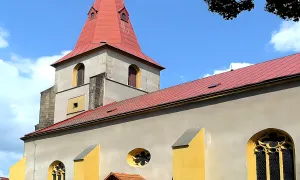
The bell tower is built of mixed masonry, typical of regional materials. The plastered facade and a square plan with dimensions of approximately five to five metres are characteristic of the folk architecture of the time. The Jehlan roof passes in an octave lantern with a small onion with a tip and a cross. The entrance is decorated with granite portals with wooden doors. The interior has a flat plaster ceiling with a hole for the rope that used to control the bell.
The original bell, weighing about 40 kilograms, served until 1942 when it was recited for war purposes. After the war it was replaced by a smaller bell weighing 14 kilograms, suspended in December 1944. He served until 2019 when he proved irreparable. The village has announced a collection for a new bell and electric bell that will replace the original mechanical solution.
The bell tower is an example of small folk architecture that captures the regional style of the Highlands. Its importance lies in the aesthetic value and historical memory of rural life. Today it is open to the public and represents an interesting stop for visitors of interest in regional history and architecture.
Historical milestones
- 2000
- Declaration of bell tower for cultural monument of the Czech Republic
Architectural development
The bell tower is built of mixed masonry and plastered. It has a square ground plan (about 5 × 5 m) with a needle roof, which passes in an octave lantern with an onion with a tip and a cross. The entrance is decorated with granite portal with wooden door. The inner space has a flat ceiling with a hole for the rope to the bell.
Historical events
The bell tower was built in the first half of the 19th century as part of the popular architecture of the Vysočina region.
In 1942, the original bell was recited for war purposes.
In 1944 a replacement bell of 14 kg was hung.
In 2000 the bell tower was declared a cultural monument of the Czech Republic.
Points of interest
- The bell tower in Hojkov is a typical example of baroque folk architecture from the early nineteenth century.
- It was used to call mass or to warn of danger and was an important place to communicate between villages.
- The original bell weighing about 40 kilograms was recited in 1942 for war purposes.
- In 1944, a new, smaller bell, weighing 14 kilograms, was hung until 2019.
- Today the bell tower is open to the public and serves as an interesting stop for visitors interested in regional history.
Guide
Show guide text
This text was created by artificial intelligence and has not been editorially reviewed. It may contain inaccuracies.
Welcome to Hoykov!
You are standing in front of one of the most picturesque folk buildings in Vysočina - a small but exceptional bell tower from the early nineteenth century. The simple, walled-up structure with the white plaster can remind you of something like a small tower house, but its importance to the local village was incomparable. Before you is a monument that carried the voice of the village on its shoulders - either called to mass or warned of danger. And now, if you look at it, you'll probably notice how its square shape gradually narrows up to the end of the needle roof. It is decorated with a lantern and a small onion, which gives the whole building something like the charm of old Highlands.
Let's take a closer look at how this building came into being. Zvonice in Hojkov is a typical example of baroque folk architecture, which appeared in this part of Bohemia at the turn of the eighteenth and nineteenth centuries. We don't know the names of those who built it, but they were certainly local craftsmen who could work with stones and wood. The building served as a local bell tower where a bell of about 40 kilograms was hung. This was an important element - rang on festive occasions, but also warned against fires or other dangers. People from the surrounding villages could react quickly and help each other.
Now pay attention to some details that can show you how this building was designed. Look at its square facade - simple but carefully worked. The inside of the bell tower was simple, with a flat ceiling, which had a hole for the rope that was controlled by the bell. It means that when someone pulled the rope, the bell rang and its sound spread all around. Note also how the roof narrows upwards - this is typical of the belfry, which was to serve as a dominant point in the landscape.
Key stories associated with this bell tower are more general than personal. It was an important communication point for the village, which preferred no other way to quickly communicate important messages. It rang at every major event - birth, wedding, but also at the funeral. And when the bell was the victim of a prop in 1942, the people of Hojkov had to find a way to preserve at least part of their tradition. After the war, the bell was replaced by a smaller bell, but that doesn't mean its meaning has fallen. The bell tower continued to serve as a symbol of the local identity and importance of the community.
The interesting thing is that this bell tower is a typical example of how the baroque influences translated into folk architecture. Although she had no complex decorations or sculptures, her shape and proportions refer to Baroque aesthetics. The fact that it was declared a cultural monument in 2000 proves that its value is not only historical but also aesthetic. It's like a little piece of college history that's been preserved until today.
If you want to get to know this place in more detail, you can see the surrounding village and imagine the sounds that spread from this bell tower a hundred years ago. The bell tower in Hojkov is like a small but important story about living in the countryside, where every sound had its meaning. And now that you're saying good-bye to her, don't forget how lucky it is that such monuments have been preserved and can remind us of the past. Thank you for looking at it, and we wish you a pleasant journey.
Tips for visitors
The best time to visit the bell tower in Hojkov is early morning or late afternoon, ideally in the summer months. At that time the light is pleasant, the sun illuminates the building from different angles and you avoid heat. The bell tower is typical of rural architecture, so in quiet hours you can enjoy its charm without crowds. If you want to capture her headgear and lantern in the best light, come here in the morning when the sun rises from the east and illuminates it from the profile. '} The place is rural, so dress according to the weather - cover your head with a umbrella in summer, wear a sweater in colder days. Children can bring something to color or paint because the bell tower offers an opportunity to observe details and talk about history.
The bell tower is ideal for photography because its square ground plan and the headroof with lantern create interesting lines. The best places for pictures are from around the village, where you can see the whole building in the context of the surrounding landscape. The sun from the east or the west creates beautiful shadows and illuminates the facade. If you want to capture the detail of lantern or onion, approach from the front of the bell tower where it is best seen.
In the vicinity of the bell tower there is a village of Hojkov with a typical rural atmosphere. Within five kilometres from here lies another village and picturesque landscape of Highlands, which is famous for its forests and fields. If you have time, go for a short walk along the surrounding roads and admire nature. Bell tower is a great starting point for exploring picturesque villages and natural beauties of the region.
For families with children, the visit to the bell tower is interesting thanks to the opportunity to explore the historical structure and talk about its history. Children can talk about a bell that in the past called people for prayer or work. You can also play a game to observe details, for example what are the differences between the plaster and the brick part of the construction. There is enough space in the surroundings to run and discover nature, so the trip will be pleasant for all.
Frequently asked questions
Can the monument be visited?
This is a structure in a public space that can usually be seen from outside free of charge. We have not verified that this particular one is freely accessible.
Why is the monument protected?
It is listed in the Central List of Cultural Monuments of the Czech Republic as a cultural monument (register no. 1000163772).
Businesses nearby
Do you run a restaurant, accommodation, shop, museum, rental, wellness or other visitor service near this monument? Show yourself directly to the people heading to it — this is how they will see you in the app and on the web:
Nearby
V okolí zvonice se nachází obec Hojkov s typickou venkovskou atmosférou. Do 5 km jsou další vesnice a malebná krajina Vysočiny, která je známá svými lesy a polími.
Accommodation nearby
Trips and activities nearby
Guided tours, tickets and activities nearby from GetYourGuide
Affiliate link: if you buy from the partner, we may receive a commission. The price for you does not change.
Search tours and activities →Themed route
Thematic cruise route with a visit to the bell tower in Hojkov
1. Bells in Hojkov - historical monument The main destination of the route is the old bell tower, which stands in the centre of the village. It is a typical example of rural sacral architecture with rich history. The tower is well preserved and offers a view of the surrounding landscape.
2. Walk through Hojkov village core After visiting the bell tower, walk the picturesque streets of the village. Stop at the old houses with typical high roofs and observe rural life. The village is quiet and ideal for relaxation.
3. Area of fields and forests (walking trip) From Hojkov, take a short walk to the surrounding area where the fields and forest trees are decomposed. Vysočina offers pleasant trails that are suitable for family trips or rest in nature.
4. Visit of neighbouring villages (approximately 3-5 km) If you have time, go to nearby villages, which are just like Hojkov, characterized by their rural nature. Here you can visit other historic houses or stop at the local homestead.
The route is simple, peaceful and suitable for those who want to enjoy nature and historical monuments without much excitement.
Seasonal recommendations
Spring In spring months, the bell tower in Hojkov will turn into a place where nature awakens to life. The surrounding area is still green, but the young leaves in the trees and the first flowers in the meadows provide a soft, fresh atmosphere. The sun appears more often, but in the morning and in the evening it may be cold, so it is advisable to wear light but warm clothes. The best time to visit is early morning or after lunch when the surroundings are quieter and light creates pleasant shadows. Watch out for rain showers that can be typical of spring months.
Summer In the summer months, the bell tower stands in full sun, surrounded by lush vegetation. Warm days and long bright evenings create a pleasant, warm atmosphere. The surrounding area is green and full of life, but in the main summer season the place can be visited by more people. I recommend you take light, airy clothes and sun protection such as hats or sunglasses. The best time to visit is early morning or late afternoon, when there are fewer crowds and the light is softer.
Autumn Autumn visit to the bell tower offers a unique atmosphere where leaves on trees turn into yellow, orange and red shades. The light is warmer, but it spreads longer, creating long shadows and soft lighting. The surrounding area is quieter but colder, therefore it is advisable to wear warmer clothes. The best time to visit is in the morning when the air is cleaner and light creates beautiful contrasts. Watch out for the wind that can be typical of autumn days.
Winter In winter, the bell tower will turn into a place surrounded by a quiet, white world. The light is softer and longer, but temperatures may be low, so it is advisable to take warm clothes and protection from the wind. The surrounding area is quiet and quiet, which creates a pleasant, peaceful atmosphere. The best time to visit is in the afternoon when the light is brightest and most pleasant. Watch out for ice and snow that can be on the road and the pavement.
Visualizations and artistic views

The visualisations are generated by artificial intelligence and serve as inspiration.
Photos from the area
Real photos taken near the monument


Zdroj a licence jsou uvedeny u každého snímku.
Tips from visitors
No tips yet. Be the first!
Log in and add your tip.
Sources and literature
Photos: Harold / CC BY-SA 3.0 — Wikimedia Commons. The author and licence also appear when you hover over the image.
Faktickým podkladem tohoto textu byl článek na Wikipedii, jehož autory jsou přispěvatelé Wikipedie. Článek je dostupný pod licencí CC BY-SA 4.0.
Location on the map

Příběhy a pověsti
Legendy, pověsti a příběhy spjaté s touto památkou
Fotografie návštěvníků
Zatím žádné fotografie. Buďte první, kdo přidá fotografii z návštěvy!
Log in a přidejte svou fotografii nebo hodnoťte.
Za ověřenou návštěvu v aplikaci získáte víc bodů — poznáme podle GPS, že jste na místě.
Reviews and comments