



Zvonice (Vepřek) Belfry
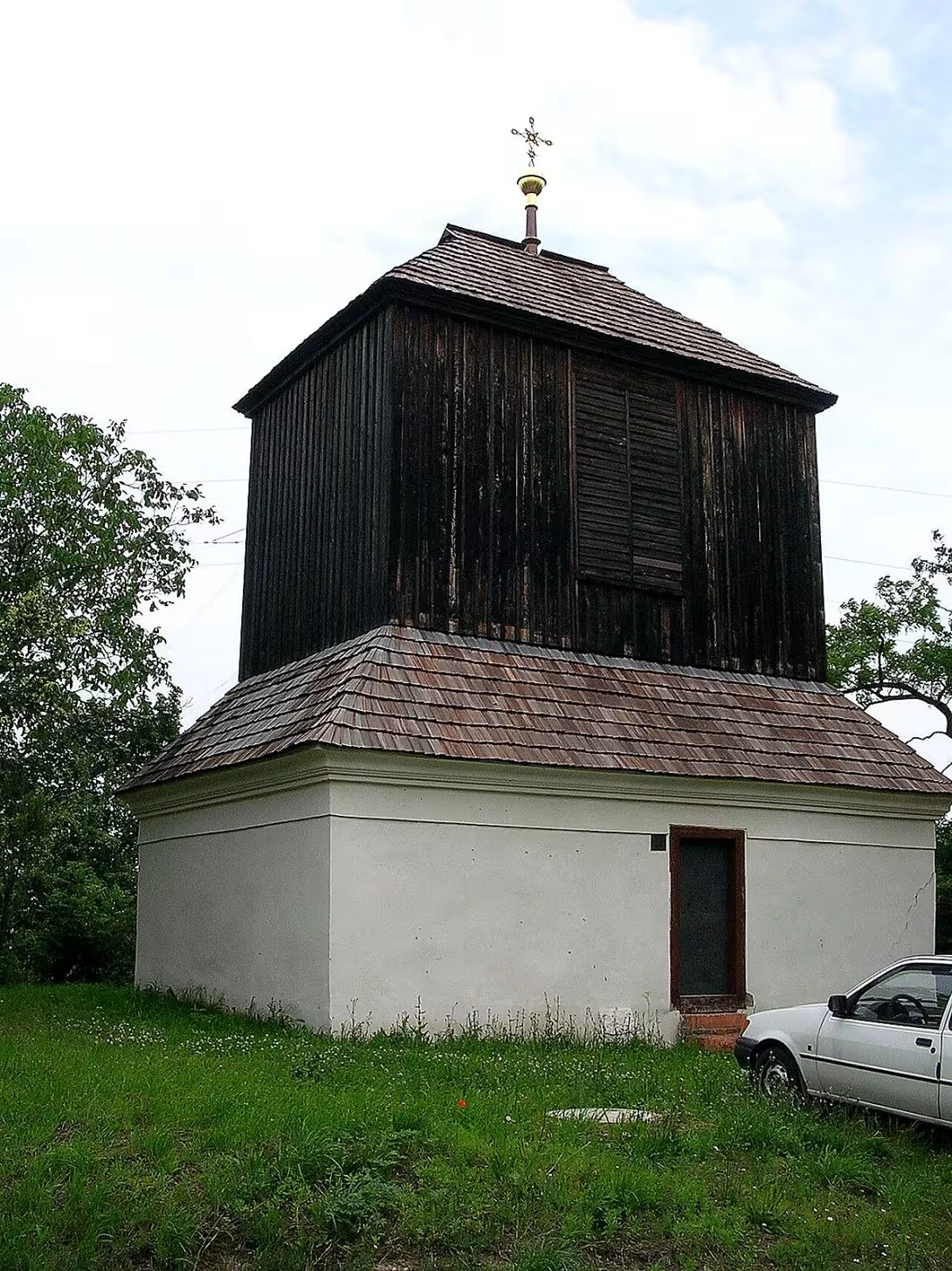
Vvolnice Veprak, a half-decked Baroque object, stands on the cadastral territory of Veprak in the village Nová Ves in the district of Měník and is declared a cultural monument by the Ministry of Culture of the Czech Republic. Located east of the Church of the Birth of the Virgin Mary, it attracts attention with its historical value and architectural performance. Its original construction dates back to 1456, making it an important element of local cultural heritage.
The history of the bell tower is closely linked to the late Middle Ages, when the Czech countries were in the phase of transformation of feudal structures and blooming of late Gothic architecture. The original building in 1456 was probably inspired by the need to provide the church with suitable equipment for bells that could be used to signal spiritual and worldly events. In 2002 the bell tower was reconstructed by Lanostav, which ensured its preservation for future generations.
Architectural is characterized by a combination of walled and wooden design. The ground floor of bricks with a white plaster and a profiled ledge has a degree shape on the rectangular plan. The lower formatted floor carries bell windows covered by wooden shutters, which gives the construction a unique look. Between the walled and wooden floors there is a sloping roof covered with shingles, while the valb roof ends the whole structure with shingles cover and a forged gilded cross on top.
The bell tower is important not only by its architecture, but also by its bells. Three bells were hung in the lift structure, two of which dates back to the 15th and 16th centuries. One of the bells is decorated with the relief of St. Peter, which gives another historical value to the building.
Today the bell tower stands as a testament to the past and attracts visitors not only by its architectural design, but also by its importance to local history. Maintaining it allows generations to understand and appreciate the rich cultural tradition of the Melnik region.
Veprak Bell is therefore not only a monument that resembles the past, but also a place where the history and culture of the region can be felt. Its visit offers a unique view of the history of the Czech countries and their architectural traditions, which makes it a necessary destination for anyone interested in the cultural heritage of the Czech Republic.
Historical milestones
- 1456
- Original construction of the bell tower Veprak.
- around the 15th to 16th century
- The production of two of the three bells which were later placed in the bell tower.
- 2002
- Reconstruction of the bell tower by Lanostav.
Architectural development
The building has a brick ground floor with a white plaster and a profiled ledge, on which stands a narrower formwork floor with vertically laid plates. Between floors there is a sloping roof covered with shingles. The whole building ends with a valb shingle roof with a forged gilded cross on top.
Historical events
1456: original construction of the bell tower; 2002: reconstruction by Lanostav.
Points of interest
- Vvolnice Veprak is a half-decked Baroque object on the cadastral territory of Veprak in the municipality of Nová Ves in the district of Mělík. - It is declared by the Ministry of Culture of the Czech Republic as a cultural monument and is located east of the Church of the Birth of the Virgin Mary. - The original building dates back to 1456, which makes it an important element of local cultural heritage. - The bell tower is characterized by a combination of walled and wooden design with a tiered shape on a rectangular plan, between the floors is a sloping roof covered by shingles. - Three bells were hung in the lift structure, two of which came from the 15th and 16th centuries, one of which is decorated with the relief of St. Peter.
Guide
Show guide text
This text was created by artificial intelligence and has not been editorially reviewed. It may contain inaccuracies.
Welcome to the village of Nová Ves, specifically in the cadastral territory of Veprak. Stop for a moment, take a breath and look ahead. Right now, you're facing a construction that carries centuries of history and silent testimony about the lives of people who lived here long before us. In front of you is a baroque bell tower that immediately attracts attention with its unique form. It is a place where the craftsof wood and the fortress of stone meet, and where time seems to slow its relentless run for a while. Feel the atmosphere of this place and try to imagine what this tower looked like when there was a completely different landscape and a different rhythm of everyday life around it.
Let us now look together at where this building comes from and what its historical context is. This bell tower is not only an ordinary architectural building, but is declared a cultural monument of the Czech Republic, which shows its high value for our national heritage. Its beginnings are truly fascinating. The original construction of this bell tower dates back to a thousand four hundred fifty-six. Imagine all that's happened since then. This tower has been standing here since the end of the Middle Ages, surviving endless waves of change, political upheaval and natural disasters. He is a silent witness to the centuries that today follows our noble appearance. Even if we don't know the names of the particular architects who designed this building, or the personalities that would be closely associated with it, the actual matter of the building and its durability speak to us.
Now pay attention to the architecture itself, which you see right in front of you. Notice this is a half-decked Baroque building. This means that its construction combines two basic materials. Take a look at the combination of walled design and wooden elements. This technique was very popular in the past because it combined the stability of the stone with the flexibility and availability of wood. If you look at the overall form, you'll see that the construction is on a rectangular plan. However, its most distinctive feature is the degree of shape. Note how the building is narrowing upwards, which gives it stability and specific aesthetics. It is this tiered character that is typical of certain types of bells, which should have been strong enough to carry the weight of heavy bells while resisting strong wind in open terrain.
If you look around, notice the position of this tower. The bell tower stands east of the Church of the Birth of the Virgin Mary. This spatial bond is not random. The bell tower was often built as a separate object so that the sound of the bells could spread more freely through the landscape and be separated from the main liturgical building, which had practical and symbolic reasons. The bells were much more in ancient times than by announcing services. They were the village's main information channels. The bells warned about the fire, announced the arrival of an important guest, celebrated the birth of a child or accompanied the departure of a member of the community from this world.
And it's the bells that bring us to one of the most interesting parts of the history of this place. As part of the chronology of this building, we know that around the fifteenth to sixteenth centuries, two of the three bells were made, which were later placed in this bell tower. Imagine the sound that carried through the valley centuries ago and called people to pray or to work in the fields. These metal tools are essentially the only concrete trace of the craftsmen who were operating at the time. Although we may not hear their thunder at all times today, we know that these bells are part of the identity of this place.
When we look at the current state of the bell tower, we have to mention more recent history. In order to survive this monument for future generations, it was necessary to take care of it. In the year two thousand and two, an important reconstruction was carried out by Lanostav. Thanks to this repair, the original shape and stability of the construction was preserved, so we can admire it today in this condition. It is proof that history care is a constant process and that even a building from the mid-fifth century requires modern care to continue to tell its story.
You may now wonder why this bell tower is so important here in the area of Veprak in the village of Nová Ves in the district of Měník. The answer lies in her authenticity. In today's world, where everything is quickly replaced by new materials, the baroque tower is an island of peace and authenticity. It's a place where we can physically feel a connection to our ancestors. The mystery of this building lies in its silence. We don't know the names of the builders, we don't know the details of every conversation that happened on her walls, but it's this emptiness that allows us to write down our own ideas of the past.
Take one last look at the total tower silhouette against the sky. Feel the contrast between the walled base and the wooden elements. This harmony of materials is a symbol of endurance. Veprak Bell reminds us that the real value is not in ostensiveness, but in durability, and that we can preserve the material for centuries.
Now that you've become acquainted with this historic monument, I suggest you take a look around. Feel the surrounding landscape and try to feel the connection between this tower and the nearby Church of the Birth of the Virgin Mary. You may want to take a few photographs or just quietly think about how many generations of people have stood in the exact same place where you stand.
Thank you for spending some time with us at this beautiful half-decked bell tower. We hope that you are interested in her story and that you are leaving with a deeper sense of the history of this region. We now invite you to further explore the surroundings and discover other hidden treasures of this area. We wish you a pleasant continued journey and many new experiences. Goodbye.
Tips for visitors
The best time to visit the bell tower in Pork is early morning or evening when the sun illuminates the building with a special light. This time is ideal for photography because shadow effects add depth and contrast to images.
For those travelling by public transport, it is advisable to check the connection before departure in order to arrive comfortably in the area.
When visiting the bell tower, take with you a camera or a mobile phone for shooting. In addition, it is good to have a protective coat with you because the weather in this area can suddenly be variable.
The bell tower stands near the Church of the Birth of the Virgin Mary. After visiting the bell tower, it is recommended to visit this church, which is also a historical monument and offers beautiful interiors.
It is advisable for families with children to prepare some toys or books because the bell tower is viewed from outside. You can also visit the surrounding area of Nová Ves and explore its picturesque landscape.
Frequently asked questions
Can the monument be visited?
This is a structure in a public space that can usually be seen from outside free of charge. We have not verified that this particular one is freely accessible.
Why is the monument protected?
It is listed in the Central List of Cultural Monuments of the Czech Republic as a cultural monument (register no. 1000163730).
Businesses nearby
Do you run a restaurant, accommodation, shop, museum, rental, wellness or other visitor service near this monument? Show yourself directly to the people heading to it — this is how they will see you in the app and on the web:
Events nearby
Zdroj akcí: otevřená data měst a obcí ČR (Národní katalog otevřených dat) a kalendář akcí Národního památkového ústavu.
Nearby
Kostel Narození Panny Marie.
Accommodation nearby
Trips and activities nearby
Guided tours, tickets and activities nearby from GetYourGuide
Affiliate link: if you buy from the partner, we may receive a commission. The price for you does not change.
Search tours and activities →Themed route
Thematic cruise route: Zvonice (Vepřek) and surroundings
1.Zvonice (Vepřek)
Type: Historical tower
Why is it worth a visit: This bell tower is the highest building in the city, offers a view of the whole area and has a rich history. It is an ideal place for those interested in architecture and history.
2. Church of the Birth of the Virgin Mary
Type: Church
Why is it worth visiting: This church is not only a spiritual centre, but also an archaeological monument with a rich history. Its interior and architecture are attractive to lovers of art and history.
3. Church tank
Type: Open space
Why is it worth a visit: The tank is a place where you can disconnect and enjoy a quiet moment. It is also a suitable point for understanding the overall structure of the church and its historical context.
4. Church Garden
Type: Garden
Why it is worth a visit: The church garden offers opportunities for relaxation and viewing of flowers and old trees. It's a place where you can enjoy the peace and beauty of nature.
5. Church Tower
Type: Tower
Why is it worth a visit: In addition to the main bell tower, the church is also home to a smaller tower that can be visited. It offers views and historical context similar to the main bell tower, but with a different angle.
This route offers a comprehensive examination of one of the most important cultural sites in the area.
Seasonal recommendations
Spring: In the spring season Veprak bell tower is lit by sunlight, which creates living and warm light. Flowers begin to bloom around the monument, turning the surrounding area into a coloured carpet. The atmosphere is full of recovery and hope. It is advisable to wear a light suit with a helmet or scarf for a visit because the temperature can change quickly. The best time for a tour is in the early afternoon when the sun illuminates the structure of the bell tower and surrounding nature in the most beautiful light.
Summer: Summer brings long days with intense sunlight, which highlights architectural details of the bell tower. The surrounding area is full of flowering trees and bushes, creating a living background for photographs. The atmosphere is warm and alive, but it can sometimes be dry. It is recommended to wear a cap, sunglasses and plenty of drinking water. The best time to visit is in the morning or late afternoon to avoid the hottest hours.
Autumn: In autumn the bell tower gains new beauty thanks to the colour spectrum of leaves which turns yellow, orange and red. The sunlight is warmer and more fragile, creating a romantic atmosphere. Nature around is quiet and less demanding for tourists. It is recommended to wear warm clothes with helmet or cap as temperatures fall. The best time for a tour is at noon, when the light is the most beautiful and the sunlight lights the bell tower.
Winter: Winter brings cold temperatures and often snow cover around the bell tower, creating a handsome and quiet landscape. The sunlight is less intense, but still illuminates the structure of the bell tower. The atmosphere is calm and easily adaptable for relaxation. It is recommended to wear warm clothes with leather shoes to ensure heat even under cold conditions. The best time to visit is at the beginning of the afternoon when the sun's rays illuminate the snow landscape and the bell tower may appear in the most attractive light.
Visualizations and artistic views

The visualisations are generated by artificial intelligence and serve as inspiration.
Photos from the area
Real photos taken near the monument


Zdroj a licence jsou uvedeny u každého snímku.
Tips from visitors
No tips yet. Be the first!
Log in and add your tip.
Sources and literature
Photos: cs:ŠJů / CC BY-SA 3.0 — Wikimedia Commons. The author and licence also appear when you hover over the image.
Faktickým podkladem tohoto textu byl článek na Wikipedii, jehož autory jsou přispěvatelé Wikipedie. Článek je dostupný pod licencí CC BY-SA 4.0.
Location on the map






Příběhy a pověsti
Legendy, pověsti a příběhy spjaté s touto památkou
Fotografie návštěvníků
Zatím žádné fotografie. Buďte první, kdo přidá fotografii z návštěvy!
Log in a přidejte svou fotografii nebo hodnoťte.
Za ověřenou návštěvu v aplikaci získáte víc bodů — poznáme podle GPS, že jste na místě.
Reviews and comments