






Zvonička (Litice nad Orlicí) Belfry
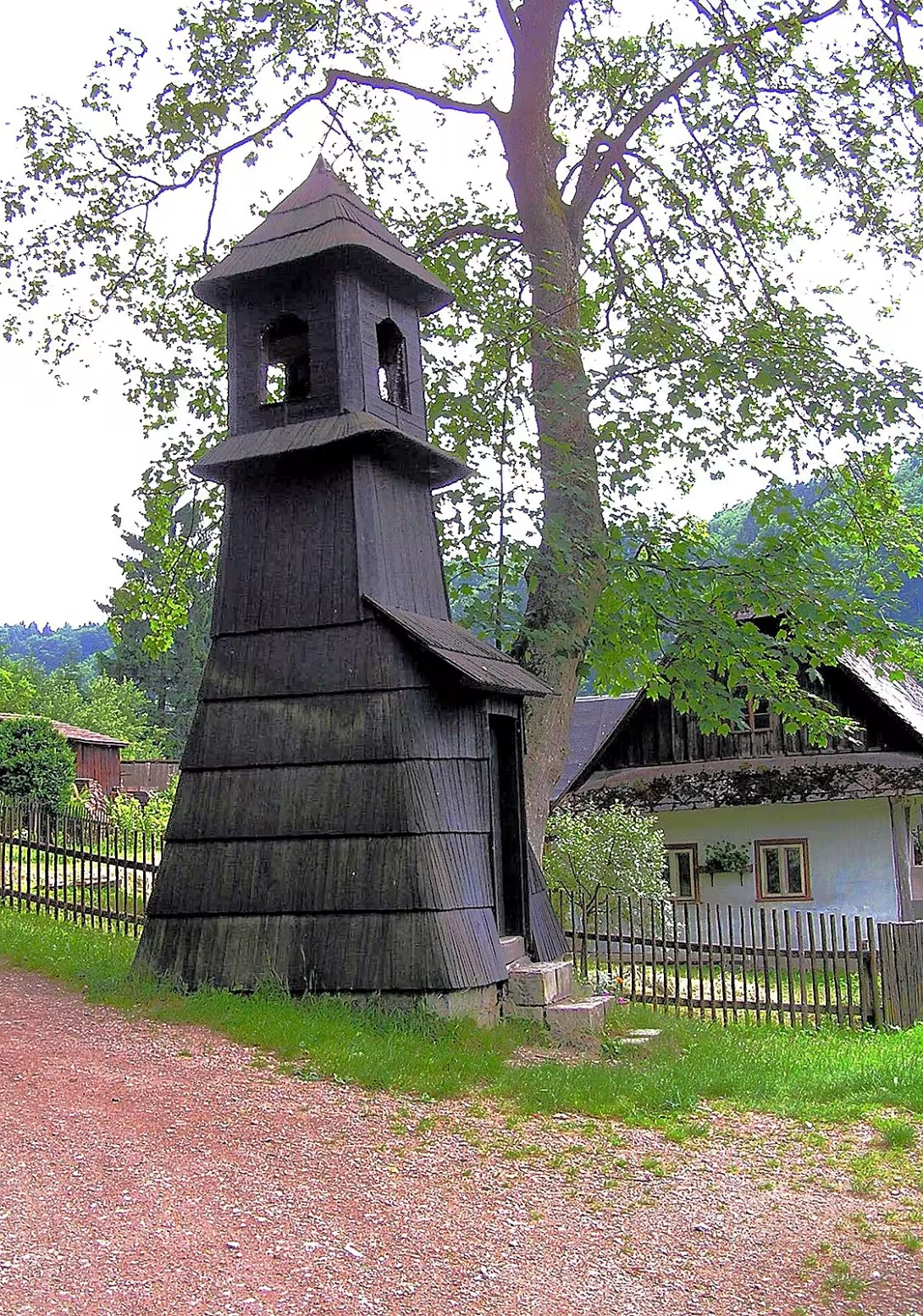
The bell tower in Litice nad Orlicí is a small wooden stenary tower from approximately the third period of the 18th century. It stands in the castle floor of Litice and represents a rare representative of rural architecture with a formatted coat. Since 2017 it has been registered in the catalogue of the National Heritage Institute.
The construction was probably created as a reaction to the fire patent of Marie Theresa from 1751, which was designed to improve fire protection in settlements. This purpose also corresponds to its location on the top of the village building centre. Together with the bells in Zahlaí and Bohous, it is one of three preserved representatives of this type of construction, which were built in the parish of the German Fish, now Rybná nad Zdobnice.
It is a tower with a stenary structure and a plank formwork coat. The current form includes a stone suspect, shingles cover and wooden formwork of the building body and lanterns. These elements were restored in extensive reconstruction in 1949 with emphasis on maintaining the original character.
The exact date of establishment is not confirmed in the historical documents. The oldest known picture of the tower dates back to 1883 from the book Augusta Sedláček "Castles, Fortress and Castles of Czech II." In 1917, a bell was removed from the building by the Austrian authorities for war purposes. After building the village cemetery in Litice in 1948, there was a need for a new bell for deaths and funerals.
In spring 1949, the largest repairs took place, after which the tower was handed over to the public on 1 May of the same year by the chairman of the Local Information Commission. The new bell was made by the company White Hradec Kralove. It weighs 36 kilograms, carries 1948 years and is decorated with a flower border and a straight frame.
The monument is located in a place where the road to the castle of Litice begins to rise, near cottage number two. To date, there is a traditional kneeling ring every evening.
This small construction is a valuable testimony to the period of fire protection and popular architecture of the region. Her visit offers insight into the history of rural life in the castle of Litice.
Historical milestones
- 1883
- The oldest famous picture of the bell tower in August Sedláček's book.
- 1917
- Withdrawal of the bell by the Austrian authorities for war purposes.
- 1949
- Completion of the extensive reconstruction and transmission of the bell tower to the public on 1 May.
- 2017
- Writing into the catalogue of the National Heritage Institute.
Architectural development
The construction is stenary with plank formwork. During the reconstruction in 1949, shingles cover, body formwork and lanterns were replaced and a stone suspect was made.
Historical events
In 1917, the bell was taken by the Austrian authorities for war purposes. In spring 1949, the largest repairs and installation of the new bell took place.
Points of interest
- The bell in Litice nad Orlicí is a small wooden stenýří tower from approximately a third of the 18th century. - It stands in the castle floor of Litice and represents a rare representative of rural architecture with a formatted coat. - It was probably created as a reaction to the fire patent of Marie Theresa from 1751, which was designed to improve fire protection in settlements. - Since 1949 extensive repairs have been made with emphasis on maintaining the original character and the new bell was made by the company White Hradec Králové. - The bell is located near cottage number two, where the road to castle Litice begins.
Guide
Show guide text
This text was created by artificial intelligence and has not been editorially reviewed. It may contain inaccuracies.
Welcome to the Litics of the Eagle. Stop for a moment right here in this quiet place where the road to the castle begins. In front of you now stands an inconspicuous but very rare building that carries stories of centuries. Look at this tiny wooden tower. It's a so-called stinger bell, which means that its structure rests on vertical columns. Although it may seem modest at first glance, it is essentially a small piece of history that survived the time when the world around it was changing dramatically.
When you look at it now, you realize that this building comes from about the third third period of the eighteenth century. So imagine the time when the landscape was completely different, the roads were just dusty trails and the life in the castle floor of Litice was closely linked to the rhythm of nature and parochial life in nearby German Rybny. This bell was not created here for beauty or landscape decoration. Its origin was very practical and rather urgent. At that time, the greatest enemy of villages and cities was fire. Wooden houses, straw roofs and an open fireplace meant that one small fire could destroy the entire village within hours. That is why this bell tower was built as a period fire-fighting measure. The bell placed in it served as a warning system. When someone saw the smoke or the flames, they rang and the whole area within the parish knew they had to run out of water and help the neighbors.
Now pay attention to her appearance and architecture. Notice her coat, which is boarded. This means that the structural elements are covered with wooden boards which form a protective cover around the inner structure. This element is very rare in our region. Only three representatives of this type of architecture with a shaded coat have been preserved throughout the area today, and this lithic bell tower is one of them. It is a fascinating example of rural construction, where functionality is combined with simple aesthetics. See how the wood grew older and how the building adapted to the background. He's a silent witness for centuries who reminds us of how the safety of the people was previously addressed.
When we think about the history of this tower, we have to stop at several key moments that accompanied it. The first one returns us to the year one thousand eight hundred eighty-three. It was this year that the bell tower appeared in the book of Augustus Sedláček, which was an important historian and explorer. The fact that she was depicted in his work today allows us to confirm her form and existence at that time. It's fascinating how one illustration in the book can help today's monuments understand how the building looked over a century ago.
However, the history of this bell tower is not just about peace and tradition. One thousand nine hundred seventeen, the time of the First World War. At that time something sad happened that happened in many villages throughout the Austrian-Hungarian Empire. The Austrian authorities decided that blacksmiths were needed at the front at the time of the war, rather than in small villages. Therefore the bell was removed from the bell so that it could be melted and used for war purposes. Imagine the void that was created in this tower at that time. The bell that was supposed to warn against danger and unite people lost its voice because of a distant conflict.
This condition lasted several decades, until the year came a thousand nine hundred forty-nine. After World War II, there was an extensive reconstruction to restore its formal fame and stability to the bell tower. The work was difficult, but the result was a renewal of the construction which was then ceremoniously handed over to the public on the first May of that year. It was a period of hope and recovery when people tried to repair what war and time destroyed.
Now I want to impress you with one interesting thing, which connects this little wooden tower with the tallest willows of that power. It is very likely that the formation of this bell tower was not random, but it was a reaction to a particular law. In a thousand and seven hundred and fifty-one, Empress Marie Theresa issued a so-called fire patent. It was a strict set of rules to improve fire protection in the empire. The Empress wanted every community to have an early warning system. And it was this royal decree that probably led the builders to build this stoner tower here in Littice. It is fascinating to think that one signed charter in the Prague or Vienna Palace has led to this particular wooden building being created here in the substation, which is still here today.
The proof of its value is that in the year two thousand seventeen the bell tower was entered in the catalogue of the National Heritage Institute. This step has been recognised as an important cultural monument to be protected for future generations. It's not just a piece of old wood, but documentation of human efforts, fear of fire and desire for safety.
Now, if you look at this little tower for the last time, feel its atmosphere. He stands here as the guardian of the road, which will now lead you above. It's a symbol of modesty and perseverance. While the castle upstairs represented power, wealth and strategy, this bell tower represented ordinary people, their daily worries and mutual assistance in need.
Now invited to the next part of your journey. Leave this silent memory behind and head up to the castle of Litice. Watch the surrounding landscape and think about how many similar little stories there are in forgotten corners in this country. I hope this brief pit stop has helped you feel the spirit of this place more. I wish you a pleasant walk and discover other secrets of the lithic suborb and castle. Goodbye.
Tips for visitors
The best time to visit Tinker Bell in Litice nad Orlicí is autumn or spring when the weather is quiet and pleasant. This period also offers a beautiful green landscape around the castle, which highlights the historical level of the monument.
Parking can be found near the castle Litice. For those travelling by public transport, it may be appropriate to verify the current connections using the route search engine. Local routes can offer comfortable ways to get to the monument.
When visiting the Bell Bell, it is good to bring a sun protection suit and in case of colder weather also warm clothes. In addition, you could consider buying beer or other food in nearby pubs offering classic Moravian gastronomy.
Photography Bell is best in light of morning or late afternoon. The best views of the bell can be captured from the side where the path to the castle begins. Also photograph the views of the surrounding landscape and castle Litice.
It is possible to visit the castle of Litice in the vicinity of Zvonka, which offers interesting history and beautiful still life. For families with children it may be advisable to explore the surrounding forests or look at toys and other attractions in nearby shops.
Businesses nearby
Do you run a restaurant, accommodation, shop, museum, rental, wellness or other visitor service near this monument? Show yourself directly to the people heading to it — this is how they will see you in the app and on the web:
Events nearby

Zdroj akcí: otevřená data měst a obcí ČR (Národní katalog otevřených dat) a kalendář akcí Národního památkového ústavu.
Nearby
Hrad Litice.
Accommodation nearby
Themed route
Tour route from Litice nad Orlicí
1.Zvonička (Litice nad Orlicí) - Type: Historical tower - Why is it worth visiting: The bell is one of the most famous monuments of the village of Litic nad Orlicí. Its history dates back to the 13th century, making it a fascinating place for history lovers. From the height of the bell tower visitors have a beautiful view of the surrounding landscape.
2. Castle Litice - Type: Historical castle - Why is it worth visiting: The castle is located near Zvonka and is an important historical monument of the village. Its ruins tell stories of past times and offer visitors the opportunity to explore ancient walls and enjoy a panoramic view of surrounding landscapes.
3. Tanks Bells - Type: Historical area - Why is it worth a visit: Tanks around the Bell Bell is an ideal place to relax and relax. You can enjoy a quiet moment while looking at the surrounding architecture and preparing for the next part of the trip.
4. Park around the Bell Bell - Type: City park - Why it is worth a visit: The park is a beautiful place to walk and relax. Its green areas provide an ideal environment for family walks or quiet moments with a book on hand.
5. St. Wenceslas Church - Type: Religious monument - Why is it worth visiting: The church is another important historical and cultural place in Litice nad Orlicí. Its architecture and interior are attractive for lovers of the old churches, while its location near Zvonka makes the journey between both places comfortable.
This route offers a combination of historical discovery and natural beauty, making it ideal for a day trip.
Seasonal recommendations
Spring: In the spring season, Bell Bell in Litice nad Orlicí is transformed into an airtight retreat, where the bright sun and warm winds prepare the ground for new vegetation. The bell lights up with fine shades of trees and bushes that are beginning to bloom, giving the place a special impression of life. In this season it is advisable to visit the monument at noon when the sun lights its roofs and slopes most beautifully. It is recommended that clothing with the possibility to postpone the top component due to changing temperatures. Despite the fact that it is not yet in full force of the tourist hunt, it is good to come early in the morning or later in the evening to enjoy the peace and sight of the rebuilding landscape.
Summer: In the summer months, the Bell Bell in Litice takes over the Eagle of its greatest life, where there is a dazzling sun and shining sky. This time of year brings long days of light and heat, creating ideal conditions for the knowledge of historical sites. The atmosphere is charged with energy due to the presence of tourists wandering around the sights and surrounding landscapes. It is recommended to visit in the early afternoon to avoid the deepest temperatures and crowds. Don't forget the protective sunglasses and a short glove to help you walk through historic places.
Autumn: Autumn season in Litice nad Orlicí offers a wonderful view of the colours of gold and red, when tree leaves turn into coloured tapestries. The climate is mild with warm day and cold evenings, which creates pleasant conditions for walking around the monument. This time of year is ideal for taking comfort and relaxation as the number of visitors is reduced. It is recommended to visit in the semi-day or in the middle of the day in order to lose views of the November landscape. Put on layered clothes so you can easily react to temperature changes.
Winter: The winter season brings a quiet and quiet character to Tinker Bell in Litice nad Orlicí, where the whole area is covered with snow. This time of year offers unique views of the memory under the white apron of glaciers, which gently illuminate its structure. The atmosphere is calm and quiet, which allows you to enjoy a historic place without a crowd of visitors. Visiting in the winter months requires warm clothes and protection against moisture, because the opening time of the monument is often limited to shorter time. It is recommended to visit at noon when the sun lights up the snow landscape most beautifully and brings warm light to cold days.
Visualizations and artistic views

The visualisations are generated by artificial intelligence and serve as inspiration.
Photos from the area
Real photos taken near the monument


Zdroj a licence jsou uvedeny u každého snímku.
Tips from visitors
No tips yet. Be the first!
Log in and add your tip.
Sources and literature
Photos: Bohemianroots / CC BY-SA 3.0 — Wikimedia Commons. The author and licence also appear when you hover over the image.
Faktickým podkladem tohoto textu byl článek na Wikipedii, jehož autory jsou přispěvatelé Wikipedie. Článek je dostupný pod licencí CC BY-SA 4.0.
Location on the map
More monuments – Litice nad Orlicí
Show all in the municipality

Příběhy a pověsti
Legendy, pověsti a příběhy spjaté s touto památkou

Fotografie návštěvníků
Zatím žádné fotografie. Buďte první, kdo přidá fotografii z návštěvy!
Log in a přidejte svou fotografii nebo hodnoťte.
Za ověřenou návštěvu v aplikaci získáte víc bodů — poznáme podle GPS, že jste na místě.
Reviews and comments