



Czech Game of Thrones: real Red Weddings, kinslaying and defenestrations
Game of Thrones was not filmed here, but Czech history has its own Red Wedding. Wallenstein’s officers slaughtered at a feast in Cheb, a whole dynasty wiped out at Libice, a sixteen-year-old king stabbed in Olomouc and heads displayed on a Prague bridge tower. Where it happened and what you can see today.
Czech Game of Thrones · true stories that never needed a TV series
Game of Thrones was not filmed in the Czech Republic. Westeros was built in Northern Ireland, Croatia, Spain, Iceland, Malta and Morocco, and House of the Dragon in Britain, Spain and Portugal. But George R. R. Martin drew on real medieval history, and Czech history has its own bloody feasts, kinslayers and heads displayed on city walls. Unlike the series, these things really happened, and you can visit the places where they did.
For each story we say what is documented and what is only legend. Where sources disagree, we say so.
The bloody feast: Cheb, 25 February 1634
If the Czech lands have a Red Wedding, it happened in Cheb. Albrecht von Wallenstein, the most powerful commander of the imperial army, was suspected of treason and arrived in Cheb on 24 February 1634 with his most loyal officers. The next evening the garrison commander, John Gordon, invited four of them to a banquet at Cheb Castle: Field Marshal Christian von Ilow, Adam Erdmann Trčka, Vilém Kinský and Captain Heinrich Niemann.
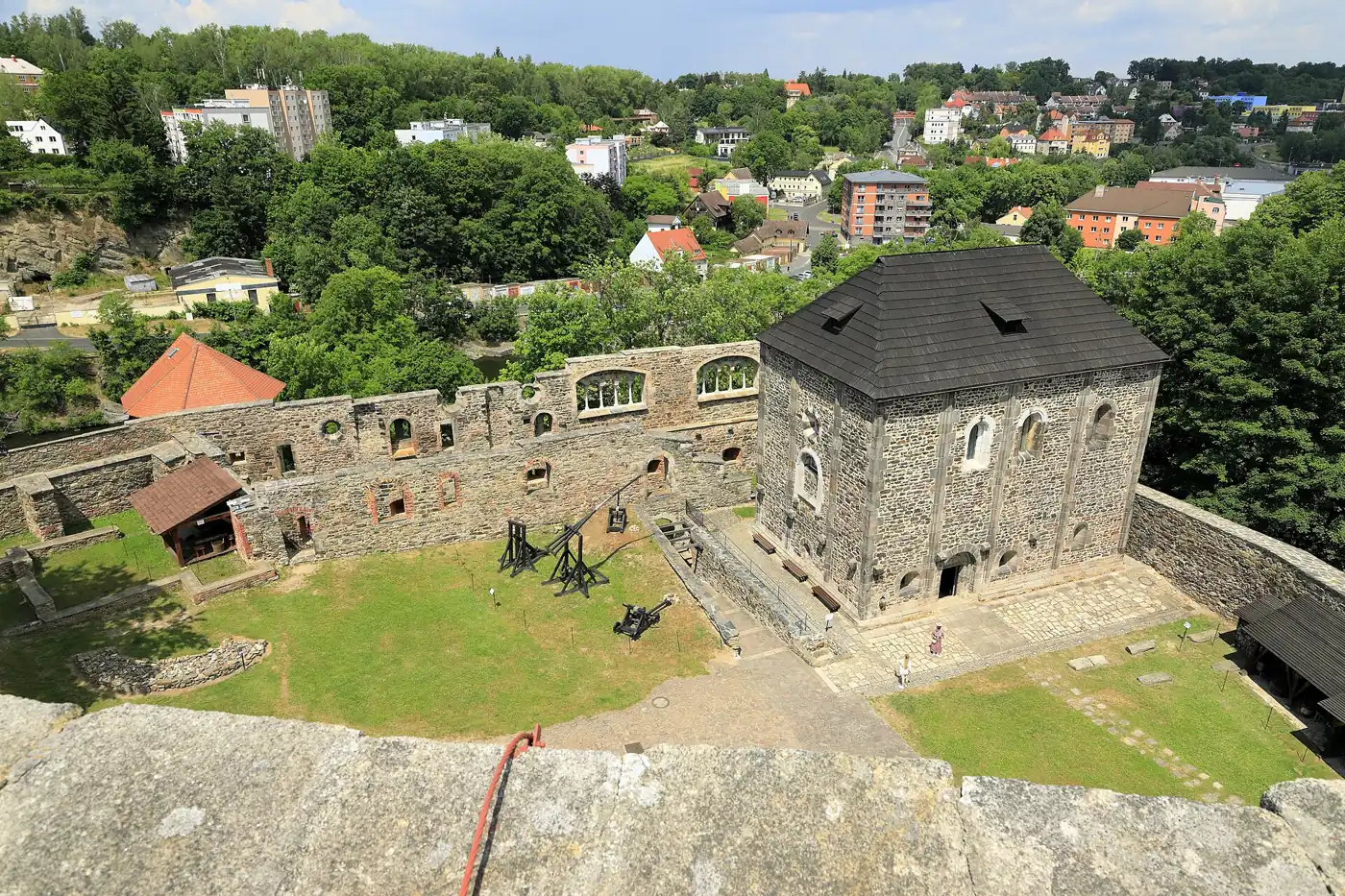

The plot was led by the Scots Gordon and Walter Leslie and the Irish colonel Walter Butler. In the middle of the feast Butler’s dragoons burst into the hall and killed the guests. Between ten and eleven that night soldiers broke into the house on the square where Wallenstein slept. The Irish captain Walter Devereux ran him through with a partisan.
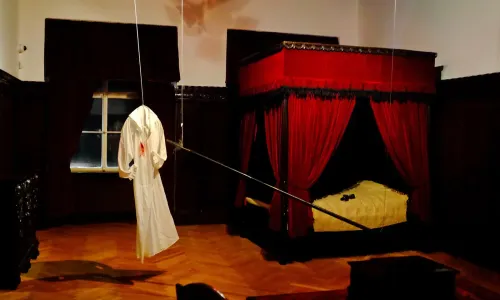
What you can see today: the Pachelbel House has been home to the Cheb Museum since the 1870s. It shows Wallenstein’s bedroom with the bed and, according to the museum, the halberd that killed him. At the castle you can visit the palace, the Black Tower and the two-storey chapel. Sources do not say which room the feast was held in.
A family wiped out: Libice, 28 September 995
From Libice nad Cidlinou the Slavník family ruled eastern Bohemia and posed a threat to the Přemyslids. In September 995 a Přemyslid army besieged their stronghold. The defenders asked for a truce because the feast of St Wenceslas was approaching. According to the chronicler Cosmas, the reply was: “If Wenceslas is your saint, Boleslaus is ours.” The stronghold fell on the feast day itself, 28 September, exactly sixty years after Wenceslas’s death. Cosmas writes that four brothers of St Adalbert and all their offspring, women and children included, were slaughtered before the altar.
Only those who were away survived. Soběslav was campaigning with Emperor Otto III against the Polabian Slavs, and Adalbert was in Rome with his half-brother Radim. Who actually ordered the massacre is still debated: Duke Boleslaus II had suffered a stroke and power lay with the nobles.
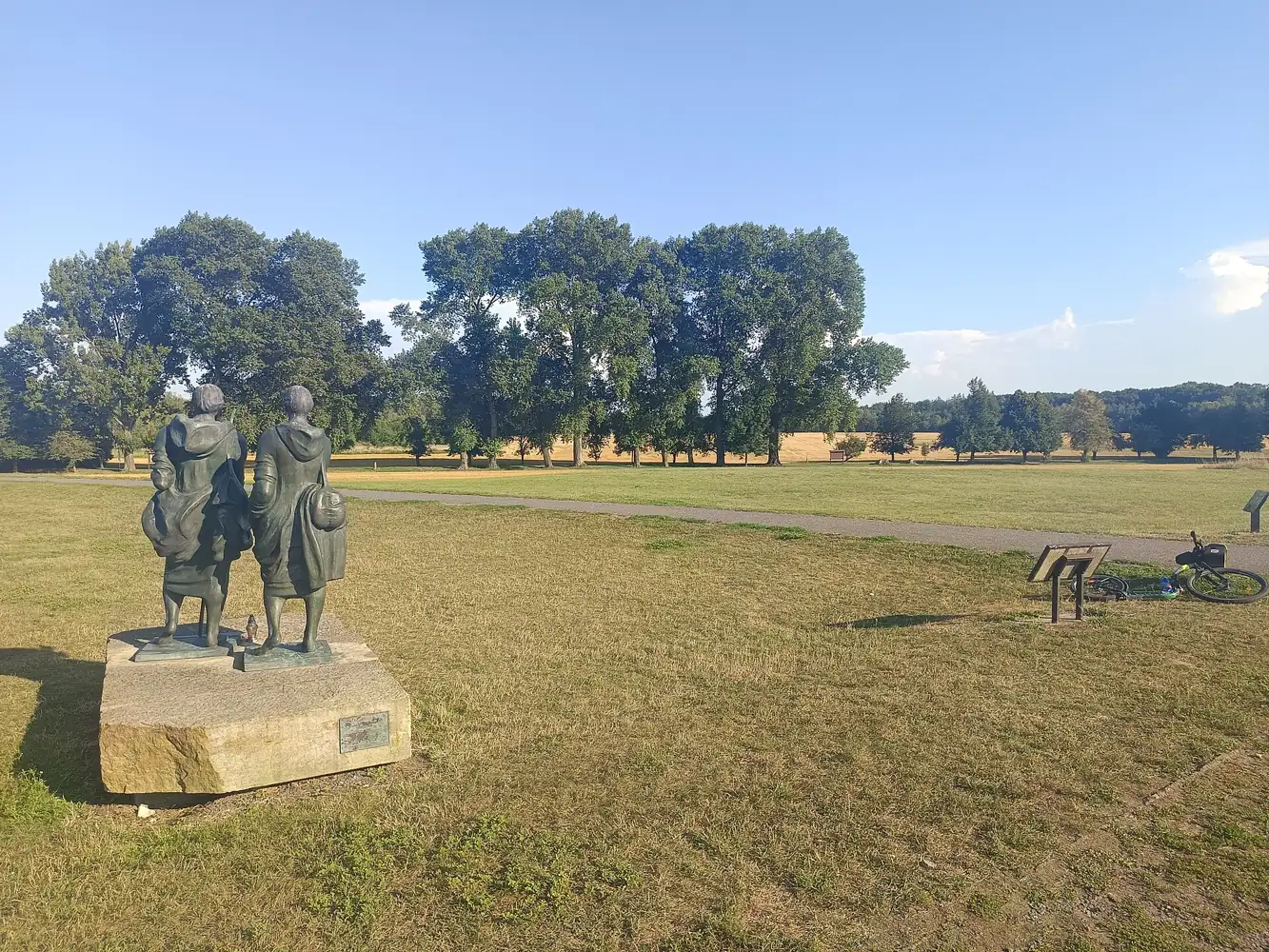
What you can see today: the Slavník stronghold shows the outlined foundations of a 10th-century palace and church and a statue of Adalbert and Radim. Finds are displayed in a small memorial hall at the municipal office.

Into the mine shafts: Kutná Hora, 1419–1421
The darkest chapter has no castle and no feast. At the start of the Hussite Wars the miners of Kutná Hora seized Hussites and their supporters and threw them alive into abandoned mine shafts. The town paid one threescore of groschen for each captured layman and five for a priest. The chronicler Laurence of Březová puts the number of victims at about 1,600, a figure the historian Jiří Kejř considers credible. Other estimates speak of almost two thousand.
What you can see today: the victims are commemorated by the U Kalicha monument in a park in the Žižkov district of Kutná Hora. The killings took place at the St Martin shafts near the lost church of St Martin. No maps of the shafts survive from that time, so the exact spot is unknown.
Kinslaying: Stará Boleslav, 28 September 935
The series opens with relatives dying for a throne. So does the Czech state. Duke Wenceslas, the “Good King Wenceslas” of the carol, came to Stará Boleslav for a feast with his brother Boleslaus. The next morning, on his way to mass, Boleslaus and his companions attacked him and stabbed him to death at the door of the church of Saints Cosmas and Damian. The year 935 is now generally accepted; older historians gave 929.
What you can see today: the Romanesque Basilica of St Wenceslas stands on the site. It was consecrated in 1046 and reopened in 2021 after restoration. The crypt holds the place where, by tradition, Wenceslas was killed, and his first grave.

Mother-in-law and daughter-in-law: Tetín, September 921
Every viewer knows the rivalry of two queens over a young ruler. The first Czech version ended in murder. Wenceslas’s grandmother Ludmila and his mother Drahomíra fought over the boy’s upbringing. On the night of 15–16 September 921, Drahomíra’s men Tunna and Gommon broke into the Tetín stronghold and killed Ludmila. Legend says they strangled her with her own veil.
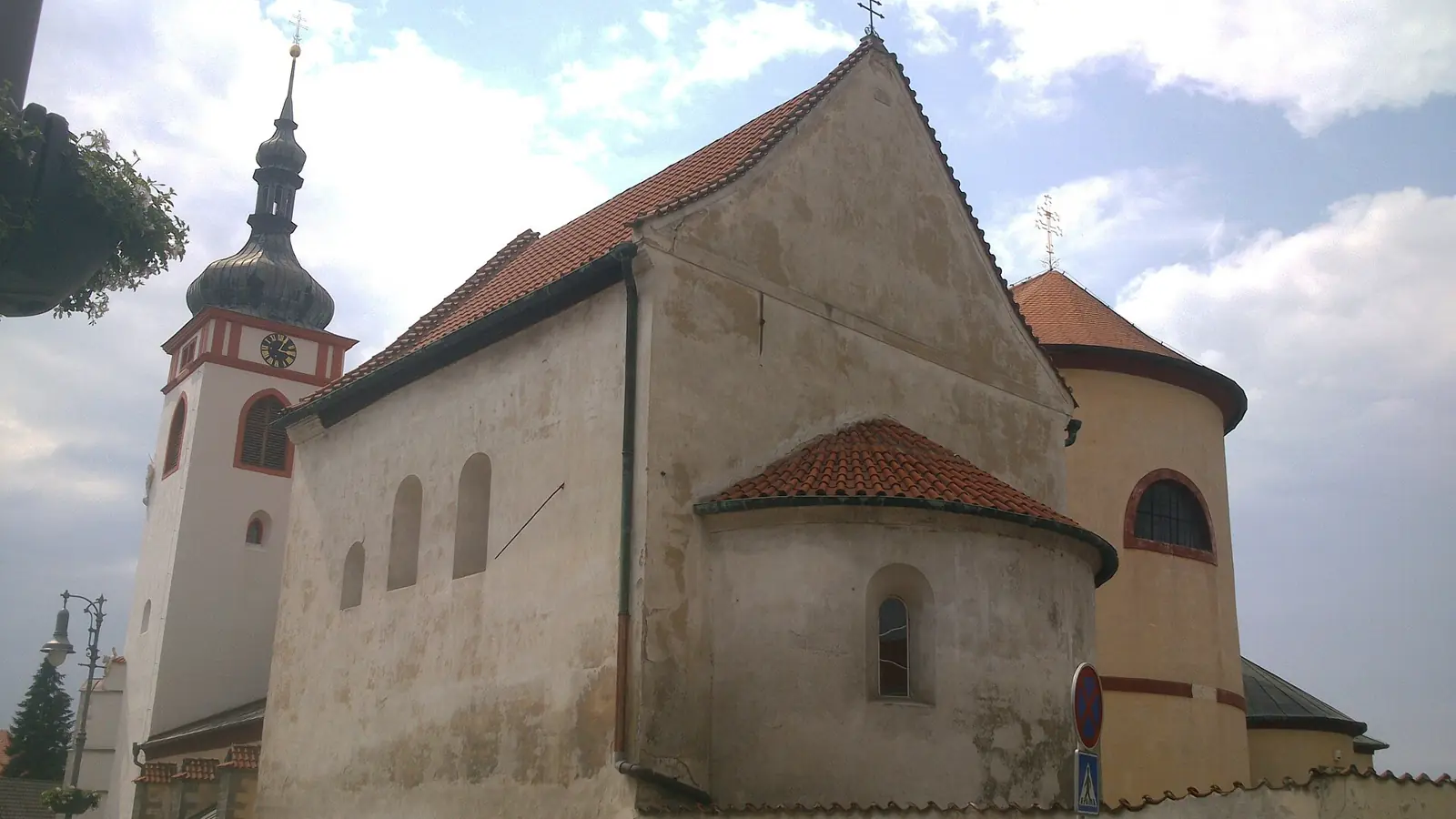
What you can see today: the Church of St Ludmila stands in Tetín near Beroun. By the altar, a glass case holds the stone on which, by tradition, Ludmila was murdered. The Romanesque church of St Catherine is nearby.
Death of the last king: Olomouc, 4 August 1306
Wenceslas III was sixteen and preparing a campaign to Poland, whose crown he claimed. Shortly after noon on 4 August 1306, in the chapter deanery at Olomouc Castle, an unknown assassin struck him three times with a knife. The killer ran out with the bloody knife and the guards killed him on the spot, so no one could question him. Sources name a certain Konrad, but who sent him was never discovered. Suspects included the Czech nobility, the Habsburgs and Władysław the Elbow-high of Poland. With Wenceslas the male line of the Přemyslids died out.
What you can see today: the Archdiocesan Museum in the Přemyslid Palace complex takes you underground to where, by tradition, the king died. Every year on 4 August at 13:06 the bells of Olomouc ring.

A head as a bargaining chip: Hluboká, 24 August 1290
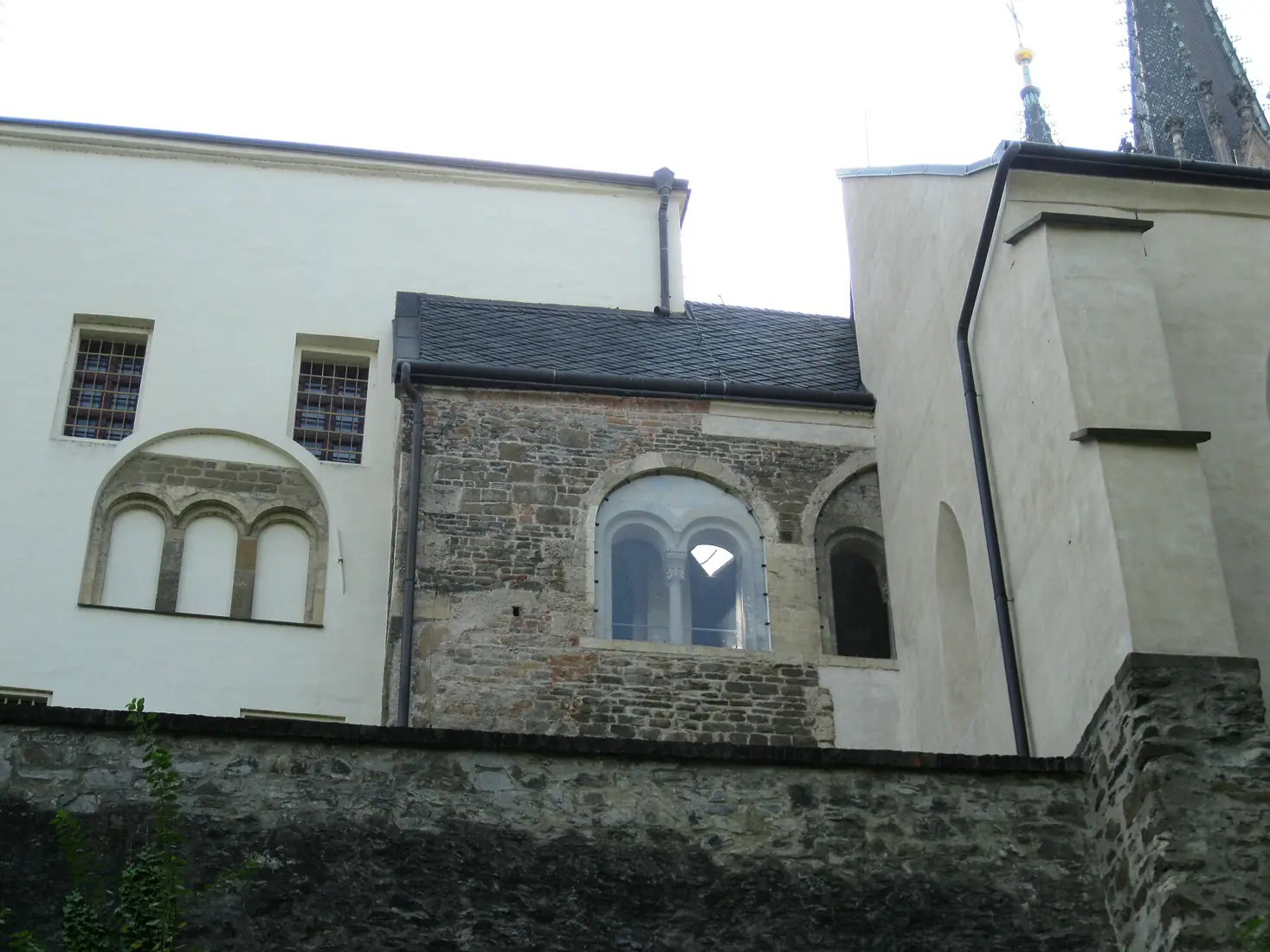
Záviš of Falkenstein married the widow of King Ottokar II and was the most powerful man in the land until his stepson Wenceslas II had him arrested for treason. He was then taken from one castle of his family to the next and threatened with execution beneath the walls so that the garrisons would surrender. Hluboká alone held out; the castle was held by Záviš’s brother Vítek. Záviš was beheaded on 24 August 1290 in the meadow below the castle.
What you can see today: a stone memorial from 1895 stands in the meadow. The exact place of execution is not known, and today’s Hluboká Castle is a 19th-century neo-Gothic rebuilding.
Out of the window: the Prague defenestrations
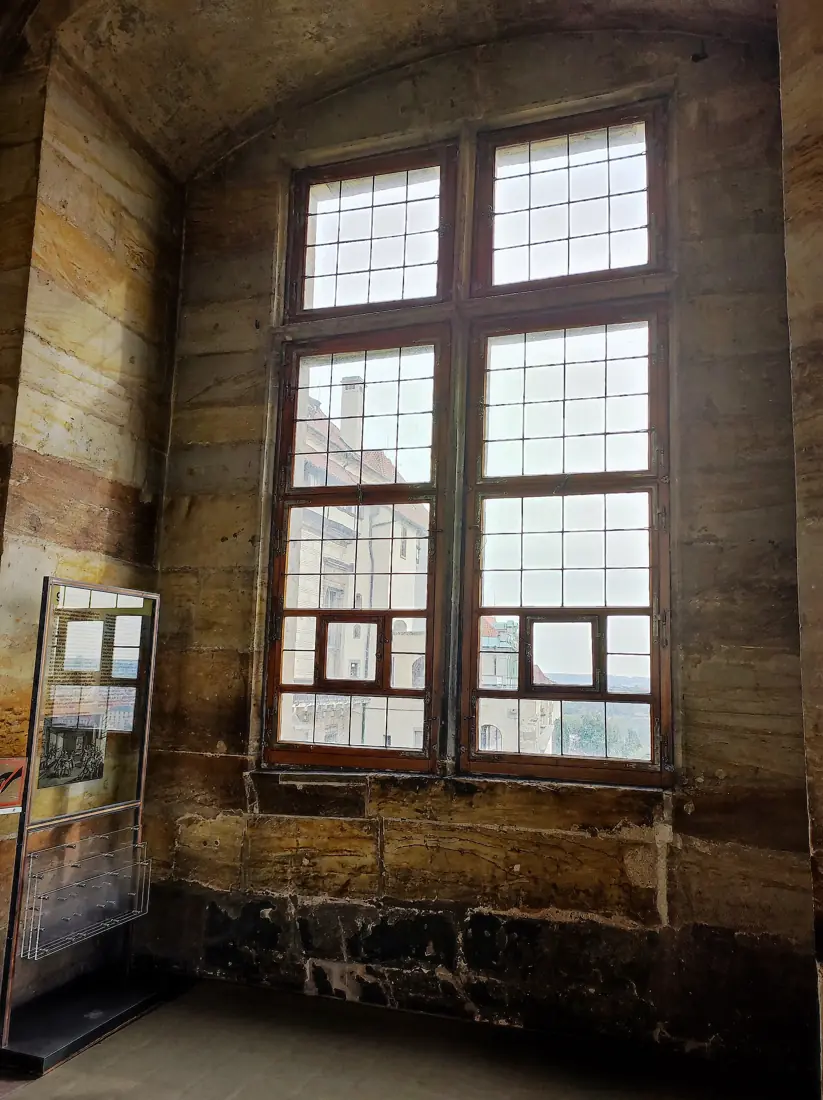
On 30 July 1419, after a sermon by Jan Želivský, a crowd marched to the New Town Hall to demand the release of imprisoned Hussites. Someone reportedly threw a stone from a window and the crowd stormed the building. Councillors were thrown out of the windows onto spears and swords, and others were beaten to death inside. Sources differ on the numbers; seven thrown out is the most common figure. The Hussite Wars had begun.
On 23 May 1618 Protestant nobles threw the governors Martinic and Slavata and their secretary Fabricius out of a window of the Bohemian Chancellery at Prague Castle. They fell some 16–17 metres and all three survived. Catholics spoke of a miracle, Protestants of a heap of rubbish in the moat. The Thirty Years’ War had begun.
What you can see today: the 1618 window is part of the Old Royal Palace tour. The New Town Hall offers tours of its Gothic halls and tower, but the tower was only finished in 1456, so its windows are not those of 1419.

Heads on the bridge: Old Town Square, 21 June 1621
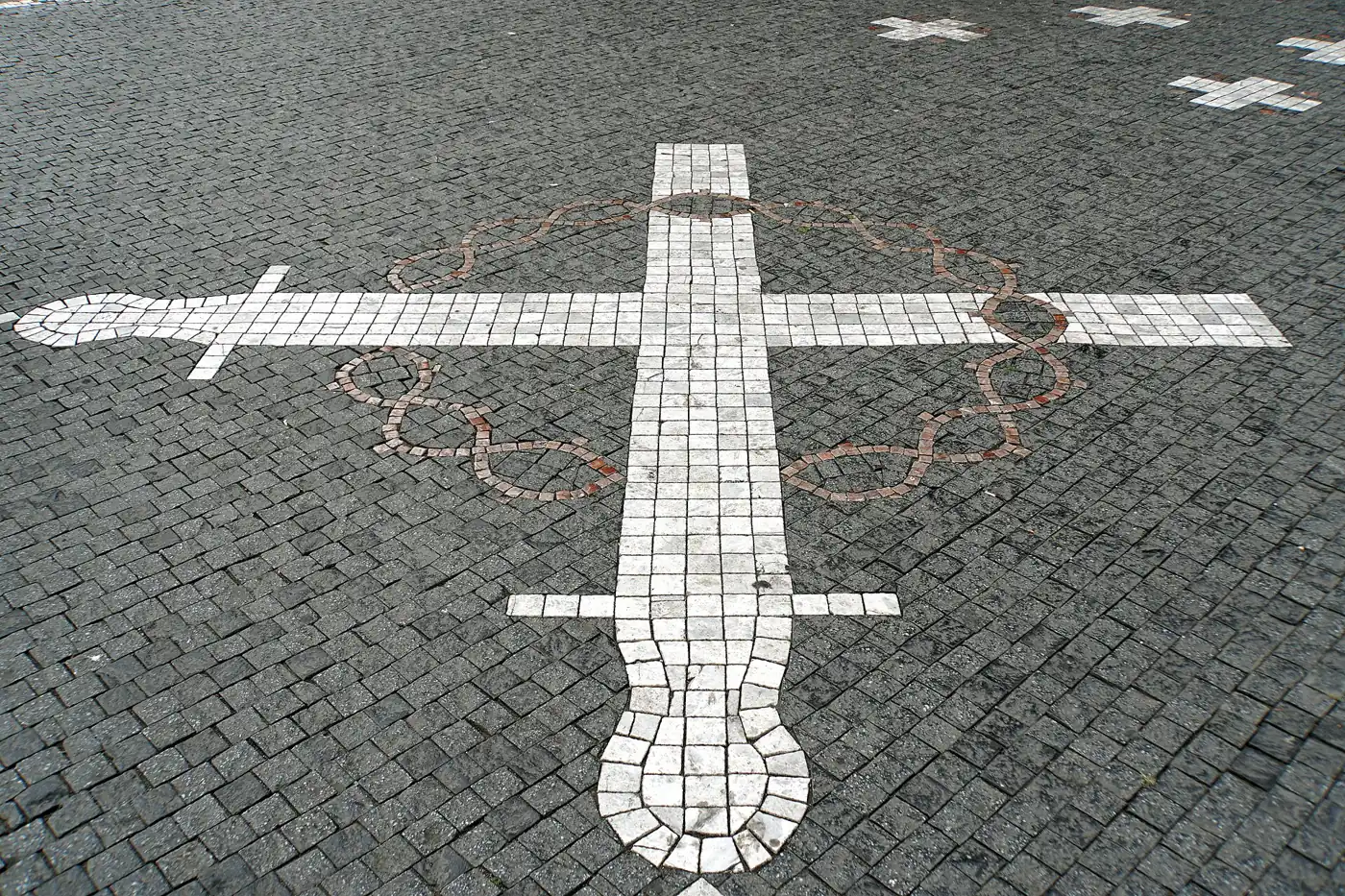
After the Battle of White Mountain came the punishment. In front of the Old Town Hall 27 leaders of the Bohemian revolt were executed: three lords, seven knights and seventeen burghers. The executioner Jan Mydlář reportedly went through four swords and the execution lasted about four hours. Twelve heads were displayed in iron baskets on the Old Town Bridge Tower and were only taken down in 1631, ten years later.
What you can see today: 27 white crosses in the pavement in front of the town hall and a memorial plaque on its wall.

Where Westeros feels closest
- The first Czech throne was made of stone. Přemyslid dukes took power by sitting on a stone seat in the middle of Prague Castle until the end of the 12th century. According to historians, fierce struggles were fought over it. The seat itself has not survived.
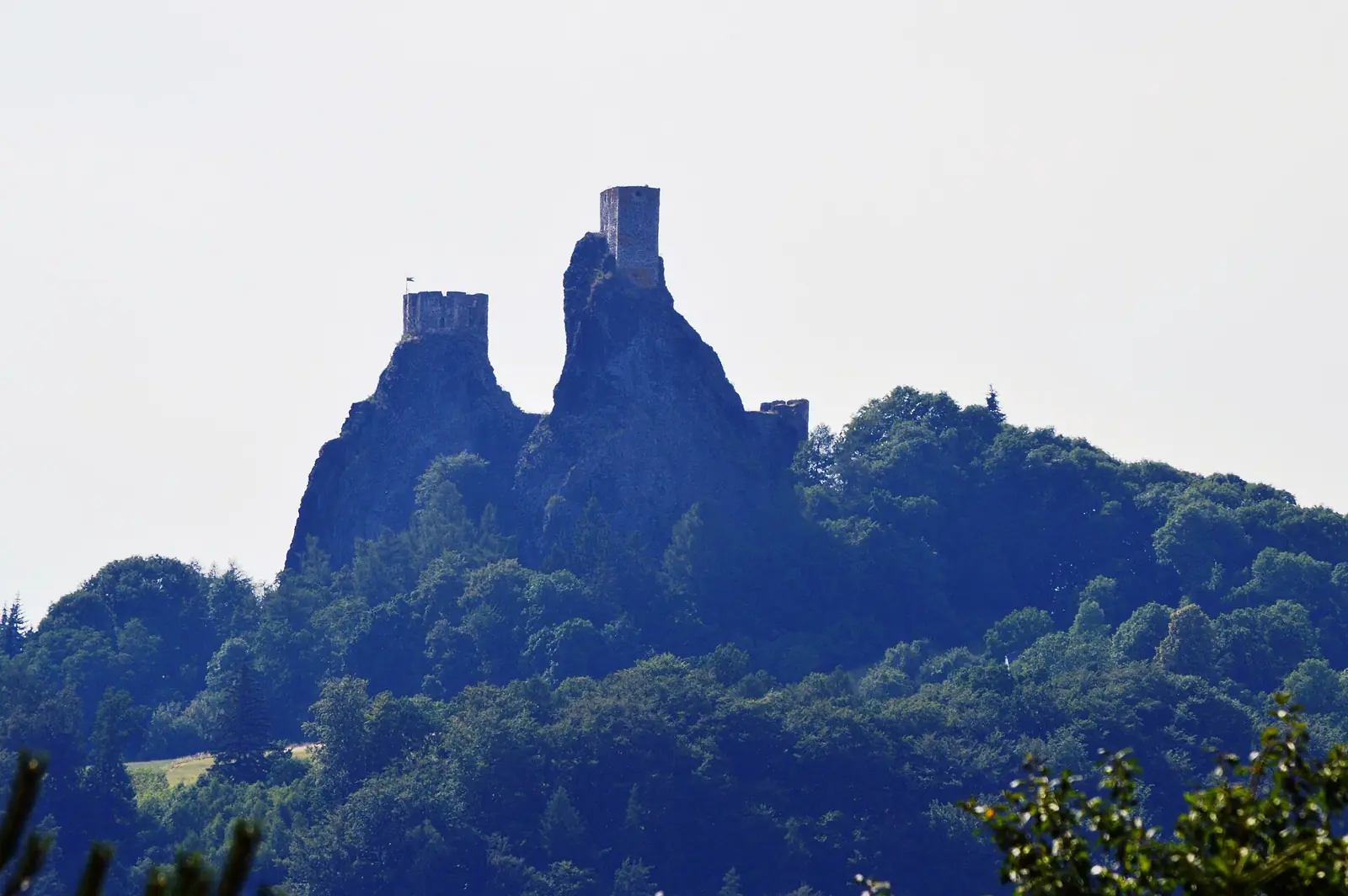
- Two towers on two rocks. Trosky Castle in Bohemian Paradise has the lower hexagonal tower Baba (“the Old Woman”) and the taller square Panna (“the Maiden”). Its silhouette looks more like a fantasy castle than many film sets. You can climb Baba; Panna is closed.
- The Night King lives in Olomouc. Slovak stuntman Vladimír Furdík, who played the Night King in the last three seasons, lives with his wife in Olomouc.

Putting it into a trip
- Prague in a day: Prague Castle with the defenestration window, Old Town Square with the 27 crosses and the New Town Hall.
- Central Bohemia: Stará Boleslav, Libice nad Cidlinou and Kutná Hora lie roughly on one line east of Prague. Tetín is beyond Beroun on the opposite side.
- Cheb and Olomouc each deserve their own day. In Cheb you can see the museum and the castle in one afternoon.
- Before you go: castles and museums have seasonal opening hours. Check the website of each place.
Frequently asked questions
Was Game of Thrones filmed in the Czech Republic?
No. The series was filmed in Northern Ireland, Croatia, Spain, Iceland, Malta and Morocco, and House of the Dragon in Britain, Spain and Portugal. But the Czech Republic has real places with equally bloody stories.
Is there a Czech Red Wedding?
The closest is Cheb: on 25 February 1634 Wallenstein’s officers were killed at a banquet in the castle, and Wallenstein himself was murdered the same night in the Pachelbel House. The Cheb Museum shows his bedroom.
Where can I see the defenestration window in Prague?
The window of the Bohemian Chancellery, through which the governors were thrown in 1618, is part of the Old Royal Palace tour at Prague Castle. The 1419 defenestration took place at the New Town Hall.
Where does the Night King actor live?
Slovak stuntman Vladimír Furdík, who played the Night King in the last three seasons, lives with his wife in Olomouc.
Historical details from academic literature, Czech Radio, ČT24, the Institute of Archaeology of the Czech Academy of Sciences and the websites of the places listed; disputed points are marked in the text. Photos from Wikimedia Commons. Lead photo: the bed in the Cheb Museum, Lubor Ferenc, Wikimedia Commons, CC BY-SA 4.0. Pamatky.cz is not affiliated with HBO or the makers of Game of Thrones; the title is used for comparison only.
