



Akademie výtvarných umění v Praze Gallery
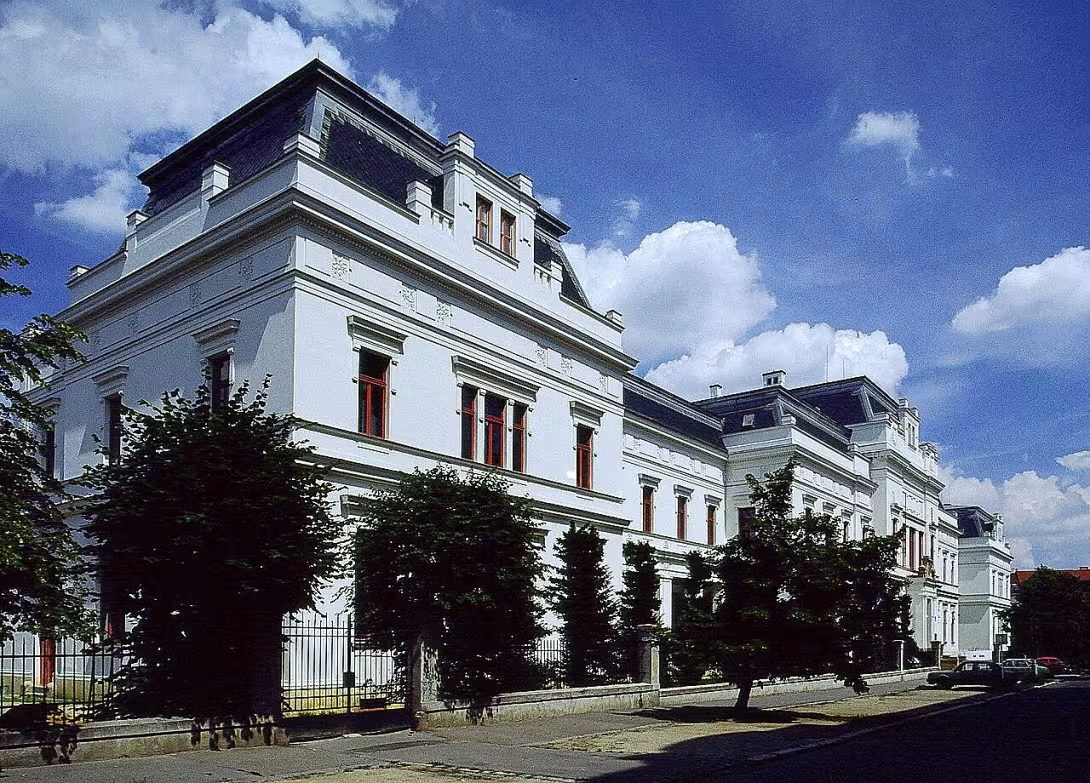
Academy of Fine Arts in Prague (AVU) is a public art university and one of the oldest of its kind in Europe. It is not only an educational institution, but also an artistic, scientific and research activity. Involved in the formation of Czech culture and society, while maintaining the traditions that are based on the time of its creation.
The Academy was founded by decree of Emperor Franz Joseph I. on 10 September 1799. The following year began teaching, in 1800. The first director was the German engraver Josef Bergler. Later, since 1836, the Academy has been led by Czech professors - specifically Professor František Tkadlík (sometimes also mentioned Kadlík). The creation of the school enabled the initiative of the Society of Patriot Friends of Arts, which was led by the idea of ensuring quality artistic education to Czech students from Bohemia, Moravia and Austria Silesia, who had to go to Vienna or Munich until then.
During the 19th century the AVU gradually modernized. In 1896 it was reformed and nationalized. The decree of 1922 then obtained the status of the first state art school in the country. To save her, it turned out to be the period of the 1880s, when the Academy stood as a very important institution crossed the path of mortal threat. Since 1885 it has been housed in very cramped conditions in the building of the School of Arts at the location of the railway station and Elishka class. The funding from the Patriot Friends of the Arts Society was beginning to fail. At that moment, Josef Hlávka, a member of the budget committee of the company, was engaged in a rescue operation with energy. In 1885 he spoke with the Austrian Minister of Education in Vienna and convinced him to take over the Academy and extend it to new professors. Based on Hlavkov's beliefs, Václav Brožík and Vojtěch Hynais were two newly appointed professors at the Academy of Professors.
The Academy currently offers education in the fields of painting, sculpture, drawings and graphics, intermedia production, new media, restoration of works of art and architectural work. He conducts master and doctoral studies in the field of fine arts. Besides its educational role, the Academy remains an important cultural institution of Czech society, which also participates in lifelong learning.
Then and now
Drag the slider to compare how the landmark may have looked when it was built with the view today.
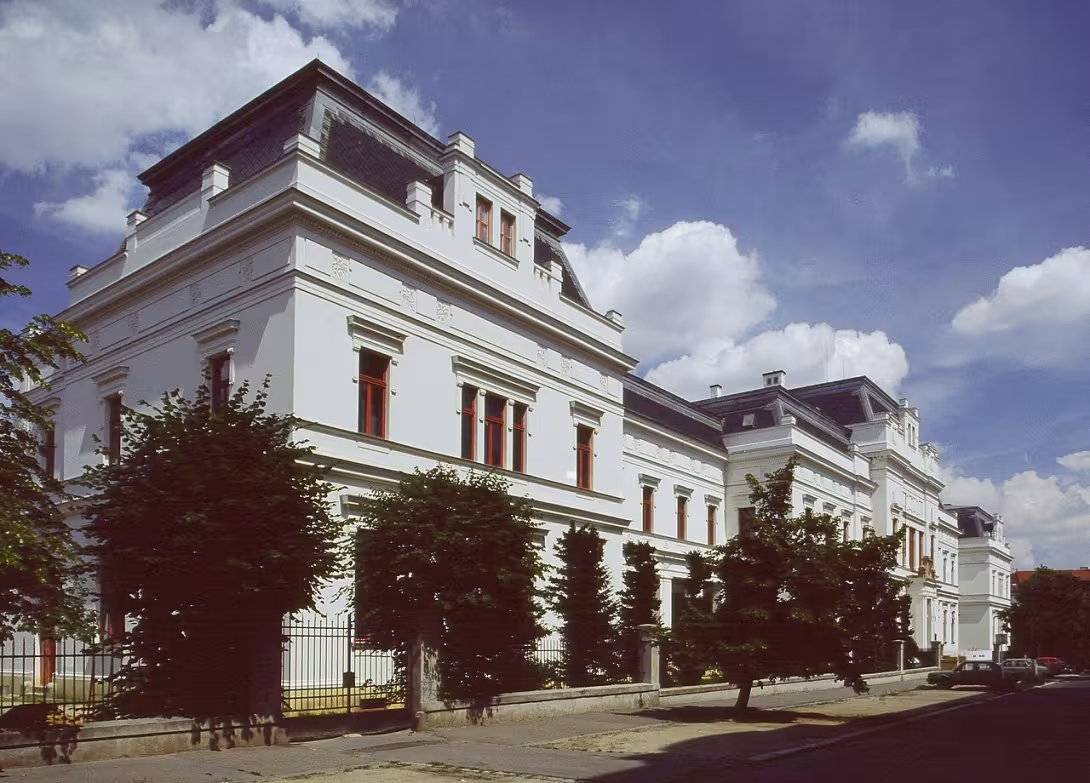
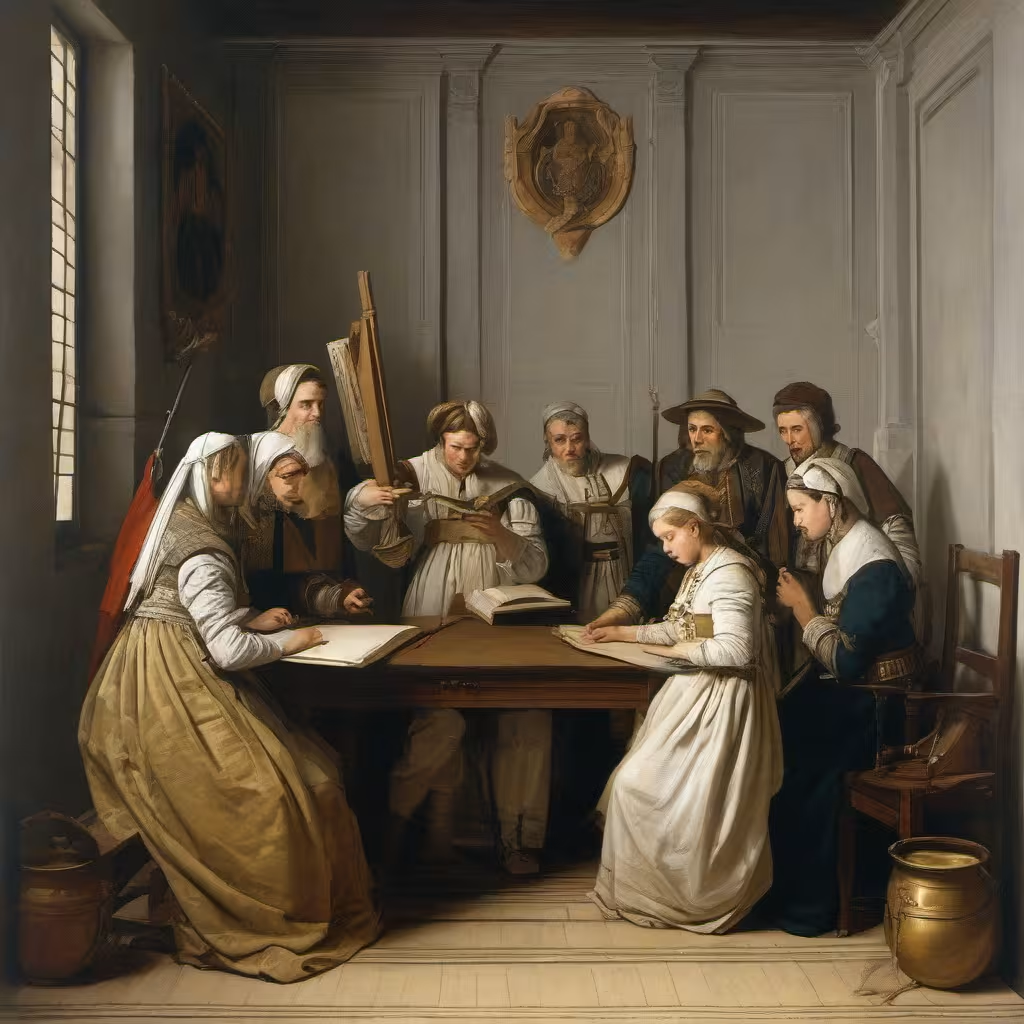
The historical appearance on the left is an AI-generated visualisation and serves as inspiration only.
Historical milestones
- 1885
- AVU was based in confined conditions in the building of the School of Arts On the ship and on Elishka's class.
- 1893
- Josef Hlávka tried to provide financial support for the AVU and rebuilding the studio for new professors.
Architectural development
The Academy of Fine Arts in Prague has historical buildings that were built in a classical style.
Historical events
- 1799
- Foundation of the Academy of Fine Arts by decree of Emperor Franz Joseph I.
- 1800
- The beginning of lessons at the AVU.
- 1896
- Reformation and nationalization of the Academy.
Owners
The Academy of Fine Arts in Prague was founded in 1799. Since its founding, it has been a public art university which specializes in fine arts. It is currently part of the public university system in the Czech Republic.
Points of interest
- The Academy of Fine Arts in Prague is one of the oldest public arts universities in Europe.
- It was founded by decree of emperor Franz Joseph I. on 10 September 1799 and the following year began teaching in 1800.
- The first director was the German engraver Josef Bergler, later led by Czech professors, namely Professor František Tkadlík since 1836.
- The establishment of the school enabled the initiative of the Society of Patriot Friends of Arts, which wanted to provide quality artistic education to Czech students from Bohemia, Moravia and Austria Silesia.
- For its rescue, the period of the 1880s, when the Academy stood as a very important institution, exceeded the path of mortal threat and was hit by Josef Hlávka, which with energy embarked on rescue action.
Guide
This guide is narrated by a synthetic voice generated by artificial intelligence.
Show guide text
This text was created by artificial intelligence and has not been editorially reviewed. It may contain inaccuracies.
The Academy of Fine Arts in Prague is the oldest art school in the Czech Republic. It is a public university that offers master's and doctoral studies. Painting, sculpture, drawing and graphic arts, intermedial creation, new media, restoration of paintings and sculptures, and also architectural creation are taught here. The Academy is at the same time an important cultural institution that participates in the development of culture and society.
It was founded on September 10th, 1799 by decree of Emperor Francis I, and teaching began a year later, in 1800. The Society of Patriotic Friends of Art played a role in its establishment. They wanted to provide quality art education to students from Bohemia, Moravia, and Austrian Silesia, who until then had to travel to Vienna or Munich to study. The first director was the German engraver Joseph Bergler. From 1836, the school was led by a Czech, Professor František Tkadlík, sometimes also referred to as Kadlík. In 1896 the academy was reformed and nationalized. A decree from 1922 then recognized it as the first state university of fine arts.
A turning point came in the eighties of the nineteenth century. From 1885 the school was located in very cramped conditions, in the building of the School of Arts and Crafts Na rejdišti and on Eliščina třída. Moreover, the Society of Patriotic Friends of Art was running out of money and the academy was threatened with closure. Josef Hlávka, then a member of the society's budget committee, took on the task of rescue. In Vienna he convinced the minister of education that the state had to take over the academy and that it needed to be expanded by two new professors. These became the painters Václav Brožík and Vojtěch Hynais, who were living in Paris at the time.
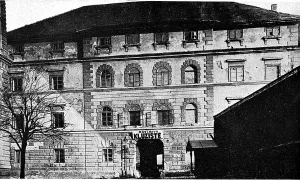
Both initially accepted the offer enthusiastically, but the nationalization was dragging on. Hlávka therefore paid their salaries together with Count Buquoy from his own pocket. Hynais was mainly causing trouble, as he wanted to have an atelier in Prague just like in Paris. The Regional Committee at Hlávka's request lent the Art Pavilion on the edge of Stromovka, which remained after the Jubilee Exhibition, and allowed it to be rebuilt. Architect Bělský drew up plans according to Hynais's wishes, but these were so excessive that almost nothing would be left of the building. Hlávka therefore prepared his own variants together with Jan Bělský and Professor Maxmilian Pirner, and on July 31st, 1893 sent them to both painters in Paris. No reply came, so he wrote again. Brožík, who until then had let Hynais do the talking, finally quickly sent at least his most important remarks.
Tips for visitors
Best time to visit The Academy of Fine Arts in Prague is a period of autumn or spring, where fewer visitors and the atmosphere in schools and galleries is quieter. In addition, these seasons often hold interesting events and exhibitions.
The nearest metro station is I. You can verify the current connection in the traffic search engine.
When visiting the Academy it is advisable to take with you comfortable shoes because you will probably walk for a long time and visit more places. Fill your backpack with an umbrella or coat in the winter months as it can suddenly get colder outside.
Photographing in schools and galleries is often allowed, but please specify the rules in advance. The best light for photos can be found in areas with high windows or on outdoor terraces during noon. Interiors can offer interesting lighting, especially in studios and studios.
In the vicinity of the Academy of Fine Arts there are several interesting places to view. These historical monuments offer rich programming and are ideal for visiting the AVU.
Frequently asked questions
Can the monument be visited?
Some buildings of this kind are open for guided tours, others serve another purpose or are privately owned. We have not verified whether and when this monument is open – please ask the operator.
What are the opening hours and admission?
We have not verified the opening hours or admission. Current information is published by the operator. Official website: http://www.avu.cz/en/
Where is the monument?
Location: Praha, Hlavní město Praha. The map on this page shows the exact spot.
For kids
Imagine going back 227 years and suddenly you're in Prague, a city full of beautiful buildings and wonderful artists. This place is the Academy of Fine Arts where the best artists from all over Europe learn.
How did it look here? Who lived here? What happened here? Imagine being a painter or sculptor and coming to Prague to learn from the best. It was like a big school, but instead of numbers tables and textbooks, artists had beautiful studios and great teachers.
Businesses nearby
Do you run a restaurant, accommodation, shop, museum, rental, wellness or other visitor service near this monument? Show yourself directly to the people heading to it — this is how they will see you in the app and on the web:
Events nearby

Zdroj akcí: otevřená data měst a obcí ČR (Národní katalog otevřených dat) a kalendář akcí Národního památkového ústavu.
Nearby
The monument is located in the historical part of Prague, near the river Vltava.
Accommodation nearby
Trips and activities nearby
Guided tours, tickets and activities nearby from GetYourGuide
Affiliate link: if you buy from the partner, we may receive a commission. The price for you does not change.
Search tours and activities →Themed route
Route: Academy of Fine Arts in Prague and its surroundings
1. Academy of Fine Arts in Prague (main objective) Type: museum Why it is worth a visit: The Academy of Fine Arts in Prague is an important artistic institution that offers a unique opportunity to look at the extensive collections of Fine Arts and learn the history of art schools in Prague.
2. Square of Peace Type: square Why is worth a visit: Peace Square is a quiet and pleasant place where you can relax and admire the beautiful architecture around.
3. Church of St. Salvator Type: church Why is worth a visit: St. Salvator's Church is a beautiful and peaceful church that is worth visiting for its historical and architectural values.
4. Airframe in Troy Type: park Why is worth a visit: Letohraz in Troy is a pleasant place to relax and relax.
Seasonal recommendations
Spring:
Spring is the time when nature wakes up from winter sleep and the Academy of Fine Arts in Prague turns into a pleasant place to walk. More daylight and warmer weather make the exhibition even more attractive. The atmosphere is relaxed and relaxed, which is ideal for relaxing and sightseeing galleries. We recommend visiting the Academy of Fine Arts early morning or late afternoon to avoid large crowds of visitors.
Summer:
In summer, the Academy of Fine Arts in Prague is full of life and energy. In the main summer season there are plenty of tourists and visitors who want to see our exhibitions and exhibitions. We recommend visiting the Academy early in the morning or in the evening when there are fewer people. This way you will be better able to view the exhibition and enjoy the atmosphere of the gallery.
Autumn:
Autumn is a beautiful season to visit the Academy of Fine Arts in Prague. The weather is mild and pleasant, which is ideal for walking around the gallery. The atmosphere is relaxed and calm, which is great for relaxing and sightseeing exhibitions. We recommend visiting the Academy early morning or late afternoon to avoid large crowds of visitors.
Winter:
In winter, the Academy of Fine Arts in Prague is a beautiful and peaceful place to walk. The warm clothes and glass doors of the gallery create a pleasant environment for viewing exhibitions. We recommend visiting the Academy early in the morning or late in the afternoon when the opening time is shorter and there are fewer people.
Visualizations and artistic views


The visualisations are generated by artificial intelligence and serve as inspiration.
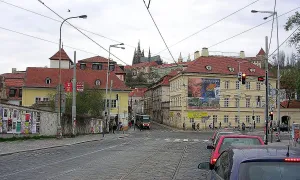
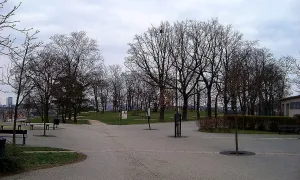
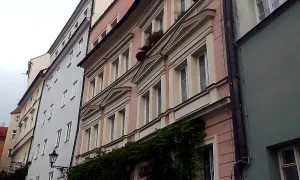
Photos from the area
Real photos taken near the monument


Zdroj a licence jsou uvedeny u každého snímku.
Atmosphere of the place
This atmospheric visualisation of the place and period was generated by artificial intelligence. It is not real footage of the location.
Tips from visitors
No tips yet. Be the first!
Log in and add your tip.
Sources and literature
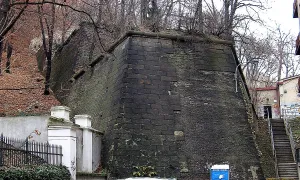
Photos: Blanka Cermakova / Public domain — Wikimedia Commons. The author and licence also appear when you hover over the image.
Faktickým podkladem tohoto textu byl článek na Wikipedii, jehož autory jsou přispěvatelé Wikipedie. Článek je dostupný pod licencí CC BY-SA 4.0.
Location on the map
Příběhy a pověsti
Legendy, pověsti a příběhy spjaté s touto památkou
Příběh: Akademie výtvarných umění v Praze
Bylo to v pondělí ráno, kdy Martin zjistil, že jeho dříve opuštěná paleta nyní vykazuje tajemné a nezvyklé barvy. Nikdo si nedovedl představit, jak by jejich…
Číst příběh
Pověst: Akademie výtvarných umění v Praze
Traduje se, že kdo jednou vstoupí branou Akademie výtvarných umění na pražském Starém Městě, toho nikdy zcela neopustí touha po kráse. Staří profesoři říkáva…
Číst příběhFotografie návštěvníků
Zatím žádné fotografie. Buďte první, kdo přidá fotografii z návštěvy!
Log in a přidejte svou fotografii nebo hodnoťte.
Za ověřenou návštěvu v aplikaci získáte víc bodů — poznáme podle GPS, že jste na místě.
Reviews and comments