






Alžbětinský klášter Monastery
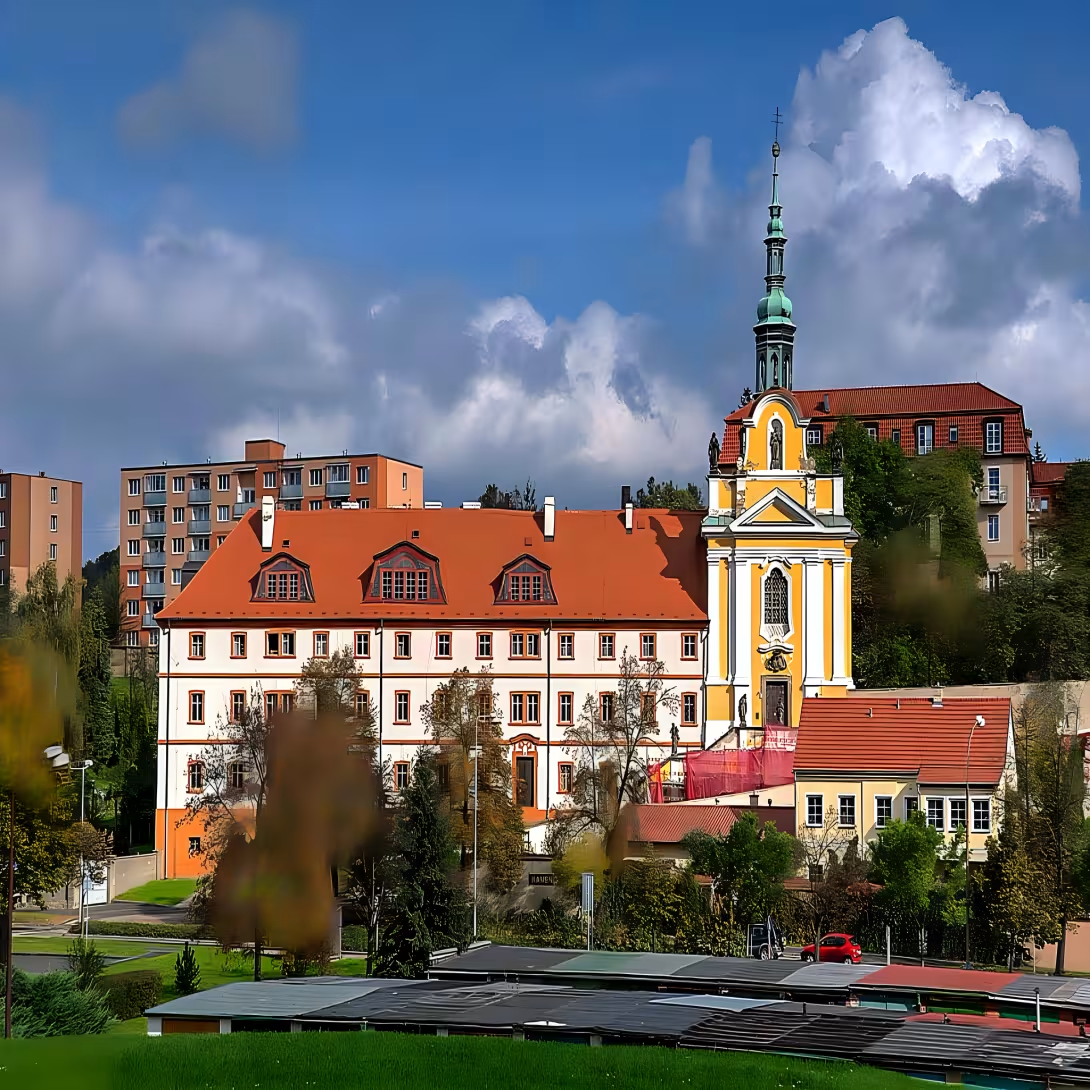
The Alžbětinský Klášter in Kadaň is a baroque architectural complex featuring a church dedicated to the Holy Family. Situated within the historic Špitálské předměstí district, this convent was founded in 1746 by Countess Karolina ze Schönkirchenu and became operational by 1748. The site holds cultural significance as it reflects the social and religious commitments of its era through its role in providing medical care via an associated hospital.
Countess Karolina ze Schönkirchenu played a crucial role in establishing the Alžbětinský Klášter, which officially began operations on November 16, 1746. By November 1748, the first nuns had arrived, marking the convent's active presence in Kadaň. This period was characterized by significant religious and social reforms under Habsburg rule in Bohemia, aligning with broader European trends of Catholic renewal.
Constructed between 1748 and 1755, the Alžbětinský Klášter showcases baroque architectural elements typical of its time. Its advantageous location provided essential building materials such as clay for brick-making and a natural spring for water supply, facilitating construction. These resources contributed to developing both the convent buildings and the church dedicated to the Holy Family, completed in 1755.
Throughout its history, the Alžbětinský Klášter experienced various changes in administration and fortune. Initially supported by Countess Karolina ze Schönkirchenu, the convent expanded its facilities over time. By 1754, under Empress Maria Theresa's patronage, the hospital's capacity increased to accommodate more patients and nuns. The number of sisters grew significantly during Emperor Joseph II's reign due to rising demand for their services, especially in wartime.
The convent was home to a unique pharmacy garden that supplied medicines not only to its own hospital but also to other local facilities. This feature highlights the Alžbětinský Klášter's role in healthcare and community support during the 18th and 19th centuries. Additionally, the convent's archives contain rare medical and pharmaceutical records from these periods, offering valuable historical insights.
Today, the Alžbětinský Klášter stands as a protected cultural monument within Kadaň, reflecting its rich history and architectural significance. Visitors can explore this site to appreciate its baroque design and learn about its role in providing medical care throughout history. The convent's enduring legacy makes it a worthwhile destination for those interested in the intersection of architecture, religion, and social service.
The Alžbětinský Klášter remains an important cultural landmark, inviting visitors to explore its historical significance and architectural beauty. Its preservation as a cultural monument ensures that future generations can appreciate its contributions to healthcare and community life during pivotal periods in European history.
Then and now
Drag the slider to compare how the landmark may have looked when it was built with the view today.
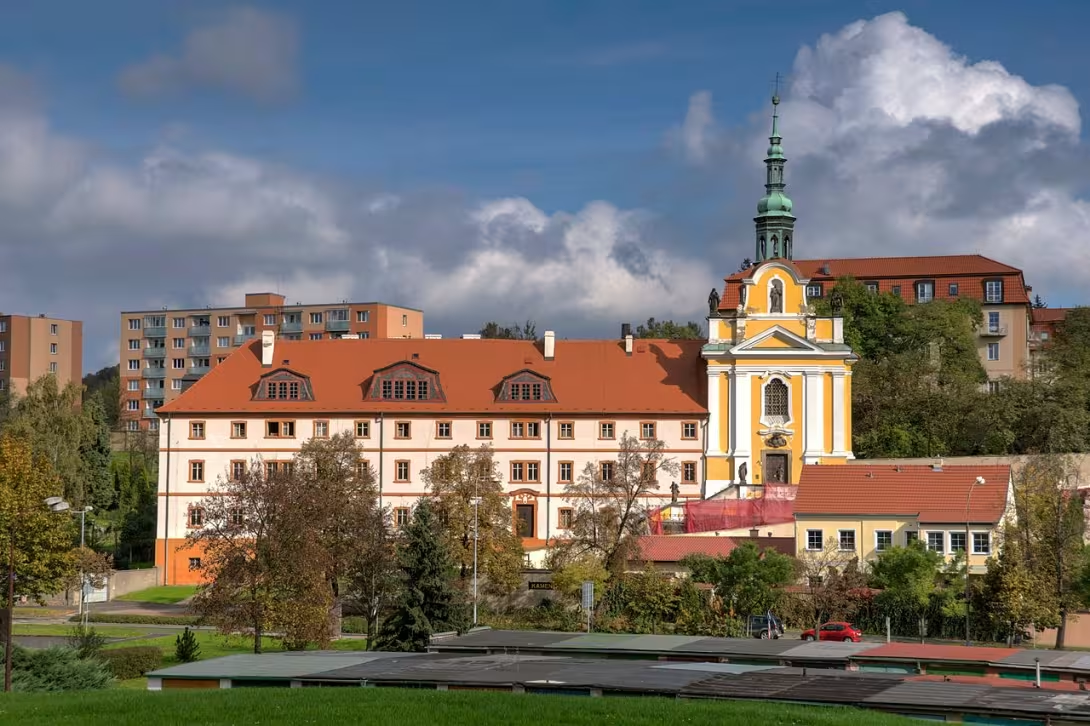
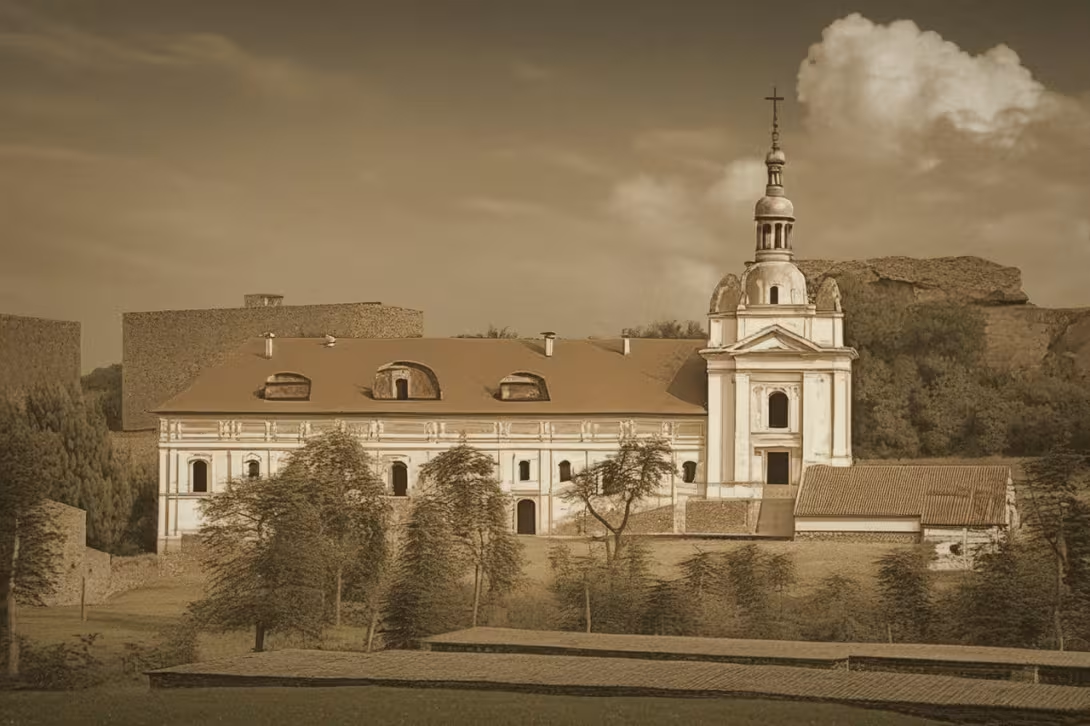
The historical appearance on the left is an AI-generated visualisation and serves as inspiration only.
Historical milestones
- 1746
- Founding of Alžbětinský Klášter by Countess Karolina ze Schönkirchenu.
- 1748
- First nuns arrived, marking the convent's active presence in Kadaň.
- 1754
- Hospital capacity increased under Empress Maria Theresa's patronage.
- 1755
- Completion of the church dedicated to the Holy Family.
Architectural development
The Alžbětinský klášter was constructed between 1748 and 1755. The site offered advantageous building materials such as clay for brick-making and a natural spring for water supply, which facilitated the construction process. The complex features baroque architectural elements typical of the period.
Historical events
- 1746
- Foundation of the Alžbětinský klášter by Countess Karolina ze Schönkirchenu.
- 1755
- Completion of the church and convent buildings, marking the end of major construction phases.
Points of interest
- The Alžbětinský Klášter was established during a period of significant religious and social reforms under Habsburg rule in Bohemia, aligning with broader European Catholic renewal movements. This context highlights the convent's role not just as a place of worship but also as part of larger societal changes.
- One unique feature of the Alžbětinský Klášter was its pharmacy garden, which supplied medicines to both its own hospital and other local facilities. This underscores the convent’s integral role in healthcare during the 18th and 19th centuries, extending beyond spiritual services to tangible community support.
- The archives at the Alžbětinský Klášter contain rare medical and pharmaceutical records from the 18th and 19th centuries. These documents provide valuable historical insights into early modern medicine and pharmacy practices in Kadaň and its surrounding regions, reflecting the convent's contribution to healthcare knowledge.
- Under Empress Maria Theresa’s patronage by 1754, the hospital associated with Alžbětinský Klášter expanded significantly, increasing its capacity for patients and nuns. This expansion reflects the growing importance of the institution in providing medical care during a time when such services were crucial to community well-being.
- The convent experienced a notable increase in the number of sisters during Emperor Joseph II's reign due to heightened demand for their services, especially during wartime. This period highlights how the Alžbětinský Klášter adapted to societal needs and contributed significantly to social service efforts amidst challenging times.
Guide
This guide is narrated by a synthetic voice generated by artificial intelligence.
Show guide text
This text was created by artificial intelligence and has not been editorially reviewed. It may contain inaccuracies.
The Convent of Saint Elizabeth in Kadaň with its adjacent Church of the Holy Family is a Baroque complex on the Špitálské przedmestí, which is part of a protected heritage reserve. It was built between 1748 and 1755 and the entire complex is protected as a cultural monument.
The foundation was primarily due to Countess Karolína Justina of Schönkirchen. The Order of Saint Elizabeth was officially introduced to Kadaň on November 16, 1746, when the location for the convent and adjacent hospital was chosen. Permission was granted for five sisters and six hospital beds, which soon proved to be insufficient. The sisters arrived in the city in November 1748. The first abbess was Marie Johanna of the Holy Cross, whose secular name was Maria Theresia von Vogelmayer.
The location was advantageous for construction. The property had plenty of building material and good clay for brick production. Soon a spring of drinking water was discovered, so the convent later got its own well. The foundation stone of the convent was laid on July 14, 1748. The foundation stone of the Church of the Holy Family was blessed on October 4, 1753 by the auxiliary bishop of Prague, Antonín Vokoun, on the same day that the residential spaces for the sisters were completed. The church was finished in 1755.
In 1754, Empress Maria Theresa allowed the expansion of the hospital to eleven beds and the convent to ten sisters including the abbess. Under Joseph II, especially during the war years, the number of sisters grew to eighteen. In the 19th century it settled at fourteen. An important part of the convent was the pharmacy with its own garden, which supplied medicines to other hospitals as well. Its medical books and recipes from the 18th and 19th centuries are among the exceptionally well-preserved sources.
The convent's income was modest and grew mainly thanks to the dowries of newly admitted sisters. The financial decree of 1811 affected the convent most severely. Later it was expanded with the Orphanage of Saint Joseph, whose extension was consecrated on September 20, 1853. It was designed and built by master mason Karl Grund and carpenter Anton Tippmann. The complex also included a school for orphans. Thanks to donations, the number of beds continued to increase. Between 1748 and 1841, more than 6225 patients were treated here, and between 1842 and 1875 already 9016.
Between 1946 and 1948, sisters of German nationality were expelled to Germany. They were replaced by Czech sisters from the Prague convent on Slupi.
Tips for visitors
The best time to visit the Alžbětinský klášter is during late spring or early autumn, when the weather is pleasant for exploring outdoor spaces without the crowds of peak tourist season. This period also offers beautiful natural lighting for photography and allows you to enjoy the surrounding historic district comfortably.
When visiting, bring comfortable walking shoes as you'll likely explore both the interior of the complex and its surroundings. A hat and sunscreen are recommended if traveling in warmer months, along with a water bottle to stay hydrated. Don't forget your camera or smartphone for capturing the baroque architecture and serene church interiors.
For photography enthusiasts, early morning is ideal for capturing soft light filtering through the windows of the church dedicated to the Holy Family. The main courtyard offers a picturesque setting for wide-angle shots that include both architectural details and greenery. Be mindful of any restrictions on flash photography inside the church.
These sites offer additional insights into the region's rich history and complement your visit to the Alžbětinský klášter.
For families with children, consider bringing a small backpack with snacks and water for convenience during your visit. The historic district around the monastery has several open spaces where kids can explore safely. Engage them by explaining the historical significance of the sites you're visiting to make the experience educational as well.
Frequently asked questions
Can the monument be visited?
Religious buildings are usually open mainly during services; at other times a visit is normally arranged with the parish or the operator. We have not verified specific times.
Where is the monument?
Location: Kadaň, Ústecký kraj. The map on this page shows the exact spot.
Why is the monument protected?
It is listed in the Central List of Cultural Monuments of the Czech Republic as a cultural monument (register no. 22449/5-927).
Businesses nearby
Do you run a restaurant, accommodation, shop, museum, rental, wellness or other visitor service near this monument? Show yourself directly to the people heading to it — this is how they will see you in the app and on the web:
Nearby
Located in Kadaň, the Alžbětinský klášter is part of a historic district known as Špitálské předměstí. The area features other cultural and architectural landmarks within a five-kilometer radius.
Accommodation nearby
Themed route
Thematic Walking Tour: Alžbětinský Klášter and Surrounding Attractions
1. Alžbětinský Klášter (Convent of Saint Elizabeth) - Type: Historical Religious Site - Why Visit: Begin your journey at the heart of Kadaň's historic district, Špitálské předměstí. The Alžbětinský klášter is renowned for its stunning Baroque architecture and serene atmosphere. Explore its beautifully preserved interiors and learn about its historical significance as a center of education and spirituality.
2. Špitálské Předměstí (Hospital Suburb) - Type: Historic District - Why Visit: Just a short walk from the convent, this area offers a glimpse into Kadaň's rich past. Špitálské předměstí is characterized by its well-preserved historic buildings and narrow streets that tell stories of medieval life in the town. It’s an ideal spot to immerse yourself in local history and enjoy the charming ambiance.
3. Kadaň Historical Museum - Type: Cultural Landmark - Why Visit: Located within a five-kilometer radius, this museum provides insights into Kadaň's cultural heritage through its extensive collection of artifacts and exhibits. It’s an excellent place to deepen your understanding of the region's history and the role played by significant sites like Alžbětinský klášter.
4. Kadaň Old Town Square - Type: Historic Public Space - Why Visit: Conclude your tour at this vibrant square, which is a short distance from the museum. The Old Town Square is surrounded by historic buildings and offers a lively atmosphere with local shops and cafes. It’s a perfect spot to reflect on your visit and enjoy the cultural pulse of Kadaň.
This thematic walking tour provides an enriching experience through Kadaň's historical heart, focusing on its architectural beauty and cultural significance.
Seasonal recommendations
Spring: Visiting Alžbětinský klášter in Kadaň during spring offers a rejuvenating experience as nature awakens around the historic site. The blooming flowers and lush greenery create a picturesque setting, enhancing the serene atmosphere of the monastery. Mornings are particularly enchanting with soft sunlight filtering through the trees, casting gentle shadows on the ancient architecture. Visitors should dress in layers to accommodate fluctuating temperatures typical of this season. While the crowds are moderate compared to summer, arriving early can provide a more tranquil experience as the site opens.
Summer: Summer is an ideal time to explore Alžbětinský klášter due to the extended daylight hours and warm weather, perfect for leisurely strolls around its grounds. The vibrant greenery and occasional floral displays add to the monastery's charm, while the longer days allow ample time to appreciate its history and architecture. However, this is also peak tourist season, so visiting early in the morning or later in the afternoon can help avoid larger crowds. Comfortable walking shoes and light clothing are recommended, along with sun protection such as hats and sunscreen.
Autumn: Autumn brings a unique beauty to Alžbětinský klášter, with the surrounding landscape transformed into a tapestry of warm colors from reds, oranges, and yellows. The cooler temperatures make for pleasant visiting conditions, allowing guests to enjoy the site without the summer heat. This season often sees fewer visitors than in spring or summer, providing a more intimate experience. Layered clothing is advisable as days can be crisp, and carrying a light jacket is wise for the evenings when it tends to get chillier.
Winter: Winter at Alžbětinský klášter offers a serene and almost mystical atmosphere, with snow often blanketing the grounds in a peaceful white. The monastery's architecture takes on a different character under winter lighting, creating dramatic contrasts between light and shadow. Warm clothing is essential, including coats, hats, gloves, and sturdy boots to navigate any icy paths. Despite the cold, the quiet charm of the site during this season can provide a unique and memorable experience.
Visualizations and artistic views


The visualisations are generated by artificial intelligence and serve as inspiration.
Photos from the area
Real photos taken near the monument


Zdroj a licence jsou uvedeny u každého snímku.
Tips from visitors
No tips yet. Be the first!
Log in and add your tip.
Sources and literature
Photos: Lukáš Kalista / CC BY-SA 4.0, rozlišení zvýšeno umělou inteligencí — Wikimedia Commons. The author and licence also appear when you hover over the image.
Faktickým podkladem tohoto textu byl článek na Wikipedii, jehož autory jsou přispěvatelé Wikipedie. Článek je dostupný pod licencí CC BY-SA 4.0.
Location on the map
More monuments – Kadaň
Show all in the municipality

Příběhy a pověsti
Legendy, pověsti a příběhy spjaté s touto památkou

Fotografie návštěvníků
Zatím žádné fotografie. Buďte první, kdo přidá fotografii z návštěvy!
Log in a přidejte svou fotografii nebo hodnoťte.
Za ověřenou návštěvu v aplikaci získáte víc bodů — poznáme podle GPS, že jste na místě.
Reviews and comments