



Arcibiskupský palác v Praze Archbishop's palace
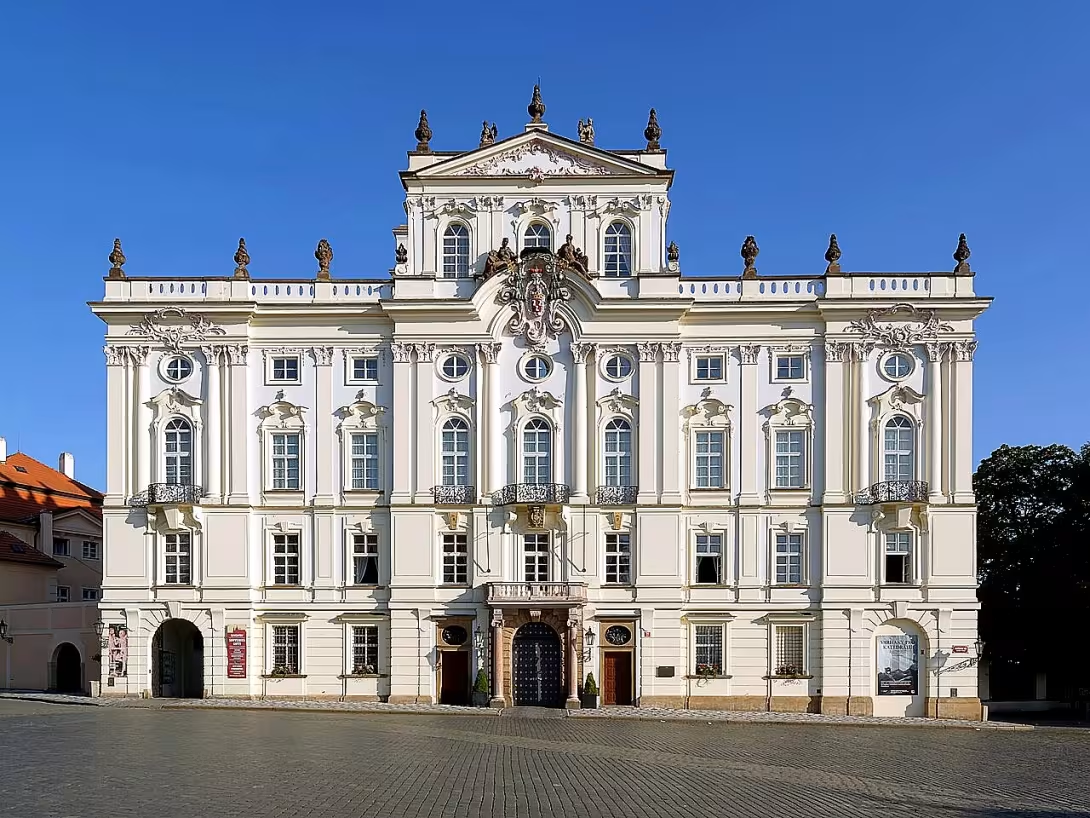
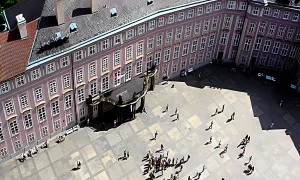
At Hradčanská Square, in the vicinity of the main gate of Prague Castle, the Archbishop's Palace has been standing since the beginning of the seventeenth century as a residence of Prague Archbishops. It is not a common Baroque building - its story reveals the fate of the Prague Church and the architectural transformation of the city.
The present palace is not the first seat of Prague's bishops. The oldest residence was built right in the Castle next to the temple of St. Vitus, today's old age, which in parts survived in its original form. The second residence was the extensive Bishop Court on the Small Party, where the Ministry of Finance is now based. Here in the 13th century Bishop Ondřej (1214-1224) built a late Romanesque building, which was later rebuilt into the Gothic style by Bishop Jan IV. of Dražice (1301-1343). The court was famous for its splendor - its beauty boasted even before King Wenceslas himself. But the Hussite wars burned him and destroyed him. After their completion, the Prague Archbishop's table was abandoned for 140 years until the Archbishop Antonín Brus z Mohelnice again occupied it in 1561.
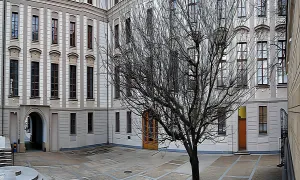
The Cesare gift brought to Antonín Brush on 5 October 1561 the dedication of Ferdinand I., who gave him a house once belonging to Florian Gryspek of Griespach. This house, standing close to Prague Castle, became an archbishop's residence. The originally Gothic house was rebuilt by Brush, expanded and increased. Another older building was gradually included in the residence, which still preserved medieval walls and original rooms in the palace. The external appearance was consistent with the Renaissance style - the facade was covered with decorative sgraffiti, especially written patterns supplemented by plant, figural and biblical motifs. On the east wall of the west wing of the first courtyard, there were two symbolic scenes: "Jacob's dream" and "Bear-eating rat," probably the allegory of the church fighting heretics.
Archbishop Zbyněk Berka of Dubé (1592-1606) rebuilt the entire palace in Renaissance style. From his time comes the chapel in the southeast wing, consecrated on 29 August 1599 and dedicated to St. John the Baptist, St. Oldřich and all saints. The portal is made of slivenec marble and bears the mark of Archbishop Berka. The paintings in the drizzle, the work of Daniel Alexius of May, illustrate the life of St. John the Baptist, the middle image of the legend of the Berk family about the rescue of Prince Jaromir. In the presbytery, the Holy Trinity is depicted on the ceiling. In 1888, Archbishop František of Pauly Schönborn gave it to St. John Nepomuk.
The palace underwent a great Baroque reconstruction in 1676-1694 for Archbishop Jan Bedřich, Count of Valdštejn. He called from Rome architect Jan Baptiste Mathey, who belongs to the leading representatives of the Czech predientzenhofer Baroque. From the north side, the Deer Trench is slanted, and in the west, the passage to the Shernberg Palace leads.
Then and now
Drag the slider to compare how the landmark may have looked when it was built with the view today.
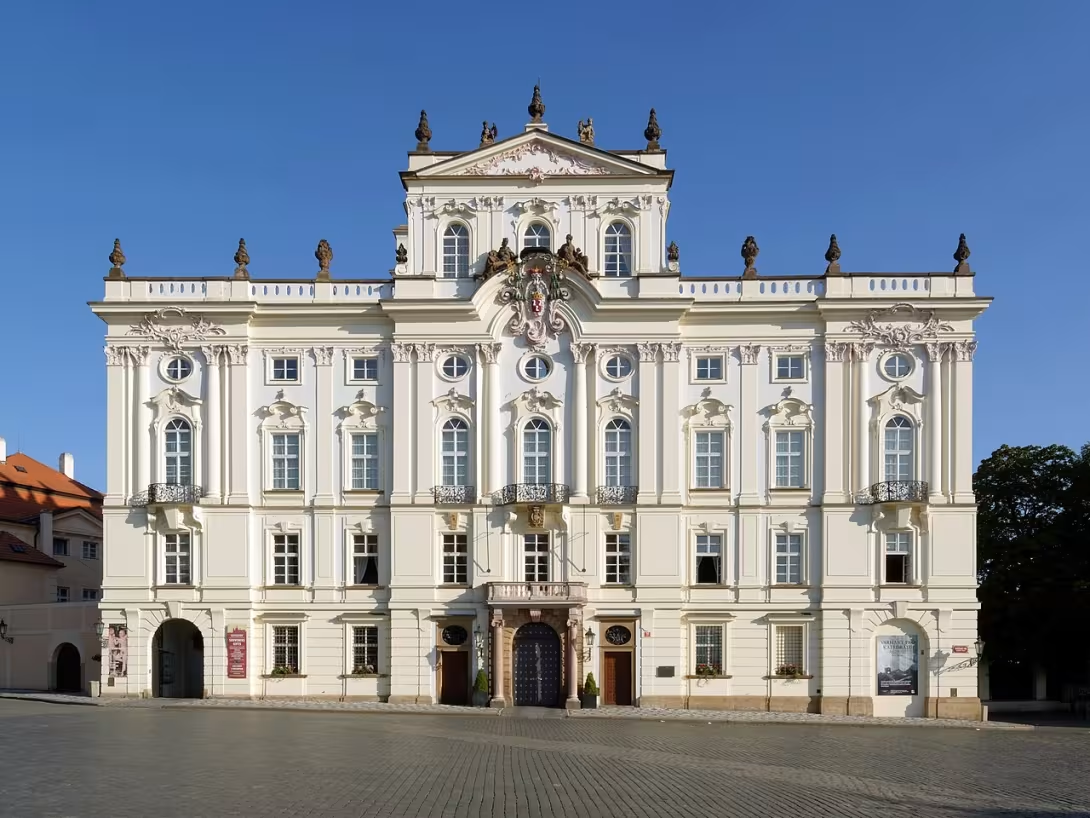

The historical appearance on the left is an AI-generated visualisation and serves as inspiration only.
Historical milestones
- 1561
- Emperor Ferdinand I. donated a house for the establishment of Archbishop residence.
- 1599
- The consecration of the palace chapel dedicated to St. John the Baptist and other saints.
- 1676
- The opening of a large reconstruction of the palace according to the design of architect Jean Baptisti Mathey.
- 2026
- The Palace has acquired the status of a national cultural monument.
Architectural development
Originally a Gothic house was converted into a Renaissance residence in the 16th century with letter sgraffiti facades. Significant Baroque reconstruction took place between 1676 and 1694 according to Jean Baptiste Mathey's design. The current external appearance is based on a reconstruction in the 1960s designed by architect Jan Josef Wirch.
Historical events
1561 donation by Emperor Ferdinand I. for Archbishop residence; 1599 consecration of the castle chapel; 1676-1694 Large reconstruction of the palace under the leadership of architect Mathey
Owners
Florian Gryspek of Griespach, Emperor Ferdinand I., Prague Archbishops
Points of interest
- The current Archbishop's Palace in Hradčanská Square is not at the first residence of the Prague bishops, because the oldest residence was directly on the Castle next to the St. Vitus Temple and the second residence was on the Little Side. - The palace originated from the gift of Ferdinand the First of October 5th in 1561, to which he gave the Archbishop Antonín Brusz of Mohelnice a house once belonging to Florian Gryspek of Griespach. - On the east wall of the west wing of the first courtyard, there are two symbolic scenes called Jacob's dream and the Bear-eating rat, which are probably the allegory of the church fighting heretics. - Archbishop Zbyněk Berka of Dubé rebuilt the entire palace in the Renaissance style and from his time comes a chapel in the southeast wing with a portal from Slivenec marble. - The great Baroque reconstruction passed the palace between 1676 and 1694 for Archbishop Jan Bedřich, Count of Valdštejn, who called architect Jan Baptiste Mathey.
Guide
Show guide text
This text was created by artificial intelligence and has not been editorially reviewed. It may contain inaccuracies.
Welcome to Hradèany Square. You are now facing an important historical building, which is Arcibiskupský palác v Praze. Look before you at this impressive work, which is the unimaginable dominance of the whole area. Enjoy the unique moment when you have a building in front of you that serves as the current residence of Prague Archbishops and is located in the immediate vicinity of Prague Castle. Let the atmosphere of a place where deep spiritual history combines with the masterful building arts of the past centuries. Take a moment to look at the exterior and look at the main facade of this important building, which has undergone a number of changes over the centuries and today boasts a noble look.
Let us now return in time and look at how this extraordinary palace was created and what its historical context was. The year is 15 hundred and sixty-one, October precisely. The monarch, Emperor Ferdinand the First, donated a house to establish the Archbishop residence. This generous gift laid firm foundations for a place that was to play a key role in the ecclesiastical and social life of Czech countries in the centuries to come. The first great personality associated with this seat was Archbishop Antonín Brus z Mohelnice. But the palace was not built on the green meadow. Several layers are reflected in its development because the construction has undergone many reconstruction from the original Renaissance and Gothic bases. When you look at the structure of the building, it's fascinating to think that inside there are even preserved medieval walls and rare wall paintings in the chapel. The fact that the chapel has long been at the spiritual heart of the entire mansion is also evidenced by the fact that in the year fifteen hundred ninety and ninety it was consecrated. That's when she was dedicated to St. John the Baptist and other saints.
Now pay attention to the architecture itself and the details that tell you the story of many construction stages. As has already been mentioned, the building has Gothic and Renaissance roots, but it has acquired its present face thanks mainly to its magnificent baroque modifications. A major break in the form of a palace came in 16,000. That was when the period of major reconstruction started according to the design of the famous architect Jean Baptiste Matheey. This master printed a clear manuscript on the building, to which other important creators such as Jan Josef Wirch or Daniel Alexius z Květné later followed. When you stand before this monument, feel the thought of the entire space. Every detail on the facade bears the mark of a time when the Baroque style tried to express the strength and nobility of the Church. Although the architects took turns over the centuries, they managed to maintain a harmonious whole, which still arouses admiration for experts and lay visitors. Recent history then brought another important milestone, because since 26, this historic building has the official status of a national cultural monument, which only underlines its extraordinary importance for our whole country.
Let's take a closer look at the key stories and significant personalities that have brought life to this place. The Archbishop's palace was not only a cold wall but a centre of power, faith and often dramatic historical events. Among the key figures that housed and shaped the destinies of the Prague Archdiocese, next to the already mentioned Antonín Brusa of Mohelnice also includes Zbyněk Berka of Dubé. Another distinctive figure was Matouš Ferdinand Sobek z Bilenberku and last but not least Jan Bedřich z Valdštejna. Each of these men has left his mark in the history of the palace. They had to face difficult times, address the difficult religious and political issues of their time, while ensuring that the residence is dignified to represent their position. When you imagine those generations of clergy, nobles, builders and craftsmen who came here, a rich mosaic of the human destinies associated with this place opens up to you.
Stop now at one interesting thing, which may surprise some and give this place an unrepeatable touch of mystery. The current Archbishop's Palace in Hradčanská Square does not stand at the first seat of Prague's bishops. Many people think that church dignitaries have lived in the Hradčany since time immemorial, but the truth is elsewhere. The oldest residence was standing right in the castle, next to St. Vitus's Temple. And that wasn't all. Before the Archbishops found their home here in Hradčany, there was a second residence on the small side. It was only mentioned that Emperor Ferdinand's gift of the first of the fifth of October in the year fifteen hundred sixty-one gave the impetus to the establishment of a permanent residence in this very place. The palace thus carries a memory of the move of power and the search for the right space to match the importance of the Prague Archbishop.
Now we are slowly approaching the conclusion of our walk today. I hope that the view of this extraordinary building has been rewarding to you and that through my words, you have felt the breath of history, which is still wandering on Hradène Square. Arcibiskupský palác v Praze remains a living part of our cultural heritage and a place that still has something to tell people. When you continue your journey further along the Hradčany or set out to discover the other beauty of our capital, remember the centuries that shaped these walls. Thank you for your attention, I wish you a wonderful rest of the day and I look forward to seeing you next to the sights of our rich history. Goodbye.
Tips for visitors
For the best experience we recommend a visit in the morning or late afternoon when there are fewer people and light on the front of the building in the style of Baroque works best. If you plan to take pictures, you can get the best views directly from Hradčanská Square, especially in the low sun.
Transportation to the place is possible by public transport and by car. Please check the current connection of the means of transport in the search engine.
Bring comfortable shoes for walking on historic tiles and drinking water. If you want to take pictures, keep in mind the rules for shooting in the interior.
In the surrounding area you can visit places such as Prague Castle, Sternberg Palace or walk in a place called Deer Trench. All of these places are a short walk away.
For families with children it is suitable to the surroundings of Hradčanský Square, where children have more room for movement than in narrow alleys.
Frequently asked questions
Can the monument be visited?
Some buildings of this kind are open for guided tours, others serve another purpose or are privately owned. We have not verified whether and when this monument is open – please ask the operator.
What are the opening hours and admission?
We have not verified the opening hours or admission. Current information is published by the operator.
Where is the monument?
Location: Hradčanské nám. 56/16, Hradčany, Praha, Hlavní město Praha. The map on this page shows the exact spot.
Why is the monument protected?
It is listed in the Central List of Cultural Monuments of the Czech Republic as a national cultural monument (register no. 517).
Businesses nearby
Do you run a restaurant, accommodation, shop, museum, rental, wellness or other visitor service near this monument? Show yourself directly to the people heading to it — this is how they will see you in the app and on the web:
Events nearby

Zdroj akcí: otevřená data měst a obcí ČR (Národní katalog otevřených dat) a kalendář akcí Národního památkového ústavu.
Nearby
Pražský hrad, Jelení příkop, Šternberský palác, Hradčanské náměstí
Accommodation nearby
Trips and activities nearby
Guided tours, tickets and activities nearby from GetYourGuide
Affiliate link: if you buy from the partner, we may receive a commission. The price for you does not change.
Search tours and activities →Themed route
1. Hradčanská Square Type: Space Why is it worth a visit: This historic area before the main entrance to the head of state offers breathtaking views of the city and serves as an ideal starting point for exploring the entire neighborhood.
Arcibiskupský palác v Praze Type: Historical monument Why is it worth a visit: The main aim of our trip is a magnificent example of Renaissance and Baroque architecture, which serves as the seat of Prague's Archbishops and hides rare art collections.
3. Prague Castle Type: Castle area Why is it worth a visit: The vast complex of buildings and temples in the immediate vicinity of the palace consists of the historic heart of the whole country with incalculable cultural value.
4. ŠTERNBERG palaces Type: Palace Why is it worth a visit: This beautiful Baroque building, right next to the main destination, captures its architecture and an important collection of fine art.
5. JEZK Type: Natural gully Why is it worth a visit: Deep green valley under the walls offers a peaceful nature walk right in the historic center of the city.
Seasonal recommendations
Spring moons bring awakening nature to the castle gardens and surrounding streets, while the sun begins to warm pleasantly and reveals the beauty of the white facade of Prague's Archbishops' mansion in new light. The atmosphere is calm and ideal for undisturbed contemplation. In this period I recommend wearing a light coat or jacket and fixed shoes suitable for longer walks on the pavement. Visitors will not yet encounter mass crowds, which is why the best time for a tour of the morning is when the surroundings are quietest and the light hits the main facade.
The summer season attracts long days with bright sun, which creates strong shadows and makes the architectural details of this magnificent palace stand out. The air is warm and the surrounding parks are green. Since this is the main tourist season, count on a large number of people in the area. I recommend you choose to visit the early morning hours immediately after opening to avoid the greatest heat and pressure. Don't forget to wear sunglasses, headgear and a bottle of drinking water, because in historical areas there can be exhaled air at noon.
Autumn time turns Hradčany into a coloured gallery thanks to the leaves of trees coloured in yellow and red shades. The sun is no longer warm and soon dark, which gives the place a melancholy and noble atmosphere. The walk requires warmer clothes, ideally a windbreaker and a scarf against the cool wind blowing down the hill. The crowds are shrinking, allowing them to enjoy the quiet atmosphere. The best time to arrive is around noon, when the autumn sun most illuminates the area before its seat and provides unique visual experiences.
The winter season covers Prague in a freezing haze and occasional snow that covers the roofs of ancient houses around it. The atmosphere is mysterious, especially in the evening, when historic lights are lit and create a unique shadow game on the walls of the palace. The need is quality winter shoes with anti-slip soles, warm hat, gloves and strong coat. Tourists are the least at this time, unless we count Christmas holidays. The best thing to do is to go out in the afternoon so you can catch the daylight while experiencing the magic of early twilight over the whole city.
Visualizations and artistic views


The visualisations are generated by artificial intelligence and serve as inspiration.
Photos from the area
Real photos taken near the monument

Zdroj a licence jsou uvedeny u každého snímku.
View from the area
This animation was generated by artificial intelligence from a real photograph of the surroundings. The motion and details are not real footage of the location.
Atmosphere of the place
This atmospheric visualisation of the place and period was generated by artificial intelligence. It is not real footage of the location.
Tips from visitors
No tips yet. Be the first!
Log in and add your tip.
Sources and literature
Photos: Gampe / CC BY-SA 4.0 — Wikimedia Commons. The author and licence also appear when you hover over the image.
Faktickým podkladem tohoto textu byl článek na Wikipedii, jehož autory jsou přispěvatelé Wikipedie. Článek je dostupný pod licencí CC BY-SA 4.0.
Location on the map

Příběhy a pověsti
Legendy, pověsti a příběhy spjaté s touto památkou
Fotografie návštěvníků
Zatím žádné fotografie. Buďte první, kdo přidá fotografii z návštěvy!
Log in a přidejte svou fotografii nebo hodnoťte.
Za ověřenou návštěvu v aplikaci získáte víc bodů — poznáme podle GPS, že jste na místě.
Reviews and comments