



Barokní sýpka v Roudnici nad Labem Granary
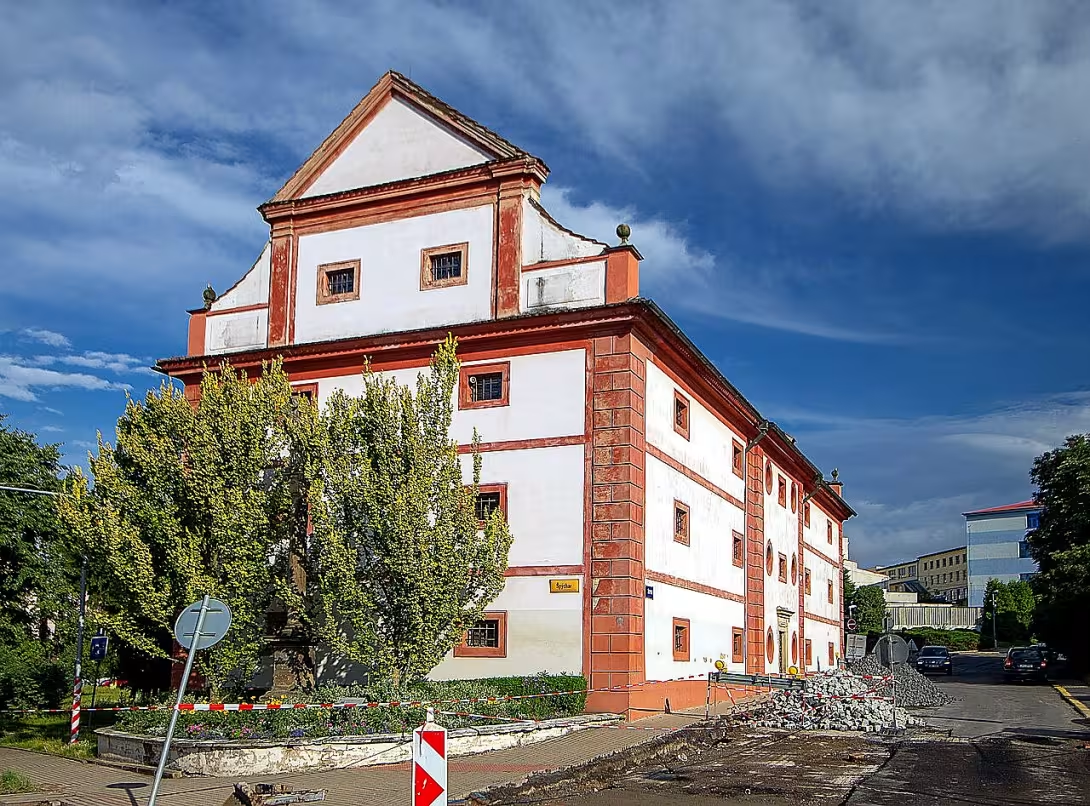
Barokní sýpka v Roudnici nad Labem is a historical monument from 1601, which originally served as a store of grain and other food. It is located in the village of Roudnice nad Labem in the district of Litoměřice, Ústecký kraj, and is known for its architectural form associated with the výAntonia della Porty.
According to the information available, the granary was built in 1601. It is officially stated that Antonia della Porty from the last quarter of the 17th century is the author.
The architecture of the building is Baroque and has a rectangular plan. It is a two-story building with a characteristic red-white facade, typical of Port's parts. The facade is decorated with a barefoot corner with wing shields and a series of small windows with stone frames.
This monument is protected as a cultural monument under the number 28111 / 5-4623 and is located at the address Na Urbanka 633.
The granary represents an important example of baroque useful architecture. Her tour provides insight into the history of the local economy and then construction.
Then and now
Drag the slider to compare how the landmark may have looked when it was built with the view today.
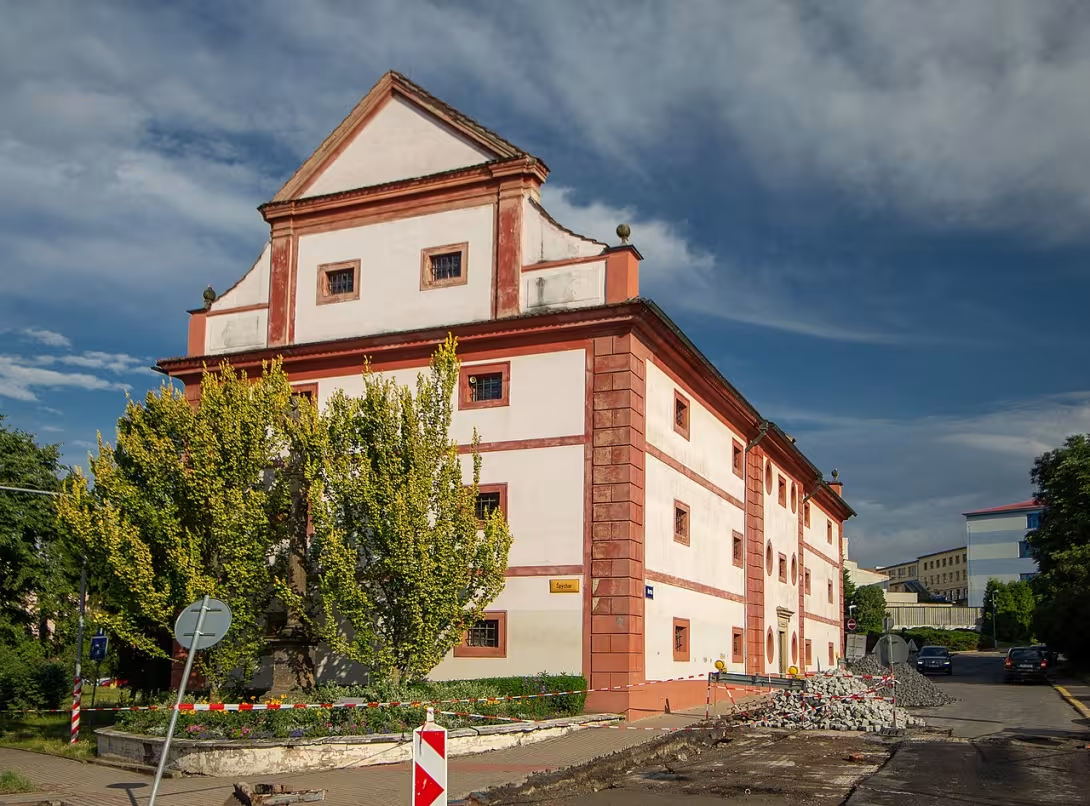

The historical appearance on the left is an AI-generated visualisation and serves as inspiration only.
Historical milestones
- 1601
- Grave formation
Points of interest
- Barokní sýpka v Roudnici nad Labem is a historical monument from 1601. - The granary was originally used as a store of grain and other food. - The architecture of the building is Baroque with characteristic red-white facade, typical of the works of Antonia della Porta. - The granary is protected as a cultural monument under the number 28111 / 5-4623. - It represents an important example of baroque utility architecture.
Guide
This guide is narrated by a synthetic voice generated by artificial intelligence.
Show guide text
This text was created by artificial intelligence and has not been editorially reviewed. It may contain inaccuracies.
Welcome to Roudnice. You just stopped in front of a building that is one of the most important witnesses to the history of this place. You are standing right in front of a baroque granary, which is very serious and extremely important by its presence in this urban area. Feel the atmosphere surrounding you. You may feel the proximity of the Elbe River, which has always been crucial to this region, and you may be fascinated by the quiet force that radiates from this object. This building is not just an ordinary house for stock storage, it is a monumental expression of stability and prosperity that has taken place in this place in the past. Look at its overall form and try to imagine what the world looked like when it first started building here.
Let's go back deep into the past together to understand why this building is standing here. If we now try to return in spirit to the moment when the first stones of this building were placed in the ground, we will find ourselves in the year one thousand six hundred and one. It is a time that has been absolutely crucial for the whole country and for this particular region. At that time, the grain was not just an ordinary food product, it was the real gold of the earth, the basic measure of wealth and security for the survival of entire communities. The granary was built with great effort and a great sense of security. It had to be solid, it could have been monumental, and it had to serve as a safe haven for the most valuable things people had at that time. This building was a symbol of economic strength and readiness for future times. Its creation in the early seventeenth century gives us an insight into the world where agricultural production became a fundamental pillar of the whole social order.
Now pay attention to the very form of this building. Even if you look at the building today as a solid part of the urban landscape, feel its rhythm and its shapes. A man named Antonio della Porta was behind this work. His name in architecture means a certain level of mastery and the ability to create something that will survive for centuries. Even if you look at the outside of the building today, you can feel the professional work that the master has put into every detail in its lines and overall structure. Feel how this building is built into the surrounding space and how its walls define the space in which you are currently standing. Although this granary is protected as a monument, its strength lies not only in its historical documents, but mainly in how it affects human senses. Watch how its shapes stick to the sky and how it can control the sight of anyone passing by it. It is an architecture that has a clear purpose, but at the same time carries the beauty that is typical of the period when practical use was combined with artistic expression.
Now, if you stop by and observe the surroundings, you might wonder who everyone in this area was. It's fascinating, but at the same time it's a little sad that history didn't tell us the names of the particular people who served this building. We don't know the names of the workers who built it, or the traders who brought their costs here, or the trustees who made sure everything was okay every day. Yet this ignorance carries a strange spell. This granary is like a silent witness to thousands of unknown stories. Every stone and every part of this building has a trail of people living here, working and building their future. Even though their names have been forgotten by time, their presence is still felt in this building. It is precisely the unknown human force that gives historical monuments their true depth.
Now consider one interesting thing that can make you think deeper. Imagine the enormous weight this building must have taken. It's not just the weight of her own walls, it's the weight of all the grain that was stored here. Imagine the smell, the weight and the constant attention this building had to require to keep everything safe. There's something mysterious about how this building survived centuries, how it resisted all the unpleasantness that came with a changing world. How did it happen that this building was preserved and today we can look at it with respect? Is it perhaps due to its extraordinary design, or perhaps because its importance to this city was too great to ever be forgotten? This granary is like a chapter of a book that is still waiting for someone to read it, but its pages are written in silence rather than words.
We will now escort you to the next part of your journey. We hope that this brief insight into the past has helped you better understand the importance of this place. Don't forget to stop for a while, see the details that just fell into your eye, and soak up the Roudnice nad Labem atmosphere. The city has many more secrets and beauty for you to discover. Thank you for taking the time of this historic monument and for letting us be your guide. We wish you a nice walk and many other interesting experiences while exploring this beautiful region. We'll say goodbye and wish you a pleasant continuation of the tour.
Frequently asked questions
Can the monument be visited?
This is a residential or farm building, not a museum with opening hours. Please view it from public space and respect the owners' privacy. We have no information about access to the interior.
Where is the monument?
Location: Na Urbance 633, Roudnice nad Labem, Ústecký kraj. The map on this page shows the exact spot.
Why is the monument protected?
It is listed in the Central List of Cultural Monuments of the Czech Republic as a cultural monument (register no. 28111/5-4623).
For kids
Imagine going back 425 years, until Roudnice nad Labem was named by another name and was a small village. This granary, which you now stand in, was built 420 years ago as a storage site for grain and other food for locals.
At that time, there were many cotters and peasants here who fed on farming and livestock farming. The granary was their great support because they used it to store the reserves for the winter. In her heart there was an amazingly calm place where people could safely store their grain and other foods.
Businesses nearby
Do you run a restaurant, accommodation, shop, museum, rental, wellness or other visitor service near this monument? Show yourself directly to the people heading to it — this is how they will see you in the app and on the web:
Nearby
Památka se nachází v centru Roudnice nad Labem, nedaleko řeky Labe.
Accommodation nearby
Themed route
Thematic cruise route: Barokní sýpka v Roudnici nad Labem
1.Barokní sýpka v Roudnici nad Labem - Type: historical monument - Why is it worth a visit: This baroque granary is a unique architectural monument that shows the history of the village and its economic development. It's the perfect place to know the history of local agriculture.
2. Church of St. Catherine - Type: religious monument - Why is it worth a visit: The church is a beautiful example of sacral architecture and offers a view of the rich history of the local clergy. Its interior is an excellent example of Baroque decoration.
3. Náves Roudnice nad Labem - Typ: veřejný prostor - Proč stojí za návštěvu: Náves je centrem místního života a nabízí příležitost procházet se po historických ulicích. Zde lze také najít různé obchody a restaurace, kde si užít regionální jídla.
4. Memorial of Wars - Type: memorable object - Why is it worth visiting: The monument is an important place to remember historical events and provides insight into the past of the village. It's a place where you can enjoy a quiet moment and think about history.
This route offers a view of the cultural and historical aspects of Roudnice nad Labem and is ideal for those who want to know local traditions and architecture.
Seasonal recommendations
Spring: In the spring period, the Baroque granary in Roudnice nad Labem appears in a new light, when the sun rays revive its architectural details. The surrounding nature begins to bloom and green, which gives the impression of life and ancient construction. Visitors can expect a slight increase in crowds, because spring is a popular time for walking outside. It is recommended to wear light but playful clothes in order to be comfortable to handle warm noon and colder morning or evening. The best time to visit is usually afternoon hour when the sun lights the granary with golden rays.
Summer: In the summer period, the Baroque granary in Roudnice nad Labem offers a wonderful noon full of light, which emphasizes its historical beauty. Nature is in full power and the surrounding green meadow or forests are an ideal place for relaxation. Summer is the time of the biggest crowd increase, so it is recommended to visit the memory in early mornings or late afternoons when there is a softer temperature and fewer people. A wet summer requires light clothes and the head should be protected by an umbrella or hat.
Autumn: Autumn brings baroque granaries in Roudnice nad Labem a melancholy atmosphere when the leaves turn colour and fall on the way around the monument. The sunny afternoons are beautifully lit by the long rays of the sun, creating breathtaking photographic moments. This season may increase the number of visitors, but it is a period when crowds are still acceptable. It is recommended to wear clothes suitable for slightly colder temperatures and possible springs such as a combination of the upper with leather coat or coat.
Winter: Winter visit to the Baroque granary in Roudnice nad Labem offers a unique atmosphere where the surrounding area is covered with snow and light turns into soft gold tones. Cold weather and shorter days make the visit not only cold but also calmer because there are fewer people out there. This season it is advisable to wear warm clothes that include leather coat and hat to enjoy visits even at cold temperatures. The short solar afternoon offers the best time for a tour, when the granary is lit in the most beautiful light.
Visualizations and artistic views


The visualisations are generated by artificial intelligence and serve as inspiration.
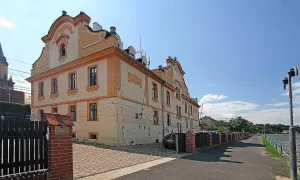
Photos from the area
Real photos taken near the monument


Zdroj a licence jsou uvedeny u každého snímku.
Atmosphere of the place
This atmospheric visualisation of the place and period was generated by artificial intelligence. It is not real footage of the location.
Tips from visitors
No tips yet. Be the first!
Log in and add your tip.
Sources and literature
Photos: VitVit / CC BY-SA 4.0 — Wikimedia Commons. The author and licence also appear when you hover over the image.
Location on the map

Příběhy a pověsti
Legendy, pověsti a příběhy spjaté s touto památkou
Fotografie návštěvníků
Zatím žádné fotografie. Buďte první, kdo přidá fotografii z návštěvy!
Log in a přidejte svou fotografii nebo hodnoťte.
Za ověřenou návštěvu v aplikaci získáte víc bodů — poznáme podle GPS, že jste na místě.
Reviews and comments