



Beranův mlýn Mill
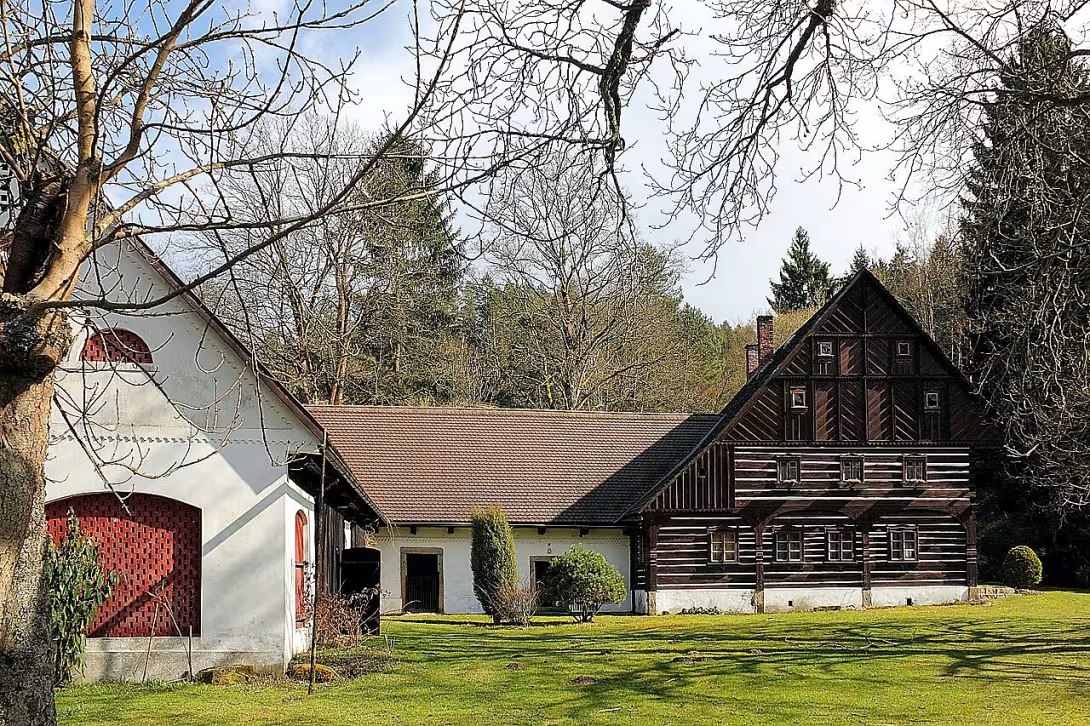
Beranův mlýn stands on the Mohelce River in Vlastibořice in the Liberec district, alone near the Zavíček settlement. It belongs to the oldest equipment of the local landscape - its first mention in the written records dates back to 1612, which makes it one of the buildings with a rich history.
The decisive change came in 1862 when the mill was bought by Jiří Beran and had it rebuilt into the form it still maintains today. The original stone structure was replaced by a wooden, grafted structure with a multi-floor arrangement. It was this intervention that gave the construction its present appearance and name. At the beginning of the twentieth century, the mill was overprofiled - there was a glass mill, which employed about ten workers and became an important part of the site's economy.
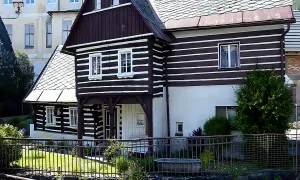
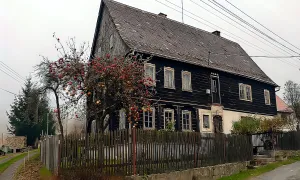
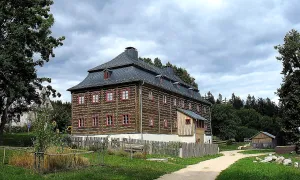
The architecture of the mill reflects its dual purpose and history. The mill became part of the layout of the residential house, with grafting and pinched shingles on the roof. The ground floor is decorated with decorative wooden columns. The mill wheels were in the back of the house. It is surrounded by economic buildings from the original stone mill. The most impressive is the wall of the barn, which adorns the brick rose, and beneath the vault equipped with the walls with holes through which the air blew into the grain box - an ingenious solution to prevent moulds in the stored grain. The water was brought to the water wheels by a drive from the top of the lake, which was located about 400 meters above the stream. After use in the mill the water continued through the drain channel to the Cooperative Mill in Sedlistice. In 1930 the mill had two wheels on top water with a drop of 2.87 meters and a performance of 5.6 horsepower.
Among other things, a large flood hit the building in 1945, which tore down the food. It was restored only later, between 1976 and 1980, when the entire complex was renovated. Today the mill is protected as a real-estate cultural monument of the Czech Republic, which ensures its preservation. This is a valuable example of the transformation of the traditional Central European mill, which, without losing its basic character, has adapted to the changing needs of its time. / p >
Then and now
Drag the slider to compare how the landmark may have looked when it was built with the view today.
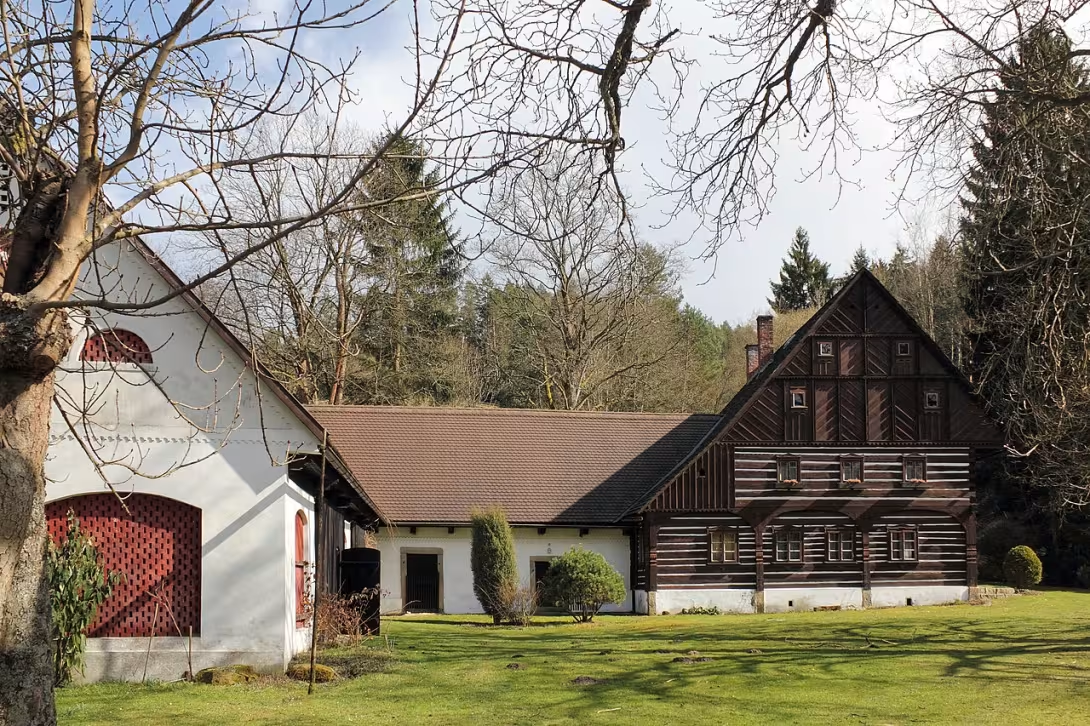

The historical appearance on the left is an AI-generated visualisation and serves as inspiration only.
Historical milestones
- 1612
- First written mention of the existence of the mill.
- 1862
- Jiří Beran bought the mill and converted it from stone to wooden object.
- 1945
- The flood destroyed the mill's food.
- 1976- 1980
- Extensive reconstruction and repair of the site.
Architectural development
The original stone mill from 1612 was replaced in 1862 by a wooden grafted construction. The building is multi-storey and the whole structure includes the roof covered by split shindle. Economic buildings are older and come from the original stone mill, with the barn's shield decorated with brick roses.
Historical events
1612: first mention of the mill; 1862: purchase of the mill by Jiří Beran and its reconstruction; 1945: the flood that tore down the food; 1976- 1980: extensive reconstruction of the whole area including repair of the jez.
Owners
Jiří Beran (since 1862)
Points of interest
- The first mention of the mill in the written records dates back to 1612. - In 1862 it was bought by Jiří Beran, who replaced the stone construction with a wooden grafted construction. - At the beginning of the twentieth century there was a glass grinding plant with approximately ten workers. - The wall of the barn is decorated with brick roses, and the walls under the vault have holes for ventilation of the grain. - In 1930 the mill had two wheels for the top water with 5.6 horsepower.
Guide
This guide is narrated by a synthetic voice generated by artificial intelligence.
Show guide text
This text was created by artificial intelligence and has not been editorially reviewed. It may contain inaccuracies.
Welcome to the Tup Mill, an extraordinary historical landmark that stands before you in the Alluvian landscape. You're standing in front of a wall of bricks and stone that reflects the sun and creates beautiful shadows. Look up and notice the wooden roof that gives the mill its unique atmosphere.
Let's move on to the history of this place. Beranův mlýn has unknown chronology, but its architecture is clearly the result of several stages of construction and reconstruction. Since there are known elements of different styles, it can be assumed that the mill was built at different times.
Now pay attention to the details of architecture. Notice how the wooden beams of the roof are connected to the stone wall using metal screws. This is a very unusual element which shows that the mill has been modernized over a certain period. Also observe the way the windows are placed at the top of the roof. It's a typical element of medieval buildings.
Beranův mlýn has a rich history, which is still unknown. There is no written or oral evidence of the persons involved in its construction or operation. Although this may sound like a deficit, it is still possible that this anonymity gives the mill its unique atmosphere.
The interesting thing about this place is that Beranův mlýn has a certain mysticism. Many people believe that there is a hidden chamber in the mill or a secret that has not yet been revealed. Although this remains merely speculation, it still gives the place its specific energy.
And so, after this short tour guide, I invite you to explore this historic place again. Beranův mlýn is full of secrets and surprises waiting for you. It's a place where you can discover something new and unusual. Whether you want to find out more about its history or simply admire its architecture, Beranův mlýn is a place that offers you an impossible experience.
Tips for visitors
The best time to visit is the late spring or autumn, when the landscape around the Mohelce River is the most colorful and nature around the mill itself seems most natural. Transport to Vlastibořice can be arranged by your own car or public connections, whose current timetables we recommend to verify in the internet search engine.
In the way, take suitable shoes into the field, because the mill is lying alone and the road to it can be wet. Since it is a technical monument in nature, we recommend to have a bug repellent and plenty of drinking water.
For the best photos we recommend to come in the morning or late afternoon light, when the sun gently illuminates the stone wall of the building. The most interesting footage offers views of the water wheels and the flow of the river Mohelce, which forms the natural background of the object.
With children you can use the road to the mill as a short trip to nature. You can follow the stream together and look for traces of the old water system, which led further towards the Cooperative Mill in Sedlistice.
Frequently asked questions
Can the monument be visited?
This is a technical monument. Some are open as exhibitions, others are out of use or on private land. We have not verified whether this one is accessible.
What are the opening hours and admission?
We have not verified the opening hours or admission. Current information is published by the operator.
Where is the monument?
Location: č.ev. 2, Vlastibořice, Liberecký kraj. The map on this page shows the exact spot.
Why is the monument protected?
It is listed in the Central List of Cultural Monuments of the Czech Republic as a cultural monument (register no. 34622/5-4496).
For kids
Imagine going back to a time when our country was full of woods and rivers. And it was in one of these woods that we now know as Beranův mlýn.
How did it look here? Who lived here? What happened here? At that time the mill was owned by a peasant named Jan Beran. He built a house next to the mill and his family lived there. The mill was an important part of the village because it served to grind the grain for the inhabitants of the surrounding villages.
Businesses nearby
Do you run a restaurant, accommodation, shop, museum, rental, wellness or other visitor service near this monument? Show yourself directly to the people heading to it — this is how they will see you in the app and on the web:
Events nearby


Zdroj akcí: otevřená data měst a obcí ČR (Národní katalog otevřených dat) a kalendář akcí Národního památkového ústavu.
Nearby
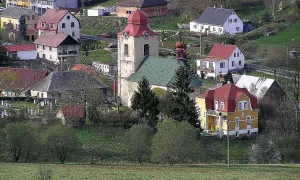
Mlýn leží na samotě poblíž osady Trávníček u obce Vlastibořice na řece Mohelce; voda z mlýna dále proudila k Družstevnímu mlýnu v Sedlišťce.
Accommodation nearby
Trips and activities nearby
Guided tours, tickets and activities nearby from GetYourGuide
Affiliate link: if you buy from the partner, we may receive a commission. The price for you does not change.
Search tours and activities →Themed route
Here is the design of the thematic route:
1. Beranův mlýn (mill) - The main destination of the trip in solitude near the village Vlastibořice, where you can admire the historical construction on the river Mohelce. 2. Grass (settlement) - Close place around the mill, which serves as an orientation point in the landscape. 3. Cooperative Mill in Sedlistice (Mill) - The final stop of the route where the water was flowing from the previous mill.
Seasonal recommendations
In spring the surroundings of the mill awaken to life and the landscape around Vlastibořice green. The air is fresh and light fine, which is ideal for observing the architecture of the building. We recommend moisture-resistant shoes because roads can be muddy after melting snow. The best place to visit in the morning when dew is still visible on the grass.
Summer brings bright sun and thick leaves of trees that provide a pleasant shade. The atmosphere is warm and calm, typical of the peak season in the landscape. It is advisable to choose light, breathable clothes and a hat on your head. The ideal time for arrival is the late afternoon, when the sun falls and the shadows extend, creating a more pleasant temperature.
The autumn of nature in the surroundings of the mill turns into gold and brown tones, which underlines the historical character of the monument. The fog over the surrounding streams gives the place a mysterious touch. It's practical to bring a lighter jacket or a wind coat. The best are clear days in October when visibility is high and the colour of leaves is the most intense.
Zimą operates a mill in quiet and quiet, often surrounded by white snow. The light is cold and the days are short, which creates a strict but impressive atmosphere. Hot shoes with anti-slip soles and laminated clothing are essential to keep the visitor from freezing. We recommend coming right after sunrise to make use of maximum daylight.
Visualizations and artistic views


The visualisations are generated by artificial intelligence and serve as inspiration.
Photos from the area
Real photos taken near the monument


Zdroj a licence jsou uvedeny u každého snímku.
Tips from visitors
No tips yet. Be the first!
Log in and add your tip.
Sources and literature
Photos: Miloslav Rejha / CC BY-SA 4.0 — Wikimedia Commons. The author and licence also appear when you hover over the image.
Faktickým podkladem tohoto textu byl článek na Wikipedii, jehož autory jsou přispěvatelé Wikipedie. Článek je dostupný pod licencí CC BY-SA 4.0.
Location on the map
Příběhy a pověsti
Legendy, pověsti a příběhy spjaté s touto památkou
Fotografie návštěvníků
Zatím žádné fotografie. Buďte první, kdo přidá fotografii z návštěvy!
Log in a přidejte svou fotografii nebo hodnoťte.
Za ověřenou návštěvu v aplikaci získáte víc bodů — poznáme podle GPS, že jste na místě.
Reviews and comments