



betonový most Zenklovy ulice přes Rokytku Bridge
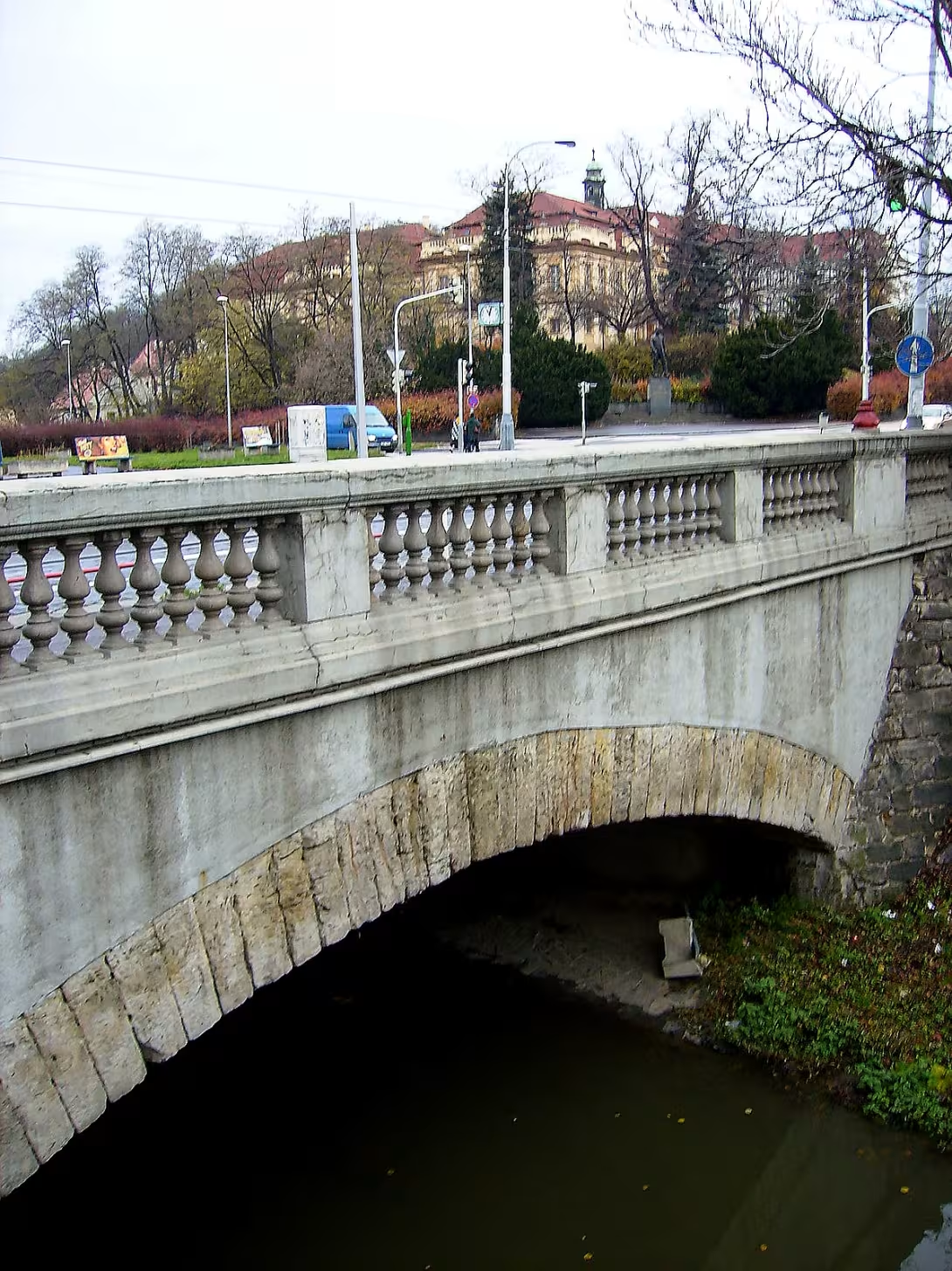
The Betonový Most Zenklovy Ulice is a historic bridge in Prague's Libeň district. It holds the distinction of being the oldest reinforced concrete road bridge in the Czech Republic. Constructed in 1896, it accommodates both vehicular and tram traffic, linking Dr. Václava Holého Square with Elsnicovo Náměstí. Its pioneering use of reinforced concrete marked a significant advancement in engineering at the time.
Designed by architect Antonín Los, the bridge was completed impressively within 35 days. Built during Europe's rapid industrialization period, it reflects the era's technological progress. In Bohemia, such developments were crucial for supporting urban growth and economic activities. Its completion on September 28, 1896, was a milestone in Prague's transportation infrastructure, facilitating tram line extensions from Palmovka to Libušák.
Architecturally, the Betonový Most Zenklovy Ulice features a single-arch design spanning 13.30 meters with a height of 2.75 meters and a thickness of 0.95 meters. The innovative use of reinforced concrete at the time is notable, along with decorative balustrades that enhance its aesthetic appeal. A commemorative plaque on the eastern side celebrates its status as Bohemia's first reinforced concrete road bridge.
In 1909, the bridge underwent an expansion on its western side to cover part of the Rokytka stream near Elsnicovo Náměstí, significantly increasing its width. This modification reflects ongoing efforts to adapt infrastructure for urban needs. The original design model, including functioning lighting, is displayed at the Museum of Roads and Highways in Velké Meziříčí, offering historical insights.
Today, the Betonový Most Zenklovy Ulice remains a vital part of Prague's urban landscape. It connects key areas near landmarks such as Libeňský Zámeček and Svět Palace. Plans to redevelop Elsnicovo Náměstí include proposals to uncover parts of the Rokytka stream, enhancing aesthetic and recreational value. This bridge is a testament to early 20th-century engineering and continues to serve its community as a cultural monument.
Visitors to Prague can appreciate this historic structure during their exploration of Libeň. Its significance in construction techniques and urban infrastructure evolution makes it a noteworthy stop for those interested in architectural history. The Betonový Most Zenklovy Ulice stands as a bridge across both a stream and time, inviting reflection on its enduring legacy.
Then and now
Drag the slider to compare how the landmark may have looked when it was built with the view today.
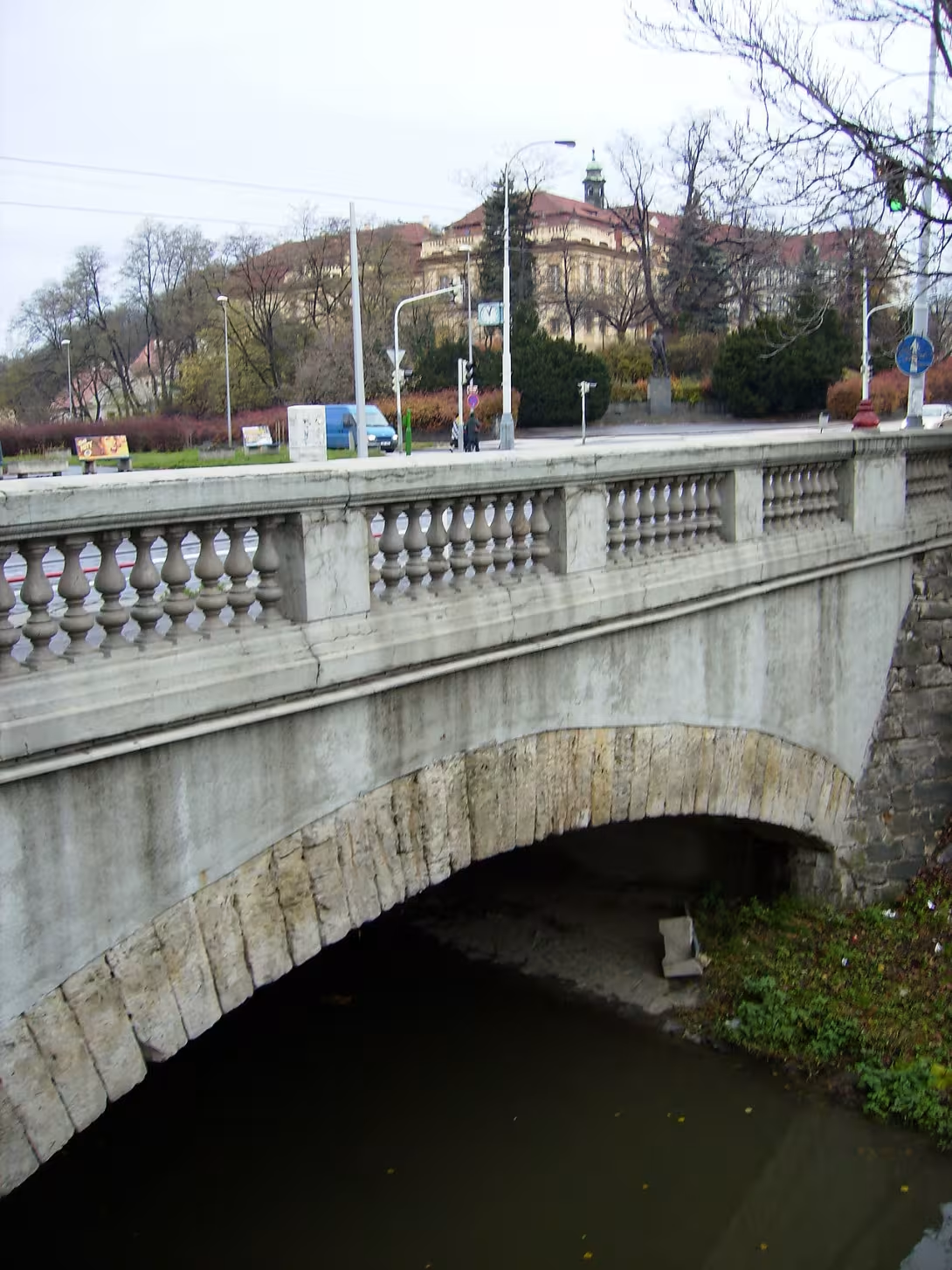
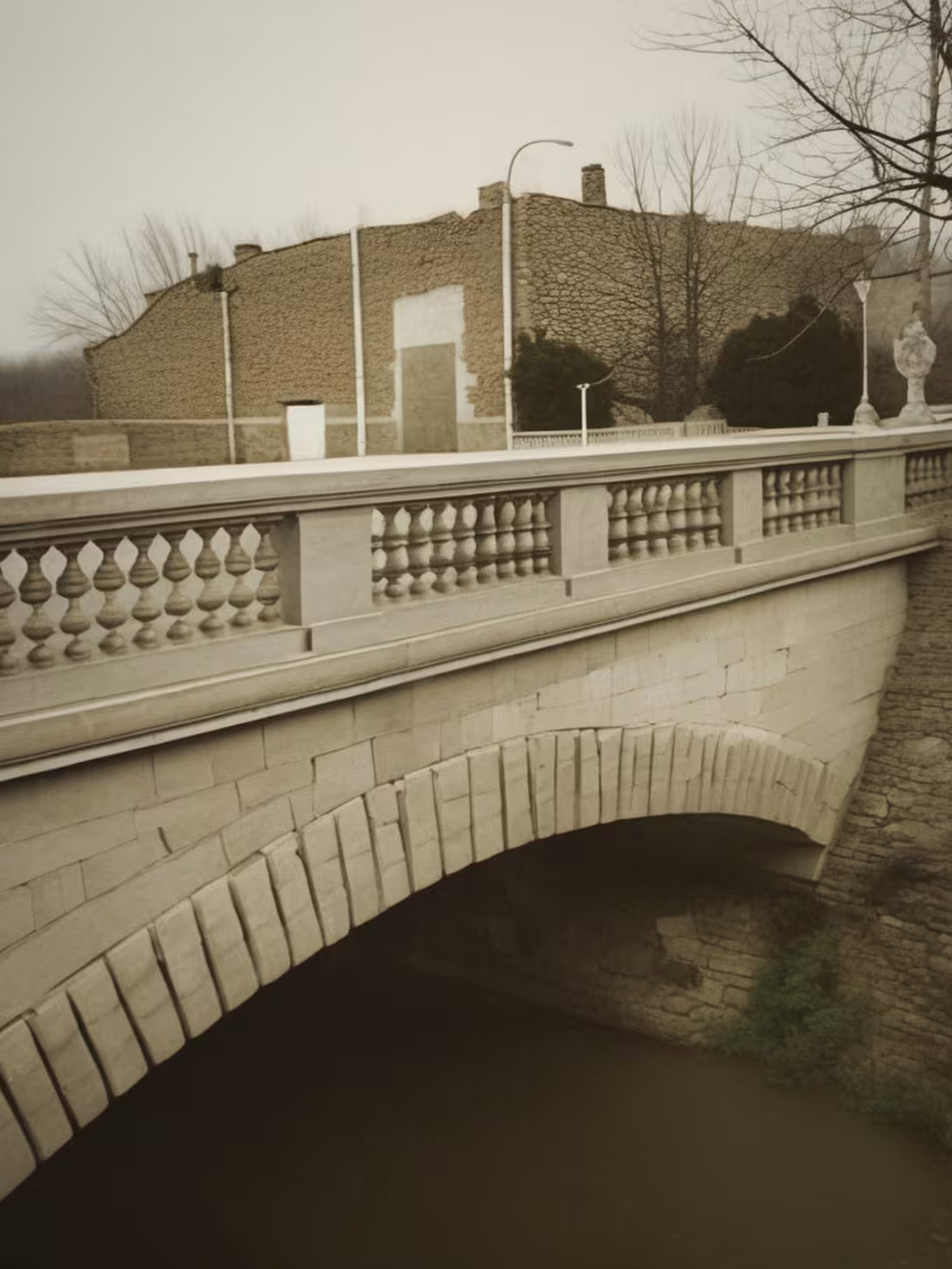
The historical appearance on the left is an AI-generated visualisation and serves as inspiration only.
Historical milestones
- 1896
- The bridge was completed and opened for traffic.
- 1909
- The western side of the bridge was expanded to cover part of the Rokytka stream.
Architectural development
Designed by architect Antonín Los, the bridge was constructed within just 35 days using reinforced concrete, a novel material at that time. The original structure featured a single arch and balustrades with decorative elements. In 1909, it underwent an expansion on its western side to cover the Rokytka stream near Elsnicovo náměstí, increasing its width significantly.
Historical events
The bridge was completed and opened on September 28, 1896, marking an important development for transportation infrastructure in Prague.
In October 1896, a tram line extension from Palmovka to Libušák began operating over the bridge.
Points of interest
- The Betonový Most Zenklovy Ulice was completed in just 35 days, a remarkably fast construction period for its time, reflecting the efficiency and ambition of late 19th-century engineering projects.
- Despite being constructed over a century ago, the original design model of the bridge, including functioning lighting, is preserved at the Museum of Roads and Highways in Velké Meziříčí, offering a rare glimpse into historical construction techniques.
- In 1909, the bridge underwent an expansion on its western side to accommodate increased urban needs, demonstrating how infrastructure was adapted over time to meet the demands of growing cities.
- The decorative balustrades on the Betonový Most Zenklovy Ulice enhance its aesthetic appeal, blending functionality with artistic design, which was a forward-thinking approach during its construction era.
- Future plans for Elsnicovo Náměstí include proposals to uncover parts of the Rokytka stream beneath the bridge, aiming to increase both the area's aesthetic and recreational value.
Guide
This guide is narrated by a synthetic voice generated by artificial intelligence.
Show guide text
This text was created by artificial intelligence and has not been editorially reviewed. It may contain inaccuracies.
Welcome to the historic Betonový most Zenklovy ulice přes Rokytku, a remarkable testament to engineering ingenuity nestled in the heart of Prague's Libeň district. As you stand here, take a moment to appreciate the elegant single-arch design that gracefully spans across the Rokytka stream. This concrete marvel, with its modest height and span, is not just a passage but a portal into the past.
Constructed in 1896 by Antonín Los, this bridge holds the distinguished title of being the oldest reinforced concrete road bridge in the Czech Republic. It was an era marked by rapid industrial advancements, and this bridge exemplifies the pioneering spirit of late 19th-century engineering. The choice to use reinforced concrete was revolutionary at the time, reflecting a bold step forward in construction technology.
As you look closely, notice how the simplicity of its design belies the complexity of its construction. The blend of functionality and innovation is evident as it accommodates both vehicular and tram traffic, seamlessly integrating into the urban landscape while preserving its historical essence.
The story of this bridge's creation is one of remarkable efficiency. Completed in just 35 days, a feat that speaks volumes about the ambition and capability of its builders. This rapid construction period was unheard of at the time and remains impressive even today.
While specific historical figures tied to this site remain unnamed, the bridge itself stands as a silent witness to the lives it has touched over more than a century. In 1909, an expansion on the western side further adapted the structure to meet evolving urban needs, showcasing its enduring relevance.
There's something captivating about how this bridge has withstood the test of time, maintaining its structural integrity and historical significance. It invites us to ponder the countless journeys it has facilitated since its inception.
As you continue your exploration, let the bridge inspire you to delve deeper into the rich tapestry of Prague's history. Each step around this iconic structure is a step through time, offering endless stories waiting to be discovered.
Thank you for joining me on this journey. May your curiosity lead you to uncover more hidden gems in this enchanting city. Safe travels as you continue to explore and discover!
Frequently asked questions
Can the monument be visited?
This is a structure in a public space that can usually be seen from outside free of charge. We have not verified that this particular one is freely accessible.
Where is the monument?
Location: Zenklova, Libeň, Praha, Libeň (Praha 8), Hlavní město Praha. The map on this page shows the exact spot.
Why is the monument protected?
It is listed in the Central List of Cultural Monuments of the Czech Republic as a cultural monument (register no. 41441/1-2105).
Businesses nearby
Do you run a restaurant, accommodation, shop, museum, rental, wellness or other visitor service near this monument? Show yourself directly to the people heading to it — this is how they will see you in the app and on the web:
Events nearby

Zdroj akcí: otevřená data měst a obcí ČR (Národní katalog otevřených dat) a kalendář akcí Národního památkového ústavu.
Nearby
The bridge connects Dr. Václava Holého Square with Elsnicovo náměstí, near landmarks such as Libeňský zámeček, the Svět Palace, and Libeňská Sokolovna. The area is characterized by its urban landscape within Prague.
Accommodation nearby
Trips and activities nearby
Guided tours, tickets and activities nearby from GetYourGuide
Affiliate link: if you buy from the partner, we may receive a commission. The price for you does not change.
Search tours and activities →Themed route
Thematic Walking Tour: Urban Exploration of Libeň
1. Betonový most Zenklovy ulice přes Rokytku (Most) - Type: Architectural Landmark - Why Visit: Begin your tour at this striking concrete bridge, a testament to modern engineering that connects Dr. Václava Holého Square with Elsnicovo náměstí. Its unique design and urban setting make it an excellent starting point for exploring the surrounding architecture of Libeň.
2. Libeňský zámeček - Type: Historical Building - Why Visit: Just a short walk from the bridge, this former castle offers a glimpse into Prague's past with its distinctive architectural style. Although primarily an office building today, its historical significance and unique design are worth exploring.
3. Svět Palace - Type: Cultural Venue - Why Visit: Located near Libeňský zámeček, Svět Palace is a cultural hub that hosts various exhibitions and events. Its modern architecture contrasts beautifully with the older structures in the area, providing insight into Prague's evolving urban landscape.
4. Libeňská Sokolovna - Type: Sports Facility - Why Visit: Conclude your tour at this iconic sports venue known for its distinctive architecture and historical significance to Czech sports culture. It offers a unique perspective on the community's recreational life and architectural heritage.
This walking tour provides an engaging exploration of Libeň’s urban environment, highlighting key landmarks that reflect both historical and modern influences in Prague 8.
Seasonal recommendations
Spring: The Zenklovy ulice Bridge over the Rokytka River offers a vibrant atmosphere during spring, with blooming trees and lush greenery enhancing its natural beauty. This season is perfect for photography enthusiasts who can capture the bridge bathed in soft morning light as flowers start to appear along the riverbanks. Visitors should consider wearing comfortable walking shoes and layers, as temperatures can vary throughout the day. While crowds are generally moderate, arriving early in the morning or later in the afternoon can provide a more peaceful experience.
Summer: In summer, the Zenklovy ulice Bridge becomes an ideal spot for leisurely strolls under the warm sun, with longer daylight hours extending your visit into the evening. This season is characterized by lively atmospheres and vibrant nature surrounding the Rokytka River. To avoid the midday heat, it's advisable to explore the area in the early morning or late afternoon. Light clothing and sunscreen are essential for comfort during this time of year. Given that summer is a popular time for outdoor activities, planning your visit on weekdays can help you escape the larger weekend crowds.
Autumn: Autumn transforms the Zenklovy ulice Bridge into a picturesque scene with its rich tapestry of reds, oranges, and yellows as the leaves change color along the Rokytka River. The cooler temperatures make it an ideal time for walking or cycling around the area without the summer heat. Visitors should dress in layers to accommodate fluctuating weather conditions. This season offers a more tranquil experience with fewer tourists compared to summer, allowing you to enjoy the serene beauty of Prague's changing landscape.
Winter: During winter, the Zenklovy ulice Bridge presents a unique charm as it is often enveloped in a quiet, frosty atmosphere. The Rokytka River can be partially frozen, creating an enchanting setting for those who appreciate the stark beauty of nature in colder months. It's crucial to wear warm clothing and sturdy boots due to potentially icy conditions. Although daylight hours are shorter, visiting early in the day ensures you make the most of the available light. Winter is a quieter time for tourism, providing a peaceful opportunity to explore without the hustle and bustle of peak seasons.
Visualizations and artistic views


The visualisations are generated by artificial intelligence and serve as inspiration.
Photos from the area
Real photos taken near the monument


Zdroj a licence jsou uvedeny u každého snímku.
Tips from visitors
No tips yet. Be the first!
Log in and add your tip.
Sources and literature
Photos: Petr Vilgus=cs:User:Slimejs / CC BY-SA 3.0 — Wikimedia Commons. The author and licence also appear when you hover over the image.
Faktickým podkladem tohoto textu byl článek na Wikipedii, jehož autory jsou přispěvatelé Wikipedie. Článek je dostupný pod licencí CC BY-SA 4.0.
Location on the map
Příběhy a pověsti
Legendy, pověsti a příběhy spjaté s touto památkou

Fotografie návštěvníků
Zatím žádné fotografie. Buďte první, kdo přidá fotografii z návštěvy!
Log in a přidejte svou fotografii nebo hodnoťte.
Za ověřenou návštěvu v aplikaci získáte víc bodů — poznáme podle GPS, že jste na místě.
Reviews and comments