



měnírna Rokoska Trafostation
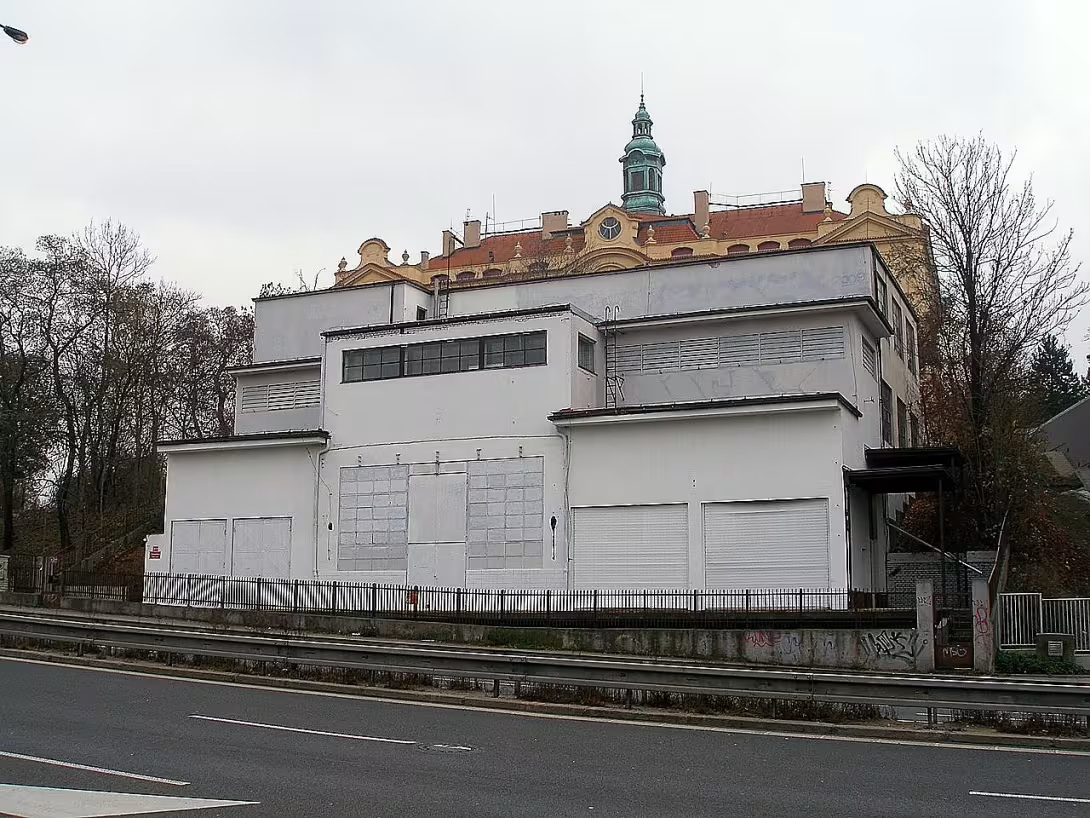
Rokoska in the Prague part of Libeň is a former tram changer from 1937 to 1940. The building used to provide electricity for tram lines to Devils and Kobylis as well as for Hospital Na Bulovce. It is an important part of the historical infrastructure of Prague transport.
The building was designed by the architect Eduard Hnilička and built by František Strnada between 1937 and 1940. The creation of the building was linked to the intensive development of urban transport and the expansion of the electricity network in Prague. At that time, the modernization of tram connections took place in the new parts of the city, including the introduction of transport to Kobylis in the late 1930s, which was allowed by the construction of the road Kobylisa and the introduction of trams by the streets of V Holešovice.
The construction was fully automated and remotely operated from the holesovice plant. Its main task was to convert alternating current into direct current for trams. For this purpose, two mercury rectifiers were originally used to adjust the input AC voltage of 6 kV and 22 kV to a DC voltage of 600 V.
In 1968, there was a technological modernization whereby mercury rectifiers were replaced by semiconductor devices. The exchange room served its original purpose until 1996. A year later, it was disabled and replaced by new Rokoska and Trojská changers.
Object in the street In Holešovice near the crossroads The breeder is currently without use, even though it was previously considered to set up the exposure of PRE a.s. There is currently a procedure for the declaration of construction by the cultural monument of the Czech Republic.
This technical monument commemorates the era of development of Prague's electrical engineering and urban mobility. It is an interesting goal for anyone interested in industrial architecture and the history of transport in the capital.
Then and now
Drag the slider to compare how the landmark may have looked when it was built with the view today.
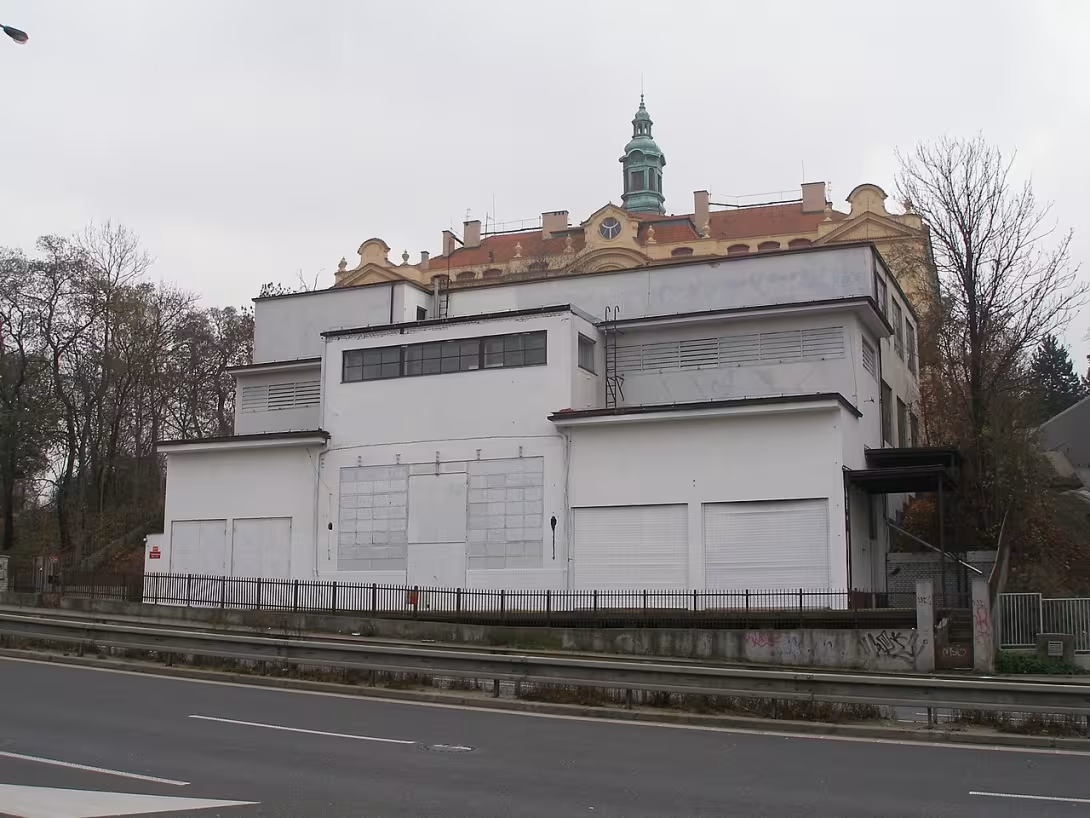
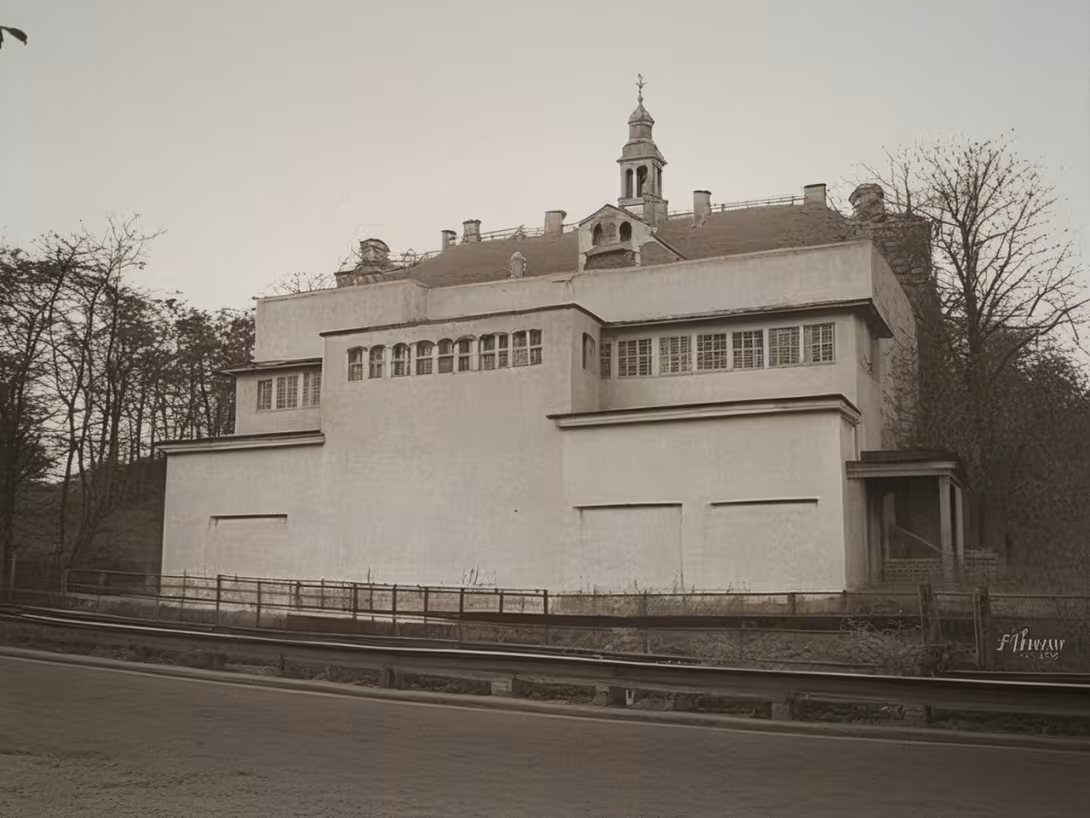
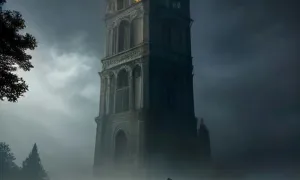
The historical appearance on the left is an AI-generated visualisation and serves as inspiration only.
Historical milestones
- 1937
- Construction of the building.
- 1968
- Exchange of mercury rectifiers for semiconductor devices.
- 1996
- Last year of traffic.
- 1997
- Discharge.
Architectural development
The building was built between 1937 and 1940 by František Strnada. In 1968, technological modernization took place in exchange for mercury rectifiers for semiconductor devices.
Historical events
1937-1940: Building construction. 1968: Exchange of mercury rectifiers for semiconductor devices. 1996: Last year of operation. 1997: Discharge.
Owners
Electric enterprises of the capital city of Prague
Points of interest
- Rokoska changer was a former tram changer from 1937 to 1940. - The object used to provide electricity for tram lines to Devils and Kobylis as well as for Hospital Na Bulovce. - The building was designed by the architect Eduard Hnilíčka and built by František Strnada between 1937 and 1940. - The exchange room was fully automated and remotely operated from the holešovice power plant, converting alternating current into direct current for tram drive. - In 1968, mercury rectifiers were replaced with semiconductor devices.
Guide
Show guide text
This text was created by artificial intelligence and has not been editorially reviewed. It may contain inaccuracies.
Welcome to the site with a rich history and unique architectural character - we are facing the former tram changer Rokoska in Libni. This object, which initially seems simple, hides behind its walls a fascinating story of technical progress and history of Prague transport.
The Rokoska Exchange was built between 1937 and 1940 according to the design of architect Eduard Hnilicek. Its purpose was to provide electricity for the tram lines that dragged to Devils and Kobylis, as well as for the hospital Na Bulovce. This building is a key part of the infrastructure that supported the development of the city during the 20th century.
Look up and you will see the elegant line of the roof and the symmetrical arrangement of the window lines, which are the characteristic features of the architecture of that time. Note also the robust wall construction that shows their function as a technical object dedicated to safety and reliability.
In 1968 there was a significant change of currency - the exchange of mercury rectifiers for semiconductor devices was carried out. This progress was another step forward in technology and traffic efficiency. Rokoska fully automated operated remotely controlled from the holešovice power plant, which was a very advanced solution for its time.
Let's move on to the key stories related to this place. Eduard Hnilička, an architect who designs this object, is one of the great personalities of Czech architecture of the 20th century. His work on changing Rokoska shows his ability to combine functionality with aesthetic attraction.
The interesting thing is that although the changer stopped its operation in 1997 and was disabled, its history and architecture continue to inspire. It is a reminder of a time when technological progress has had profound consequences for everyday life.
Now pay attention to the surrounding environment and consider how this building has become an integral part of Libne's history. Think about the people who worked here and the technological progress that was possible through their efforts.
Thank you for your attention and we hope that this guide inspired you to further explore the history and architecture of our city. If you are interested in more interesting places, feel free to look for the other paths Prague offers. Goodbye!
Tips for visitors
The best time to visit the Rokoska changing plant is in the spring or autumn season when the weather is favourable and the light is ideal for photography. This building is located in the picturesque surroundings of Libna, which makes it an interesting destination even outside the main tourist season.
Traffic to the place is possible both by car and by public means. You can check the current connection in the online search engine.
When you visit, remember the camera, because the historical architectural style of the building designed by Eduard Hnilicko offers beautiful possibilities for photography. The best light appears in the early morning or late afternoon when the sun is not too high.
In the vicinity you can visit the hospital On Bulovce or explore the crossroads of Vyčitelna and the street V Holešovice. These places offer interesting views of the modern and historical appearance of Libna.
For families with children, a visit to the Rokoska shape exchange along with a walk around the surrounding streets can be an interesting opportunity to discover the history of tram transport and architecture. Moreover, a nearby hospital can be a place where children can see different services of health workers.
Frequently asked questions
Can the monument be visited?
Some buildings of this kind are open for guided tours, others serve another purpose or are privately owned. We have not verified whether and when this monument is open – please ask the operator.
What are the opening hours and admission?
We have not verified the opening hours or admission. Current information is published by the operator.
Where is the monument?
Location: Libeň (Praha 8). The map on this page shows the exact spot.
Why is the monument protected?
It is listed in the Central List of Cultural Monuments of the Czech Republic as a cultural monument (register no. 2000003452).
Businesses nearby
Do you run a restaurant, accommodation, shop, museum, rental, wellness or other visitor service near this monument? Show yourself directly to the people heading to it — this is how they will see you in the app and on the web:
Events nearby

Zdroj akcí: otevřená data měst a obcí ČR (Národní katalog otevřených dat) a kalendář akcí Národního památkového ústavu.
Nearby
Nemocnice Na Bulovce, křižovatka Vychovatelna a ulice V Holešovičkách.
Accommodation nearby
Trips and activities nearby
Guided tours, tickets and activities nearby from GetYourGuide
Affiliate link: if you buy from the partner, we may receive a commission. The price for you does not change.
Search tours and activities →Themed route
Thematic cruise route from Libná
1. Rokoska Currency Exchange - Type: Historical site - Why is it worth a visit: This changehouse is a monument that commemorates an important historical period in Czech financial matters. It is an interesting place for those interested in the economic and cultural history of Prague.
2. Hospital on Bulovce - Type: Historical area - Why is it worth visiting: This hospital has a long tradition in the medical field and is associated with many historical events. It's a place where architectural elements from the past century can be discovered.
3. Crossroads Raised - Type: Historical and Cultural Centre - Why is it worth visiting: The crossroads are known for their educational and cultural importance. It is a place where the history of education and social care intersects with modern initiatives.
4. Street in Holešovice - Type: Cultural and historical passage - Why is it worth visiting: This street offers a view of architecture from the past decades. It's a place where you can explore local life and history through your urban character.
This route offers a view of the rich history and cultural heritage of the village of Libeň, each point having its own unique meaning.
Seasonal recommendations
Spring: In the spring season měnírna Rokoska offers visitors a pleasant atmosphere where flowering gardens around the building come to life and create a vivid color picture. The sun rays illuminate the historical walls with their warm light, which gives the monument a special touch. It is recommended to visit the room in the early afternoon time when the sun is at its highest so that it is possible to fully appreciate the spring light. Choose light clothes with a sun adhesive during the tour and do not be silent about wearing goggles or a hat.
Summer: In the summer period, the Rokoska Currency Exchange is high above sea level, meaning a warm and often sunny day. Due to the presence of strong sun, it is recommended to visit the memory in the early morning or in the evening when the temperature is milder and less hot light disrupts the tours. Clothes should be light and free, with sun protection such as gloves or wide hats. Don't forget to take a drink, because in summer temperatures can increase.
Autumn: In autumn, the Rokoska Currency Exchange offers visitors a peaceful and mild atmosphere. Leaves on trees turn into living colors, giving the surrounding landscape a unique view. The sunny days are rare this season and long evenings offer an opportunity to see the memory in a mild light, when historical walls seem even more interesting. It is recommended to wear warmer clothes with the possibility of delaying layers and getting ready for a cooler evening.
The light becomes finer and less intense, allowing visitors to look more closely at the interiors with an added sense of mystery. When visiting, it is advisable to wear warm clothes, including hat and gloves, and it is recommended to choose the time of the inspection during daylight so that it is possible to see best.
Visualizations and artistic views


The visualisations are generated by artificial intelligence and serve as inspiration.
Photos from the area
Real photos taken near the monument


Zdroj a licence jsou uvedeny u každého snímku.
Tips from visitors
No tips yet. Be the first!
Log in and add your tip.
Sources and literature
Photos: Jan Polák / CC BY-SA 3.0 — Wikimedia Commons. The author and licence also appear when you hover over the image.
Faktickým podkladem tohoto textu byl článek na Wikipedii, jehož autory jsou přispěvatelé Wikipedie. Článek je dostupný pod licencí CC BY-SA 4.0.
Location on the map
More monuments – Libeň (Praha 8)
Show all in the municipality
Příběhy a pověsti
Legendy, pověsti a příběhy spjaté s touto památkou
Fotografie návštěvníků
Zatím žádné fotografie. Buďte první, kdo přidá fotografii z návštěvy!
Log in a přidejte svou fotografii nebo hodnoťte.
Za ověřenou návštěvu v aplikaci získáte víc bodů — poznáme podle GPS, že jste na místě.
Reviews and comments