






vodárna čakovického cukrovaru Waterworks
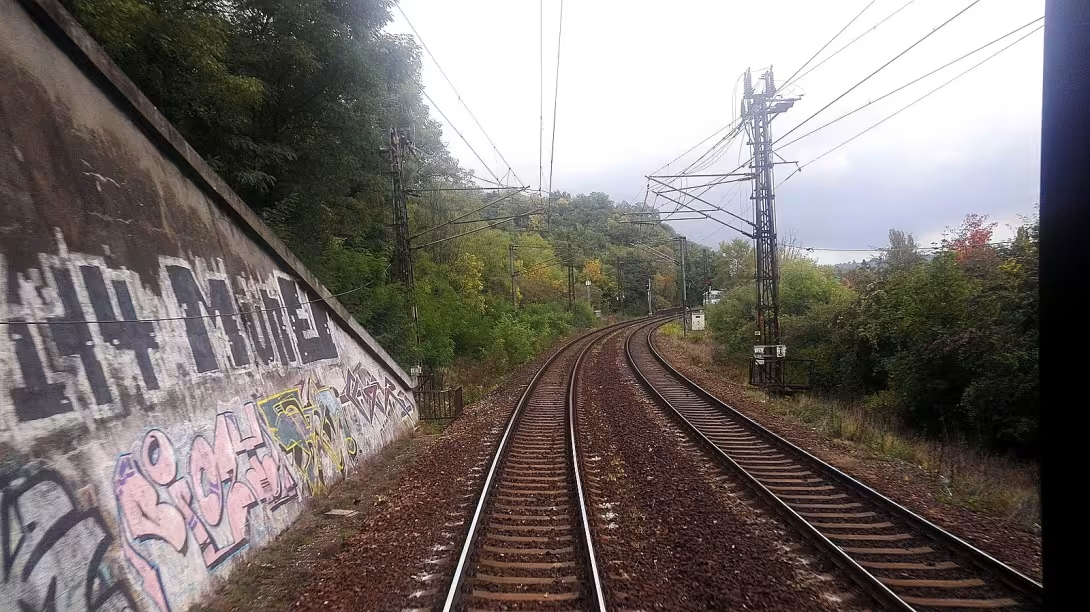
The Vodárna Čakovického Cukrovaru is a historic waterworks monument situated in Libeň, Prague 8. Built in 1879 as part of the Schoeller water supply system, it played a vital role in supplying water to various industrial sites and residential areas in the region. This notable monument is significant not only for its historical context but also for its architectural design and functional purpose.
The Vodárna was constructed as part of the Schoeller water supply system, which brought water from the Vltava River to a sugar refinery in Čakovice. The waterworks featured a series of filters to remove impurities from the river water, making it an essential infrastructure project that supported the growth of industry and urbanization in Bohemia.
The water supply system expanded in 1885 to include additional industrial sites and residential areas, further emphasizing the importance of this monument. In 1964-1966, the Vodárna was declared a cultural monument, recognizing its historical significance. Unfortunately, it was demolished between 1967-1974 due to the construction of the Holešovice railway.
The architecture of the Vodárna is not well-documented, but it is known that it had filters to remove impurities from the river water. The waterworks played a crucial role in supplying water to various industrial sites and residential areas, making it an essential part of the region's infrastructure.
There are no recorded events or notable figures associated with the Vodárna, as its history is largely focused on its functional purpose and construction.
Today, the Vodárna Čakovického Cukrovaru no longer exists due to its demolition in 1967-1974. However, its historical significance remains, making it an important monument to visit for those interested in the region's industrial and urban history.
Historical milestones
- 1879
- Construction of the Vodárna Čakovického Cukrovaru as part of the Schoeller water supply system
- 1885
- Expansion of the water supply system to include additional industrial sites and residential areas
- 1964
- Declaration of the Vodárna as a cultural monument
- 1967
- Demolition of the Vodárna Čakovického Cukrovaru due to the construction of the Holešovice railway
Historical events
1885: Water supply system expanded to include additional industrial sites and residential areas
1964-1966: Declared a cultural monument
1967-1974: Demolished due to the construction of the Holešovice railway
Points of interest
– The Vodárna Čakovického Cukrovaru is a historic waterworks monument situated in Libeň, Prague 8.
– Built in 1879 as part of the Schoeller water supply system, it played a vital role in supplying water to various industrial sites and residential areas in the region.
– The Vodárna was declared a cultural monument in 1964-1966, recognizing its historical significance.
– Unfortunately, it was demolished between 1967-1974 due to the construction of the Holešovice railway.
Guide
Show guide text
This text was created by artificial intelligence and has not been editorially reviewed. It may contain inaccuracies.
Welcome, and thank you for taking the time to explore this fascinating part of Prague. As you stand right here in Libeň, putting on your headphones, take a moment to look around you and soak in the atmosphere of this historic urban landscape. You are standing before the site of the former Vodárna Čakovického Cukrovaru, a place deeply connected to the industrial heritage of this region. While the physical structure itself is no longer standing, the ground beneath your feet holds the memory of a remarkable engineering feat that shaped the development of Prague eight and its surrounding neighborhoods.
Let us travel back in time to the year 1879, when this site saw the birth of the Schoeller water supply system. This ambitious project was created with a very specific and vital purpose: to bring water all the way from the Vltava River to a sugar refinery located in Čakovice. Imagine the scale of this undertaking in the late nineteenth century, an era when industrial ambition was transforming the landscape of the Czech lands. The waterworks built here were not merely a local utility; they formed the beating heart of a massive infrastructure network. As the years went on, specifically by 1885, the system expanded significantly, taking on the crucial responsibility of supplying water not just to the sugar refinery, but to a diverse array of various industrial sites and rapidly growing residential areas across Libeň, Prosek, Vysočany, and Karlín. This was a lifeline for the factories and homes that fueled the economic boom of the period.
Now, look closely at the open space around you and use your imagination to picture the brick, mortar, and machinery that once defined this location. While the architects remain unknown to history, the sheer functionality and impact of their design speak volumes. Although the specific architectural style is lost to time, you can still appreciate the scale and strategic importance of what once stood here. The footprint of the Vodárna Čakovického Cukrovaru represents a golden age of industrial expansion, where every pipe and pump played a role in the daily lives of thousands of workers and residents.
While history often focuses on kings and generals, the true heroes of a place like this are the anonymous planners, builders, and operators whose names have been swallowed by time. No specific historical personalities are recorded as the masterminds behind its daily operation, yet the collective effort required to run such a vast water supply system involved countless local workers whose sweat and labor kept the surrounding industrial districts thriving. Their stories are woven into the very fabric of Libeň's industrial past.
One of the most compelling and perhaps surprising chapters in the chronology of this site occurred much later in the twentieth century. Long after its initial industrial heyday, the historical significance of the waterworks was officially recognized when it was declared a cultural monument in 1964. Yet, heritage protection did not save it from the relentless march of modern infrastructure. Just three years later, in 1967, the Vodárna Čakovického Cukrovaru faced demolition to make way for the construction of the Holešovice railway. It is a poignant reminder of how modern progress often requires the sacrifice of the past, leaving us today to stand on the surface of a vanished history and imagine what once stood before us.
As we bring our audio tour to a close, take one last look around this urban environment and let the layers of history sink in. The water that once flowed through the Schoeller system helped build the modern identity of Prague, connecting the Vltava River to the factories of Karlín, Vysočany, Prosek, and Libeň. We invite you to continue exploring the fascinating industrial heritage of Prague eight, keeping your eyes open for the hidden stories that lie beneath everyday places. Thank you for listening, and enjoy the rest of your journey.
Tips for visitors
The best time to visit the Čakovický cukrovar waterworks is during spring or autumn when the weather is mild and sunny, making it ideal for photography.
Parking is available near the site, but we recommend using public transportation as it's easily accessible by bus or tram. You can check the current schedules on a route planner.
Don't forget to bring comfortable shoes and clothing suitable for the outdoors. It's also a good idea to bring a camera and a bottle of water.
The best spots for photography are around the waterworks' structure itself, as well as the surrounding area with its unique industrial landscape. The morning or late afternoon sun provides great lighting for photos.
If you're looking for something to see nearby, head to the Vltava River (about 30 minutes away) and enjoy a stroll along its banks.
Businesses nearby
Events nearby

Zdroj akcí: otevřená data měst a obcí ČR (Národní katalog otevřených dat) a kalendář akcí Národního památkového ústavu.
Accommodation nearby
Trips and activities nearby
Guided tours, tickets and activities nearby from GetYourGuide
Affiliate link: if you buy from the partner, we may receive a commission. The price for you does not change.
Search tours and activities →Themed route
Libeň Water Tower Loop
This thematic walking tour takes you through the charming neighborhood of Libeń, exploring its rich history and cultural heritage. The main attraction is the Cakovický Sugar Refinery Water Tower, a unique landmark that stands out for its architectural beauty.
Stop 1: Cakovický Sugar Refinery Water Tower Type: Industrial Heritage Why visit: This impressive water tower was built in the early 20th century to supply water to the nearby sugar refinery. Its striking design and rich history make it a must-see attraction.
Stop 2: Libeň Square Type: Urban Landmark Why visit: This picturesque square is the heart of Libeń's social life, hosting various events and festivals throughout the year. Admire the beautiful architecture surrounding the square, including the stunning church tower.
Stop 3: Rokytovka Park Type: Green Oasis Why visit: This peaceful park offers a serene escape from the hustle and bustle of city life. Take a stroll along the walking paths, enjoy the lush greenery, and relax in this tranquil atmosphere.
This loop takes you through the charming streets of Libeń, showcasing its unique blend of industrial heritage, urban landmarks, and natural beauty.
Seasonal recommendations
Spring brings a fresh awakening to the historic site of the vodárna čakovického cukrovaru in Libeň (Praha 8), where despite the fact that the structure has been demolished, the surrounding landscape slowly greens up and wildflowers begin to bloom through the urban rubble. The seasonal lighting is bright and clear, casting long morning shadows that highlight the contours of the old industrial foundations against the fresh spring vegetation. Practical advice for this time of year includes wearing sturdy waterproof footwear, as the melting ground and spring rains can make the terrain quite muddy. Crowds are generally sparse, making it an ideal period for quiet contemplation. The best time to visit is in the mid-morning when the daylight is optimal for exploring the remnants of the site without the disruption of heavy tourist traffic.
Summer transforms the area around the vodárna čakovického cukrovaru into a vibrant, overgrown urban wilderness where dense foliage partially reclaims the demolished ruins. The lighting is characterized by harsh midday sun and long, warm golden-hour evenings that create a striking contrast between the weathered brick fragments and the lush green canopy above. Since temperatures can rise significantly in this open urban setting, visitors should wear light, breathable clothing, bring plenty of drinking water, and apply sun protection. To avoid the peak heat of the day and occasional small groups of local architecture enthusiasts, the best time to arrive is early in the morning just after sunrise.
Autumn casts a melancholic, reflective atmosphere over the Libeň location of the vodárna čakovického cukrovaru as deciduous trees shed their leaves, blanketing the ground with golden and brown hues. The lighting during these months is often moody and diffused, featuring frequent overcast skies and early evening mist that accentuates the historical abandonment of the demolished complex. Practical preparation requires dressing in layers with a windproof jacket, as chilly breezes sweep through the open spaces of Praha 8 during this period. Visitor numbers drop significantly compared to the summer months, offering great solitude. The ideal time for a visit is during the early afternoon when the soft, low-angle autumn sun provides the best visibility through the thinning tree branches.
Winter offers a stark, minimalist aesthetic at the vodárna čakovického cukrovaru site, especially when a rare layer of snow dusts the demolished remnants and bare surrounding trees. The lighting is brief and starkly cold, with very short daylight hours that plunge the Libeň surroundings into early twilight. Practicality is paramount here: visitors must wear heavy winter coats, thermal layers, and non-slip boots due to potential ice and freezing temperatures. You will almost certainly have the entire area to yourself, ensuring complete peace and quiet. The best and safest time to visit is around noon when the weak winter sun provides maximum visibility and slightly higher temperatures than the freezing morning or evening hours.
Visualizations and artistic views

The visualisations are generated by artificial intelligence and serve as inspiration.
Photos from the area
Real photos taken near the monument


Zdroj a licence jsou uvedeny u každého snímku.
Tips from visitors
No tips yet. Be the first!
Log in and add your tip.
Sources and literature
Faktickým podkladem tohoto textu byl článek na Wikipedii, jehož autory jsou přispěvatelé Wikipedie. Článek je dostupný pod licencí CC BY-SA 4.0.
Location on the map
More monuments – Libeň (Praha 8)
Show all in the municipality
Příběhy a pověsti
Legendy, pověsti a příběhy spjaté s touto památkou

Fotografie návštěvníků
Zatím žádné fotografie. Buďte první, kdo přidá fotografii z návštěvy!
Přihlaste se a přidejte svou fotografii nebo hodnoťte.
Za ověřenou návštěvu v aplikaci získáte víc bodů — poznáme podle GPS, že jste na místě.
Reviews and comments