






Bílá skála Hillfort
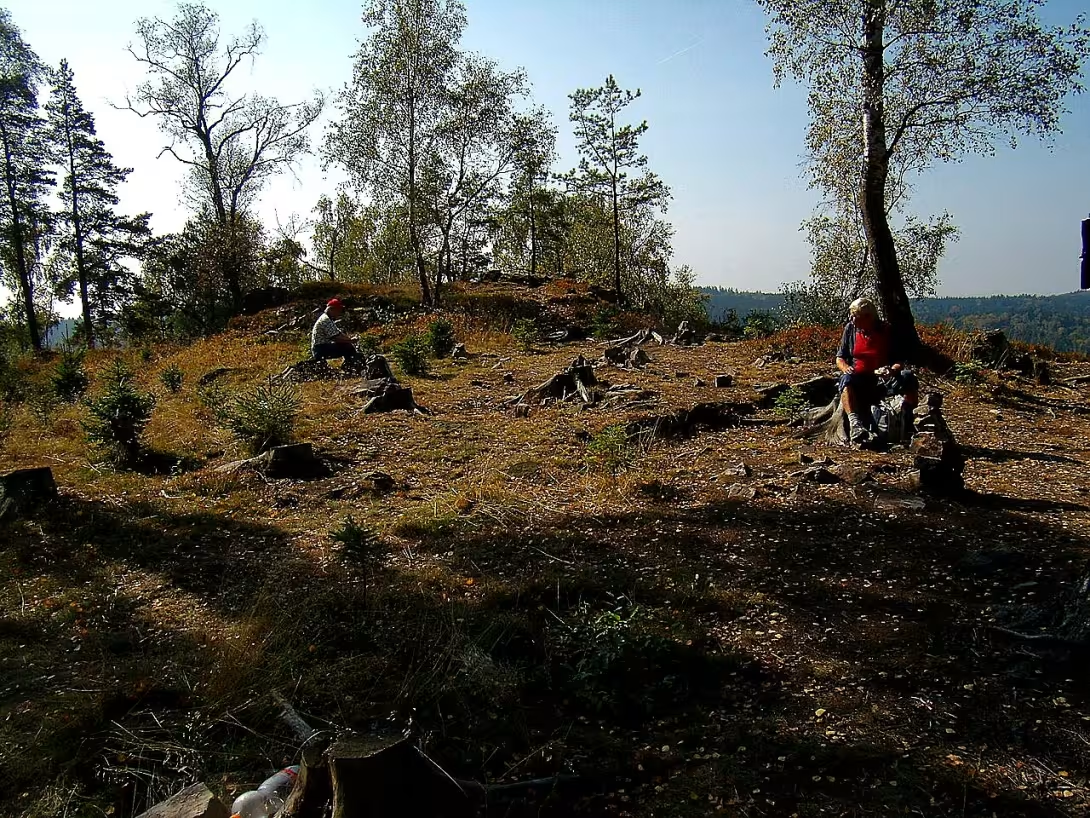
Bílá Skála, also known as Sklená Huť, is a prehistoric fortification near the village of Sklená Huť in the Rokycany district of the Czech Republic. This site features remnants of ancient defensive structures and stands out due to its strategic use of natural rocky formations. Discovered in 1975, Bílá Skála is notable for being a state-protected cultural monument. Its historical significance lies in reflecting prehistoric settlement patterns and fortification practices during an era when early European cultures inhabited Bohemia.
The origins of Bílá Skála are rooted in the prehistoric period, although specific details about its construction remain elusive due to the lack of datable artifacts from the site. It is assumed that this fortification was built by early inhabitants of Bohemia who sought protection and strategic advantage through such structures. The natural terrain played a crucial role in its design, with steep slopes and vertical rock faces forming part of its defenses. This aligns with broader patterns observed across Europe during prehistory when communities often constructed similar fortifications.
Architecturally, Bílá Skála is characterized by its integration with the surrounding landscape. The site features a nearly straight stone wall approximately 43 meters long, which forms part of its northern defensive structures. This wall reaches about one meter in height and four meters at its base. Behind this wall lies an oval area measuring 170 by 90 meters, divided into two terraces by natural rock formations. These terraces were likely used for habitation or other functional purposes within the fortification.
Throughout history, there are no specific records of ownership or dramatic changes in administration related to Bílá Skála. The site's primary historical significance is its role as a prehistoric settlement and defensive structure rather than any later developments or notable events associated with it. Its discovery in 1975 marked the beginning of modern interest in this ancient monument, highlighting its importance within regional archaeological studies.
The key event associated with Bílá Skála is its discovery in 1975. While no significant battles or historical figures are linked to the site, its identification has provided valuable insights into prehistoric life and fortification techniques in the region. The lack of artifacts complicates efforts to date the structure precisely, but it remains an important example of early European defensive architecture.
Today, Bílá Skála is accessible as a cultural monument under state protection. Visitors can explore the remnants of its ancient defenses and appreciate how natural formations were utilized for strategic purposes. Its historical value lies in offering a glimpse into prehistoric settlement practices and fortification strategies. The site's preservation allows modern audiences to connect with the distant past, making it an intriguing destination for those interested in history and archaeology.
Bílá Skála stands as a testament to human ingenuity in utilizing natural landscapes for protection and strategic advantage during prehistory. Its discovery has enriched our understanding of early European cultures and their architectural practices. Visitors are invited to explore this remarkable site, where the echoes of ancient life continue to resonate through its enduring structures.
Then and now
Drag the slider to compare how the landmark may have looked when it was built with the view today.
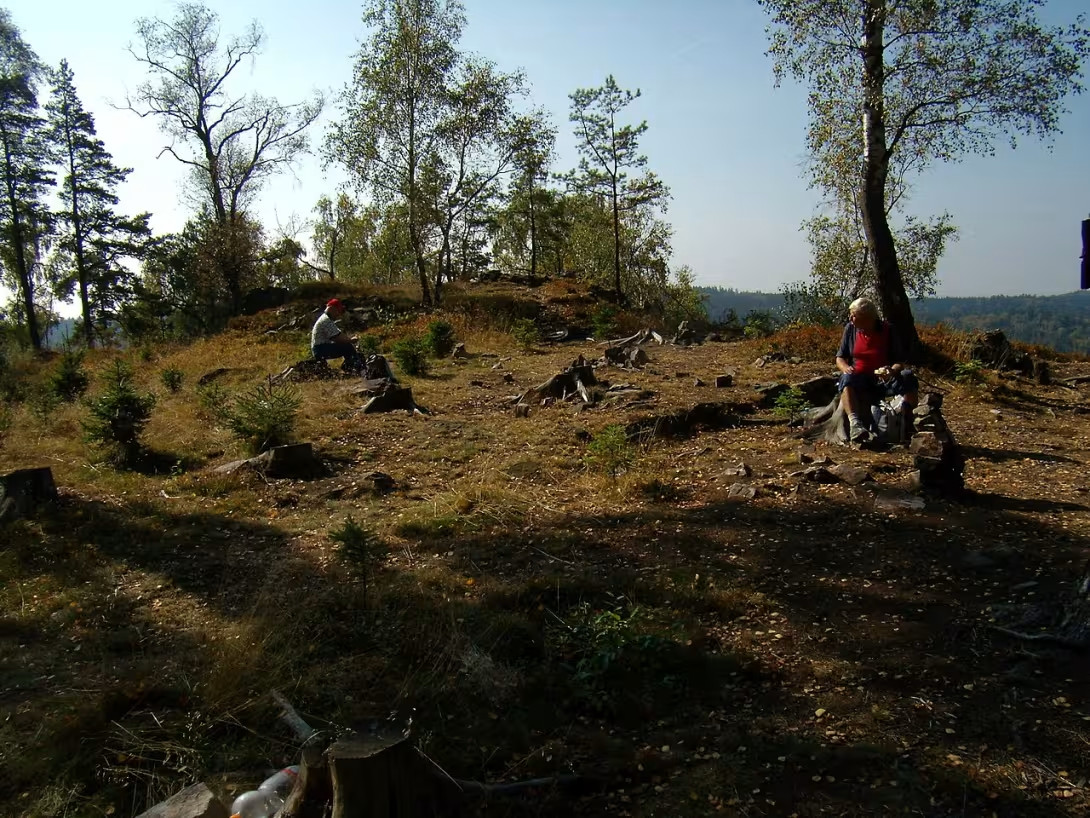

The historical appearance on the left is an AI-generated visualisation and serves as inspiration only.
Historical milestones
- prehistoric period
- Bílá Skála was built as a prehistoric fortification.
- 1975
- The discovery of Bílá Skála and its protection as a cultural monument.
Architectural development
Bílá skála's construction utilized the natural rocky terrain, with a nearly straight stone wall approximately 43 meters long forming part of its defenses. The site includes an oval area measuring 170 by 90 meters, divided into two terraces by natural rock formations.
Historical events
- 1975
- The fortification was discovered in this year.
Guide
This guide is narrated by a synthetic voice generated by artificial intelligence.
Show guide text
This text was created by artificial intelligence and has not been editorially reviewed. It may contain inaccuracies.
Bílá skála, also known as Sklená Huť, is probably a prehistoric hillfort in the Rokycany district. It lies about one kilometer east of the village Sklená Huť u Přívětic, on a rocky spur that extends from the southwestern edge of the Radeč Ridge. Remains of fortifications have been preserved from it, and the entire site is protected as a cultural monument.
The hillfort was discovered in nineteen seventy-five. However, no finds were obtained from it that would make it possible to determine when it was established. In its character and especially its geological substrate, it is similar to the prehistoric hillforts Žďár and Březina.
A promontory served the construction of the hillfort, which is protected on most sides by steep slopes and vertical rock walls. The fortifications were therefore built only on the northern side. They consist of an almost straight stone rampart measuring forty-three meters long. It is approximately one meter high and about four meters wide at the base.
Behind the rampart lies an oval area measuring one hundred seventy by ninety meters. Natural rock formations divide it into two platforms.
Tips for visitors
The best time to visit Bílá skála is during late spring or early autumn. During these seasons, the weather is typically mild, making it comfortable for exploring the rocky terrain and enjoying panoramic views of the surrounding landscape. Additionally, visiting outside of peak summer months helps avoid larger crowds, allowing a more serene experience as you explore this historical site.
Public transport options may include regional buses that connect nearby towns, but it's best to check current schedules online or through local transit resources. Walking from the nearest village is also an option for those who prefer a scenic approach.
When visiting Bílá skála, consider bringing comfortable walking shoes as you'll be navigating uneven and rocky paths. A hat, sunscreen, and water are essential to stay hydrated and protected from the sun. Additionally, a camera or smartphone with a good zoom lens is recommended for capturing the stunning views and historical remnants of the site.
For photography enthusiasts, early morning or late afternoon light offers the best conditions at Bílá skála. The soft lighting during these times enhances the textures of the natural rock formations and provides dramatic shadows that highlight the site's ancient features. The southwestern tip of the Radeč ridge is particularly photogenic, offering expansive views over the landscape.
Nearby attractions within a 30-minute drive include historical sites and natural landscapes in the Rokycany district. Visitors can explore other local villages or enjoy nature trails that offer additional insights into the region's history and geography. These nearby locations provide opportunities for extended exploration beyond Bílá skála.
Frequently asked questions
Can the monument be visited?
This is an archaeological site. Often there is little to see on the ground and the land may be private. We have not verified access.
Where is the monument?
Location: Plzeňský kraj. The map on this page shows the exact spot.
Why is the monument protected?
It is listed in the Central List of Cultural Monuments of the Czech Republic as a cultural monument (register no. 1000135288).
Businesses nearby
Do you run a restaurant, accommodation, shop, museum, rental, wellness or other visitor service near this monument? Show yourself directly to the people heading to it — this is how they will see you in the app and on the web:
Nearby
Bílá skála is located near the village of Sklená Huť, with natural rocky formations contributing to its defensive features. The site lies at the southwestern tip of the Radeč ridge.
Accommodation nearby
Trips and activities nearby
Guided tours, tickets and activities nearby from GetYourGuide
Affiliate link: if you buy from the partner, we may receive a commission. The price for you does not change.
Search tours and activities →Themed route
Bílá skála and Surroundings Hiking Trail
1. Bílá skála (Hradiště) Bílá skála is a significant archaeological site with a rich history, offering a glimpse into the lives of ancient people. The site's natural rocky formations contribute to its defensive features, making it an intriguing place to explore.
2. Sklená Huť (Vesnice) The village of Sklená Huť is a charming settlement with a strong sense of community. Visitors can experience traditional Czech culture and hospitality by visiting the local shops, cafes, and restaurants.
3. Radeč Ridge (Horská hora) The Radeč ridge offers breathtaking views of the surrounding landscape, making it a perfect spot for nature lovers and photographers. The ridge's unique geology and flora are also worth exploring.
Seasonal recommendations
Jaro
In the spring, Bílá skála is surrounded by green trees and flowers, creating a pleasant atmosphere. The lighting is natural, with sunlight revealing the beauty of nature. We recommend visiting Bílá skála in the spring season to enjoy nature at its finest. The best time to visit Bílá skála is in April and May when the weather is comfortable and not too warm. We suggest coming early to avoid crowds.
Léto
In summer, Bílá skála is very popular with visitors, so we recommend arriving early. The sunlight is more intense and the lighting is natural. The atmosphere is relaxed and pleasant. Summer is the ideal time for strolls around Bílá skála and exploring the fortress. We suggest visiting in June and July when the weather is sunny and warm.
Podzim
In autumn, Bílá skála is surrounded by the colors of fall nature. The lighting is natural, with sunlight revealing the beauty of nature at the end of the year. The atmosphere is calm and relaxed. We recommend visiting Bílá skála in the autumn season to enjoy nature at its finest. The best time to visit Bílá skála is in September and October when the weather is comfortable and not too cold.
Zima
In winter, Bílá skála is calm and quiet. The lighting is artificial because sunlight is weak. The atmosphere is calm and soothing. We recommend visiting Bílá skála in the winter season to enjoy the tranquil and serene nature. The best time to visit Bílá skála is in December, January, and February when the weather is cold and there's plenty of snow. We suggest wearing warm clothing and bringing a hat and gloves.
Visualizations and artistic views


The visualisations are generated by artificial intelligence and serve as inspiration.
Tips from visitors
No tips yet. Be the first!
Log in and add your tip.
Sources and literature
Photos: Krabat77 / CC BY-SA 3.0 — Wikimedia Commons. The author and licence also appear when you hover over the image.
Faktickým podkladem tohoto textu byl článek na Wikipedii, jehož autory jsou přispěvatelé Wikipedie. Článek je dostupný pod licencí CC BY-SA 4.0.
Location on the map
More monuments – Plzeňský kraj
Show all in the region

Příběhy a pověsti
Legendy, pověsti a příběhy spjaté s touto památkou

Fotografie návštěvníků
Zatím žádné fotografie. Buďte první, kdo přidá fotografii z návštěvy!
Log in a přidejte svou fotografii nebo hodnoťte.
Za ověřenou návštěvu v aplikaci získáte víc bodů — poznáme podle GPS, že jste na místě.
Reviews and comments