



Boží muka (Moravské Budějovice, 1000135565) Wayside shrine
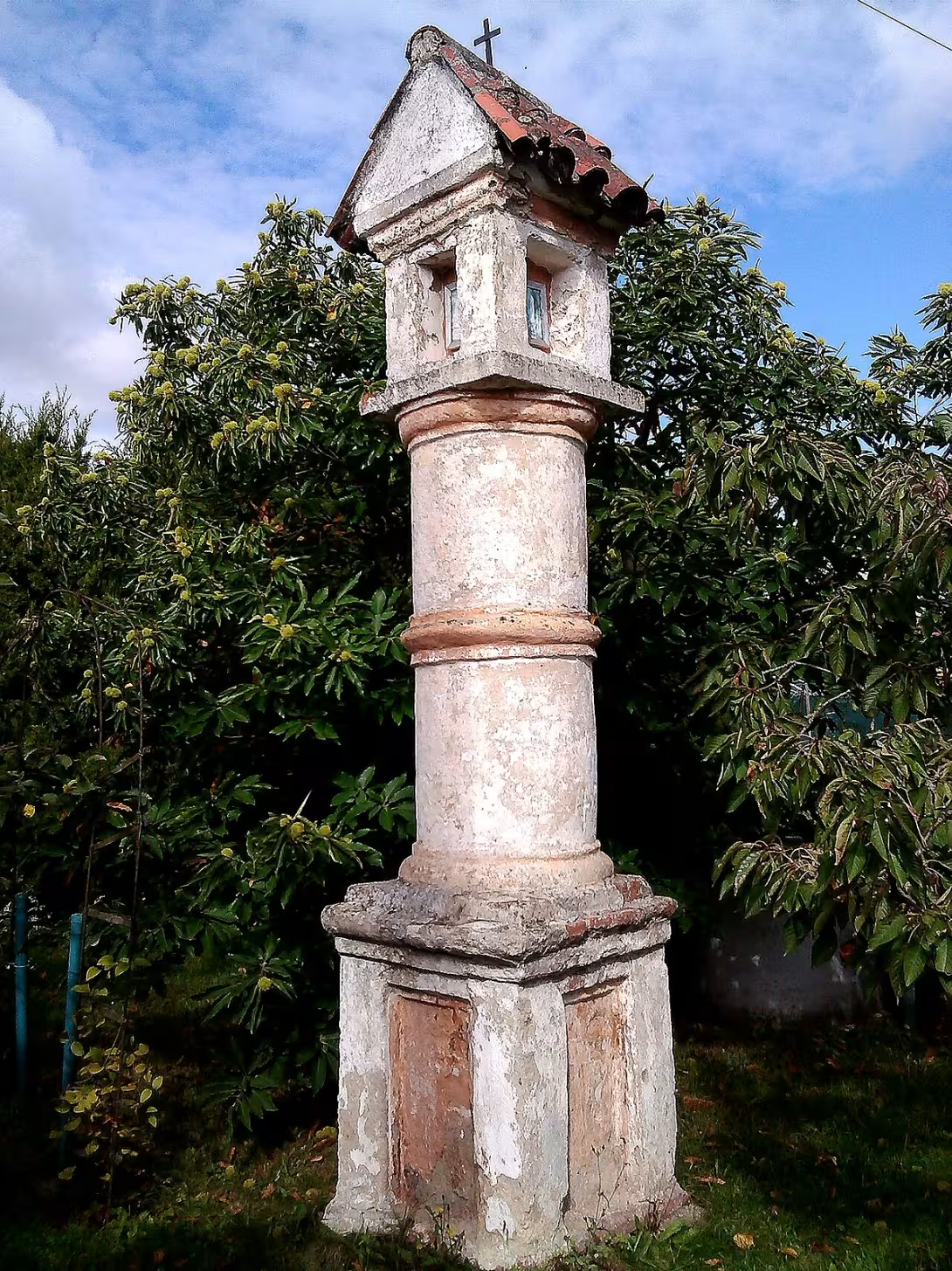
The pillars of God's torture in Moravian Budejovice, located in three different locations of Třebíč district, are an example of Baroque sacral architecture from the 18th century. These monuments, protected as cultural heritage, feature unique design and historical importance for the area.
God's torment in the garden colony of the street Znojemská is a representative of the Baroque style, which spread throughout Europe during the 18th century. This period was characterized by dramatic forms and details in art and architecture. In Bohemia, this style also appeared in the construction of God's Torments, which served as monuments to the sites of tragic events or signs of faith and repentance.
Architecturally, God's torture in Moravian Budejovice is a walled-up building. Its lower part consists of a prism on a square base with engraved frames, which adds an impression of integrity and elegance. Above it is a cylindrical column divided by a simple ledge, which ends with a square head. On this warhead there is a chapel with nobodies, which gives the building religious importance and aesthetic value. The whole structure is closed by a profiled roof ledge and saddle roof.
The history of God's torments is not fully documented, but their existence in the 18th century suggests a link to the baroque period, when such monuments were often built as a response to tragedy or as an expression of religious burning. Although the specific ownership and management of these monuments are not recorded in detail, their maintenance as protected cultural monuments shows their lasting importance to the local community.
Today, God's torment in Moravian Budejovice is open and is worth visiting not only for historians but also for everyone interested in baroque architecture. Their preservation allows you to look into the past and appreciate the aesthetic as well as cultural value of these monuments.
The visit to God's torture in Moravian Budejovice offers a unique view of Baroque art and architecture, which are an important part of the cultural heritage of the region. It is a reminder of the past, which calls us to reflect historical events and their impact on the present.
Then and now
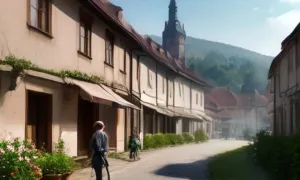
Drag the slider to compare how the landmark may have looked when it was built with the view today.
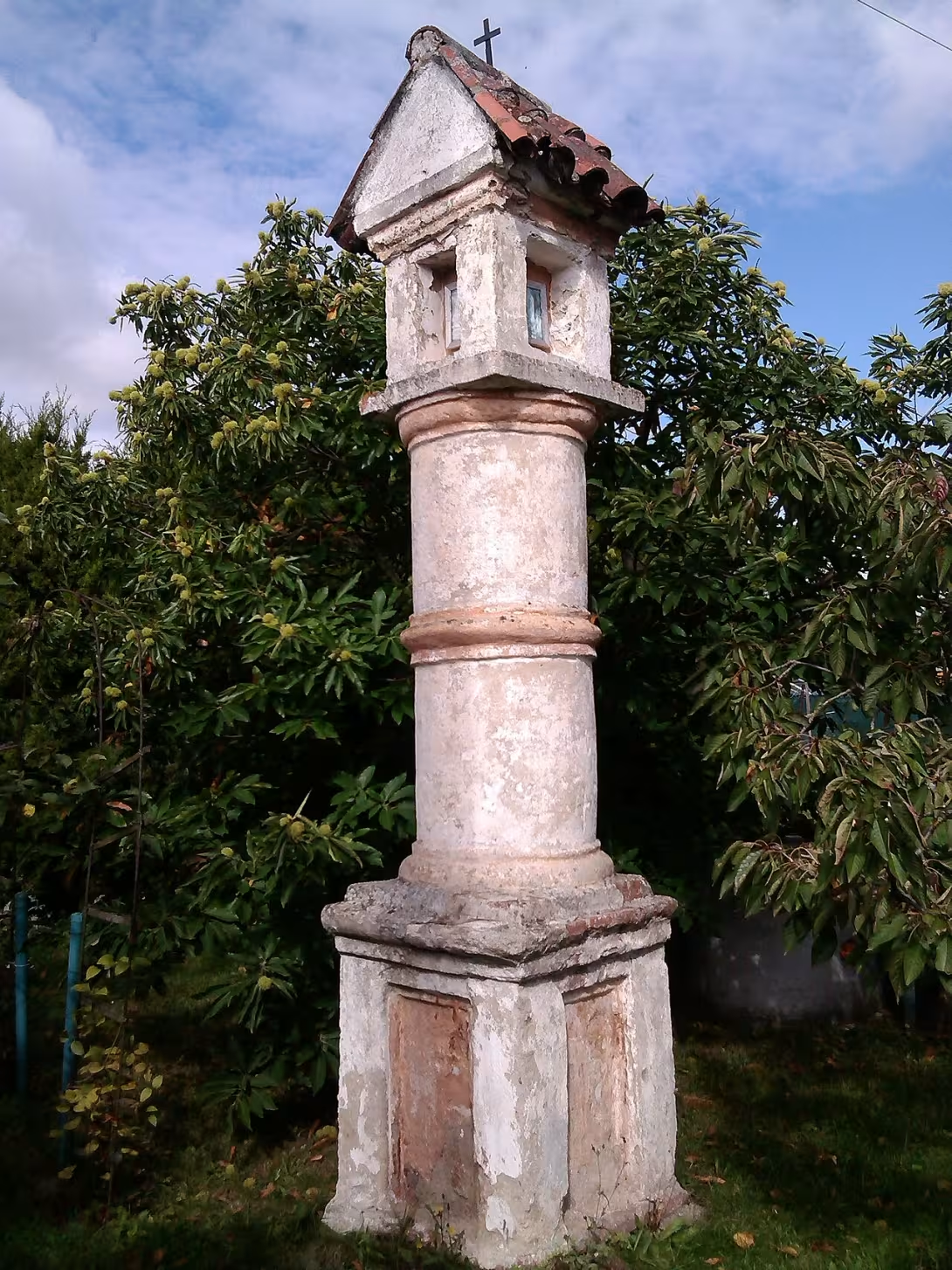

The historical appearance on the left is an AI-generated visualisation and serves as inspiration only.
Historical milestones
- 18th century
- The creation of pillars of God's torture in Baroque style.
- around 1750
- The period of extended sacral architecture in the area.
- Present
- Protection of the monument as part of the cultural heritage.
Architectural development
God's torment has a simple but distinct baroque architecture. Its construction includes a prism base, a cylindrical column and a square head with a chapel. The material used is plastered wood.
Points of interest
- The pillars of God's torture in Moravian Budejovice are an example of Baroque sacral architecture from the 18th century. - These monuments, protected as cultural heritage, feature unique design and historical importance for the region. - The torture of God in the garden colony of Znojemská Street is a representative of the Baroque style that spread throughout Europe during the 18th century. - Architecturally, God's torture is a brick-plated building with a prism on a square base and a cylindrical column finished with a chapel with nobodies. - The existence of God's anguish in the 18th century suggests a link to the Baroque period, when such monuments were often built as a response to tragedy or the expression of religious burning.
Guide
Show guide text
This text was created by artificial intelligence and has not been editorially reviewed. It may contain inaccuracies.
Welcome! You are standing right in front of God's torment in Moravian Budejovice, one of the greatest examples of Baroque sacral architecture of the 18th century. This monument boasts unique design and historical value for our cultural heritage.
Take a look up at the wall plastered construction with a prism base. This column monument greets you with its cylindrical column, which ends with a square head with a chapel. On the profiled roof ledge is found a saddle roof, which all adds an impression of architectural elegance.
Let's move on to the history of this masterpiece. The creation of God's Torments is written into the 18th century, a period which was very fruitful for sacral architecture. Although the particular creators of this work are not known, they are among those examples of the extended Baroque style around 1750. These monuments are not only architectural gems, but also witnesses to the past that has come to date.
Now pay attention to the unique details you see before you. The pillar of God's torture is divided into three locations and each one bears its own character. Note the elegant combination of materials that gives the monument its uniqueness.
Although particular historical figures associated with this monument remain unknown, their work lives in the form of these masterpieces. These torments of God are an important part of the cultural heritage of Moravian Budejovice and offer a wonderful view of the past.
The interesting thing about this monument is its ability to combine beauty with historical value. It's a place where you can feel the presence of earlier generations and their faith.
By inviting you to explore further Moravian Budejovice, this torture of God has addressed you with its beauty. I hope you enjoy every moment during your visit and remain impressed by her history and architecture. With God on the next journey through these beautiful places!
Tips for visitors
For the best experience visit these places during today's light hours, especially in the late afternoon, when light is softer and baroque details are better distinguished. Since this is three different points within the city, we recommend you plan a walk that allows you to see all three buildings.
Transport is possible both by its own vehicle and through local public transport; Please check the current connection in the search engine.
Bring comfortable shoes suitable for walking on urban roads and possibly a water bottle. Since these are outdoor monuments, prepare for changing weather.
The most suitable moments for photography are around sunset, when Baroque plaster and column shapes gain depth. The best angles can be found by looking from below, which will highlight the vertical character of the construction.
For families with children, the search for all three sites can be an interesting game of explorers within urban walks.
Frequently asked questions
Can the monument be visited?
This is a structure in a public space that can usually be seen from outside free of charge. We have not verified that this particular one is freely accessible.
Where is the monument?
Location: Moravské Budějovice, Kraj Vysočina. The map on this page shows the exact spot.
Why is the monument protected?
It is listed in the Central List of Cultural Monuments of the Czech Republic as a cultural monument (register no. 1000135565).
Businesses nearby
Do you run a restaurant, accommodation, shop, museum, rental, wellness or other visitor service near this monument? Show yourself directly to the people heading to it — this is how they will see you in the app and on the web:
Nearby
🏰 Historic sites (62)
- Muzeum Masné krámy 1.0 km web
- Muzeum řemesel 1.1 km web
- Moravské Budějovice 1.1 km
- Čeněk Hloušek 3.4 km
- letohrádek na sv. Vítu 4.6 km
- pohřebiště 50 vojáků z francouzského lazareru 6.4 km
- Tvrz lesůňky, valy 7.3 km
- Pomník šesti francouzských vojáků (1809) 7.5 km
- Apollón 7.5 km
- Athéna 7.5 km
- Sv. Cyril a Metoděj 7.5 km
- Héra 7.5 km
- Zeus 7.5 km
- Pieta 7.5 km
- Arés 7.5 km
- Ukřižování se sv. Maří Magdalénou 7.6 km
- Éós 7.6 km
- Kronos 7.6 km
- Klythie 7.6 km
- svatý Jan Nepomucký 7.6 km
🍽️ Restaurants and dining (42)
- Bowling Spotr Bar 0.6 km
- Benyclub 0.8 km Šafaříkova
- Restaurace Bílý Dům 1.0 km
- Pekarstvi Vonka 1.0 km
- Venuše 1.1 km
- Grand 1.2 km
- Asian cuisine 1.2 km
- Stop Cafe 1.8 km Pražská 1039
- Motorest U Nováků 4.1 km
- Kiosek "U Zdroje" 5.1 km +420 770 623 523
- U Rybníka 6.4 km
- Sportbar 7.1 km
- Opera 7.6 km
- Viola 7.7 km Komenského 34 web
- Viola 7.7 km nám. Míru 24
- Na Palubě 7.8 km nám. Míru 6
- Hospůdka U Samce 10.2 km Domamil 37
- Hostinec U Blahoudků 10.8 km web
- Hospoda U Valů 11.3 km
- Hospůdka Rozkoš 11.7 km
🏨 Accommodation (21)
- Penzion Venuše 1.1 km
- Hotel Stern 1.7 km
- Pension Grasel 4.6 km
- Grand Hotel Opera 7.6 km web
- Apartmán Chvalatice 11.9 km web
- Penzion Nova 11.9 km
- Hotel Bítov 13.3 km Bítov 87 +420 607 874 922 web
- Penzion Port Bítov 13.3 km Bítov 83 +420 737 140 189
- Statek Vranč 13.4 km
- Kafe v obýváku 13.5 km Bítov 57 +420606730991 web
- Rumburak 13.6 km Bítov 106 +420 777 348 757
- Camp Bítov 13.6 km web
- Domek u lesa 13.8 km +420777135478
- Chaty U Tesařů 13.8 km
- Penzion Šalamoun 14.0 km
- Chata Lucka 14.0 km Bítov ev.228 web
- Chata U rybáře 14.0 km +420 724 263 787 web
- Volareza - hotel Vranov 14.4 km web
- Penziony a restaurace Gaudeo 14.5 km +420 774 869 840 web
- Penzion pod hradem Cornštejn 14.7 km +420 774 742 475 web
🚲 Rentals and sport (6)
- Letní koupaliště Moravské Budějovice 1.1 km
- Sportisimo 1.3 km
- Fitness MB 1.6 km Pražská 115
- Hostinec Na Vlachovce 2.9 km
- Hockey Storm 6.1 km web
- Půjčovna lodiček 13.6 km
🥾 Hiking and nature (42)
- Zámecký park 1.2 km
- Dolní park 1.3 km
- Tovačovského sady 1.3 km
- Jeskyně na Lukovské hoře 3.2 km
- Lukovská hora 3.5 km
- Svatý Vít 4.6 km
- Habrová seč 6.8 km
- Zámecký park zámku Jaroměřice nad Rokytnou 7.4 km
- U lusthausu 7.4 km
- Přední kopec 7.4 km
- Hájky 7.6 km
- Na Mlýncích 8.1 km
- Žleby 8.7 km
- Pergola u rybníka 8.8 km
- Lavička u koupaliště 9.3 km
- Verunka 9.8 km web
- Pramen Jevišovky 10.2 km
- Černá blata 10.2 km
- Čertova studánka 10.4 km
- Suchá hora 11.4 km
Accommodation nearby
Themed route
Thematic cruise route from Moravian Budejovice
1. God's Torture (Moravské Budějovice) Type: historical monument Why is he worth a visit? The torture of God in Moravian Budejovice is a unique example of Baroque sculpture from the 18th century, which tells about the historical events and religious tradition of the region. It's an important place to understand the city's cultural heritage.
2. Church of St. Gilji (Moravské Budějovice) Type: religious building Why is he worth a visit? This church is not only the spiritual centre of the city, but also architectural pearls with rich historical elements. Its interior and decoration offer a view of the artistic styles of the past century.
3. Moravian-Budějovice Town Hall Type: historical building Why is he worth a visit? City Hall is a key place for understanding the administrative and cultural life of the city. Its elegant Baroque architecture attracts attention with its historical value and beautiful interiors.
4. Freedom Square (Moravské Budějovice) Type: public square Why is he worth a visit? The square is the heart of a city where history and the present meet. It is a place for relaxing, walking or watching various events and events taking place here.
5. Ján Amos Komenský Memorial (Moravské Budějovice) Type: memorial Why is he worth a visit? This monument celebrates the life and work of an important educator and thinker known as the "father of modern education." It is a place for reflection on Komenský's educational influence on Europe.
This route offers a view of the cultural and historical richness of Moravian Budejovice, from religious monuments to public spaces.
Seasonal recommendations
Spring: During this period, God's torment in Moravian Budejovice appears in its most beautiful glow of blooming nature. Flowers and shrubs around the monument emit a live shine, creating an ideal environment for short walks under the blue sky. Due to the favourable weather, the probability of visitors increases, so it is advisable to visit early in the afternoon to avoid larger crowds. Clothes should be adequate for mild temperatures - short gloves and light hat are ideal.
Summer: In the summer months, God's torment is most visited, making it a living memory of tourists. Sunshine days attract many people who enjoy warm weather and the beauty of historic buildings. It is recommended to visit early in the morning or late in the afternoon to avoid the peaks of attendance. Clothes should be light and protective from the sun - tie with wide glove, hat and UV protection.
Autumn: In autumn, God's torment in the Moravian Budejovice gains melancholic charm with fine grey leaves falling on the road. Sunshine days are still present, but temperatures are falling, creating a mild and calm atmosphere. Visiting the sights during these months is ideal for those looking for a quieter experience without too many crowds. Clothes should be mild - skirts or pants with warm shirts and ties are suitable.
Winter: During the winter months, God's torment in the Moravian Budejovice gains a unique charm when its architectural elements reflect on the snow surface. In addition, it is important to wear warm clothes - wool shirt and hat are necessary for comfort during the visit to this historic monument.
Visualizations and artistic views


The visualisations are generated by artificial intelligence and serve as inspiration.
Photos from the area
Real photos taken near the monument


Zdroj a licence jsou uvedeny u každého snímku.
Tips from visitors
No tips yet. Be the first!
Log in and add your tip.
Sources and literature
Photos: Omik29 / CC BY-SA 3.0 — Wikimedia Commons. The author and licence also appear when you hover over the image.
Faktickým podkladem tohoto textu byl článek na Wikipedii, jehož autory jsou přispěvatelé Wikipedie. Článek je dostupný pod licencí CC BY-SA 4.0.
Location on the map

Příběhy a pověsti
Legendy, pověsti a příběhy spjaté s touto památkou
Fotografie návštěvníků
Zatím žádné fotografie. Buďte první, kdo přidá fotografii z návštěvy!
Log in a přidejte svou fotografii nebo hodnoťte.
Za ověřenou návštěvu v aplikaci získáte víc bodů — poznáme podle GPS, že jste na místě.
Reviews and comments