



kostel svatého Jiljí (Moravské Budějovice) Church
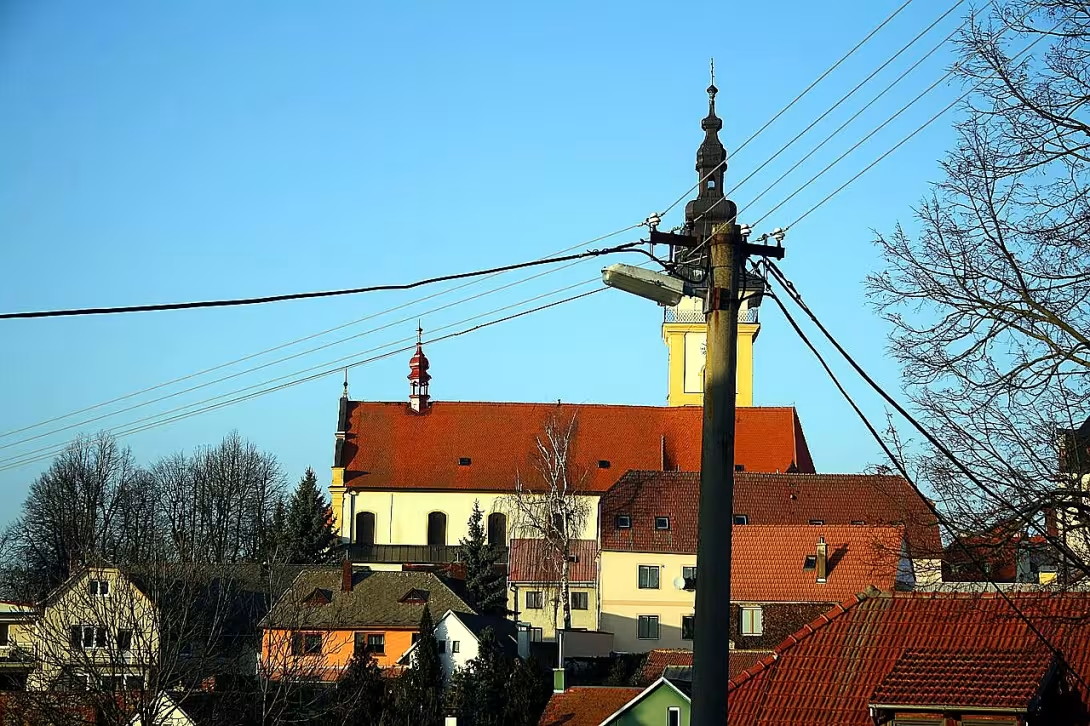
The church of St. Jilje in Moravian Budejovice is one of the oldest parish churches in the region. It is located on Purcner Street south of Peace Square, right by the chateau. Protected as a cultural monument of the Czech Republic.
It was founded in the 13th century, originally as a Romanesque church. It gradually evolved into a contemporary Baroque building with a tower 50.92 meters high, which serves as a lookout tower.
The first written mention dates back to 1235, when it was donated by Constantine to St. Francis's Hospital in Prague. The Roman core - the presbytery and the main ship - was built first. Over the centuries he went through several reconstructions, especially in the Baroque period, when the chapel of the Virgin Mary of Bolová was built, the main ship was sealed and a new tower was built.
New altars and statues were installed in the church in the 19th century. In the 20th century, extensive reconstruction took place, including modernization of the interior and installation of the cross road.
The architecture of the church combines two stylish layers: the Roman core from the 13th century and the Baroque reconstruction from the 18th century. The tower with a view was built only in 1714 when the original tower was demolished. Three bells were preserved in the interior, the oldest of which dates back to 1432.
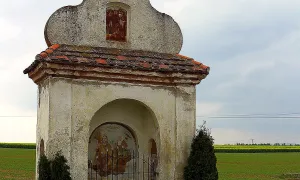
The chapel of St. Michael, which lies next to the church, is a rotunda with fresco of the Last Court and a former skeleton with a cross vault depicted by Christ's dungeon.
The church was originally a parish in Moravian Budejovice. Over the centuries, fires have gone through, for example, 1532 and 1633, which burned down adjacent buildings. In the 18th century, Baroque reconstructions were carried out, including the encroachment of the main ship. In 1950, the main altar was placed in the church, which replaced the elders. New benches were installed in 1971- 1985 and electrical installations were upgraded.
Today, the church of St. Alice is open to the public. His visit is interesting for historical value and architectural diversity. The tower offers panoramic views, while the chapel of St. Michael is interesting with frescoes. In the surroundings there is a chateau and Square of Peace, which makes the church an attractive place to explore regional history.
Holy Church Jilji is an example of how historical buildings adapted to various epochs. His visit is an opportunity to deepen Czech cultural heritage.
Then and now
Drag the slider to compare how the landmark may have looked when it was built with the view today.
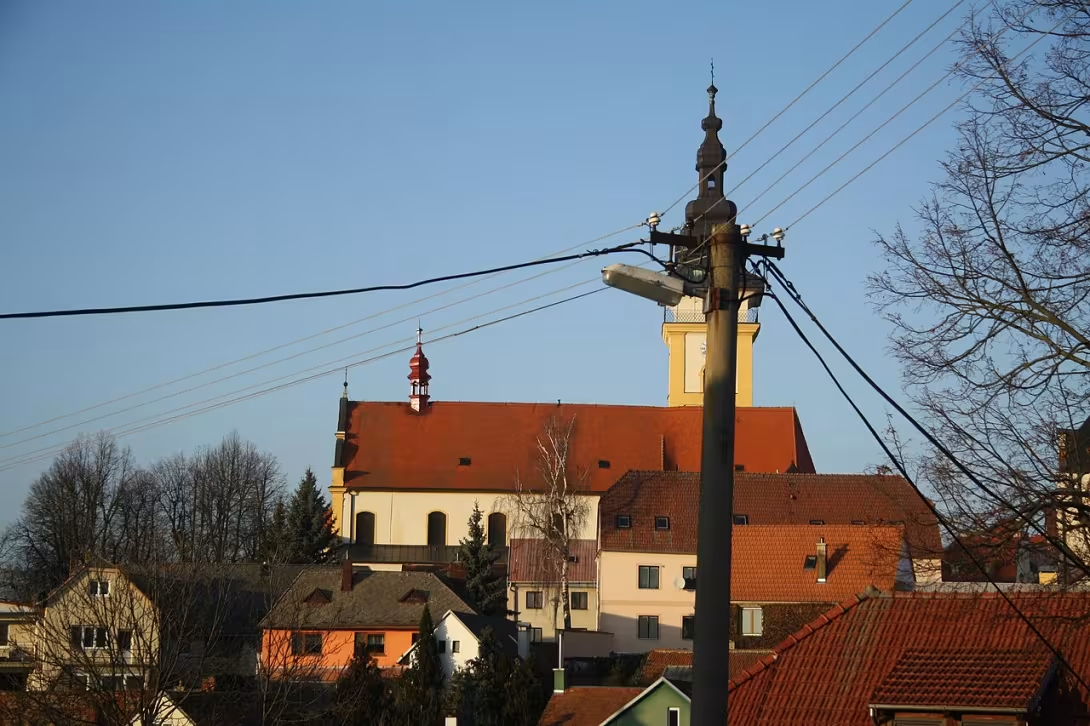

The historical appearance on the left is an AI-generated visualisation and serves as inspiration only.
Historical milestones
- 1235
- Donating the Church of St. Gilji to the Constantia of the Hungarian Hospital of St. Francis in Prague
- 1586
- Unveiling of sgraffiti with a year of reconstruction in 1928
- 1432
- Production of the oldest bell in the church tower
- 1702
- The position of the chapel of St. Michael (Michael) in the neighbourhood of the church
Architectural development
The first part of the church, the presbytery and the main ship, was built in Romanesque style in the 13th century. In the 17th century, the Baroque reconstruction took place when the chapel of the Virgin Mary Bolestva was added, the main ship was sealed and the chapel of the Virgin Mary Lourd was added. A new tower, Wallis tomb and other Baroque elements were built in the 18th century. New altars and sculptures were installed in the 19th century, reconstruction took place in the 20th century, including installation of cross roads and modernization of the interior.
Historical events
- 1235
- First written mention of the church, donating the Constantia to St. Francis Hospital in Prague
- 1532
- Parish building explosion
- 1633
- Second explosion of the parish building
- 1714
- Beginning of Baroque reconstruction, demolishing of original tower, construction of new tower (50,92 m)
Owners
Constantia Uherská (1235), hospital of St. Francis in Prague (1235), later parish Moravské Budějovice (from 13th century to present)
Points of interest
- The church was built in the 13th century originally in Romanesque style, with presbytery and the main boat as the first part.
- The tower with a view was built only in 1714 when the original tower was demolished.
The oldest bell in the interior dates back to 1432.
- St. Michael's Chapel has a fresco with a painting of the Last Court and a former skeleton with a cross vault.
- In the 19th century, new altars and statues were installed in the church.
Guide
Show guide text
This text was created by artificial intelligence and has not been editorially reviewed. It may contain inaccuracies.
Welcome to the church of St. Gilya in Moravian Budejovice!
You are facing a simple but impressive construction that will welcome you with its centuries-old history. In front of you is a church whose origin dates back to the 13th century, when it was built in Romanesque style, which was typical of sacral buildings in our territory at the time. The church stands right by the chateau, just a short walk from the Square of Peace, and its silhouette is reflected in the local landscape as evidence of past times.
Let's look at its origin and meaning. This church was originally donated in the year twelve hundred thirty-five by the Queen of Hungary to St. Francis Hospital in Prague. This means that its history is closely linked to the important events of medieval Europe. Over the centuries he passed several reconstructions, especially during the Baroque period, when he was modified according to the fashion trends at the time. Yet he kept his original core, including the carner - the oldest, sacral space that served as a burial ground or chapel.
Now pay attention to his external appearance. There's a one-ship church in front of you, which means it only has one main ship without the side chapel. Its facade is simple but impressive, and if you look up, you'll see a tower that was built in the eighteenth century. The original tower from the seventeenth century no longer exists - it was demolished, and in its place was created the one you see today. It offers you the opportunity to climb up and see the surrounding landscape from a height.
There are several attractions in the interior of the church. The oldest bell here is from fourteen hundred thirty-two - that is more than six hundred years! During the reconstruction in nineteenth hundred and twenty eight were exposed sgraffiti, i.e. painting or decoration on the plaster, which bear the year. These details reveal how the church evolved and how its appearance changed with time.
Near the church is also the chapel of St. Michael, built in seventeen hundred and two. Her fresco with the image of the Last Court is one of the few preserved works of art that remind us of how people in the past perceived religious symbols. This chapel is proof that the church never left on its spiritual mission and that it was constantly enriched with new elements.
Now, something that may surprise you: do you know that the church was originally built as the first part of the complex? His presbytery and the main ship formed the basis on which another architecture later grew. So what you see today is only part of what was once here.
Before you lies a place that bears witness to many generations. Every stone, every plaster, and every bell here tells its history. If you are interested in learning more, you can look inside, where you will find not only the beauty of architecture, but also the atmosphere of peace and respect.
Whether you choose to stay just for a while or explore the church in more detail, I hope you have taken at least a hint of how powerful and deep the history of this place is. Thank you for looking into the history of Moravian Budejovice. May the visit bring you not only knowledge, but a moment of peace. Goodbye!
Tips for visitors
Holy Church Jilji is most attractive when visiting between April and October, when the weather is pleasant and the possibility to visit the surrounding park and the Square of Peace is ideal. In winter, the interior of the church is warm, but the outdoor conditions may be less pleasant for a walk. It is also recommended to visit in the morning when light is pleasant for photography and visitors are less numerous.
It is recommended to check the current connection and availability on the search engine in advance.
To visit the church and surrounding sights we recommend to take comfortable clothes and shoes, because winter can be cold and summer heat. Do not forget the appropriate documents such as the ID card or the parish card if you need access to some parts of the church. It is also appropriate to take water and refreshments, especially if you plan to take a longer walk.
For shooting is the best light in the morning or in the noon hours when the light is pleasant and less shadows. The best places for photography are the facade of the church, windows and portals that are typical of Romanesque style. Detailed photographs of frescoes and architectural elements are also interesting. In the vicinity of the church, especially near the chateau and chapel of St. Michael, there are also interesting places for photography. '} {' co visit in the area (within 30 minutes walk) ':' In the vicinity of the church of St. Jilje it is possible to visit the castle Moravské Budějovice, which is part of the park area. You can visit the chapel of St. Michael (Michal) right next to the church. In the Square of Peace you can see historical monuments and see public events or markets that can take place here. There are also natural and cultural monuments such as gardens and park spaces near the chateau.
Frequently asked questions
Can the monument be visited?
Religious buildings are usually open mainly during services; at other times a visit is normally arranged with the parish or the operator. We have not verified specific times.
Where is the monument?
Location: Moravské Budějovice, Kraj Vysočina. The map on this page shows the exact spot.
Why is the monument protected?
It is listed in the Central List of Cultural Monuments of the Czech Republic as a cultural monument (register no. 1204556761_0001). It is protected as part of a larger listed ensemble.
Businesses nearby
Do you run a restaurant, accommodation, shop, museum, rental, wellness or other visitor service near this monument? Show yourself directly to the people heading to it — this is how they will see you in the app and on the web:
Nearby
V okolí kostela se nachází zámek Moravské Budějovice, kaple sv. Michaela (Michala) a historické náměstí Míru. V blízkosti se nachází také přírodní a kulturní památky, jako je například areál zámku s parkem.
Accommodation nearby
Trips and activities nearby
Guided tours, tickets and activities nearby from GetYourGuide
Affiliate link: if you buy from the partner, we may receive a commission. The price for you does not change.
Search tours and activities →Themed route
1. Church of St. Gilji Type: Sacral building, Gothic-Renaissance church. Why visit? Unique architecture connecting two historical styles with preserved frescos and valuable equipment. It is the center of the village and symbolizes its long tradition.
2. Castle Moravské Budějovice Type: Renaissance chateau with park. Why visit? A luxury building with rich decoration, built in the 16th century, surrounded by a park with rare trees. It recalls the importance of the Liechtenstein family in the region.
3. St. Michael's Chapel Type: Baroque chapel in the middle of the village. Why visit? A picturesque building overlooking the church, connected with local legends. It is an example of small sacral architecture with historical significance.
4. Historical Square of Peace Type: Municipal square with monuments. Why visit? The heart of the village where all the routes meet. The surrounding houses with Renaissance and Baroque elements reflect the rich history of Moravian Budejovice.
5. Chateau area with park Type: Garden architecture and natural monument. Why visit? The park with rare trees, water elements and well-maintained paths offers a quiet environment for walks. It is part of the overall complex of the chateau and complements its historical character.
Seasonal recommendations
Spring: In the spring period, the church of St. Jilje is illuminated by the sunlight, which shines through high windows and emphasizes the colour of the interior. Nature awakens from its winter sleep with flowering bushes and trees, adding peace and new life to the atmosphere. Visitors are advised to wear clothes suitable for mild temperatures and be ready for sudden chills. The best time to visit is in the morning or in the evening, when they avoid crowds.
Summer: In years, the church becomes a popular destination for tourists and locals. The sunny days bring a long and warm afternoon when it is recommended to visit in the morning or evening to avoid heat and crowds. The architectural details of the church are highlighted in the aerial light, making the visit an artistic experience. It is advisable to carry sunglasses and UV protection cream.
Autumn: Autumn brings melancholic colors to the atmosphere of the church when leaves in the surroundings turn their shine yellow and orange. Sunshine days are still frequent, but temperatures are gradually decreasing. Visitors are advised to wear several layers of clothing and carry an umbrella or raincoat for possible rain. The best time to visit is again morning or evening when the atmosphere is quieter.
Winter: In the winter, the church of St. Gilya is transformed into a place full of silence and peace. Sunshine days are rare, but when the sun illuminates the church, its interior takes on beautiful color contrasts. Visitors are advised to wear warm clothes and bring with them an umbrella or raincoat because winter weather can suddenly be variable.
Visualizations and artistic views


The visualisations are generated by artificial intelligence and serve as inspiration.
Photos from the area
Real photos taken near the monument


Zdroj a licence jsou uvedeny u každého snímku.
Tips from visitors
No tips yet. Be the first!
Log in and add your tip.
Sources and literature
Photos: Jiří Sedláček / CC BY-SA 4.0 — Wikimedia Commons. The author and licence also appear when you hover over the image.
Faktickým podkladem tohoto textu byl článek na Wikipedii, jehož autory jsou přispěvatelé Wikipedie. Článek je dostupný pod licencí CC BY-SA 4.0.
Location on the map

Příběhy a pověsti
Legendy, pověsti a příběhy spjaté s touto památkou
Fotografie návštěvníků
Zatím žádné fotografie. Buďte první, kdo přidá fotografii z návštěvy!
Log in a přidejte svou fotografii nebo hodnoťte.
Za ověřenou návštěvu v aplikaci získáte víc bodů — poznáme podle GPS, že jste na místě.
Reviews and comments