






Bradlo Castle
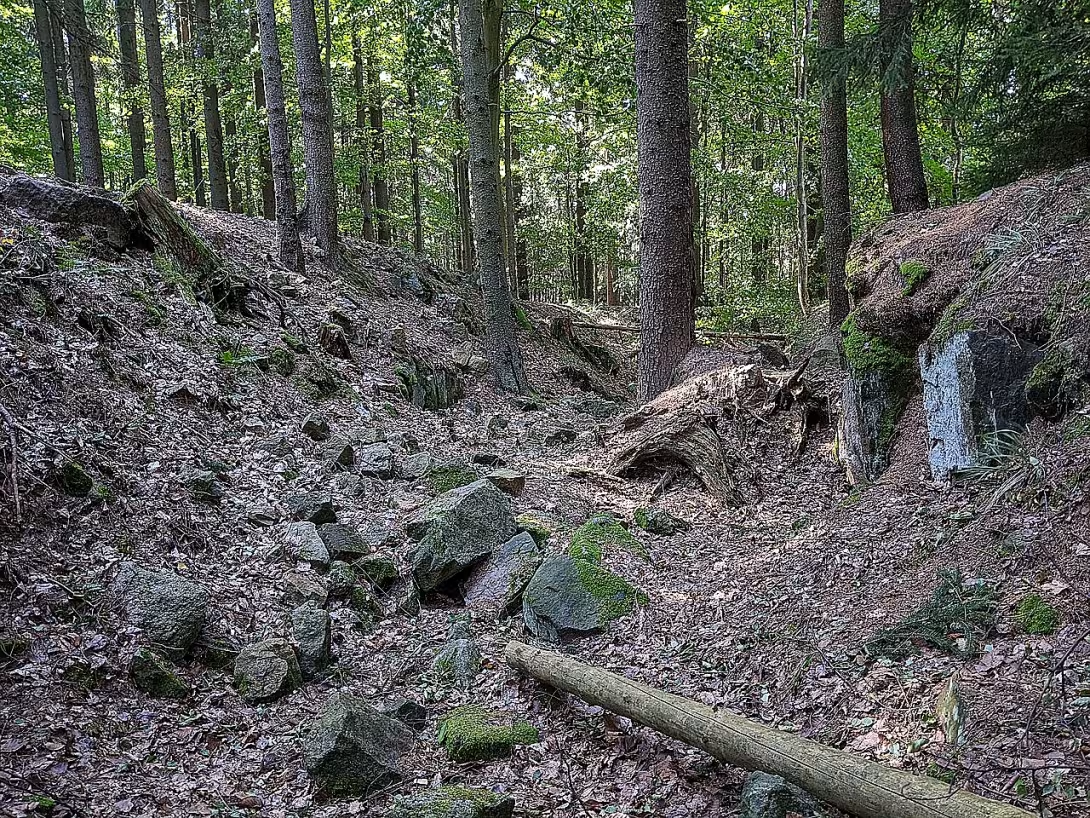
Bradlo is an extinct castle on the western edge of the hill Bradlo near the confluence of the Elbe and Olešnik creek. It lies in the cadastral territory of the municipality Dolní Olešnice in the Králové Hradec Region. This cultural monument is the remnants of the medieval fortifications, which are related to the colonization of Podkrkonoší.
No written sources have been preserved about the oldest history of the building and its original name remains unknown. In professional literature, the castle is often referred to as a colonization provisional. In the 13th century the region colonized the Order of German Knights. It is assumed that a smaller castle was created around the middle of the 13th century. This is linked to the beginning of the colonization of the Olešnik escape in 1241 and the arrival of Silesian settlers in the 1960s and 1970s. However, the archaeological research of Antonín Hejna from 1966- 1968 suggests that construction could have taken place only at the turn of the 13th and 14th centuries.
The castle was of the Donjon type, with the main residential function being filled by this very tower. The front was protected by a moat with a massive wall made of stone laid dry. Due to natural conditions and steep slopes, the other parties only had a lighter fortification. There was a square tower on the northwest side. Its lower part was made of stone without mortar, the upper floor was petrified. On the west side there was a kitchen with a small blacksmith adjacent. Another building element was located in the southeast corner of the courtyard.
In 1325 the castle became owned by Half I of Turgov. Around 1316 this nobleman obtained from King John of Luxembourg the entire Trutnov region, including the Court of Králové and the Innkeeper. The Bradlo lost its original meaning and was abandoned. Probably not long after the castle disappeared. Půta I. z Turgova later built the Castle of Choustnikov Hradiště along with his son Zona II.
In the past, this place was often confused with the Host, where, according to historical data, Prince Sobeslav I died.
Today the remains of the castle are protected as a cultural monument. The route leads to them along the turn of the green tourist brand from Debrný towards Vestřev settlement.
Visiting this place offers insight into the early stages of medieval colonization in the region. The remains of the castle are proof of the way the landscape was built and populated.
Then and now
Drag the slider to compare how the landmark may have looked when it was built with the view today.
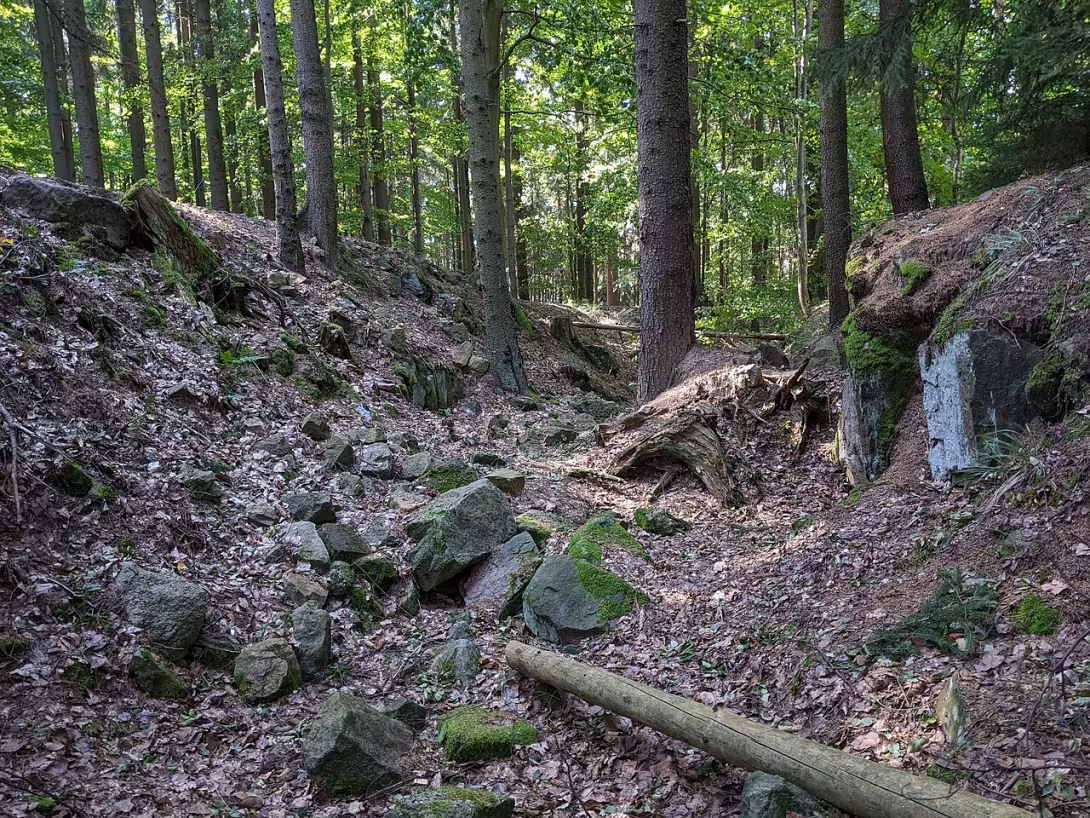
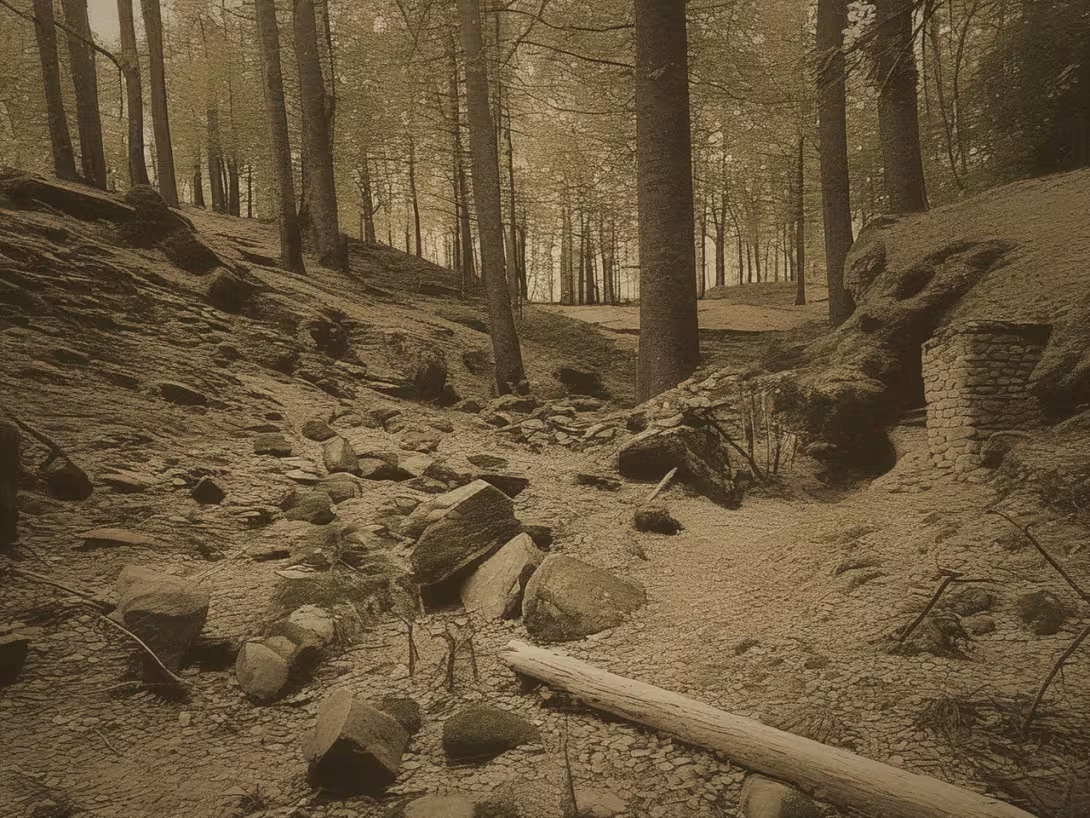
The historical appearance on the left is an AI-generated visualisation and serves as inspiration only.
Historical milestones
- 1241
- The Beginning of the Colonization of the Olešnik Escape
- Around the mid 13th century
- Expected creation of a small castle
- Around 1316
- Retrieval of Trutnov County by Half I of Turgova
- 1325
- The transfer of the castle to the property of Half I. from Turgova
- 1966-1968
- Archaeological research by Antonín Hejna
Architectural development
The castle was built as a smaller castle, probably at the turn of the 13th and 14th centuries. He had a front side protected by a moat and a massive wall of dry laid stones. On the northwest side there was a square tower which was built of stone without the use of mortar.
Historical events
- 1241
- The beginning of the colonization of the Olešník escape and Podkrkonoší by the Order of German Knights.
- 1325
- Půta I. z Turgova will take ownership of the castle Bradlo.
Owners
The property went from the Order of German Knights to the Pøetov I from Turgov around 1325, which together with his son built the castle Choustnikov Hradiště.
Points of interest
- The castle is of the Donjon type and its main residential function was the tower. - The front of the castle was protected by a moat with a massive wall of stones laid dry. - There was a square tower on the northwest side with raked upper floors. - In 1325 the castle was transferred to the property of Half I of Turgov. - This place has often been confused with the Host in the past.
Guide
Show guide text
This text was created by artificial intelligence and has not been editorially reviewed. It may contain inaccuracies.
Welcome to Castle Bradlo. Stop for a moment, take a breath and feel the surroundings. You are standing in a place that once dominated a strategic point in the landscape, where the waters of the Elbe and the Olešnik stream meet in a harmonious connection. If you look around now, maybe you won't see straight-up walls or tall towers, as we used to imagine from fairy tales. Bradlo is now a extinct castle. What you see are traces of history embedded in land and landscape. It is a place that is silent, but if we listen carefully, it tells us a fascinating story about power, defensive thinking and the beginnings of the settlement of these parties.
Let's go back to the 13th century together in time. Imagine this area in 1241. It was at this time that the great colonization of the Olešný escape began. It was not an accidental settlement, but an organized process that was behind it by the Order of German Knights. It is these engravers who have brought new energy, order and administration to Podkrkonoší. As part of this colonisation, the headquarters were established, which was not only intended to manage the newly acquired territories, but above all to protect them. It is assumed that in the middle of the thirteenth century there were first, originally smaller castles. It was the cornerstone from which the castle Bradlo later evolved. At that time, it was not only a luxury residence, but a necessary element of control over the surrounding landscape and trade routes.
Now pay attention to how the castle was actually built. Even though we don't see the whole building today in its full beauty, we know about it through careful study. Bradlo was a castle of the so-called donjon type. You may have met this word before, but it basically means that the heart of the castle was one dominant, massive tower, the donjon. This tower was not only intended to defend itself in the event of an attack, but it mainly performed the main residential function. Imagine how day-to-day life took place in this high building, how the lords of the castle lived on its floors and how from its peak they had a perfect overview of the confluence of rivers.
Now, if you think about the defensive elements surrounding the castle, imagine the front of the building. It wasn't left to chance. It was protected by a deep moat, designed to prevent easy access to the enemy. And behind him was a massive wall. What's fascinating about it is the way it's built. The stones were placed dry, i.e. without the use of mortar or other connecting material. It is a fascinating testimony about the craftsmanship of the then builders who were able to create a stable and durable barrier only through the precise composition of heavy boulders.
If you now move your thoughts to the northwest side of the castle, you can imagine another architectural detail. There was a square tower that was very specific. While the lower part was probably stone and robust, the upper floors were raked. This means it was built from a wooden skeleton filled with other material. Such structures provided construction with some lightness and at the same time practical for living areas in the upper parts.
With each century, however, ownership of this strategic place has also changed. The key character with which Bradlo is connected is Půta I. z Turgova. This man was a major player in regional politics at the time. Around 1316 Half I was acquired by Trutnov Region and in 1325 Castle Bradlo officially became part of its property. The Turgov family was powerful and influential in these parts, and Castle Bradlo served as one of the pillars of their power. Later this place was joined by the name of Half II of Turgov, who followed the work of his predecessor. Imagine these men going through here, planning to manage their vast estates, and seeing the same view of the Elbe that you can see today.
Perhaps now you can think of the question of how we know all these details when the castle is not fully built. The answer leads us to modern times, namely the 1960s. Between 1966 and 1968 there was a very thorough archaeological research conducted by Antonín Hejn. It is thanks to his patient work and precise excavations that we are now able to reconstruct the form of castle Bradlo in our minds. The archaeologists in the country found traces of the dry-laid wall, the outline of the donjon and the trench. It is a reminder that history is not only in books, but is physically present in the ground beneath our feet.
The interesting thing that may interest you is the invisibility of the castle. Bradlo is basically a secret hidden in the landscape. While other castles proudly stand out over the surroundings, Bradlo teaches us humility before time. It is a mystery about how such a massive building with a stone wall and a high tower could gradually disappear and become part of natural terrain. If we went back to the 14th century, we would see a formidable fortress that radiated strength and authority. Today we see peace and silence, but it is filled with echoes of the past.
Now that you know the story of this place, I suggest you slowly walk around. Feel the atmosphere of this confluence of rivers and try to fill in in your spirit those missing walls, towers and walls. Imagine the Knights of the Order, who established the first foundations here, and the mighty lords of Turgov who ruled here. Bradlo may no longer have its roofs, but his spirit is still here.
Thank you for accompanying me on this short journey to Dolní Olešnice history. I hope this view of the lost castle has helped you better understand the importance of this place. Now invited to further explore the surroundings and discover other hidden corners of this beautiful landscape. I wish you a pleasant journey and many new experiences. Goodbye.
Tips for visitors
The ideal time to visit is spring or autumn when vegetation is thinner and the terrain on top of Bradlo is better accessible. In summer, the place may be overgrown with lush greenery, making it difficult to move in ruins. You can easily walk to the castle on the green tourist mark from Debrný in the direction of Vestřev settlement. Parking is possible in adjacent municipalities, where it is necessary to continue on foot. With you, bring your shoes to the field, plenty of fluids and snacks, as you will find no facilities or refreshments in the immediate vicinity of the ruins. For photography it is best to use the morning or late afternoon light to highlight the remnants of the masonry and the rainfall of the terrain over the confluence of the Elbe and the Olešnik stream. In the area within 30 minutes you can visit the village of Debrné and Nové Castle near the Hostinný, which offer a quiet atmosphere of Podkrkonoší. For families with children the trip is more suitable as an adventure walk through nature; Due to the nature of the ruins, increased caution and constant supervision of children in the affected terrain is required.
Businesses nearby
Do you run a restaurant, accommodation, shop, museum, rental, wellness or other visitor service near this monument? Show yourself directly to the people heading to it — this is how they will see you in the app and on the web:
Nearby
The place is available after the turn of the green tourist brand leading from Debrný to Vestřev settlement. The village of Debrné and Nové Castle near the Hostinný is located in the area.
Accommodation nearby
Themed route
Debrn Type: village / Default point Here begins our quest. From the village we will take the green tourist sign, which will lead us safely to the destination. It's the perfect place to start and start the ground.
Osada Vestév Type: Set / Transition point This settlement lies directly on the green mark route. It serves as a key point where it turns towards the monument itself. Here you can take a short break and soak up the quiet rural environment before the final climb.
Bradlo Type: Castle / Main destination The ruin of castle Bradlo is the heart of this route. It offers breathtaking views of the surrounding countryside and the possibility of admiring the historical remains of the fortifications. It is an invaluable opportunity for history lovers to explore the atmosphere of the medieval mansion.
New Castle at the Guesthouse Type: Castle / Ambient interest When you return from the castle you can head towards this location. The castle is a contrast to the wilderness and ruins, offering a view of another architecture of the region. It is a suitable point for ending the trip or extending the walk.
Debrn Type: village / End point Close the route by returning to the starting village. Here you can replenish your strength and evaluate the experiences from today's walk. You return with the same green mark, which ensures a simple and clear return path without unnecessary complications.
Seasonal recommendations
In the spring, the ruins of the Wings wake up with nature. The light is soft and the spreading fog in the valley makes the place mysterious. It is the perfect time to observe the first green vegetation around the stone remains. We recommend wearing a waterproof jacket and layered clothes because the morning cold can be overlooked. The path to the monument is peaceful and without crowds in this period, which allows us to perceive the very history in silence.
The summer season brings intense sunlight and rich vegetation to Dolní Olešnice, which surrounds the ruins. The atmosphere is alive, but heat can be tiring in the open. For the best experience, come right after opening or early in the morning to avoid the biggest crowds and noon heat. Don't forget enough water, headgear and solid shoes suitable for dry but uneven soil.
Autumn changes the surroundings of the castle into a sea of golden and red colors, creating perfect conditions for photography. The lighting is low and very cozy at this time, which underlines the melancholy nature of the ruins. Due to wet terrain and falling leaves, we recommend to choose high-quality shoes with good grip. It's the best time for those who seek peace and want to escape the summer rush.
The winter visit to bradla offers raw beauty and unusual silence, especially if the landscape is covered with snow. The view of stone ruins in a freezing environment is very dramatic and monumental. Due to short days and lower temperatures it is necessary to arrive at a bright sun clock and wear very warm and wind-resistant clothes. Be careful when walking, because the paths to the monument can be slippery.
Visualizations and artistic views


The visualisations are generated by artificial intelligence and serve as inspiration.
Photos from the area
Real photos taken near the monument


Zdroj a licence jsou uvedeny u každého snímku.
Tips from visitors
No tips yet. Be the first!
Log in and add your tip.
Sources and literature
Faktickým podkladem tohoto textu byl článek na Wikipedii, jehož autory jsou přispěvatelé Wikipedie. Článek je dostupný pod licencí CC BY-SA 4.0.
Location on the map
More monuments – Dolní Olešnice
Show all in the municipality
Příběhy a pověsti
Legendy, pověsti a příběhy spjaté s touto památkou
Fotografie návštěvníků
Zatím žádné fotografie. Buďte první, kdo přidá fotografii z návštěvy!
Přihlaste se a přidejte svou fotografii nebo hodnoťte.
Za ověřenou návštěvu v aplikaci získáte víc bodů — poznáme podle GPS, že jste na místě.
Reviews and comments