






Brána svatého Valentina Gate
Objekt se nedochoval — na místě dnes nestojí. Následující text popisuje jeho historii, ne současnou návštěvu.
The Saint Valentine's Gate is a medieval gate once part of Prague's fortifications, located at the corner of Křižovnická and Kaprova streets in Staré Město (Old Town). Constructed in the 13th century as part of Prague’s defensive system, it was named after the nearby Church of Saint Valentine. Although it no longer stands, its historical significance is highlighted by recent archaeological discoveries that have unearthed remnants of its structure and surrounding fortifications.
The origins of Saint Valentine's Gate date back to the medieval period when Prague emerged as a significant center in Bohemia. The city's fortifications were part of broader efforts across Europe to protect urban centers from invasions and conflicts during this era. Built in the 13th century, the gate was an integral component of these defensive structures, strategically positioned to control access into the city.
Architecturally, Saint Valentine's Gate featured walls constructed from sandstone and granite, materials typical for medieval fortifications due to their durability. The portico was built using sandstone likely sourced from the Petřín quarry, showcasing the use of local resources in its construction. Its design included a simple passage without additional architectural embellishments, reflecting the utilitarian focus of defensive architecture at the time.
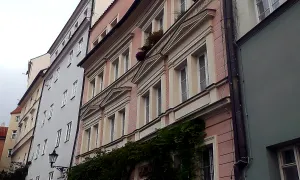
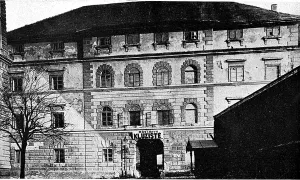
Following the dismantling of Prague's city walls, the site where Saint Valentine's Gate once stood underwent significant changes. The area was developed into a building known as 'Na Kocandě.' This transformation marked a shift from military to civilian use, illustrating how urban landscapes evolve over centuries. The name "kocanda" is linked to old merchant stalls called "kotci," where flammable materials like linen and hemp were sold, indicating the area's commercial activity in later years.
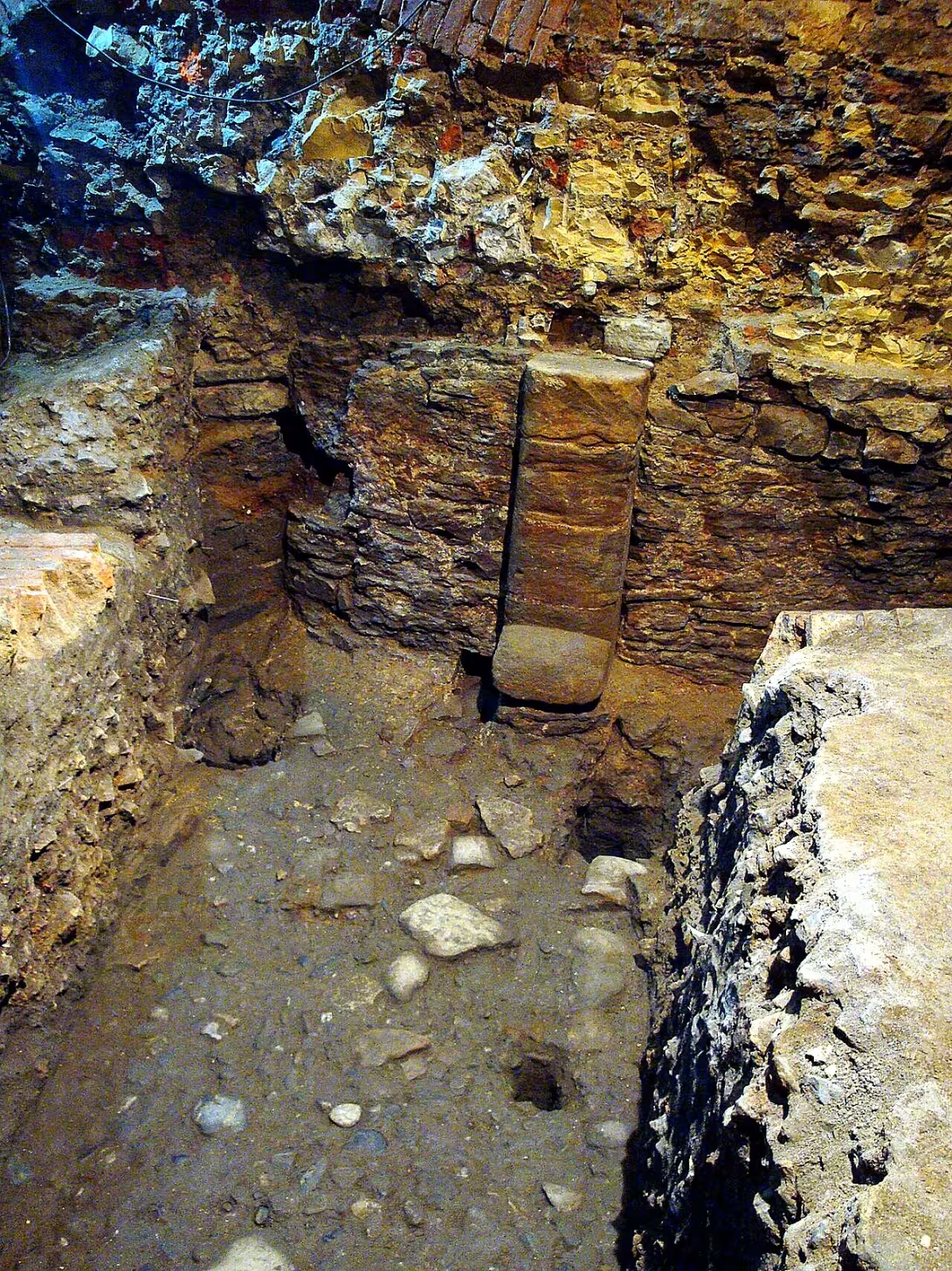
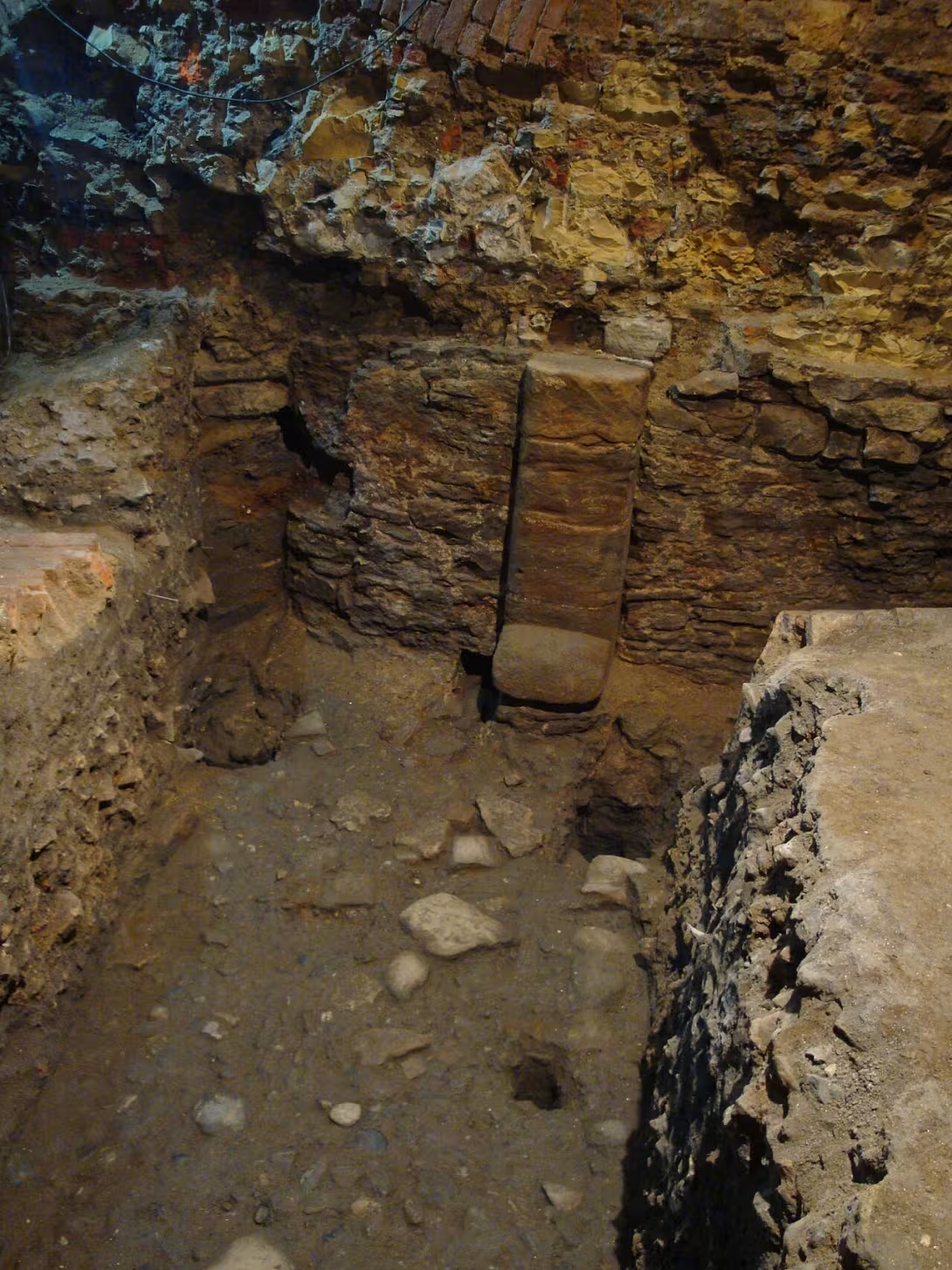
In 2017, an archaeological excavation at the site of Na Kocandě revealed approximately 26 meters of the fortification wall and remnants of the gate itself. This discovery provided valuable insights into the construction techniques and scale of medieval Prague’s defenses. The original roadway, paved with river cobbles, was found to be about five meters below the current street level, offering a glimpse into the historical urban layout.
Today, while Saint Valentine's Gate no longer exists as a physical structure, its legacy endures through these archaeological findings and the rich history they represent. The site's transformation from a medieval gate to part of modern Prague highlights the city's dynamic evolution over centuries. Visitors interested in exploring Prague’s historical layers can appreciate this monument's significance by understanding its role in the city's past defenses and its contribution to the urban fabric.
Saint Valentine's Gate offers a unique window into Prague's medieval history, inviting those curious about the past to delve deeper into the stories embedded within the city's ancient walls. Its historical value lies not only in its architectural features but also in the narrative of change and continuity that it represents.
Then and now
Drag the slider to compare how the landmark may have looked when it was built with the view today.
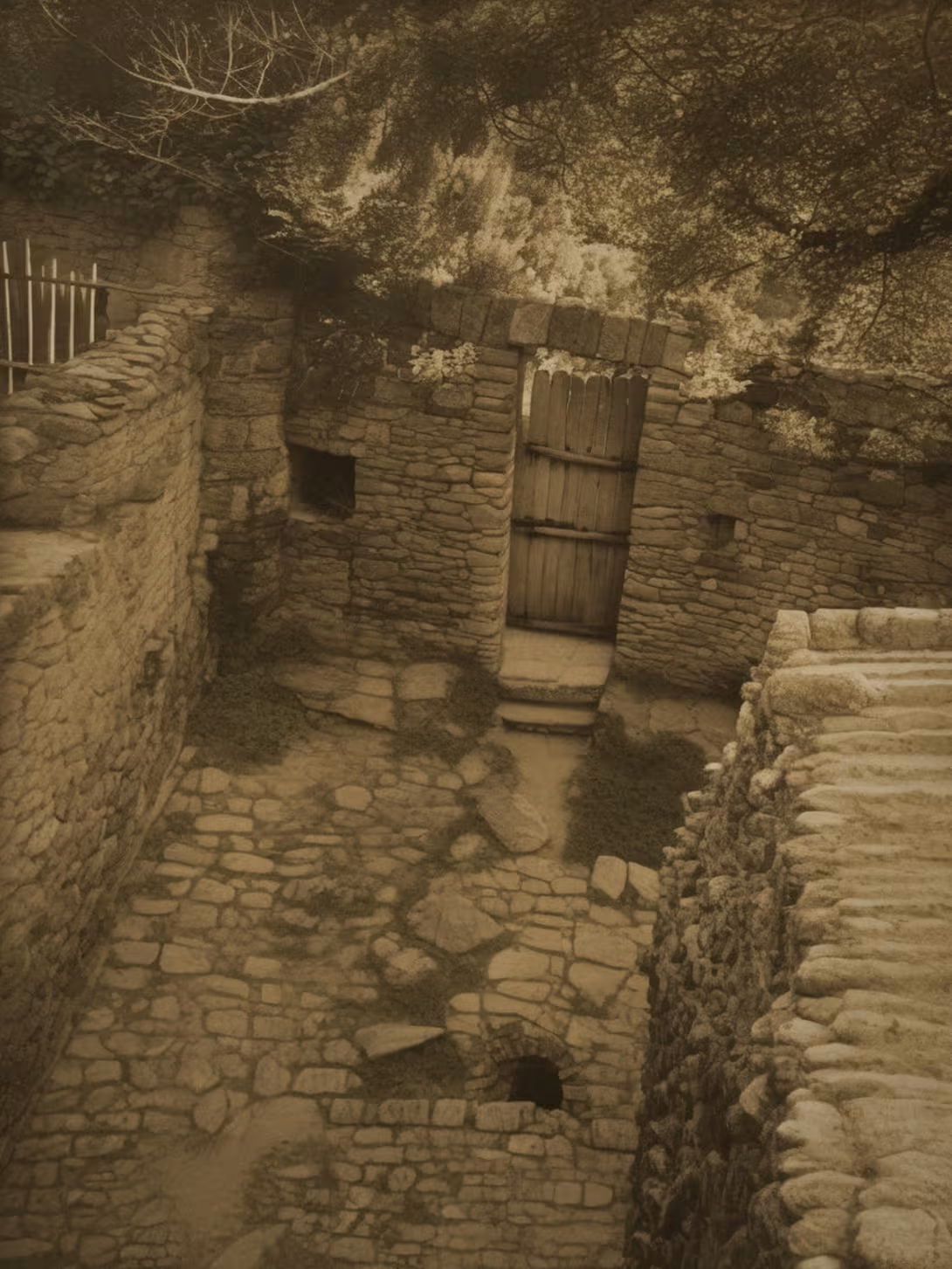
The historical appearance on the left is an AI-generated visualisation and serves as inspiration only.
Historical milestones
- 2017
- Archaeological excavation uncovered approximately 26 meters of fortification wall and remnants of the gate.
Architectural development
Originally constructed as a defensive structure in the 13th century, Brána svatého Valentina was part of Prague's medieval fortifications. The gate featured walls made from sandstone and granite, with a portico built from sandstone likely sourced from Petřín quarry. It had a simple passage design without additional architectural elements. After the city walls were dismantled, the site saw new development.
Historical events
The gate was part of the city's fortifications built in the 13th century.
In 2017, an archaeological excavation uncovered remnants of the gate and surrounding fortifications.
Points of interest
- Despite its name, the Saint Valentine's Gate was named after the nearby Church of Saint Valentine rather than any association with love or romance; this reflects how many medieval structures were often named based on geographic proximity to other landmarks.
- The gate's construction utilized sandstone from the Petřín quarry, which is a testament to the use of local resources in medieval architecture and highlights the importance of regional materials in historical building practices.
- After its dismantling, the site where Saint Valentine's Gate once stood was transformed into 'Na Kocandě,' linking it to old merchant stalls known as "kotci," indicating a shift from military defense to commercial activity in urban development over time.
- Archaeological excavations in 2017 uncovered about 26 meters of fortification wall and remnants of the gate, providing insights into medieval construction techniques and revealing that the original roadway was five meters below current street level, offering clues to Prague's historical urban layout.
- The transformation from a defensive structure to part of modern Prague illustrates the city’s dynamic evolution, showing how areas once critical for military purposes can become integral parts of civilian life and commerce over centuries.
Guide
This guide is narrated by a synthetic voice generated by artificial intelligence.
Show guide text
This text was created by artificial intelligence and has not been editorially reviewed. It may contain inaccuracies.
The Gate of Saint Valentine no longer stands today. It belonged to the fortification of Prague's Old Town and was located at the corner of Křižovnické and Kaprovy streets, in the place where the house Na Kocandě stands today. It was named after the nearby Church of Saint Valentine. To the north of it was a gate on Břehová street, and to the south was the bridge gate near Judith Bridge.
The city fortification was built in the thirteenth century. It ran from Judith Bridge and from the Křižovníci area away from the river, and at the Church of Saint Valentine it was interrupted by this very gate. The church stood to the east of it, in the middle of a cemetery. After the fortifications were torn down, a house called Na Kocandě was built on the site of the gate, part of the fortifications, and part of the cemetery.
Its name is connected to an old term for merchant stalls, which were called kotce. Flax and teasel were highly flammable, and so they were sold at the market in front of the city gates. In Prague, this merchandise was sold right in front of the Gate of Saint Valentine.
In 2017, an archaeological excavation took place in the basement of the house Na Kocandě. Archaeologists uncovered approximately 26 meters of continuous masonry of the city fortification made of slate and flint. The masonry was roughly 1.6 to 1.9 meters wide. They also discovered the gate itself. It was so large that a carriage with horses or a rider on horseback could pass through it comfortably. The portal was built from sandstone, probably from the Petřín quarry. The passage was simple, without any other structural elements. The original roadway was paved with river pebbles and lies approximately five meters below the level of the surrounding street.
Businesses nearby
Do you run a restaurant, accommodation, shop, museum, rental, wellness or other visitor service near this monument? Show yourself directly to the people heading to it — this is how they will see you in the app and on the web:
Events nearby

Zdroj akcí: otevřená data měst a obcí ČR (Národní katalog otevřených dat) a kalendář akcí Národního památkového ústavu.
Visualizations and artistic views


The visualisations are generated by artificial intelligence and serve as inspiration.
Photos from the area
Real photos taken near the monument

Zdroj a licence jsou uvedeny u každého snímku.
Tips from visitors
No tips yet. Be the first!
Log in and add your tip.
Sources and literature
Photos: Svenkaj / CC BY-SA 4.0 — Wikimedia Commons. The author and licence also appear when you hover over the image.
Faktickým podkladem tohoto textu byl článek na Wikipedii, jehož autory jsou přispěvatelé Wikipedie. Článek je dostupný pod licencí CC BY-SA 4.0.
Location on the map
Příběhy a pověsti
Legendy, pověsti a příběhy spjaté s touto památkou

Fotografie návštěvníků
Zatím žádné fotografie. Buďte první, kdo přidá fotografii z návštěvy!
Log in a přidejte svou fotografii nebo hodnoťte.
Za ověřenou návštěvu v aplikaci získáte víc bodů — poznáme podle GPS, že jste na místě.
Reviews and comments