



Bratrský sbor Mosque
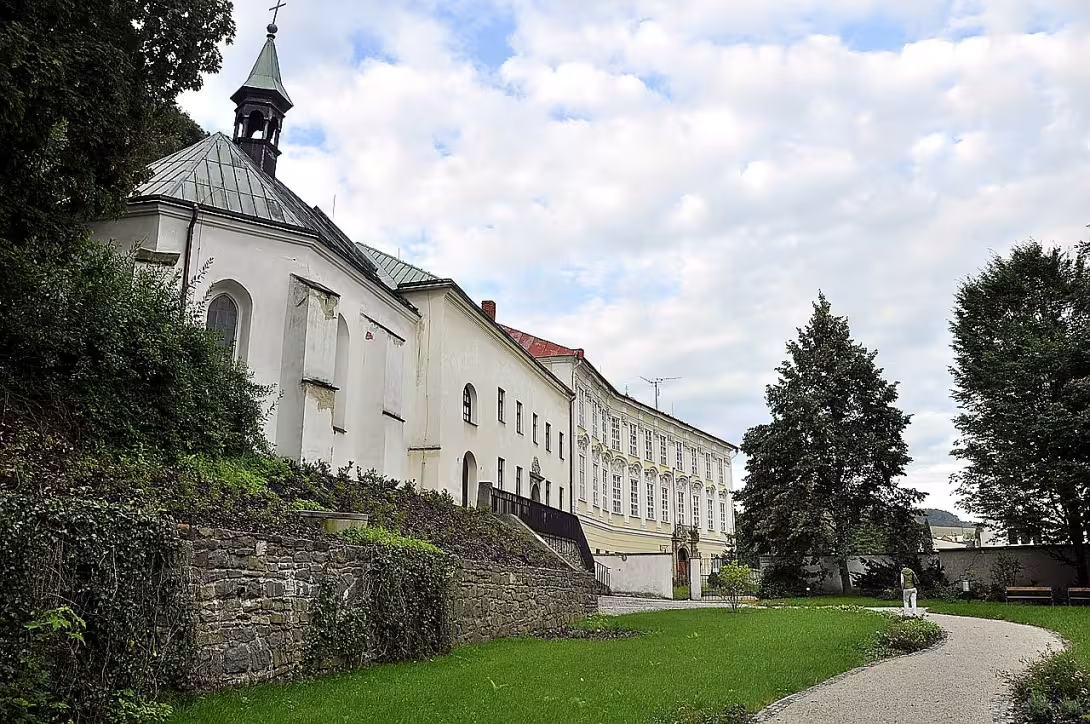
Bratrský sbor in Fulnek is a prayer house with rich historical and cultural value, designated as a national cultural monument of the Czech Republic. Located in the village Fulnek, district Nový Jičín, Moravskoslezský kraj. This object is remarkable not only by its architectural structure but also by being the last place of residence of Jan Amos Komenský before his departure into exile. Choir 80 in Fulnek is the address of this historic place.
Bratrský sbor has its roots in the middle period of Gothic, but it was modified at the beginning of the 17th century and rebuilt at the beginning of the 18th century. This prayer room is therefore the result of several construction phases that reflect the historical development of the region. Its architecture and location are connected to the spiritual life of the region and represent a cultural monument of the Czech Republic in the territory of Fulneka.
The history of the Brotherhood Corps is inextricably linked to the person of Jan Amos Komenski, also known as Comenius. This important educator and theologian spent the last days here before he went into exile. His connection to this place highlights his influence on Czech culture and spiritual life.
The choir is supplemented by a statue of Jan Amos Komenský, which was created by Josef Štursa in 1924. This statue reminds of important personalities associated with this prayer house and strengthens its historical value.
Today Bratrský sbor in Fulnek is protected as a national cultural monument. It is a place that is worth visiting not only for its architectural appearance and history, but also for its connection with Jan Amos Komenský. Visiting this choir means traveling to the past and discovering part of the history that shaped Czech culture.
Bratrský sbor in Fulnek is therefore not only a prayer building, but also a monument to historical personalities and events. It is a place that resembles the importance of cultural and spiritual heritage in Czech countries. Visiting this choir is a valuable experience for anyone interested in the history and culture of the Czech Republic.
Historical milestones
- The last residence of J. A. Komensky before going into exile.
Guide
Show guide text
This text was created by artificial intelligence and has not been editorially reviewed. It may contain inaccuracies.
Welcome to Fulnek, a picturesque city in Moravia, which has much deeper ties with the history of the Czech nation than it might seem. You are standing in front of one of the most important places connected to this region. In front of you is the brotherly choir building, also known as the prayer room. It is a place where the fates of faith, education and political events are crossed, which shaped the face of Central Europe. This building is not just an ordinary church architecture, but is protected as a national cultural monument of the Czech Republic, which shows its extraordinary importance to our cultural memory.
When you look at this building, you realize you're looking at a place where the key moments of John Amos Komensky's life were taking place. Yes, he is the great thinker, educator and bishop of Czech brothers, who is considered the father of modern pedagogy. Fulnek wasn't just a random stop on the way. It was his last stay in Czech countries before he had to leave his country and go into exile. Imagine the atmosphere from the end of the 16th and the beginning of the 17th century. The Czech Reformation Movement, especially the Choir of the Czech Brothers, went through difficult times. After the 1620 White Mountain and the subsequent suppression of Protestantism, many believers and thinkers had to seek refuge elsewhere. Komenský, who was deeply associated with this movement, found himself in Fulnek at a time when his fate was determined. This prayer room was for him a place where he could once again experience spiritual fellowship with other brothers before fate took him abroad.
Now let's look at the construction itself. Although the particular architects who designed this prayer house remain unknown to history, the building itself speaks of the time in which it was created. Look at her facade and see the overall composition. This type of construction, which served as a chorus for Czech brothers, was often characterised by simplicity and emphasis on the inner space intended for common prayer and listening to the word. It was not a monumental cathedral with high towers and rich decoration, but a functional and spiritually charged space. Note how the building is incorporated into the urban environment of Fulnek. It's a place that seems to have had traces of different modifications and reconstructions over the centuries, which is quite common for monuments of this type. Although we do not have detailed architectural studies from the time of creation, the very presence of this building as a national cultural monument tells us that in it you will find elements that are historically and artistically valuable.
The key story that is inherent in this place is the escape of Jan Amos Komenský from Czech countries. After the defeat of the situation on the White Mountain and the subsequent expulsion of Protestants from Bohemia and Moravia, Komenský had to decide where to go next. Fulnek was his last refuge on Czech soil. Here, in this house of prayer and near his fellow believers, he has spent the last few weeks of his life in exile. Imagine how he must have felt sadness and hope. Grief over the loss of his country and the fact that his ideas of education and peace could not be found in the home country. And the hope that his work will survive and be spread around the world. From Fulnek he went to exile, where he spent the rest of his life, and although he never returned to Czech countries, his influence remained deeply anchored here. So this prayer room is a sort of stone witness to this breakup. It's a place where one chapter of his life ends and the other begins to lead him to Poland, Hungary, Holland and England.
The interesting thing that can impress a visitor is that although Komenský is now a world-famous character, his stay in Fulnek is not as widely promoted as his work in Amsterdam or Exeter. Many people think that Komenský left the Czech Republic directly abroad without knowing that his last steps in the homeland led right here to Fulnek. This prayer room thus serves as an important point on the map of his exodus. It's a place where each of us can stop and think about the forces that make people leave their homes. What is the price of freedom of thought and faith? And how important it is that these monuments are protected and maintained to remind us that history is not just a set of data, but a living story of people who have experienced similar dilemmas like us.
When searching this place, try not only to perceive the stone walls, but also the atmosphere that rules here. Imagine how there were prayers in these spaces, how the choir gathered together to read and sing together. Even though there are no more sounds, the energy of the place remains. This prayer room is a symbol of the courage of the Czech brothers who, even in the days of persecution, insisted on their faith and education. It is a reminder that culture and faith are often inseparable, and that their protection is as important as the protection of material monuments.
Now that you have enjoyed this view and thought about the history associated with this place, I suggest you take the time to explore Fulnek again. The city offers other attractions that complement the picture of this region. You can walk down the alleys, which have preserved their historical nature, and look for more clues of the past. Or stop for a moment and let the peace of this place take effect on you. I believe that this visit will remain in your memory not only as a view of a beautiful building, but as a meeting with a story that has a deep human dimension.
Thank you for finding time for this audio tour. We hope that you enjoyed this experience and that you have brought with you at least a piece of history that will accompany you even after leaving Fulnek. Remember, every monument is like a book that can be read over and over again, and every time you read it, we find something new. May the rest of the day in this beautiful city bring you more discoveries and pleasant moments. You touch and wish your travels to be as rich in experience as the history we have just explored together.
Tips for visitors
For the best experience we recommend a visit during quiet morning hours, where the atmosphere of the historic Fulnek is most authentic and avoid the biggest crowds.
The location can be reached by car and public transport.
With us we recommend to take drinking water, comfortable shoes for walking around the historical centre and cash if required when entering the building.
It is ideal to take advantage of the time around sunrise or sunset when soft light best highlights the details of the historical building.
Families with children can use the visit to explore the history of the building itself and its nearby surroundings.
Frequently asked questions
Can the monument be visited?
Religious buildings are usually open mainly during services; at other times a visit is normally arranged with the parish or the operator. We have not verified specific times.
Where is the monument?
Location: Sborová 80, Fulnek, Moravskoslezský kraj. The map on this page shows the exact spot.
Why is the monument protected?
It is listed in the Central List of Cultural Monuments of the Czech Republic as a national cultural monument (register no. 132).
Businesses nearby
Do you run a restaurant, accommodation, shop, museum, rental, wellness or other visitor service near this monument? Show yourself directly to the people heading to it — this is how they will see you in the app and on the web:
Nearby
ITEX Show interactive overview of the surroundings - restaurants, accommodation, rentals and other places within a 15 km radius.
Data: OpenStreetMap contributors, 15 km radius.
‡ Historical monuments
- J. A. Komenský Memorial (0.0 km)
- J. A. Komenské (0.0 km)
- sv Jan Nepomucký (0.1 km)
- J. A. Komenské (0.3 km)
- František Palacky (0.4 km)
- Museum of Moravian Brothers (7.6 km)
- Museum of Military History (7.6 km)
- Katovna (7.9 km - Circular 83 / 32)
Restaurant and catering
- Municipal pub (7.2 km - 2)
- Restaurant Centrum (7.5 km)
- Pizzeria Toscana (7.8 km - Masaryk Square 8)
- Workshop house Odry (8.0 km)
- Nonstop (8.3 km)
- Bartoncity (8.3 km)
- Restaurant HOLUB PETR (9.8 km)
- Manor on the road (9.8 km - 257)
Accommodation
- Hotel Heipark Tošovice (5.2 km)
- Guesthouse Poodři (7.6 km - Komenský 260)
- Water mill Wesselsky (8.3 km)
- Water mill Wesselsky (8.3 km)
- Guesthouse U bell tower (8.7 km)
- Agility kemp (8.9 km - ev.10)
- Hotel Holub (9.8 km)
- Hotelek & Café Antler (10.4 km)
› Rental and sports
- TJ Romo Fulnek (0.5 km)
- Sport hala (7.8 km)
- Scodok (8.2 km)
- Bowling (8.3 km)
- Sport centre Jakubčovice above odrou (9.2 km)
- mTenis.cz - Tennis, badminton, squash, weaving servis (9.8 km - Ostravská 699 / 26)
- Tennis courts (10.4 km)
- Football Stadium (10.5 km)
© Tourism and nature
- Pod Hubleskou (7.5 km)
- View Kanihrora (7.8 km)
- Bílov (at the observation tower) (7.8 km)
- Bílovka (zst, bus) (9.1 km)
- Na Height (9.4 km)
- Valley Young (10.8 km)
- Lawns (11.2 km)
- Large Albrechtice (11.4 km)
Accommodation nearby
Themed route
Thematic cruise route: Bratrský sbor (prayer room) and surroundings Fulneka
1.Bratrský sbor (prayer room) * Type: * Historical landmark * Why is it worth a visit: * This prayer room is one of the most famous and beautiful examples of the architecture of the brotherly movement. It is a place where you can explore the rich history and spiritual tradition of the Unity Elder. Prayer offers visitors a view of unique architecture with a view from the tower.
2. Church of St. Jacob the Greater * Type: * Cathedral * Why is it worth visiting: * This Gothic cathedral is another important historical and architectural monument in Fulnek. It is known for its impressive construction, rich history and beautiful interiors. The church was built on the site of an older Romanesque temple and is an important symbol of the cultural heritage of the village.
3. St. Nicholas Church * Type: * Church * Why is it worth visiting: * This church, built in Baroque style, is another historical memory of Fulneka. He is famous for his architecture and location in the place of the former castle. The church serves as a place for cultural services and cultural events, which makes it a living centre of the village.
4. The Station of the Brotherhood Choir * Type: * Historical courtyard * Why is it worth a visit: * The reservoir in front of the prayer room is an ideal place to relax and reflect. Here you can use a quiet space that gives an understanding of the historical context of the Brotherhood Corps. It is also a place where various cultural events and exhibitions take place.
5. Park near the Brotherhood Choir * Type: * City Park * Why is it worth a visit: * Park offers an opportunity to relax in green, which is ideal after a tour of historical monuments. It is a place for short walks and enjoy a quiet environment near the center of Fulneka.
This route offers visitors the opportunity to immerse themselves in the history and culture of Fulneka while passing through the most important places of the village.
Seasonal recommendations
Spring: In spring, Fulnek awakens into life and the surrounding hills become green, which adds a fresh and promising charge to the prayer. The light is soft and pleasant in this period to observe the details of the construction. We recommend wearing layered clothes because spring weather is unpredictable in this area. The best place to visit is in the morning, when the air is the cleanest and the traffic is minimal.
Summer: Summer months bring intense sun to the historic streets of Fulnek and full bloom of vegetation. The atmosphere is alive, but it may be hot near the prayer room. Due to the main summer season, more people count on visitors, so it is reasonable to come early in the morning or late in the afternoon to enjoy the peace. Don't forget the comfortable shoes and sun protection.
Autumn: Autumn season is the most melancholy and spiritual for this memory. The morning mist surrounding the surrounding landscape and the golden colours of the leaves create a unique setting for the prayer house. It is necessary to prepare for cooler temperatures and humidity, so choose a tighter jacket and waterproof shoes. The ideal time for visiting is early afternoon, when the colors most excel before early twilight.
Winter: In winter the place is very quiet and distant, especially if snow covers the surroundings. Silver lighting and short days underscore the historical character of the building. Due to low temperatures and shorter opening times we recommend to come in bright morning. The need is very warm clothes, including hat and gloves, to make the visit a pleasant experience despite the freezing weather.
Visualizations and artistic views


The visualisations are generated by artificial intelligence and serve as inspiration.
Photos from the area
Real photos taken near the monument


Zdroj a licence jsou uvedeny u každého snímku.
Tips from visitors
No tips yet. Be the first!
Log in and add your tip.
Sources and literature
Photos: EulenspiegelZC / CC BY-SA 3.0 — Wikimedia Commons. The author and licence also appear when you hover over the image.
Location on the map


Příběhy a pověsti
Legendy, pověsti a příběhy spjaté s touto památkou
Fotografie návštěvníků
Zatím žádné fotografie. Buďte první, kdo přidá fotografii z návštěvy!
Log in a přidejte svou fotografii nebo hodnoťte.
Za ověřenou návštěvu v aplikaci získáte víc bodů — poznáme podle GPS, že jste na místě.
Reviews and comments