



Klášter augustiniánů kanovníků (Fulnek) Monastery
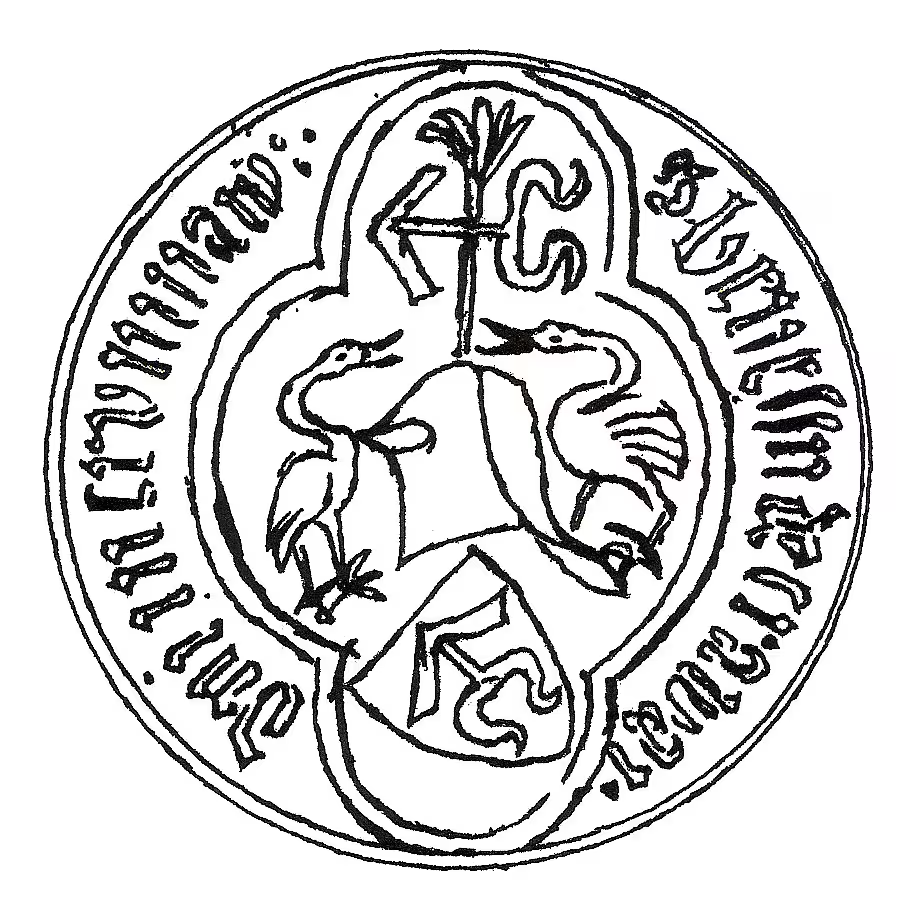
The monastery of the Augustinian canaries in Fulnek had its beginnings in the late Middle Ages, in a period when the Augustinian became a sought-after order of their open approach to practical life in the community. Their headquarters in Fulnek soon gained an important position in the church and legal map of the region.
The founder of the monastery was Beneš z Kravař, the master of the Moravian Krumlov and master of the chamber at King Wenceslas IV. On 29 September 1389 he founded it in order to secure the salvation of his soul, his wife, his parents and all his heirs to the honor of the Savior and the Holy Trinity. The founding charter was confirmed on 16 October 1389 by Bishop of Olomouc Mikuláš from Rýzmburk, giving the monastery important religious recognition.
The Founder provided the monastery with rich equipment. It was dedicated to the village of Děrná and Čílovka, salt footbridge in Fulnek, orchard opposite the monastery, forest near Děrny with bees and chapel in the fulnek chateau. All these goods were intended to benefit the monastery and to help the poor, but never to be sold. It was of particular importance that the parish church in Fulnek became a capitular church - that is, its administration was taken over by the monastery. Beneš reserved for himself and his descendants the right of repair and fundamentalist; He also made it clear that three memorial mass should serve for him every month.
The monastery was originally established for Probost and nine canons. In 1391, the number of seats was extended by four - the initiative of Lacka of Kravař, the brother of the founder, and his oldest son John, who dedicated the village of White and Old Ves. As a condition, they decided to have the Mass of the Virgin Mary served daily in the monastery temple. The school was also associated with the monastery; The convention was supposed to feed her rector.
The early years of the monastery were not just a sign of growth, but also of building relationships. In 1397 the monastery closed the fraternity with the Augustines in Lanskroun, and a year later with the virgin monastery in Pustimer. These ties between the Greek communities had a deep spiritual meaning - especially the sharing of prayers and parietal services.
In the long term, however, the monastery faced legal complications. He was based in the Moravian Marcrabism, but his possessions and villages lay in the prince of the Opava. This division of jurisdiction created uncertainties in the legal status of the Convention. In 1434, the Suit Lords stopped being at Fulnek; In the chateau, non-Catholic nobles who claimed the rights of the founder were settled. The monastery suffered from this act. Only later did the law return to the Catholic Kravars; after the extinction of their direct line in 1466, it was taken over by their relatives, Fvorkovský of Kravař.
Legal uncertainties continued over the following centuries. In 1486 Jan of Žerotín gave a full estate including the monastery and its villages to the Olomouc Land Law. But already in 1502 the monastic villages were erased and returned to the Principality of Opava. In 1512, when the monastery bought the village of Lukavec, he undertook to leave it in the prince of the opava. Such a halved legal position has lasted for a long time. Moreover, for years it has not been clear to whom the right to choose the Probošt - the monarchs themselves or the convention - belongs.
The monastery of Augustinian canons in Fulnek existed until 1784 when it was cancelled by Emperor Josef II.
Then and now
Drag the slider to compare how the landmark may have looked when it was built with the view today.
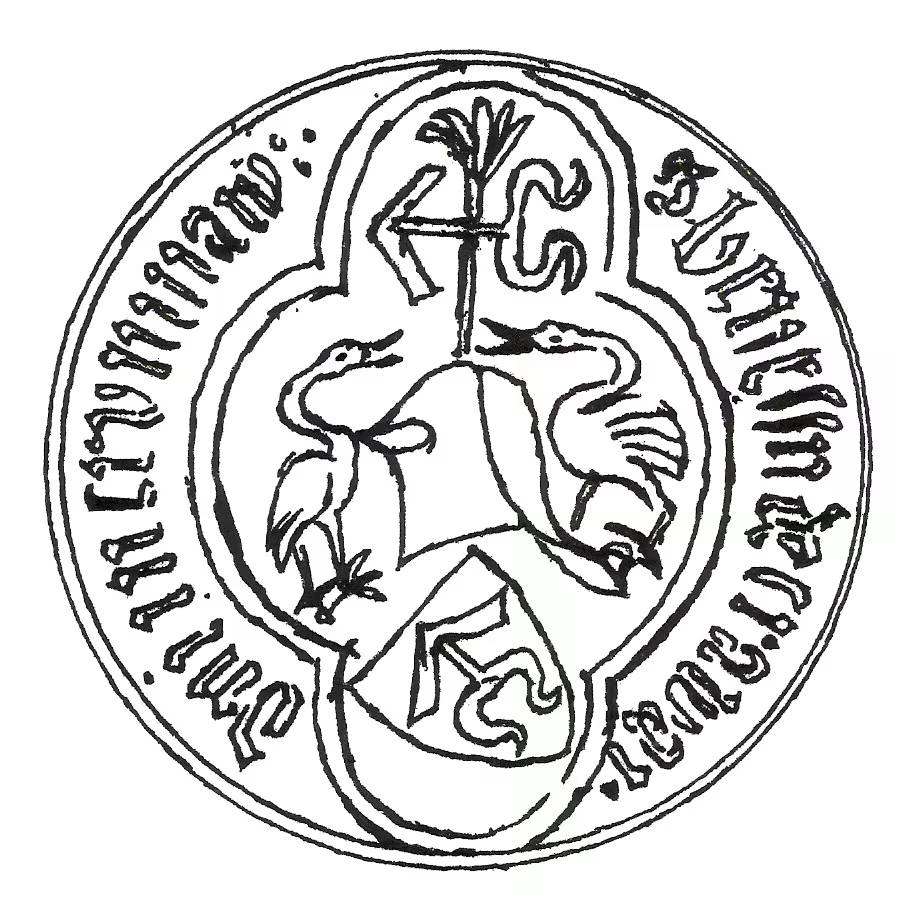
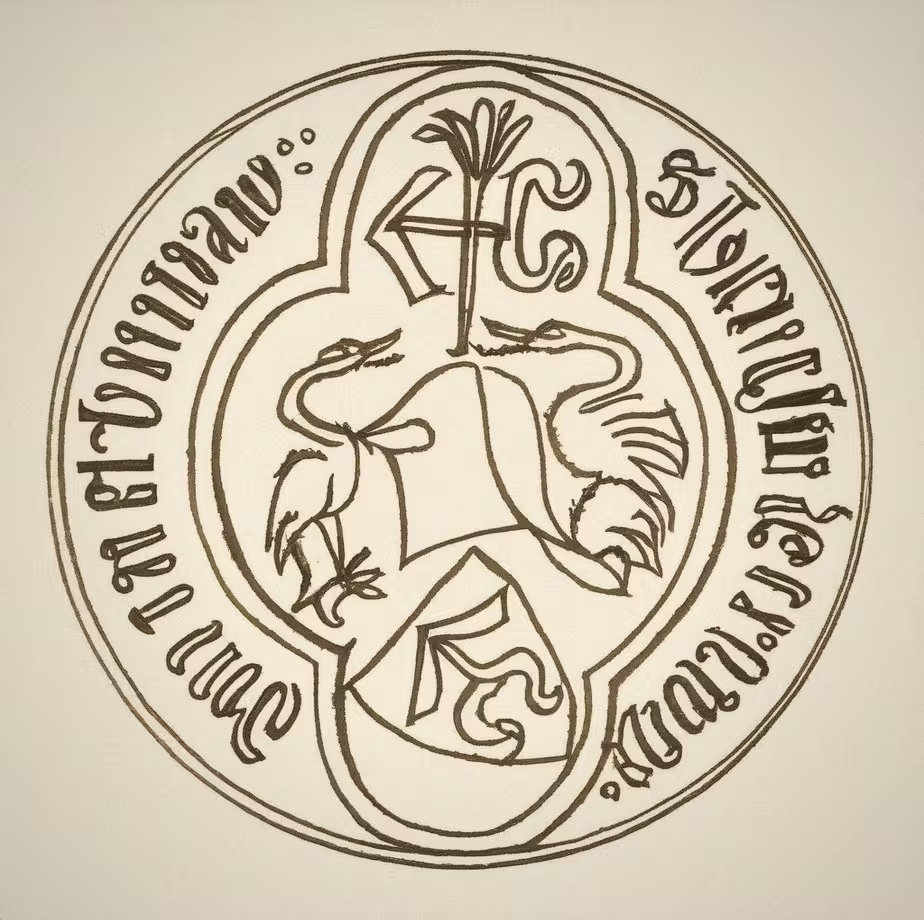
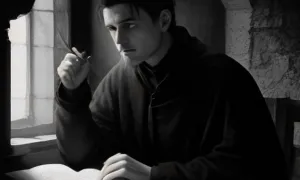
The historical appearance on the left is an AI-generated visualisation and serves as inspiration only.
Historical milestones
- 1389
- The charter of Beneš from Kravař and the confirmation of Olomouc Bishop Nicholas from Rýzmburk. The monastery acquired property and the right to the parish church in Fulnek.
- 1391
- The extension of the monastery by four additional canons thanks to the gifts of Lacek from Kravař and Jan from Kravař.
- 1486
- Transfer of the Fulnec estate, including the monastery, to the administration of Olomouc earthly rights (Moravia) on the basis of King George's letter from Poděbrad.
- 1784
- The abrogation of the monastery by Emperor Joseph II and its secularization.
Architectural development
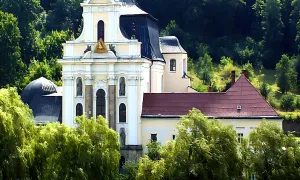
The original monastery was founded in Gothic style with a capitular church. In the 17th century a Baroque reconstruction took place which affected the appearance of the complex. The original Gothic quadrature of the monastery was preserved while the church gained baroque features. Baroque sculptures are also part of the complex.
Historical events
- 1389
- The establishment of the monastery Beneš z Kravař with confirmation of the Olomouc bishop Mikuláš z Rýzmburk. The monastery acquired a parish church in Fulnek and other properties.
- 1391
- The extension of the monastery by four other canons thanks to the gifts of Lacek of Kravař and his son John.
- 1784
- The abrogation of the monastery by Emperor Joseph II as part of the Josephine reforms.
Points of interest
- The monastery was founded in 1389 by Beneš of Kravař, who dedicated it to the rescue of the souls of his family and to the honor of the Savior and the Holy Trinity.
- The founder of the monastery donated to the monasteries of the village of Děnná and Čílovka, salt bridge in Fulnek, forests with bees and a chapel in the chateau of Fulnek, all of which were to serve the poor and could never be sold.
- The parish church in Fulnek became a capitular church whose administration was taken over by the monastery.
- The monastery originally counted on Probošt and nine canons, in 1391 the number of seats expanded by four thanks to the gift of the villages of Bílova and Stará Ves from Lack of Kravař and his son John.
- The monastery had a joined school, whose rector was to be fed by the convention.
Guide
This guide is narrated by a synthetic voice generated by artificial intelligence.
Show guide text
This text was created by artificial intelligence and has not been editorially reviewed. It may contain inaccuracies.
The Augustinian monastery in Fulnék was founded in 1389 and lasted for almost four hundred years. It was dissolved by Emperor Joseph the Second in 1784.
The foundation charter was issued on September twenty-ninth, thirteen eighty-nine in Moravský Krumlov by Beneš from Kravař, master of the chamber of the Roman King Václav the Fourth. He donated to the monastery the villages of Děrné and Jílovec, salt springs in Fulnék, an orchard opposite the monastery, a forest near Děrné together with beehives, and a chapel on Fulnék castle. None of this was to be sold. The revenues were to serve the monastery, poor people, and building repairs. Beneš also established a school at the monastery and the convent was to support its rector. In return, he stipulated that after his death the monks would say three funeral masses for him every month.
In October of the same year, the charter was confirmed by Mikuláš from Rýzmburka, bishop of Olomouc. The parish church in Fulnék came to the monastery, which thus became its chapter church. The canons were to live according to the same rules as their brothers in Šternberk. Originally, a provost and nine monks were supposed to live there. In thirteen ninety-one, Beneš's brother Lacek and his son Jan added the villages of Bílov and Stará Ves, so the number of canons could be increased by four. In return, they asked for daily masses for the Virgin Mary. At the end of the fourteenth century, the monastery established a brotherhood with the Augustinians in Lanškroun and with the women's monastery in Pustiměř.
In fourteen thirty-four, the Kravař family ceased to be lords of Fulnék. The new non-Catholic holders usurped rights over the monastery and it suffered greatly because of this. Later the rights returned to the Kravař family and after the extinction of their direct line in fourteen sixty-six, they were taken over by the Catholic relatives, the Tvorkovský family from Kravař.
The territorial affiliation was also complicated. The monastery along with the town initially belonged to Opava. However, Jan from Žerotín attached the Fulnék domain to Moravia in fourteen eighty-six. In fifteen hundred and two, the monastery villages were again recorded in the Opava books. Thus the monastery was located in Moravia, but its estates lay in the Opava principality, which complicated its legal status.
For a long time it was also unclear who had the right to elect the provost. In fifteen forty-seven, King Ferdinand asked the bishop of Olomouc, Jan Doubravský, whether this right belonged to him or to the convent. The convent had the right and the monks from the brother monasteries also voted. Around the middle of the sixteenth century, the records mention irregularities in the convent, apparently mainly under the influence of Lutheranism, which the nobility supported at that time.
Tips for visitors
Best time to visit the ruins of the monastery is in spring or autumn when the weather is pleasant and the ruins are not as crowded as in the summer months. The sunny morning clock provides ideal light for photography, especially on the north side of the monastery, where there is less shadow. In winter the visit can be interesting due to its calm character, but some trips to the monument can be difficult to access.
It is recommended to park in areas near Fulnek Square, where the monastery is only a short walk away. If you arrive by public transport, stops are near the city, a specific connection is good to check before travelling in the traffic search engine.
When visiting, wear comfortable shoes because the roads to the ruins are often uneven and stone. It is also convenient to take a map or mobile navigation with you to make it easier to navigate around. If you are planning to photograph, bring the lens with a larger focal length, which allows detailed footage of the ruins.
Photography of the ruins is permitted, but it is necessary to take care to respect the monument. The best places for photos are the entrance portal, the remains of the monastery yard and surrounding terrain overlooking the city. Sunlight hits the west side of the monastery in the afternoon. Always avoid using lightning to avoid damaging historical surfaces.
In the vicinity of the monastery is worth visiting Fulnecká Square with its baroque staircase, which connects the monastery to the historical centre of the city. Another interesting thing is the Parish Church of St. Peter and Paul, which was originally a capitular church of the monastery. Both of these places are just a few minutes' walk from the ruins and offer another look into Fulneka history.
For families with children, visiting the monastery is interesting thanks to the possibility of discovering history and nature. Children can see the remains of the monastery and have fun on the surrounding lawns. In the vicinity you can also visit the Parish Church, where children can learn more about medieval architecture. It is also recommended to visit Fulnecká Square where children can observe historical elements and Baroque architecture.
Frequently asked questions
Can the monument be visited?
Religious buildings are usually open mainly during services; at other times a visit is normally arranged with the parish or the operator. We have not verified specific times.
Where is the monument?
Location: Kostelní, Fulnek, Moravskoslezský kraj. The map on this page shows the exact spot.
Why is the monument protected?
It is listed in the Central List of Cultural Monuments of the Czech Republic as a cultural monument (register no. 21391/8-1557).
For kids
Imagine going back to the past and finding yourself in a small village of Fulnek. The locals will welcome you with a smile and invite you to their convent. In 1389 this monastery was founded by the Augustinian canaries who lived and prayed here.
It was like a small town in the heart of a village. The monastery building was tall and thin, with high towers that seemed to reach the sky. The interior of the monastery was full of libraries, chapels and rooms where canons lived and prayed.
Businesses nearby
Do you run a restaurant, accommodation, shop, museum, rental, wellness or other visitor service near this monument? Show yourself directly to the people heading to it — this is how they will see you in the app and on the web:
Nearby
- A square with a Baroque staircase connecting the monastery with the historical heart of the city, about 200 metres from the monastery.
- The church, which was assigned to the monastery as a capitular and served as its temple, is located near the monastery.
- Forest complex about 3 km from the monastery with rich flora and fauna, protected as a nature reserve.
Accommodation nearby
Themed route
The daily cruise route to the monastery of Augustinian canoes in Fulnek
1. Klášter augustinians of canons * * The 16th century monastery is an example of Baroque architecture with a rich history. The still functioning canon community has preserved the original interiors and expositions that tell about the life of the monastery. Look up the bell tower and carefully examine the Gothic and Renaissance elements.
2. Full Square * * From the monastery you will go about 200 meters to the square, where there is a Baroque staircase connecting the monastery with the historical heart of the city. Around the square there are a number of historic houses and is an ideal place for a short break with a view of the city.
3. Farn Church of St. Peter and Pavla * * In the nearby vicinity of the monastery there is a church which served as its capitular temple. The interior of the church is an excellent example of local Baroque art and the original altar decoration has been preserved here.
Conclusion The route is short but rich in cultural and historical values. After visiting the monastery and church you can relax in the square and see the surrounding historical monuments.
Seasonal recommendations
Spring In a monastery full of blossoms, life manifests itself in full strength - green trees, flowering meadows and fine sunlight create a calm atmosphere. At this time there are fewer visitors than in the summer months, but nature is the most beautiful one in the flowering season. I recommend visiting the monastery early in the morning when the temperature is pleasant and the crowds are minimal. Suitable clothes should be light but still warm because evenings can be cold. Don't forget the long shoes, because the roads are often unwashed.
Summer In the main summer season, the monastery is full of tourists, which is why it is best to come in a timely time to avoid crowds. The sunny weather creates a pleasant atmosphere, but it must be protected from the sun and hydrated. Suitable clothes should be light and airy, with long sun sleeves. It is also appropriate to wear a hat or scarf to protect itself from direct sunlight.
Autumn Autumn brings mild temperatures and green forests that are beginning to turn into gold and red colors. At this time, the monastery is less visited, which allows exploring space without disturbing crowd. I recommend visiting the monastery in the morning when the air is clean and nature is the most beautiful. Suitable clothes should be warm but light, with layers to adjust to variable weather. Don't forget the warm gloves and shoes that are necessary for walking on unwashed roads.
Winter In advent time, the monastery is quiet and the atmosphere is magical, especially when a snow blanket spreads around it. However, it is only limited in time, so it is appropriate to check the opening times in advance. I recommend visiting the monastery in the morning when the light is fine and the atmosphere is most friendly. Suitable clothes should be warm and laminated to protect themselves from cold. Don't forget the warm shoes and the tight clothes to keep the heat up.
Visualizations and artistic views


The visualisations are generated by artificial intelligence and serve as inspiration.
Photos from the area
Real photos taken near the monument


Zdroj a licence jsou uvedeny u každého snímku.
Tips from visitors
No tips yet. Be the first!
Log in and add your tip.
Sources and literature
Photos: August SEDLÁČEK / Public domain — Wikimedia Commons. The author and licence also appear when you hover over the image.
Faktickým podkladem tohoto textu byl článek na Wikipedii, jehož autory jsou přispěvatelé Wikipedie. Článek je dostupný pod licencí CC BY-SA 4.0.
Location on the map


Příběhy a pověsti
Legendy, pověsti a příběhy spjaté s touto památkou
Fotografie návštěvníků
Zatím žádné fotografie. Buďte první, kdo přidá fotografii z návštěvy!
Log in a přidejte svou fotografii nebo hodnoťte.
Za ověřenou návštěvu v aplikaci získáte víc bodů — poznáme podle GPS, že jste na místě.
Reviews and comments