



Fulnek Chateau
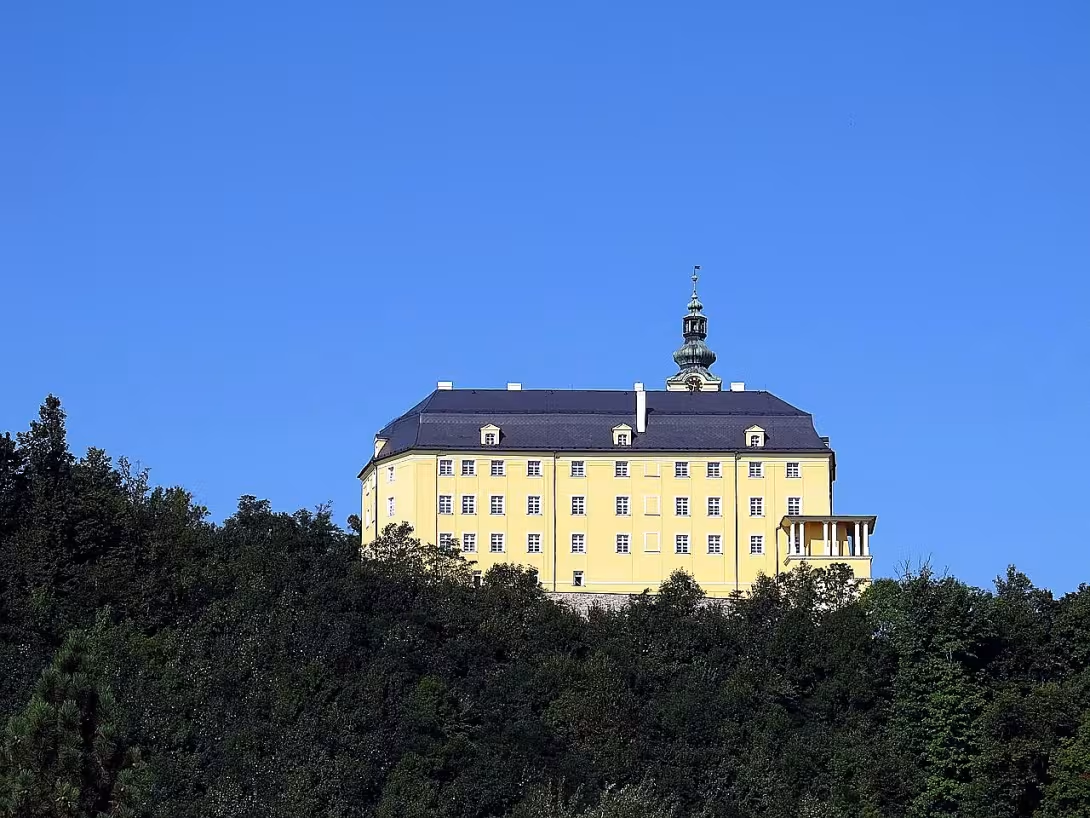
The castle in Fulnek is an extensive complex of buildings consisting of the Upper and Lower Castle, which is located on the Castle Board in the city centre. Since 1958, it has been protected as a cultural monument. The top lock is a significant visual dominant, visible from a distance of many kilometers. The buildings are privately owned and underwent significant building development from the 16th to 20th century.
The first written mention of Fulnek dates back to 1293, when it was owned by páni z Lichtenburka. Later it was held long by páni z Kravař, who built a castle here in the 14th century. This was mentioned specifically for the first time in 1372. In the following times the castle is gradually moved into the hands of other noble families - Sternberk and Žerotín. A significant change was brought about in 1540, when the Silesian nobleman Oldřich Cetrys z Kynšperka, who held an important position in the court of Louis Jagellonian, purchased Fulnek. But his sudden death in 1543 led to another ownership shift - his wife married Baltazar Schweinitz, who then had the castle converted to a representative Renaissance castle.
The reconstruction into a two-story Renaissance castle is carried out by Baltazar Schweinitz in the second half of the 16th century, inviting Italian artists to work. The main hall was decorated with frescoes with portraits of Roman emperors, although this valuable art ensemble later disappeared in one of the fires. At the beginning of the 17th century, the construction works under the leadership of Skrbenských from the Game continue. Their owner Jan II. starší Skrbenský z Hříště, however, joined the construction uprising, resulting in the confiscation of the estate. Since 1622, the castle has been owned by Bruntalské of Vrbno for more than 150 years.
The year 1788 brought a change with the rich Opava merchant Karl Čejka of Badenfeld, who purchased the estate and was promoted to knighthood that year. More than half a century later, in 1842, Fulnek buys Baron Kristián Friedrich Stockmar, a personal physician of the Belgian King Leopold I. The purchase price was 3quarter of a million gold pieces. Leopold I. actually became the owner, even though the ruling monarchs at that time were not allowed to own foreign goods - Stockmar served as his legal intermediary. After the death of the king, his younger son, Prince Philip of Flanders, followed by his daughters, replaced him with wealth.
Earth reform radically changed ownership in the 1920s. The grandeur with the castle included 2,636 hectares of land and owned by Belgian Princess Henrietta, Duchess of Vendôme, and Josephine, the married Princess Hohenzollern. After the reform, the princesses decided to abandon the assets in Czechoslovakia and sell them. The castle and the remaining large estate were purchased for six and a half million crowns by František Chrastina, the factory and former mayor of Valasské Meziříčí, and JUDr. Jaromír Špaček, a member of the National Assembly and a significant Czech minority in Fulnek. In 1928, Smáček bought his share and became the sole owner.
The Second World War and the subsequent political changes had a cruel impact on the castle. Spacek left during the occupation in Prague, returned after the war and tried to restore the plundered castle, but February's coup 1948 definitely took his property (formally 1950). The chateau was subsequently used by the state medical institution - the City Institute of National Health in Ostrava - as a medical warehouse. After 1989, the estate returned to his son Rostislav Spacek, who until then lived in the United States. He started a partial reconstruction of the castle and restored the castle park, but eventually he sold the decrepit object. Today the castle is private property.
Then and now
Drag the slider to compare how the landmark may have looked when it was built with the view today.
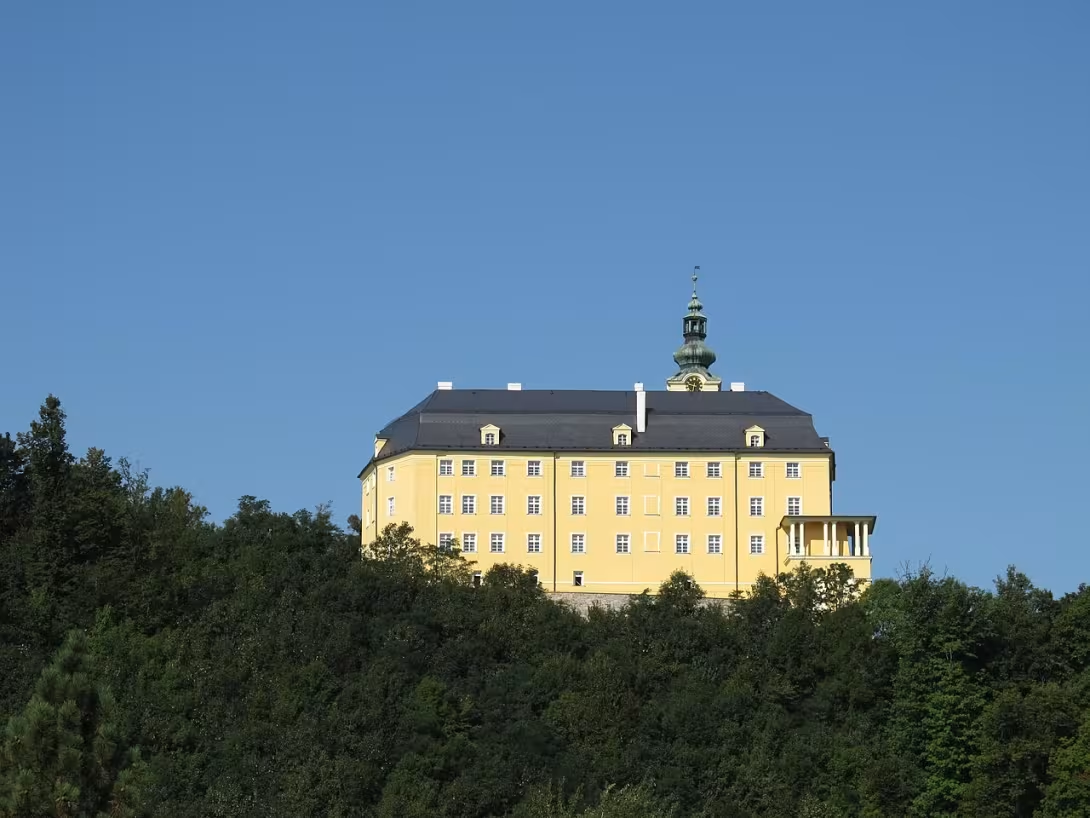

The historical appearance on the left is an AI-generated visualisation and serves as inspiration only.
Historical milestones
- 1372
- First mention of the castle.
- 1540
- Rebuilding to Renaissance castle for Baltazar Schweinitz.
Architectural development
The castle evolved from a medieval castle built by the masters of Kravař in the 14th century, rebuilt into a Renaissance castle in the second half of the 16th century behind Baltazar Schweinitz. Other building modifications took place at the beginning of the 17th century under the leadership of Skrobenště z Příště and later in the 19th century.
Historical events
- 1372
- First mention of the castle.
- 1540
- Rebuilding to Renaissance castle for Baltazar Schweinitz.
- 1622
- Confiscation of Fulnek after the participation of Skrubenski in the state uprising.
- 1788
- He'll buy the Karel Čejka z Badenfeldu Manor.
Owners
Current private owner
Points of interest
- The castle in Fulnek is an extensive complex of buildings consisting of the Upper and Lower Castle, which is located on the Castle Board in the city centre. - He's been protected as a cultural monument since 1958. - The first written mention of Fulnek dates back to 1293 when it was owned by páni z Lichtenburka. - A significant change was made in 1540, when Fulnek was purchased by Silesian nobleman Oldřich Cetrys z Kynšperka. - The reconstruction into a two-story Renaissance castle is carried out by Baltazar Schweinitz in the second half of the 16th century, inviting Italian artists to work.
Guide
This guide is narrated by a synthetic voice generated by artificial intelligence.
Show guide text
This text was created by artificial intelligence and has not been editorially reviewed. It may contain inaccuracies.
The castle in Fulnek stands on Castle Hill east of the city center. It forms an extensive complex of buildings of the Upper and Lower Castle, which has been protected as a cultural monument since nineteen fifty-eight. The current appearance of the complex was created during many reconstructions from the sixteenth to the twentieth century. The Upper Castle is a striking landmark, visible from many kilometers away. Currently, the castle is in private ownership.
The Upper Castle stands on the site of a fortress that was built in the fourteenth century by the lords of Kravař and was first mentioned in thirteen seventy-two. Even then, a suburb existed beneath it, and later the Lower Castle was built on its site. In the second half of the sixteenth century, Baltazar Schweinitz had the fortress rebuilt into a two-story Renaissance castle and invited Italian artists to do so. The main hall then received frescoes with portraits of Roman emperors. This valuable collection, however, was lost in one of the later fires. Further modifications were made in the early seventeenth century by the Skrbenský family of Hříště.
Jan Druhý starší Skrbenský of Hříště joined the Estates Revolt and lost Fulnek. In sixteen twenty-two, Václav Bruntálský of Vrbna acquired the estate and his family held it until seventeen eighty-eight. Then the debt-ridden estate was purchased by a wealthy Opava merchant Karel Čejka of Badenfeldu. In eighteen forty-two, Fulnek passed to Baron Kristián Friedrich Stockmar, the personal physician of Belgian King Leopold the First. The actual owner was the king himself, because reigning monarchs at that time were not allowed to own estates abroad. The castle was then inherited by his younger son Filip Flanderský and after him by his daughters.
After the land reform in the nineteen twenties, the Belgian princesses sold the rest of the large estate along with the castle. It was purchased by factory owner František Chrastina and member of parliament Jaromír Špaček, who became the sole owner in nineteen twenty-eight. During the occupation, he left for Prague and after the war tried to restore the plundered castle. After February nineteen forty-eight, he lost it permanently and spent his remaining years in a modest rented apartment on the town square.
The castle then served for a long time as a warehouse for medicines for the Municipal Institute of National Health in Ostrava. After nineteen eighty-nine, Špaček's son Rostislav obtained it through restitution, having lived in the United States until then. He launched a partial reconstruction and restored the castle park, but eventually sold the deteriorating building.
Tips for visitors
The best time to visit Fulneka is in the spring or autumn period, when the locks here are especially charming and less demanding temperatures allow long walks. When visiting these times you will also enjoy beautiful sunsets on the castle hill.
Transport to the castle can also be carried out by public transport; Accurate connections and times in the current route search engine.
When you visit to take suitable shoes with you, because walking along the Castle Suites can be a little strenuous. Don't forget to wear a protective coat or jacket and umbrella in case of unforeseen weather changes.
The best place for photography is the Castle Suites, especially in the morning or evening, when light is softer and shadow effects add depth to images. Don't forget to also try to cut out a panoramic view of the entire complex of the castle.
In the vicinity of Fulneka, within 30 minutes of the journey, you can see the historical part of the city and its centre with the beautiful church of St. Jilje. It is advisable for families with children to visit the castle park, where the playground is also located.
Frequently asked questions
Can the monument be visited?
Some buildings of this kind are open for guided tours, others serve another purpose or are privately owned. We have not verified whether and when this monument is open – please ask the operator.
What are the opening hours and admission?
We have not verified the opening hours or admission. Current information is published by the operator.
Where is the monument?
Location: Fulnek, Moravskoslezský kraj. The map on this page shows the exact spot.
Why is the monument protected?
It is listed in the Central List of Cultural Monuments of the Czech Republic as a cultural monument (register no. 14516/8-1559).
For kids
Imagine going back to the past and finding yourself in a small village of Fulnek. The castle, known today as one of the most beautiful in the whole republic, stood in the middle of the city as if it were his heart.
It was like in a game where the main hero lived in a castle, beside which were narrowly alleys and houses villages. The castle was the seat of the local master who decided the fate of the inhabitants of Fulnek. Local people used to feed on agriculture, livestock and craft.
Businesses nearby
Do you run a restaurant, accommodation, shop, museum, rental, wellness or other visitor service near this monument? Show yourself directly to the people heading to it — this is how they will see you in the app and on the web:
Nearby
Ambient landscape, other sights
Accommodation nearby
Themed route
The route starts in the center of the village Fulnek, where the Fulnecko Museum stands. The museum will tell you about the history and culture of the region.
From there, we'll head south and visit the Fulnek cemetery. It's a major cemetery in the region where the tomb of the House of Harracha is located.
We continue south and visit the Fulnecke Spa. The spa was founded in the 18th century and are known for its healing springs.
The main objective of our route is the Fulnecko Castle. It is a Baroque castle built in the 17th century and is famous for its beautiful architecture and rich history.
Seasonal recommendations
Spring:
Fulnecko is in the spring season full of life and color. The woods around the castle begin to green and the flowers fill the area. A suitable time to visit the castle is in the spring period from April to May, when the weather is sunny and warm.
Summer:
Summer is the season when the castle is most visited. It is therefore advisable to arrive before larger groups of people begin to accumulate. The best time to visit the castle is from June to August.
Autumn:
Autumn season brings nice weather and beautiful colors to the surrounding forests. The castle is open during this period from September to November.
Winter:
In winter, the castle is only open for a limited time and it is necessary to wear warmer clothes. The most suitable period for visiting the castle is from December to February.
Visualizations and artistic views


The visualisations are generated by artificial intelligence and serve as inspiration.
Photos from the area
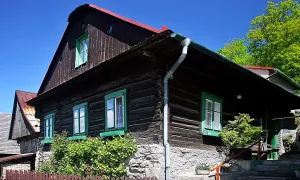
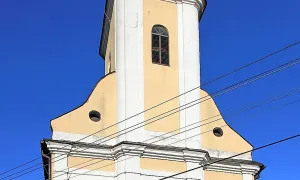
Real photos taken near the monument

Zdroj a licence jsou uvedeny u každého snímku.
Atmosphere of the place
This atmospheric visualisation of the place and period was generated by artificial intelligence. It is not real footage of the location.
Tips from visitors
No tips yet. Be the first!
Log in and add your tip.
Sources and literature
Photos: Vlach Pavel / CC BY-SA 4.0 — Wikimedia Commons. The author and licence also appear when you hover over the image.
Faktickým podkladem tohoto textu byl článek na Wikipedii, jehož autory jsou přispěvatelé Wikipedie. Článek je dostupný pod licencí CC BY-SA 4.0.
Location on the map


Příběhy a pověsti
Legendy, pověsti a příběhy spjaté s touto památkou
Fotografie návštěvníků
Zatím žádné fotografie. Buďte první, kdo přidá fotografii z návštěvy!
Log in a přidejte svou fotografii nebo hodnoťte.
Za ověřenou návštěvu v aplikaci získáte víc bodů — poznáme podle GPS, že jste na místě.
Reviews and comments