






Budeč Castle
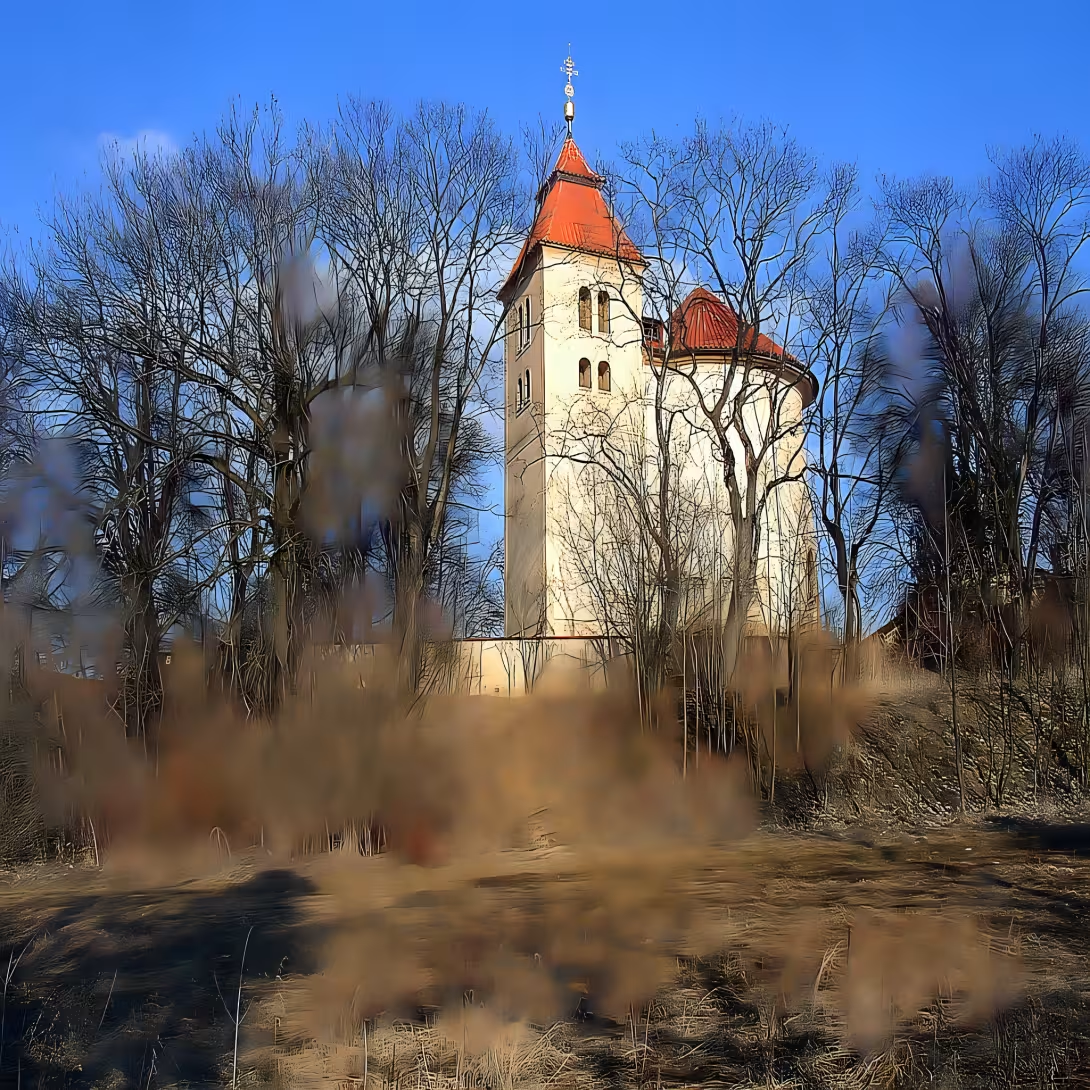
Budeč is located on the Kovar cadastrum at an altitude of 260 to 280 metres on the island, which stretches from Brandýska to Zákolany near Zákolany in the district of Kladno. The fort has attracted attention and tradition for thousands of years - not only archaeologists, but also legends and written reports about the beginnings of the Czech state.
The top was settled in the oldest times. Archaeological findings show habitation as early as prehistoric, namely from the period of the brow culture of the Middle Bronze Age and later from the colonial culture of the late Bronze Age. The first stone fortification has already been built here in the period of Knoviz. When the Slavic era was taken over by the Budco Slavs, they built a new wall right on the remnants of the prehistoric fortification system, it is assumed that perhaps even in the 9th century under Prince Bořivy.
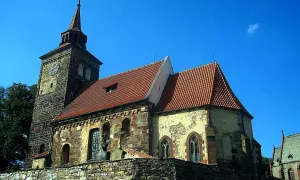
The key event in the history of the Buddha dates from 895 to 905, when Prince Spytihněv I. founded the Rotunda of St. Peter. This dedication to St. Paul was completed only in the 16th century. It is with this place that old legends of St. Václav link the tradition of staying here and learning the Psalms. The legend Crescent fide mentions that his father, blessed prince Vratislav, sent him to Castle Budeč to be raised by a certain priest named the Scholar. This anchoring in the sacramento legends gradually increased the tradition of Budèe as a centre of education, which he gained in later times and dramatically developed the chronicler Václav Hájek.
It is clear from the letter sources that in the 10th century Budeč was one of the main supporting points of the Přemyslovů. However, in the 12th century the situation changed radically - Budeč does not appear in the written reports or in the list of important castles and no managers are mentioned. This absence suggests that the local fort has lost its state-law significance. The settlement continued for several centuries, but the top gradually depopulated until only the remains of the valleys and churches with the cemetery remained.
At the turn of the 9th and 10th centuries, the aforementioned Rotunda of St. Peter was built on the acropolis. From the first half of the 10th century, a burial ground adjacent to this church, where archaeologists uncovered 56 graves. Some buried objects were found such as earrings, gombs or spurs.
In the 19th century, she inspired the reputation of Budchi as the alleged educational centre of teacher Karl Slavoj Amerling. In the 1940s, he founded an industrial school called Budeč on Prague's New Town, which was soon a failure due to a lack of resources. The Budèe tradition itself was reflected in the names of many of the teachers' associations at the time.
Since 1962, the area of the Běč castle has been declared a national cultural monument, in 1967 the rotunda and the castle were registered as a cultural monument. In 2011, the natural park around the District and Budèe was defined. Today the territory is marked by the tourist routes of the Czech Tourist Club and remains a place where you can literally walk for centuries.
Then and now
Drag the slider to compare how the landmark may have looked when it was built with the view today.
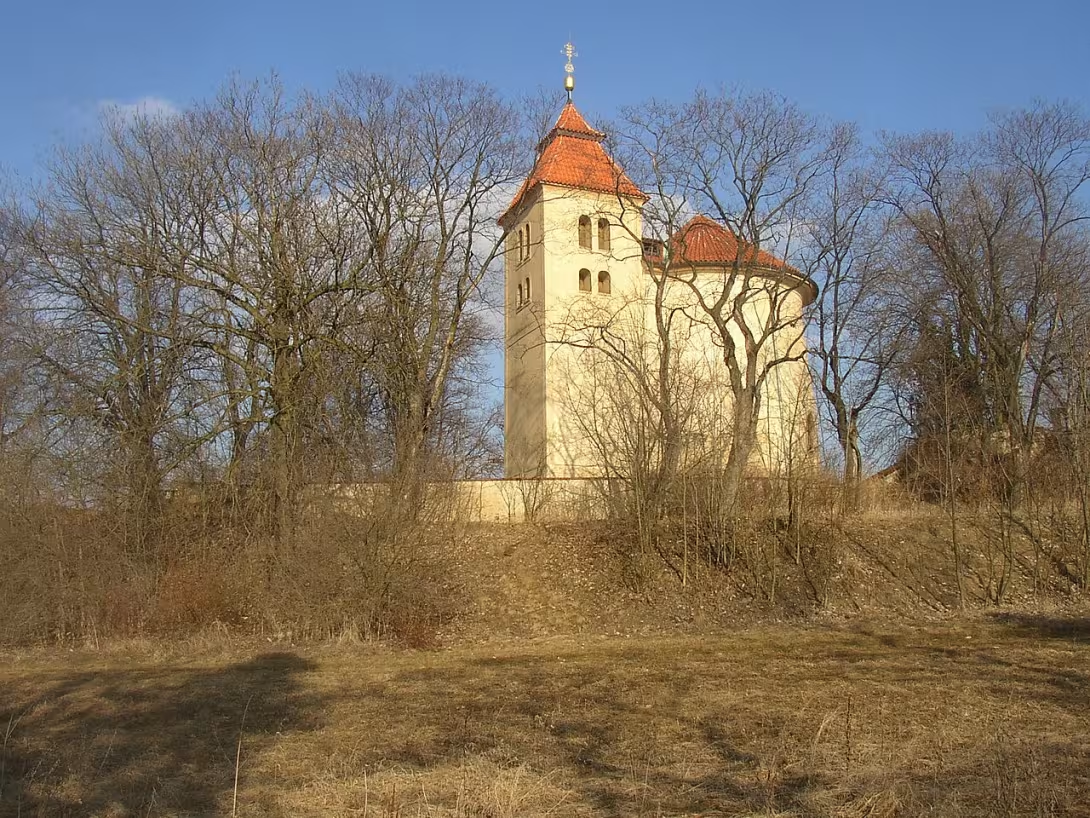

The historical appearance on the left is an AI-generated visualisation and serves as inspiration only.
Historical milestones
- 1967
- Registration of the castle and rotunda as cultural monuments
Architectural development
The first wall in the Slavic period was built on the remains of the primordial wall in the 9th century, perhaps under Prince Bořivy. At the turn of the 9th and 10th centuries was built the church - the rotunda of St. Peter.
Historical events
- 895-905
- The founding of the Rotunda of St. Peter by Prince Spytirage I.
- 1962
- Declaration of the area by a national cultural monument
- 2011
- Announcement of the natural park around the district and Budce
Owners
The ownership of the Budeč monument is not accurately documented, but given its historical value, it can be assumed that it was owned by monarchs or noble nobles. In the novice, it probably became the property of the village Zácolany and its part Kováry, where it is located.
Points of interest
- The Budeč is located on the Kovar cadastrum and is located on an island with an altitude of 260 to 280 metres.
- When the Slavs took over the Buddha, they built a new wall on the remnants of the prehistoric fortification system, perhaps even in the 9th century behind Prince Bořivy.
- Between 895 and 905 here Prince Spytihněv I. founded the Rotunda of St. Peter, which is linked by legends with the youth of St. Václava.
- Since 1962, the area of the Běčský hradiště has been declared a national cultural monument and in 2011 the natural park District and Budče was defined in the surroundings.
Guide
This guide is narrated by a synthetic voice generated by artificial intelligence.
Show guide text
This text was created by artificial intelligence and has not been editorially reviewed. It may contain inaccuracies.
Welcome to the historical site Budeč, where each layer of the country is secretly filled with stories of ancient and early Bohemia. You are now standing at one of the oldest monuments of our state, where the view extends over the region of Kovar in Central Bohemia. Before you are the remnants of the castle and the church of St. Peter and Paul, which tell us of ancient times and legends.
Budeč has roots dating back to the period of the moth culture of the Middle Bronze Age and the Knoviz culture of the late Bronze Age. Archaeological findings indicate the prehistoric settlement of this place, indicating its significant role before the Slavs arrived. When the Slavs settled here, Budeč became a key point of support for the Přemysovka and became part of the early process of christianization of Bohemia.
Look up at the church of St. Peter and Paul. Although the remnants of the fortifications are indicative of long history, this church represents the oldest standing building in the Czech Republic. His simple architecture and peaceful space emit the spirit of the past, when Prince Václav spent part of his childhood here.
The key personality associated with Budeč is Spytihněv I., which used the castle as a strategic point. It also reminds us of Prince Václav, whose childhood was spent here and to whom the place is traditionally joined.
The interest of Budeče is not only its historical importance, but also its geographical location on the island with an altitude of 260 to 280 metres. This position gave him natural defence and ensured strategic superiority.
In 1967, the castle and the rotunda of the church of St. Peter and Paul were officially registered as cultural monuments. This move saved these historical structures for future generations so that they could remember the rich past of our nation.
Let's move on and explore this fascinating location. Every stone here has its own story, waiting to be heard. I hope Budeče met with past and stories that they will love even after visiting. Thank you for your interest in our cultural heritage and I hope this guide inspired you to further discover historical monuments of the Czech Republic.
Tips for visitors
The best time to visit is in spring or autumn season, when the weather is pleasant and vegetation on the walls offers a beautiful view. This time also allows photography with ideal light without extreme sunlight.
When visiting, take with you a suitable crocodiles, boots or wand for a comfortable walk along hilly terrain. Also remember protective clothing and sunglasses, especially in summer.
The best places for photography are at the church of St. Peter and Paul and from the wall with a view of the valley of the Zakolansky creek, where it is possible to capture a beautiful morning or evening light effect.
In the surroundings of Budeče you can visit the historic location of Hradiště and explore the natural beauty of the valley of Zakolanský creek. For families with children this place is ideal because it offers space for comfort and active leisure.
Frequently asked questions
Can the monument be visited?
This is a ruin. Such sites are often freely accessible, but some can only be visited with a guide or are closed for safety reasons. We have not verified the current situation – take care and respect any restrictions.
Where is the monument?
Location: Kováry, Středočeský kraj. The map on this page shows the exact spot.
Why is the monument protected?
It is listed in the Central List of Cultural Monuments of the Czech Republic as a national cultural monument (register no. 118).
For kids
Imagine going back to the past, when Prince Václav was one of the most famous Czech rulers. There was a castle Budeč, near Prague, where Prince Václav met with warriors and engravers.
How did it look here? Who lived here? What happened here? The fort was like a fortress that protected the surrounding village from attacks. Prince Václav was raising his troops and planning his attacks against his enemies. There was also a chapel at the castle where the priests prayed for the success of the wars.
Businesses nearby
Do you run a restaurant, accommodation, shop, museum, rental, wellness or other visitor service near this monument? Show yourself directly to the people heading to it — this is how they will see you in the app and on the web:
Events nearby
Zdroj akcí: otevřená data měst a obcí ČR (Národní katalog otevřených dat) a kalendář akcí Národního památkového ústavu.
Nearby
The fort is located on the hill between Brandýsek and Zákolány, with natural protection from three sides. The surrounding area is a valuable landscape of the valley of the Zakolanský creek.
Accommodation nearby
Trips and activities nearby
Guided tours, tickets and activities nearby from GetYourGuide
Affiliate link: if you buy from the partner, we may receive a commission. The price for you does not change.
Search tours and activities →Themed route
Thematic cruise route: Budeč and surroundings
Total length of route: 25 km
1. Kováry (Kováry) Type: Village Why is it worth a visit: Kováry are a small village with a rich history, located right near the castle Budeč. You can visit the local church of St. James and its Baroque tower. 2. Castle Budeč (Budeč) Type: Castle Why is worth a visit: Castle Budeč is an important monument to the medieval period, which offers views of the surroundings and interesting historical information. 3. Iron Brod (Iron Brod) Type: Cities Why is worth a visit: Iron Brod is a small town with a rich history located near the castle Budeč. You can visit the local church of St. Václav and its Baroque tower.
The route begins in the village Kováry, where you will visit the local church of St. James. Then you will head towards Castle Budeč, which is the main destination of the trip. After visiting the castle you will go to the town of Železný Brod, where you will visit the church of St. Václav and its Baroque tower. The route ends in the village Kováry.
Seasonal recommendations
Spring
Specific is that Budeč Castle in spring September under the influence of sunlight and mild temperature. The atmosphere is full of optimism and a fresh start. Growing trees and flowers add other beautiful colors to the place. The first spring markets and holidays, such as Earth Day and Spring Festival, take place in the surroundings.
Local Traditions: Markets with local products such as fruits, vegetables and flowers. Holidays: Earth Day, Spring Festival.
Clothes: comfortable clothes and good shoes for walking around the castle. Best time: morning or late afternoon.
Summer
Specific is that Budeč Castle shines in the summer season under the influence of sunlight and high temperatures. The atmosphere is full of energy and relaxation. Growing trees and flowers add other beautiful colors to the place. Summer markets and holidays, such as Summer Festival or Children's Health Day, take place in the surroundings.
Local Traditions: Markets with local products such as fruits, vegetables and flowers. Holidays: Summer Festival, Children's Health Day.
Clothes: light clothes and good shoes for walking around the castle. Best time: evening or night.
Autumn
Specific is that Budeč Castle shines in autumn under the influence of sunlight and mild temperature. The atmosphere is full of respect and memories. Growing trees and flowers add other beautiful colors to the place. Autumn markets and holidays, such as Autumn Festival or Senior Health Day, take place in the surroundings.
Local Traditions: Markets with local products such as fruits, vegetables and flowers. Holidays: Autumn Festival, Senior Health Day.
Clothes: comfortable clothes and good shoes for walking around the castle. Best time: morning or late afternoon.
Winter
Specific is that Budeč Castle shines in winter under the influence of sunlight and low temperatures. The atmosphere is full of respect and memories. The snow cover gives the place another beautiful color. Winter markets and holidays, such as Winter Festival or Christmas Market Day, take place in the surroundings.
Local Traditions: Markets with local products such as fruits, vegetables and flowers. Holidays: Winter Festival, Christmas Market Day.
Clothes: warm clothes and good shoes for walking around the castle. Best time: evening or night.
Visualizations and artistic views


The visualisations are generated by artificial intelligence and serve as inspiration.
Photos from the area
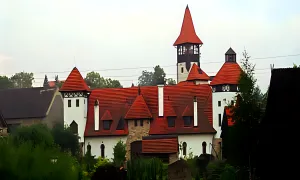
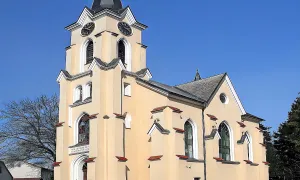
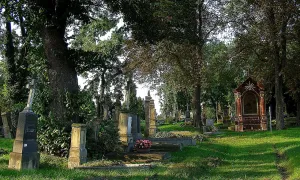
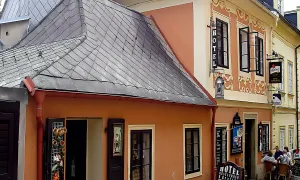
Real photos taken near the monument


Zdroj a licence jsou uvedeny u každého snímku.
Atmosphere of the place
This atmospheric visualisation of the place and period was generated by artificial intelligence. It is not real footage of the location.
Tips from visitors
No tips yet. Be the first!
Log in and add your tip.
Sources and literature
Photos: User:Miaow Miaow / Public domain, rozlišení zvýšeno umělou inteligencí — Wikimedia Commons. The author and licence also appear when you hover over the image.
Faktickým podkladem tohoto textu byl článek na Wikipedii, jehož autory jsou přispěvatelé Wikipedie. Článek je dostupný pod licencí CC BY-SA 4.0.
Location on the map
Příběhy a pověsti
Legendy, pověsti a příběhy spjaté s touto památkou
Fotografie návštěvníků
Zatím žádné fotografie. Buďte první, kdo přidá fotografii z návštěvy!
Log in a přidejte svou fotografii nebo hodnoťte.
Za ověřenou návštěvu v aplikaci získáte víc bodů — poznáme podle GPS, že jste na místě.
Reviews and comments