






Rotunda svatého Petra a Pavla (Kováry) Church
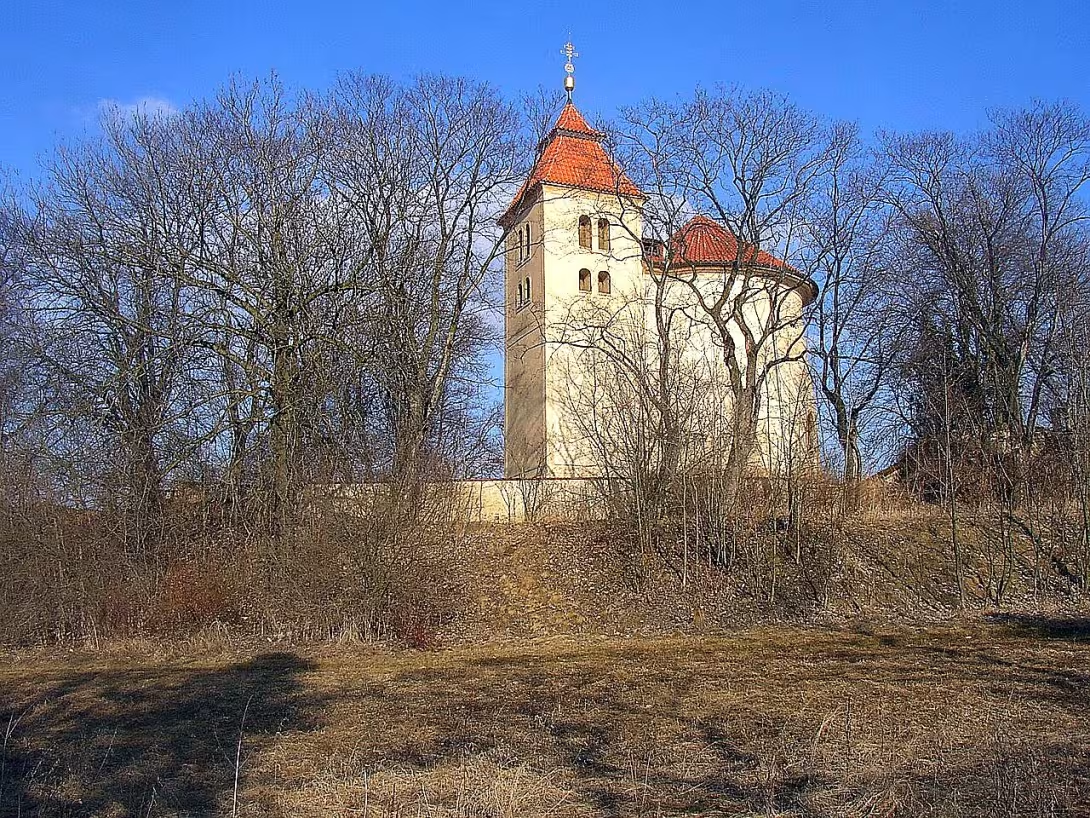
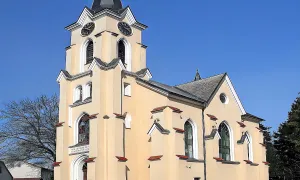
The Rotunda of Saints Peter and Paul in Kováry is a Romanesque church located within Zákolany municipality in the Central Bohemian Region of the Czech Republic. This architectural gem stands on Budeč, known for its early medieval significance as one of the largest settlements from that era. The rotunda's circular nave holds the distinction of being the oldest standing building in the country, dating back to the 10th century. Its construction is attributed to Duke Spýtihněv I and reflects Christianization efforts during a period of political consolidation under the Přemyslid dynasty.
The origins of this monument are deeply rooted in early medieval Bohemia's history. Budeč was initially inhabited since prehistoric times, with archaeological evidence tracing back to the Middle Bronze Age and Knovíz culture of the Late Bronze Age. By the 9th century AD, a Slavic settlement emerged on the site, fortified by walls built upon earlier structures. Written records indicate that Budeč served as an important base for the Přemyslid dynasty towards the end of the 9th and beginning of the 10th centuries. It is during this period that Duke Spýtihněv I commissioned the construction of the rotunda, likely completed between 895-915, with historical consensus pointing to 905 as a probable year.
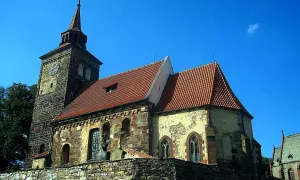
Architecturally, the Rotunda exemplifies early Romanesque style. The original structure features a circular nave constructed from fieldstone, with walls approximately one meter thick. Over time, the church underwent significant modifications reflecting evolving architectural styles and functional needs. In the second half of the 11th century, an additional apse was added to the north side. Later changes included constructing a Romanesque tower and replacing an earlier apse with a baroque presbytery during the late medieval period.
Throughout its history, Budeč has seen various owners and administrators. The site is notably associated with Saint Wenceslaus (Wenceslaus I), who spent his youth here learning to read Latin books and sing psalms according to local legends. By the second half of the 13th century, Queen Kunigunda of Halych donated Budeč to the Vyšehrad Chapter, marking one of its last recorded mentions in historical documents.
The Rotunda is not only a testament to early Czech sacred architecture but also holds cultural significance tied to Czech folklore and history. It features prominently in Hájek's Chronicle, further cementing its place in the national narrative. The site’s association with Saint Wenceslaus adds an element of spiritual heritage, making it a focal point for both historical and religious interest.
Today, the Rotunda of Saints Peter and Paul stands as a national cultural monument, recognized for its architectural and historical importance. Visitors can explore this ancient structure, appreciating its unique circular design and the layers of history embedded within its walls. The site's accessibility makes it an attractive destination for those interested in early medieval architecture and Czech history.
The Rotunda of Saints Peter and Paul is a remarkable window into the past, offering insights into the architectural ingenuity and cultural developments of early Bohemia. Its preservation allows contemporary audiences to connect with the historical narratives that shaped the region. For anyone intrigued by history or architecture, a visit to this site promises an enriching experience, providing a tangible link to the formative years of Czech statehood.
Then and now
Drag the slider to compare how the landmark may have looked when it was built with the view today.
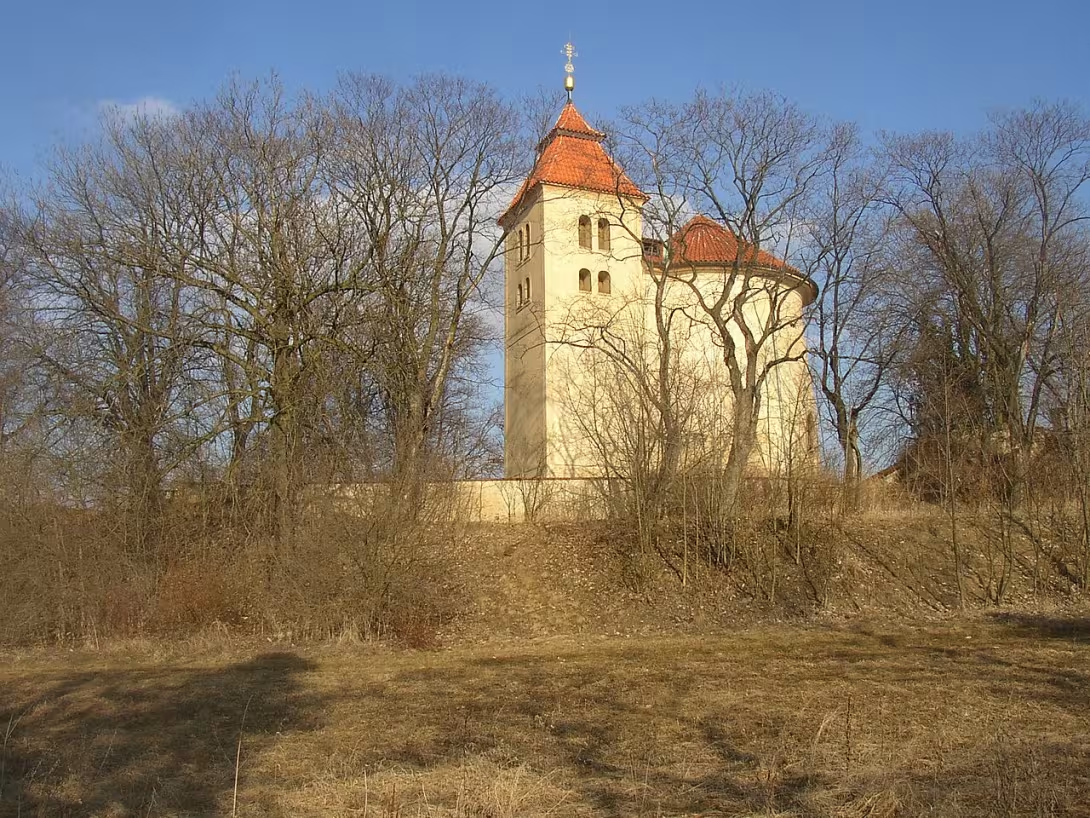
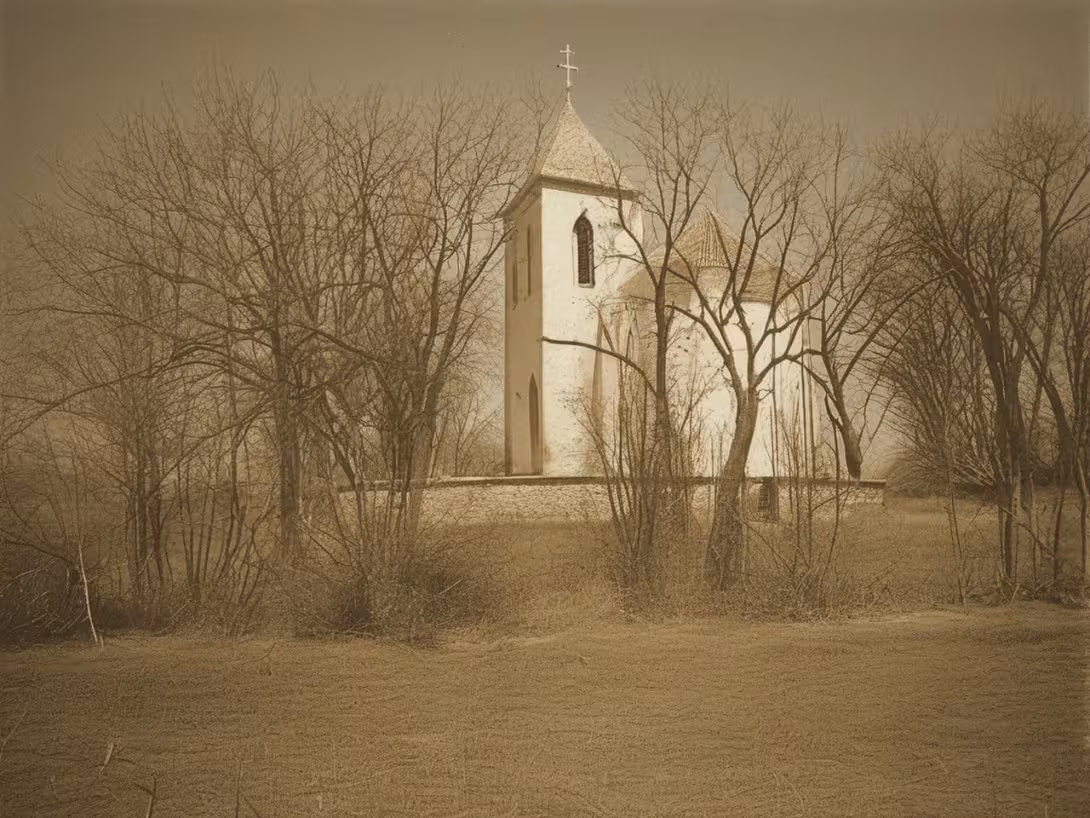
The historical appearance on the left is an AI-generated visualisation and serves as inspiration only.
Historical milestones
- 9
- Budeč inhabited since Middle Bronze Age.
- konec 9. století
- Slavic settlement emerges, fortified by walls.
- 905
- Construction of the Rotunda likely completed.
- polovina 11. století
- Addition of an apse to the north side.
- konec středověku
- Construction of Romanesque tower and baroque presbytery.
Architectural development
The original structure features a circular nave with walls approximately one meter thick made from fieldstone. The church underwent significant changes in the late medieval period, including the addition of a Romanesque tower and a baroque presbytery replacing an earlier apse. These modifications reflect evolving architectural styles and functional needs over time.
Historical events
Construction likely completed between 895-915, most probably in 905 under Duke Spýtihněv I.
In the second half of the 11th century, a second apse was added to the north side.
Points of interest
- The Rotunda of Saints Peter and Paul is built on a site with prehistoric roots, as it was inhabited since the Middle Bronze Age by the Knovíz culture, making its location one of historical continuity spanning several millennia.
- Despite being primarily Romanesque in style, the rotunda has undergone significant architectural transformations over the centuries, including the addition of an apse in the 11th century and a baroque presbytery later on, reflecting evolving religious and aesthetic trends.
- The site's connection to Saint Wenceslaus is more than just historical; local legends suggest he learned Latin and sang psalms here during his youth, adding a layer of spiritual mystique to its cultural narrative.
- Budeč served as an important stronghold for the Přemyslid dynasty in the late 9th and early 10th centuries, with Duke Spýtihněv I commissioning the rotunda's construction as part of broader efforts to consolidate political power through Christianization.
- The Rotunda is prominently featured in Hájek's Chronicle, a significant work of Czech historiography, which highlights its importance not just architecturally but also within the national historical consciousness.
Guide
This guide is narrated by a synthetic voice generated by artificial intelligence.
Show guide text
This text was created by artificial intelligence and has not been editorially reviewed. It may contain inaccuracies.
Welcome to the Rotunda of Saints Peter and Paul in Kováry, a remarkable testament to early Czech sacred architecture nestled within the serene landscape of the Budč estate near Zákolany. As you stand before this Romanesque church, take a moment to soak in its historical aura, which has been preserved through centuries. This site is not just a structure but a storybook of architectural evolution and cultural continuity.
The Rotunda's origins are deeply rooted in history, tracing back to the Middle Bronze Age when it was inhabited by the Knovíz culture. By the end of the 9th century, this area saw the emergence of a Slavic settlement fortified with walls, marking a significant period of development. The construction of the rotunda itself is believed to have been completed in 905, making it one of the oldest surviving structures of its kind in the Czech Republic. Over time, it underwent several transformations, including the addition of an apse on the north side around the mid-11th century and later enhancements like a Romanesque tower and baroque presbytery towards the end of the Middle Ages.
As you take in the rotunda's circular nave, notice its simplicity yet profound significance. This architectural choice reflects not only the ingenuity of its unknown architects but also their ability to create a space that has endured through time. The structure stands as an important testament to early Czech sacred architecture, inviting you to explore its historical layers.
The history of this site is intertwined with notable figures such as Spýtihněv I, whose influence during his reign contributed to the cultural and architectural developments in the region. His legacy is a thread woven into the fabric of Kováry's past, adding depth to your visit.
One intriguing aspect of the Rotunda of Saints Peter and Paul is its foundation on a site with prehistoric roots, highlighting centuries of human presence and activity. This continuity from the Middle Bronze Age through various historical epochs adds an element of mystery and fascination, inviting you to ponder the lives that have intersected here over millennia.
As your visit draws to a close, we invite you to continue exploring Kováry, a place where history is palpable in every corner. Let this journey inspire curiosity and wonder as you delve deeper into the stories etched within these ancient stones. Thank you for joining us on this exploration of the Rotunda of Saints Peter and Paul—a monument that stands not just as a structure but as a beacon of cultural heritage.
Businesses nearby
Do you run a restaurant, accommodation, shop, museum, rental, wellness or other visitor service near this monument? Show yourself directly to the people heading to it — this is how they will see you in the app and on the web:
Accommodation nearby
Trips and activities nearby
Guided tours, tickets and activities nearby from GetYourGuide
Affiliate link: if you buy from the partner, we may receive a commission. The price for you does not change.
Search tours and activities →Themed route
Thematic Vlog Tour: Kovary and the Rotunda of St. Peter and Paul
1. Rotunda of St. Peter and Paul (Kovary) - Church Begin your journey at the heart of Kovary with this stunning example of Baroque architecture, known for its unique octagonal design. This church is not only a spiritual center but also a testament to the rich cultural heritage of the region.
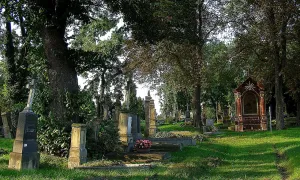
2. Local Cemetery in Kovary A short walk from the Rotunda will lead you to the local cemetery. It's an intriguing place that offers insights into the community’s history and traditions, with gravestones dating back several centuries. This site provides a quiet reflection on the passage of time and the stories of those who lived here.
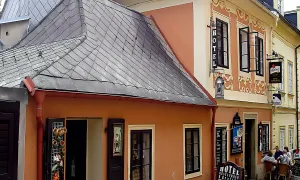
3. Kovary Village Square Continue your exploration by visiting the village square in Kovary. This central area is surrounded by traditional houses that reflect the architectural style of the region. It's an ideal spot to experience local life, perhaps stopping at a café or bakery to sample regional specialties and interact with residents.
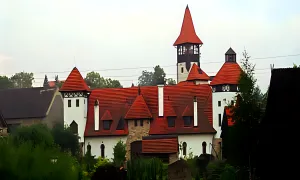
4. Kovary Community Center Conclude your tour at the community center in Kovary. This venue often hosts cultural events, exhibitions, and gatherings that showcase local talent and traditions. It's a great place to learn more about contemporary life in Kovary and perhaps catch an event or two if you're visiting during a festival.
This thematic vlog tour offers a comprehensive look at Kovary, blending historical exploration with community engagement, all within the charming confines of this Středočeský kraj village.
Seasonal recommendations
Spring: Visiting the Rotunda of Saints Peter and Paul during spring offers a unique experience as the surrounding landscape bursts into life with vibrant colors. The blossoming trees and blooming flowers create a picturesque setting, enhancing the serene atmosphere around the church. This season is ideal for photography enthusiasts looking to capture the natural beauty in harmony with the historical architecture. While the weather can be unpredictable, bringing layers allows you to adapt comfortably as temperatures fluctuate. Morning visits are recommended to avoid larger crowds that gather later in the day and enjoy the tranquility of early spring.
Summer: Summer brings a lively atmosphere to the Rotunda of Saints Peter and Paul, with longer daylight hours providing ample time for exploration. The lush greenery surrounding the church is at its peak, creating an inviting environment for picnics or leisurely walks. However, this season also attracts more visitors, so arriving early in the day can help you avoid the midday crowds. Light, breathable clothing and sunscreen are essential to stay comfortable under the sun, while a hat can provide additional protection.
Autumn: The autumn months transform the landscape around the Rotunda into a tapestry of warm hues, offering a stunning backdrop for visitors. The cooler temperatures make it an ideal time for a leisurely visit without the summer heat. As leaves begin to fall, they add to the picturesque charm of the area, making it perfect for photography or simply enjoying nature's beauty. Wearing layers is advisable as the weather can vary significantly throughout the day, and carrying a light jacket ensures comfort during cooler evenings.
Winter: Winter at the Rotunda of Saints Peter and Paul provides a magical experience with its snowy landscape and festive atmosphere. The church takes on an ethereal quality when illuminated by soft winter lighting, creating a tranquil and reflective setting. However, visitors should be prepared for shorter opening hours and potentially challenging weather conditions. Dressing warmly in layers is crucial, along with wearing waterproof footwear to navigate any icy paths. Visiting during weekdays can help avoid larger weekend crowds, allowing for a more peaceful experience.
Visualizations and artistic views


The visualisations are generated by artificial intelligence and serve as inspiration.
Photos from the area
Real photos taken near the monument


Zdroj a licence jsou uvedeny u každého snímku.
Tips from visitors
No tips yet. Be the first!
Log in and add your tip.
Sources and literature
Fotografie: User:Miaow Miaow / Public domain — Wikimedia Commons. The author and licence also appear when you hover over the image.
Faktickým podkladem tohoto textu byl článek na Wikipedii, jehož autory jsou přispěvatelé Wikipedie. Článek je dostupný pod licencí CC BY-SA 4.0.
Location on the map
Příběhy a pověsti
Legendy, pověsti a příběhy spjaté s touto památkou
Fotografie návštěvníků
Zatím žádné fotografie. Buďte první, kdo přidá fotografii z návštěvy!
Přihlaste se a přidejte svou fotografii nebo hodnoťte.
Za ověřenou návštěvu v aplikaci získáte víc bodů — poznáme podle GPS, že jste na místě.
Reviews and comments