






Bukovina Ruin
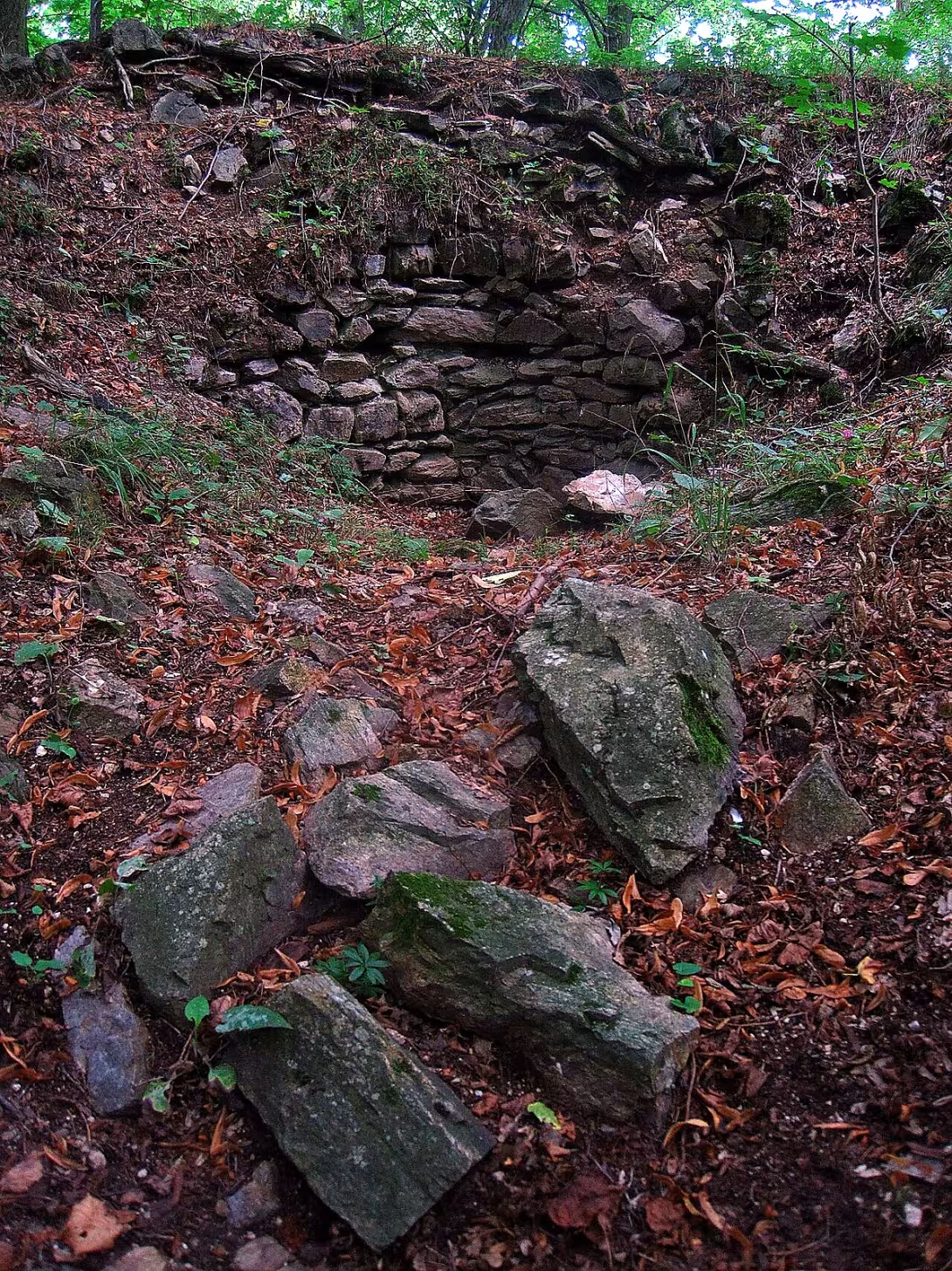
The Bukovina Castle is a ruined Gothic castle located in the Czech Republic, specifically in the Hostim municipality, near the village of Bukovina, in the Znojmo District. This monument is notable for its historical significance, dating back to the 14th century, and its unique architectural features. It was built as a noble residence by the Lords of Bukovina and later changed hands several times.
The castle's origins and historical context are well-documented. Founded in the late 14th century, the first mention of the castle dates back to 1337. The Lords of Bukovina constructed the castle, reflecting their power and influence during the 14th century, a period of growth and expansion for the Czech Kingdom. The region was also influenced by the nearby Moravian Kingdom.
The castle's architecture and artistic form are characterized by a 2.5-meter thick wall with a round bergfrit and a gatehouse. A new, larger palace was added later, featuring a two-story underground and a portalek connecting the two rooms. The castle had a unique architectural feature with two types of towers: a round bergfrit and a square donjon.
The castle's ownership and fortunes are well-documented. Founded by the Lords of Bukovina, it was later acquired by Jan Vajtmilnar ze Žerotic and then the Bítovští z Lichtenburka in 1464. The castle was abandoned before being acquired by the Bítovští z Lichtenburka.
The castle's history is marked by several key events and curiosities. Built during a time of growth and expansion for the Czech Kingdom, its unique architectural features reflect the power and influence of its founders. The castle's abandonment before 1464 is also notable.
Today, the castle is a protected cultural monument and a ruin. Located in a scenic area, its current state and accessibility are not well-documented. Visitors can still explore the castle's remains, offering a glimpse into the region's rich history. Bukovina is worth visiting for its historical significance and unique architectural features, providing a fascinating insight into the region's past.
Historical milestones
- 1320-1325
- Founded
- 1337
- First mentioned
- 1464
- Acquired by Bítovští z Lichtenburka
Architectural development
The castle was built on a hill overlooking the Nedveka stream. The main fortification was a 2.5-meter thick wall with a round bergfrit and a gatehouse. A new and larger palace was added later, with a two-story underground and a portalek connecting the two rooms.
Historical events
Founded in the late 14th century
First mentioned in 1337
Abandoned before 1464
Owners
Lords of Bukovina, Jan Vajtmilnar ze Žerotic, Bítovští z Lichtenburka
Points of interest
– The castle's bergfrit, a unique architectural feature, is a 2.5-meter thick wall with a round shape, which was a common design in medieval castles.
– The castle was built on a site where a previous settlement or fortification may have existed, but its exact location and purpose are unknown.
– The castle's round bergfrit and square donjon are a rare combination of tower designs in Czech castles, making Bukovina a unique architectural example.
– The castle's ownership changed hands several times, including being acquired by Jan Vajtmilnar ze Žerotic and then the Bítovští z Lichtenburka in 1464.
– The castle's abandonment before 1464 is notable, as it was likely due to a decline in the power and influence of the Lords of Bukovina.
Guide
This guide is narrated by a synthetic voice generated by artificial intelligence.
Show guide text
This text was created by artificial intelligence and has not been editorially reviewed. It may contain inaccuracies.
Welcome to the ruins of Bukovina. You stand before one of the oldest landmarks in the South Moravian Region. Your first impression is that of a ruin towering over the surrounding area. Take a look at what remains of the original structure. Here you can see part of the moat and the castle walls rising high.
Let's move forward in time and return to the 14th century when Bukovina was built as a noble residence. It was founded by the Lords of Bukovina, but later became the property of other families. The first mention of the castle dates back to 1337. In 1464 it was acquired by the Bítovský family of Lichtenburk.
Now pay attention to the architecture. Notice that the castle walls are made of stone and brick. Here you can see a bergfried, which is a unique feature of castle architecture. It's a 2.5-meter-thick circular wall typical for medieval castles. Take a closer look at it and make sure you notice its uniqueness.
Bukovina stands on a site where there may have once been a settlement or another fortification. However, it is unclear whether this was a larger settlement or just a small village. After all, you've noticed that the castle stands on a hilltop towering over the surrounding area.
One interesting aspect that might intrigue you is that the castle walls were built to withstand enemy attacks. The Lords of Bukovina must have been very determined to construct such a stronghold.
Allow me to invite you to further explore this ruin. There are plenty of other things here for you to see and discover. Take a look at the moat and the towering walls. And don't forget to notice how the castle integrates into the surrounding landscape. I am convinced that you will find it fascinating to explore this ruin and uncover its secrets.
Tips for visitors
The best time to visit Bukovina is during spring and autumn when the weather is mild and sunny.
The castle is accessible by car and public transportation. You can park near the castle and then walk to it.
It's recommended to bring comfortable shoes and clothes for walking and exploring the castle ruins.
The best spots for photography are around the castle walls and towers, especially during sunrise and sunset when the light is soft and golden.
If you're visiting with children, consider bringing a picnic lunch and exploring the nearby village of Bukovina, which has a playground and a small museum.
Frequently asked questions
Can the monument be visited?
This is a ruin. Such sites are often freely accessible, but some can only be visited with a guide or are closed for safety reasons. We have not verified the current situation – take care and respect any restrictions.
Where is the monument?
Location: Hostim, Jihomoravský kraj. The map on this page shows the exact spot.
Why is the monument protected?
It is listed in the Central List of Cultural Monuments of the Czech Republic as a cultural monument (register no. 21209/7-6345).
Businesses nearby
Do you run a restaurant, accommodation, shop, museum, rental, wellness or other visitor service near this monument? Show yourself directly to the people heading to it — this is how they will see you in the app and on the web:
Events nearby
Zdroj akcí: otevřená data měst a obcí ČR (Národní katalog otevřených dat) a kalendář akcí Národního památkového ústavu.
Nearby
The castle is located in the Hostim municipality, near the village of Bukovina, in the Znojmo District.
Accommodation nearby
Themed route
Bukovina Castle Hike
This 5 km hike takes you through the picturesque countryside of the Znojmo District, exploring the charming village of Bukovina and its surroundings.
1. Bukovina Castle (zřícenina) Experience the grandeur of this 13th-century castle ruin, nestled in the heart of the village. Explore the remains of the castle walls, towers, and courtyards, and imagine the history that once unfolded within its walls. 2. Bukovina Village (obec Bukovina) Walk through the charming streets of this small village, admiring the traditional architecture and getting a glimpse into rural life. Visit the local church and enjoy the peaceful atmosphere. 3. Kostel svatého Václava (kostel) Stop by this beautiful church, which dates back to the 13th century. Admire its Romanesque architecture and peaceful surroundings, a perfect spot to reflect and recharge. 4. Památník padlým (památník) Visit this memorial dedicated to the fallen soldiers of World War I and World War II. Take a moment to pay your respects and appreciate the significance of this somber monument. 5. Bukovina Park (park) End your hike with a leisurely stroll through this picturesque park, surrounded by trees and scenic views. A perfect spot to relax and unwind after your hike.
Seasonal recommendations
Jaro
Spring is the perfect time to visit the ruins of Bukovina as nature is in full bloom and the surroundings are filled with bright colors. The atmosphere is calm and serene, allowing for a better exploration of the site. It's recommended to visit Bukovina during the spring months (March to May), when it opens earlier and crowds are smaller than in the main summer season. Don't forget to bring hiking boots and comfortable clothing so you can fully enjoy your visit.
Summer
Summer is the peak season for visitors to the ruins of Bukovina, so it's recommended to visit early in the morning to avoid crowds. The atmosphere is warm and sunny, making it ideal for exploring the site. Although it's open year-round, visiting Bukovina in June, July, and August is advised when the weather is hottest and most tourists are present. Don't forget to bring plenty of water and snacks, as you can easily get dehydrated in the warm weather.
Autumn
Fall is a beautiful time to visit the ruins of Bukovina, with nature full of colors and a calm atmosphere. It's recommended to visit during the autumn months (September to November), when it opens later and crowds are smaller than in the main summer season. Don't forget to bring hiking boots and comfortable clothing so you can fully enjoy your visit.
Winter
Winter is a quiet time to visit the ruins of Bukovina, as there are fewer tourists and the atmosphere is calm. Don't forget to bring hiking boots and warm clothing so you can fully enjoy your visit.
Visualizations and artistic views


The visualisations are generated by artificial intelligence and serve as inspiration.
Tips from visitors
No tips yet. Be the first!
Log in and add your tip.
Sources and literature
Photos: MartinVeselka / CC BY-SA 4.0 — Wikimedia Commons. The author and licence also appear when you hover over the image.
Faktickým podkladem tohoto textu byl článek na Wikipedii, jehož autory jsou přispěvatelé Wikipedie. Článek je dostupný pod licencí CC BY-SA 4.0.
Location on the map

Příběhy a pověsti
Legendy, pověsti a příběhy spjaté s touto památkou

Fotografie návštěvníků
Zatím žádné fotografie. Buďte první, kdo přidá fotografii z návštěvy!
Log in a přidejte svou fotografii nebo hodnoťte.
Za ověřenou návštěvu v aplikaci získáte víc bodů — poznáme podle GPS, že jste na místě.
Reviews and comments