



bývalé ředitelství státních drah Administrative building
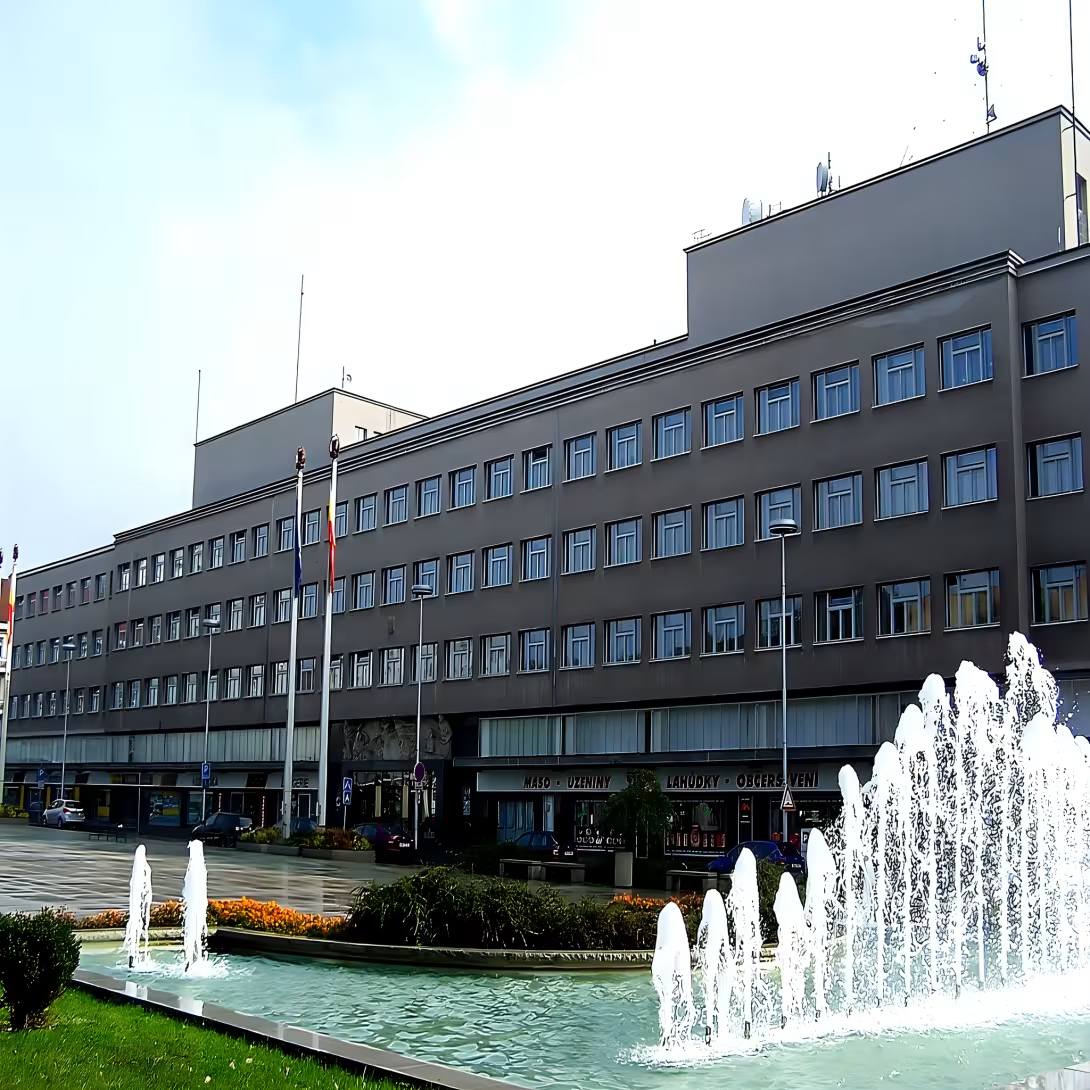
The former headquarters of the State Railways in Hradec Kralove is a monumental constructive building from 1928-1932, situated on the south side of Ulrich Square. The object was designed by architect Josef Gočár. The construction is a key element of the modern urban concept of the city and has since 1964 been included in the list of cultural monuments.
After the creation of Czechoslovakia in 1919, the office of the Directorate of State Railways was temporarily located in Prague Karlín and subsequently in the Gayer barracks in Hradec Králové. The decision on the construction of its own seat was taken after the city had provided the land with an area of more than one hectare and a financial contribution of CZK 1 million. Total construction costs amounted to CZK 27.6 million. The project was developed by Josef Gočár, which was also co-author of the city's regulatory plan. The ceremonial dig of the foundations took place on 8 October 1928 in the presence of the Minister of Railways J. V. Najmana. On 24 May 1929, President T. G. Masaryk visited the site. The building was ceremoniously opened on October 30, 1932, and the decoration continued until 1934.
The construction is 128 metres long and its horizontal lines resemble the design of fast cars. The reinforced concrete skeleton is supplemented by two perpendicular, 68-metre-long galleys, which, together with the south wing, close the inner courtyard. The facade breaks shallow risalites and ends with an atica with a ledge. The entrance portal is lined with black syenite and decorated with sandstone relief Allegorie's work, trade and transport from sculptor Bedřich Stefan. In the vestibule, lined with marble, there is a five-piece stained glass according to the design of Josef Kaplický. The complex also includes a two-storey villa for senior officials, which is connected to the main building by a corridor on the first floor.
The building was owned by the Czechoslovak State Railways until 1962 when it was transferred to the Regional Administration of the Ministry of Interior. During World War II, anti-aircraft shelters were built on the property. In the 1950s, garages, warehouses and public toilets were added. After 1962, the layout was modified, for example, the encamping of glass-glass-faced corridors, and in 1975 a partial reconstruction of interiors took place. A number of local companies participated in the construction and equipment of the building; F. Čílek has supplied lamps and products made of silver bronze, company B. Hubáček has ensured installation of the pipeline and gas pipeline.
The relief on the facade, set in 1933, depicts figures symbolizing the railway, trade and transport, including the ancient deities Mercury and Demetera. This decoration together with the technical solution illustrates the high level of construction at the time and the emphasis on modern infrastructure during the period of the first republic.
The building of the former Railway Directorate remains an important example of functionalist architecture and urban development of Hradec Kralove. For those interested in the history of modern architecture this object represents a valuable example of the connection of aesthetics and operational functionality, which is worth paying attention when visiting Ulrich Square.
Then and now
Drag the slider to compare how the landmark may have looked when it was built with the view today.
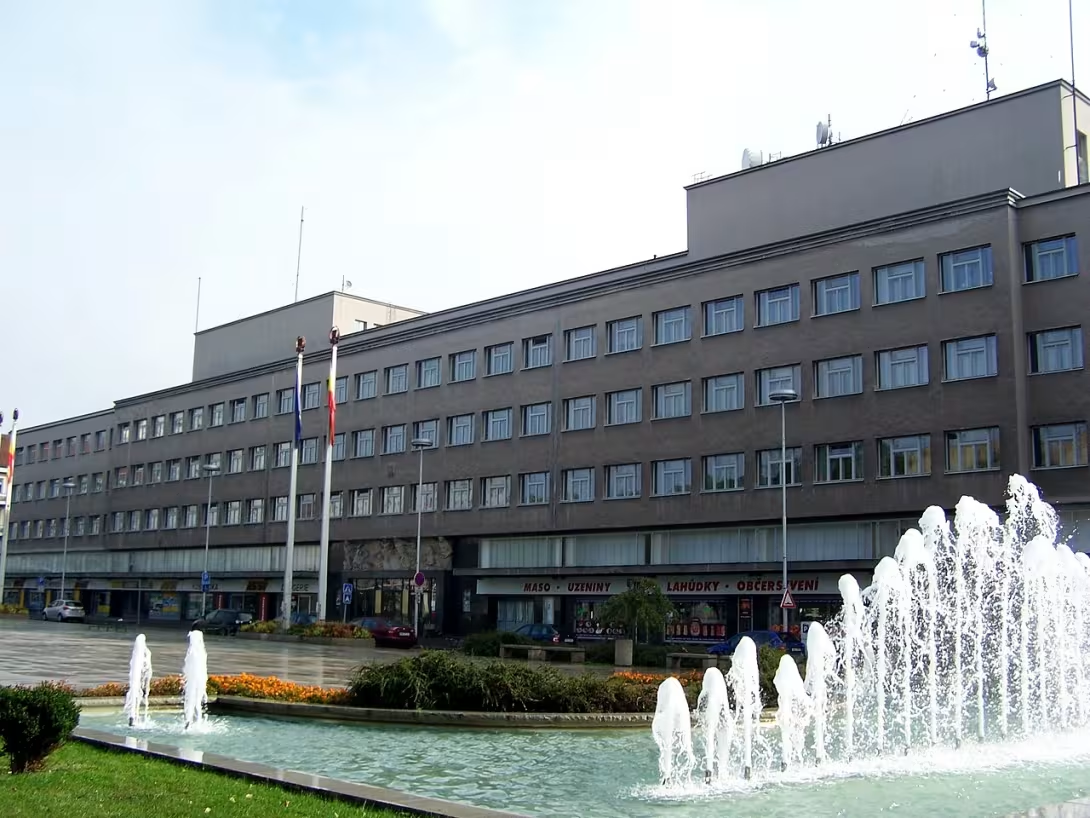

The historical appearance on the left is an AI-generated visualisation and serves as inspiration only.
Historical milestones
- 1928
- Opening of the building with a festive excavation of foundations.
- 1932
- Ceremonial opening of the National Railways Directorate building.
- 1964
- The building was listed in a list of protected cultural monuments.
Architectural development
The building was built as a reinforced concrete skeleton with horizontal structure of the facade. Garages and warehouses were added to the property in the 1950s. In 1962, the interior layout was modified, including the encapsulation of glass corridors, and in 1975 partial reconstruction followed.
Historical events
1928: Ceremonial excavation of foundations with the participation of the Minister of Railways. 1929: Visit of President T. G. Masaryk at the construction site. 1932: Opening ceremony. 1964: Entry of the building into the list of cultural monuments.
Owners
Czechoslovak State Railways (1932- 1962), Regional Administration of the Ministry of Interior (from 1962).
Points of interest
- The building is an hundred and twenty-eight meters long and its horizontal line resembles the appearance of fast cars. - The entrance portal is lined with a black molten rock and decorated with sandstone relief representing work, trade and transport. - There is a two-storey villa for senior officials, which is connected to the main building by a corridor on the first floor. During World War II, anti-aircraft shelters were built on the property. - There's a five-piece stained glass in the lobby.
Guide
Show guide text
This text was created by artificial intelligence and has not been editorially reviewed. It may contain inaccuracies.
Welcome to Hradec Kralove! You are standing right in front of the monumental constructive work of architecture, which is a symbol of this city - the former head of the State Railways. This building, built according to the design of Josef Gočár from 1928 to 1932, forms the dominant element of the southern side of Ulrich Square. Its distinctive horizontal line resembles the design of the then express cars, which refers to its original purpose.
Let's look at the history of this place. The opening of the building was festively opened in 1928 and after four years, in 1932, the building was festively opened as the headquarters of the state rail. In 1964 it was officially included in the list of protected cultural monuments. Architect Josef Gočár, known for his innovative work, has put a lot of modernist spirit into this project.
Take a look up there and you'll see an entrance portal lined with a black molten rock. It is decorated with sandstone relief, which represents work, trade and transport - key aspects of this place. The building is one hundred twenty-eight meters long and its horizontal lines are not only visually engaging, but also refer to its transport function.
This object is connected with several key historical personalities. František Ulrich, J. V. Najman and T. G. Masaryk were among those who had an influence on its development and development. Their benefits are an integral part of the history of this place.
The interesting thing is that part of the complex is also a two-storey villa for senior officials, which is connected to the main building. This villa adds another layer of historical and architectural interest to the overall impression.
Now let's look at what you can explore further. The city of Hradec Králové offers many other historical monuments and attractions waiting for your visit. Let yourself be inspired by this wonderful place and explore more of this beautiful region.
Thank you for your attention! I hope this guide inspired you to explore again. I wish you a pleasant stay in Hradec Králové and a useful exploration of his rich historical monuments.
---
This text is intended to be recorded as an audio guide, providing visitors with an interesting and informative experience while walking through the heritage of Hradec Králové.
Tips for visitors
The best time to visit is in the morning when the sun illuminates the facade of the building from the south side, highlighting its constructive features and geometric purity. At this time the square is also less busy.
The building is located right on Ulrich Square. The location is easily accessible by foot from the city centre, by car or public transport.
For a tour of the exterior, wear comfortable shoes for walking on the square and surrounding streets. If you are planning to photograph, do not forget the wide-angle lens to help you capture the monumental dimensions of this building.
The ideal place for images is the center of Ulrich Square, where symmetry and total matter of the building stand out. The best light to capture the facade details is during bright days when shadows in the structure stand out.
You can visit the historical centre of Hradec Kralove, Stein Palace or Gayer barracks nearby. For families with children, the area is suitable for walking around the square, which offers sufficient space for movement without dense traffic.
Frequently asked questions
Can the monument be visited?
The building is in use (offices, a school, shops and the like). The interior is generally accessible only during operating hours and tours are not usually offered; we have not verified the details. You can see the exterior from the street.
Where is the monument?
Location: Hradec Králové, Královéhradecký kraj. The map on this page shows the exact spot.
Why is the monument protected?
It is listed in the Central List of Cultural Monuments of the Czech Republic as a cultural monument (register no. 1000129072).
Businesses nearby
Do you run a restaurant, accommodation, shop, museum, rental, wellness or other visitor service near this monument? Show yourself directly to the people heading to it — this is how they will see you in the app and on the web:
Nearby
Ulrichovo náměstí, Steinského palác, Gayerova kasárna, historické centrum Hradce Králové.
Accommodation nearby
Themed route
1. Historical Centre Hradec Kralove (Type: City area) - A walk through the old streets will allow you to soak up the atmosphere of the historical core. 2. Stein Palace (Type: Building) - This object represents an interesting example of urban architecture. 3. Ulrich Square (Type: Square) - Central area where you can observe urban life. 4. Former Directorate of State Railways (Type: Main Objective) - This building was an important headquarters for railway management. 5. Gayer barracks (Type: Building) - Magnificent object which forms an important part of the surroundings.
Seasonal recommendations
Spring: During the spring season bývalé ředitelství státních drah in Hradec gets the Royal Unique Lights when the sun rays illuminate ancient architecture. The green surroundings and flowering shrubs provide natural beauty that increases visitors' attention. The travel of the monuments at this time is peaceful thanks to mild crowds, which allows you to explore in more detail historical elements. We recommend a visit at the beginning of spring when the temperature is pleasant and the clothes according to cold weather can be a simple jacket or sweater.
Summer: Summer brings full experience of the visit, when the atmosphere in Hradec Králové is filled with warm sunny days and long evenings. Nature is in full power, which increases the attractiveness of the surroundings of the monument. In the main summer season you may encounter a larger crowd of visitors, so we recommend you arrive at the beginning of the day in order to explore the memory without unnecessary waiting. A light sweater and ties or a sun shirt are suitable for clothing.
Autumn: In autumn, bývalé ředitelství státních drah offers a view of historical architecture in the beautiful clothes of golden and red leaves. The atmosphere is calmer when the number of tourists is reduced, allowing for a more intimate tour. The damp autumn air can be cold, so it is advisable to wear warmer clothes and perhaps even an umbrella in anticipating the first rainfall. The best time to visit is at the end of October or early November, when the temperature is still pleasant.
If the weather is dry and freezing, it can add magic to historical buildings. The opening times of the monuments often shorten at this time, so it is advisable to take a tour soon. Hot clothes such as jackets and gloves are essential to protect against cold temperatures. Visit the memory in a quiet winter period to avoid the peak during Christmas time.
Visualizations and artistic views


The visualisations are generated by artificial intelligence and serve as inspiration.
Photos from the area
Real photos taken near the monument


Zdroj a licence jsou uvedeny u každého snímku.
Tips from visitors
No tips yet. Be the first!
Log in and add your tip.
Sources and literature
Photos: Kixx / CC BY-SA 3.0, rozlišení zvýšeno umělou inteligencí — Wikimedia Commons. The author and licence also appear when you hover over the image.
Faktickým podkladem tohoto textu byl článek na Wikipedii, jehož autory jsou přispěvatelé Wikipedie. Článek je dostupný pod licencí CC BY-SA 4.0.
Location on the map
More monuments – Hradec Králové
Show all in the municipality
Příběhy a pověsti
Legendy, pověsti a příběhy spjaté s touto památkou
Fotografie návštěvníků
Zatím žádné fotografie. Buďte první, kdo přidá fotografii z návštěvy!
Log in a přidejte svou fotografii nebo hodnoťte.
Za ověřenou návštěvu v aplikaci získáte víc bodů — poznáme podle GPS, že jste na místě.
Reviews and comments