






bývalý klášter dominikánek v Plzni Monastery
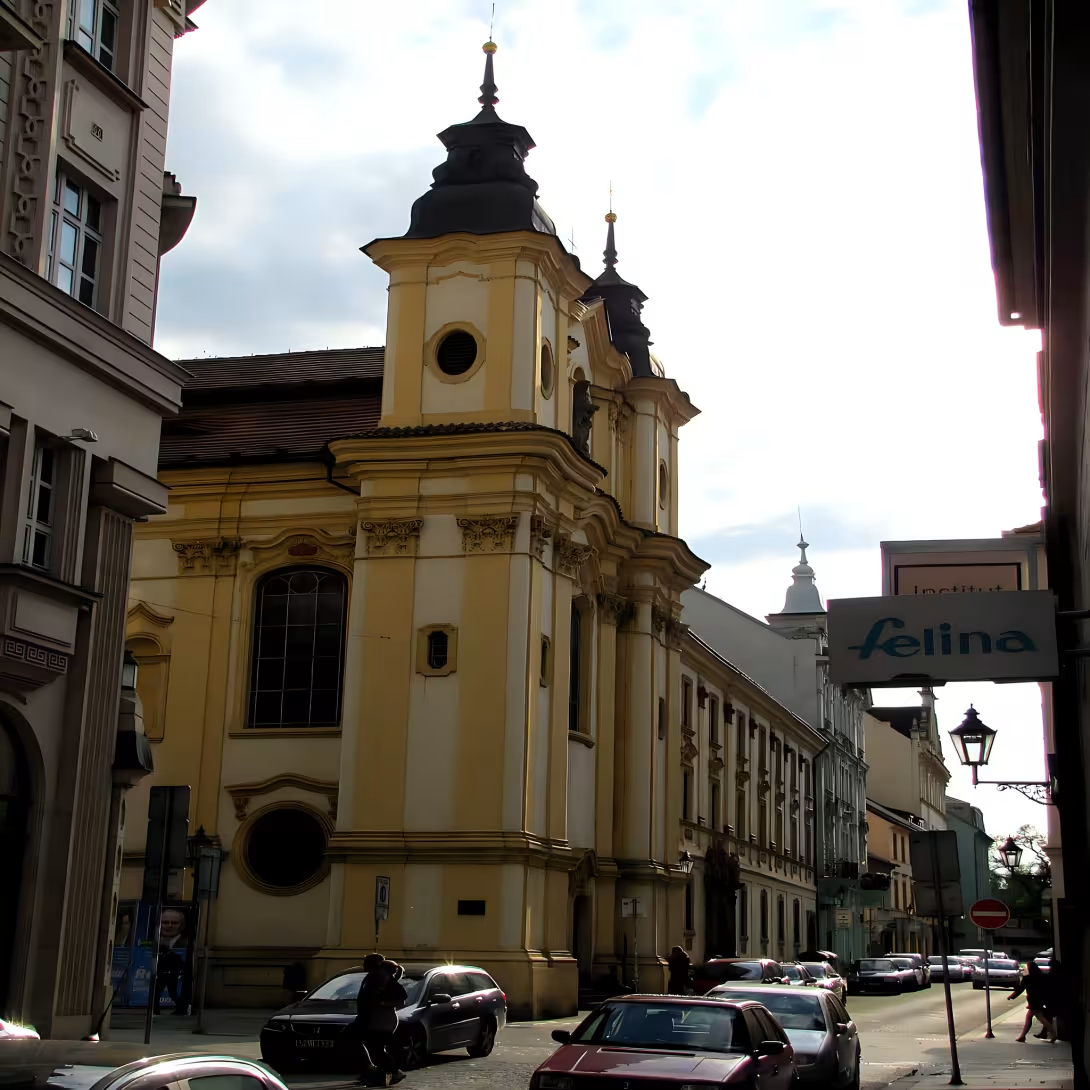
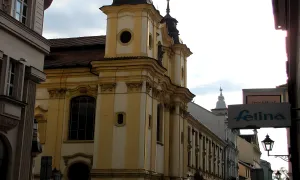
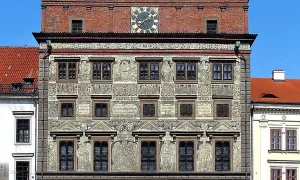
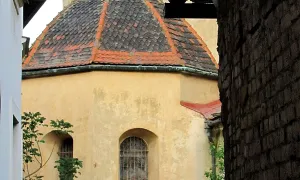
The former convent of Dominican nuns in Plzeň is a Baroque monument that has witnessed history from its establishment in the early 18th century to its current use as a library. Located in the Vnitřní Město district, this building was designed by Jakub Auguston ml. and features a unique blend of architectural styles.
The idea of building a convent was first conceived in 1708, with Eleonora Magdalena Terezie, Maximiliana, and Václav Ignác Vratislav z Mitrovic playing key roles in its establishment. The convent received official approval in 1711, and construction began the following year. By 1714, part of the convent was completed, and it was inhabited by a group of Dominican nuns.
The building underwent several architectural phases during its construction, including the addition of a school and gymnasium in the late 18th century. The convent's church was consecrated in 1735, serving as a school and gymnasium until the late 18th century. After World War I, the convent was used by the Czechoslovak Hussite Church before being returned to the Catholic Church.
On August 26, 1782, the convent was officially abolished due to Josephine reforms. The following year, it was purchased from the Ecclesiastical Fund and became a property of the city of Plzeň. In 1784, a school and gymnasium were established within the convent's walls. Over the years, the building underwent several renovations under Š. M. Schella's guidance.
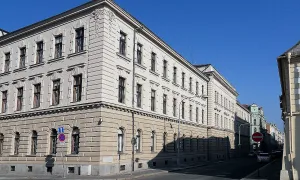
Today, the former convent is home to the Study and Scientific Library of the Plzeň Region, which has been located in the building since 1950. The convent's church now serves as a place of worship for the Czech Orthodox Church.
This monument is notable not only for its architectural significance but also for its rich history and cultural importance. Visitors can explore the building and learn about its fascinating past, making it a must-see destination for anyone interested in history and architecture.
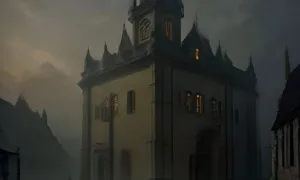
Then and now
Drag the slider to compare how the landmark may have looked when it was built with the view today.
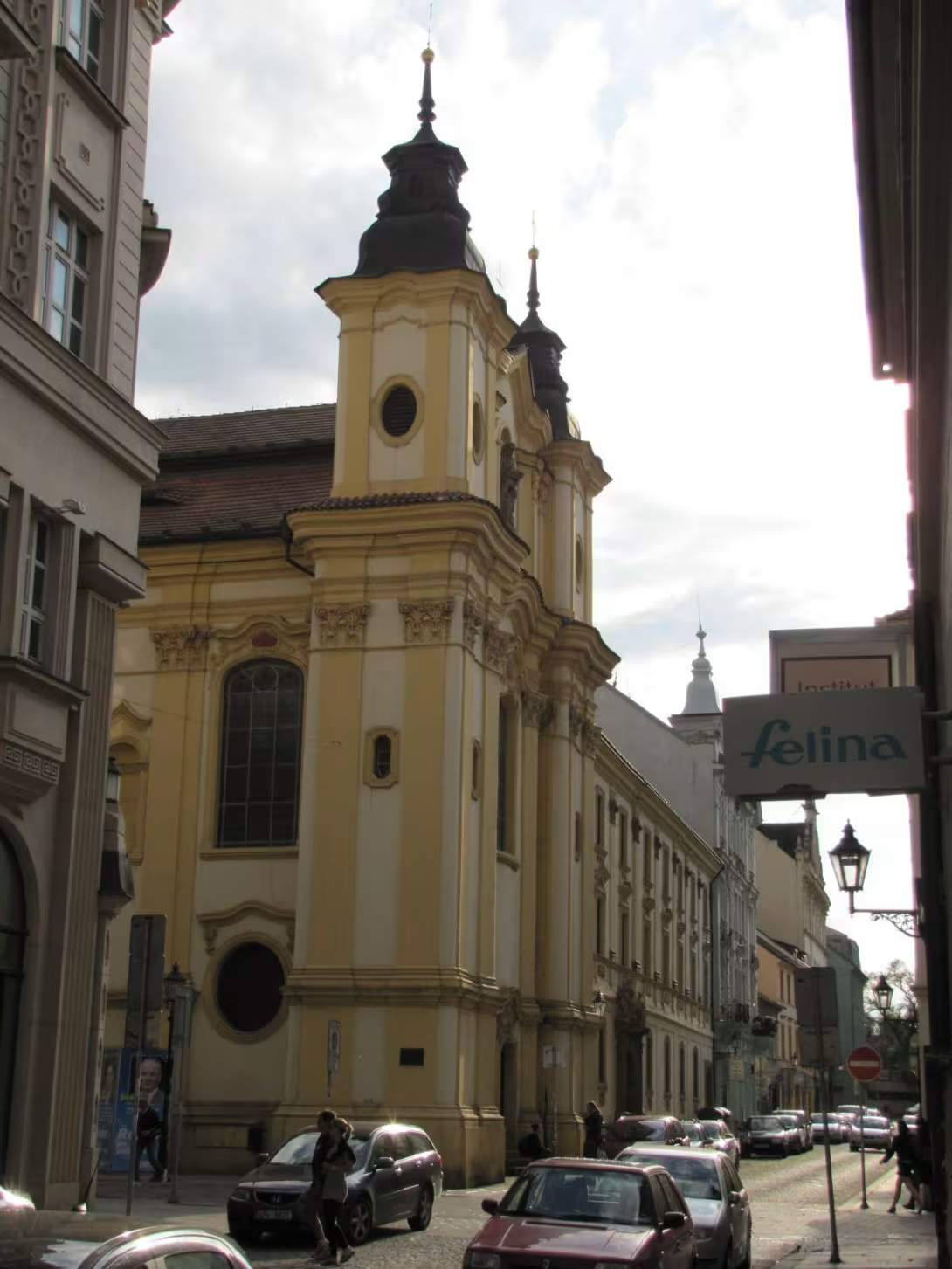
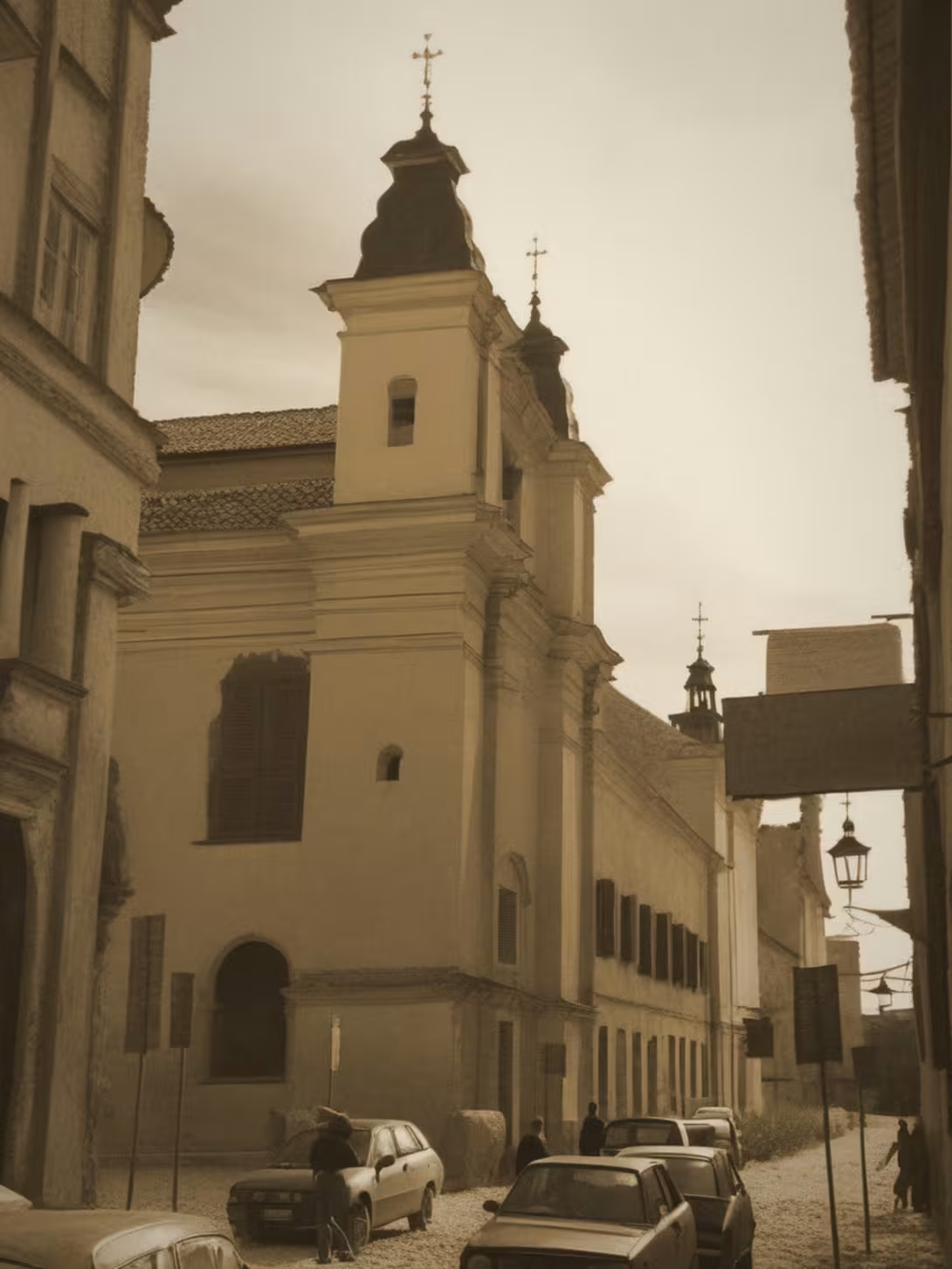
The historical appearance on the left is an AI-generated visualisation and serves as inspiration only.
Historical milestones
- 1708
- The idea of building a convent was first conceived
- 1711
- Convent received official approval
- 1712
- Construction began
- 1714
- Part of the convent was completed and inhabited by Dominican nuns
- 1735
- The convent's church was consecrated
- 1782
- Convent was officially abolished due to Josephine reforms
- 1950
- Study and Scientific Library of the Plzeň Region moved into the building
Architectural development
The building underwent several architectural phases, including the addition of a school and gymnasium in the late 18th century.
Historical events
- 1708
- The idea of building a convent was first conceived.
- 1711
- The convent received official approval.
- 1712
- Construction began.
- 1735
- The convent's church was consecrated.
Owners
Eleonora Magdalena Terezie
Maxmiliána
Václav Ignác Vratislav z Mitrovic
Points of interest
– The convent was originally intended to be a male monastery, but Eleonora Magdalena Terezie and Maximiliana convinced the authorities to allow it to become a female convent instead.
– In the late 18th century, the convent's church served as a school and gymnasium for boys from poor families, providing them with an education that would otherwise have been inaccessible.
– The building was renovated in the mid-19th century under the guidance of Š. M. Schella, who incorporated elements of the Renaissance style into the Baroque architecture of the convent.
– After World War I, the convent was used by the Czechoslovak Hussite Church, which held services and meetings within its walls.
– Today, the former convent's church is a place of worship for the Czech Orthodox Church, making it one of the few buildings in the country where both Catholic and Orthodox liturgies are celebrated.
Guide
This guide is narrated by a synthetic voice generated by artificial intelligence.
Show guide text
This text was created by artificial intelligence and has not been editorially reviewed. It may contain inaccuracies.
Welcome to the former convent of Dominican nuns in Plzeň, a stunning Baroque monument that has witnessed history from its establishment in the early 18th century to its current use as a library. As you stand before this magnificent structure, take a moment to appreciate the unique blend of architectural styles that will surround you throughout your visit.
As you gaze upon the convent's façade, notice the intricate stone carvings and ornate details that reflect the era in which it was built. The building itself is a testament to the vision and determination of Eleonora Magdalena Terezie and Maximiliana, who convinced the authorities to allow this female convent to be established instead of the originally planned male monastery.
As you step inside, imagine the sisters who once called this place home, living and working within these walls. The convent's church was consecrated in 1735, and it's said that Eleonora Magdalena Terezie herself played a significant role in its design.
Now, let your eyes wander to the ornate ceiling above, adorned with intricate frescoes that tell stories of faith and devotion. Take note of the unique blend of architectural styles that has been preserved throughout the centuries, from the Baroque to the Rococo.
As you explore this historic site, remember the key figures who played a part in its story. Eleonora Magdalena Terezie, Maxmiliána, and Václav Ignác Vratislav z Mitrovic are just a few of the many individuals whose lives intersected with this place.
And now, let me share with you three lesser-known curiosities about this Czech historical monument. Firstly, did you know that the convent was originally intended to be a male monastery? It's true! The sisters' determination and perseverance ultimately led to its transformation into a female convent.
Secondly, in the late 18th century, the convent was officially abolished due to Josephine reforms. Today, however, it serves as a library, providing a peaceful haven for readers and scholars alike.
Lastly, take note of the unique blend of architectural styles that has been preserved throughout the centuries. This is no ordinary building – every stone, every carving, and every fresco tells a story of faith, devotion, and resilience.
As you conclude your visit to this incredible historical monument, I invite you to return and explore further, uncovering more secrets and surprises hidden within these ancient walls. Farewell for now, but know that the memories and stories of this place will stay with you forever.
Tips for visitors
Best Time to Visit: The former convent of Dominican nuns is a year-round attraction, but the best time to visit is during spring and autumn when the weather is mild and pleasant. This allows you to fully appreciate the building's architecture and surroundings without the harshness of winter or summer heatwaves. Parking and Transport: The convent is located in the heart of Plzeň's Inner City, making it easily accessible by car or public transportation. There are several parking options available nearby, including street parking and paid parking lots. Public buses and trams stop within a short walking distance from the site. What to Bring: Wear comfortable shoes for exploring the convent's interior and exterior spaces. A camera is also recommended to capture the stunning architecture and beautiful surroundings. Don't forget to bring a bottle of water and a snack, as you'll want to take your time to fully appreciate this historic gem. Photography: The best spots for photography are around the convent's courtyard and exterior walls. The morning sunlight is ideal for capturing the building's intricate details and architectural features. Be mindful of any restricted areas or signs indicating no photography allowed. What to See Nearby: Within a 30-minute walking distance, you can visit other historical landmarks such as the St. Bartholomew's Church and the City Hall. Take a stroll along the Vltava River and enjoy the city's scenic views.
Businesses nearby
Do you run a restaurant, accommodation, shop, museum, rental, wellness or other visitor service near this monument? Show yourself directly to the people heading to it — this is how they will see you in the app and on the web:
Events nearby




Zdroj akcí: otevřená data měst a obcí ČR (Národní katalog otevřených dat) a kalendář akcí Národního památkového ústavu.
Accommodation nearby
Trips and activities nearby
Guided tours, tickets and activities nearby from GetYourGuide
Affiliate link: if you buy from the partner, we may receive a commission. The price for you does not change.
Search tours and activities →Themed route
Thematic Tour Route
Main Goal: Former Dominican Nuns' Convent in Plzeň (Convent)
Location: Vnitřní Město, Plzeň-město district, Plzeň Region
Route:
1. St. Bartholomew's Church (Svatý Bartoloměj): A beautiful Gothic church located near the convent, featuring stunning stained-glass windows and a unique architecture. 2. Town Hall Square (Rašínovo náměstí): A charming square with a beautiful Renaissance-style town hall, surrounded by cafes and shops. It's a great place to relax and enjoy the atmosphere. 3. Former Town Hall (Zaniklý radnice): A historic building that once served as the town hall, now housing a museum and offering insight into Plzeň's rich history.
Approximate Distances:
* St. Bartholomew's Church to Convent: 5-minute walk * Town Hall Square to Convent: 10-minute walk * Former Town Hall to Convent: 15-minute walk
This route offers a mix of historical and cultural attractions, providing a comprehensive experience of Plzeň's Vnitřní Město district. The former Dominican Nuns' Convent remains the main focus of the tour, with its unique architecture and rich history.
Seasonal recommendations
Here are the seasonal recommendations for visiting the former Dominican convent of nuns in Plzeň:
Spring
As the snow melts away, the convent's courtyard and surrounding streets come alive with blooming flowers and greenery. The gentle spring weather makes it an ideal time to visit, with mild temperatures and plenty of natural light. Be prepared for moderate-sized crowds, especially on weekends. Wear comfortable shoes and layers for unpredictable weather. Best time to visit: late morning or early afternoon.
Summer
The warm summer days bring a lively atmosphere to the convent's courtyard, perfect for picnics and relaxation. The surrounding streets are bustling with tourists and locals alike, so plan your visit accordingly. Arrive early to beat the crowds, and don't forget to wear sunscreen and a hat. Best time to visit: morning or late afternoon.
Autumn
As the leaves change colors, the convent's courtyard takes on a cozy atmosphere, perfect for a romantic stroll or a family outing. The crisp autumn air makes it an excellent time to visit, with smaller crowds than in the summer. Wear layers and comfortable shoes for the season. Best time to visit: late morning or early afternoon.
Winter
The winter months bring a serene atmosphere to the convent's courtyard, perfect for a peaceful visit. The cold weather means shorter opening hours, so plan your visit accordingly. Dress warmly and wear sturdy boots for the potentially icy streets. Best time to visit: mid-morning or early afternoon.
Visualizations and artistic views


The visualisations are generated by artificial intelligence and serve as inspiration.
Photos from the area
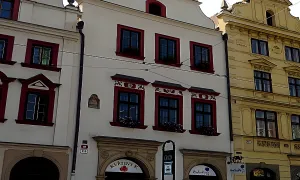
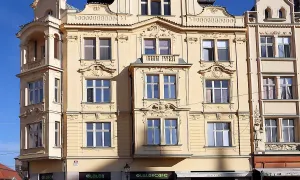
Real photos taken near the monument


Zdroj a licence jsou uvedeny u každého snímku.
Tips from visitors
No tips yet. Be the first!
Log in and add your tip.
Sources and literature
Photos: Mgr. Milan Zahn / CC BY-SA 3.0, rozlišení zvýšeno umělou inteligencí — Wikimedia Commons. The author and licence also appear when you hover over the image.
Location on the map
Příběhy a pověsti
Legendy, pověsti a příběhy spjaté s touto památkou
Fotografie návštěvníků
Zatím žádné fotografie. Buďte první, kdo přidá fotografii z návštěvy!
Log in a přidejte svou fotografii nebo hodnoťte.
Za ověřenou návštěvu v aplikaci získáte víc bodů — poznáme podle GPS, že jste na místě.
Reviews and comments