






Náměstí Republiky 19 House
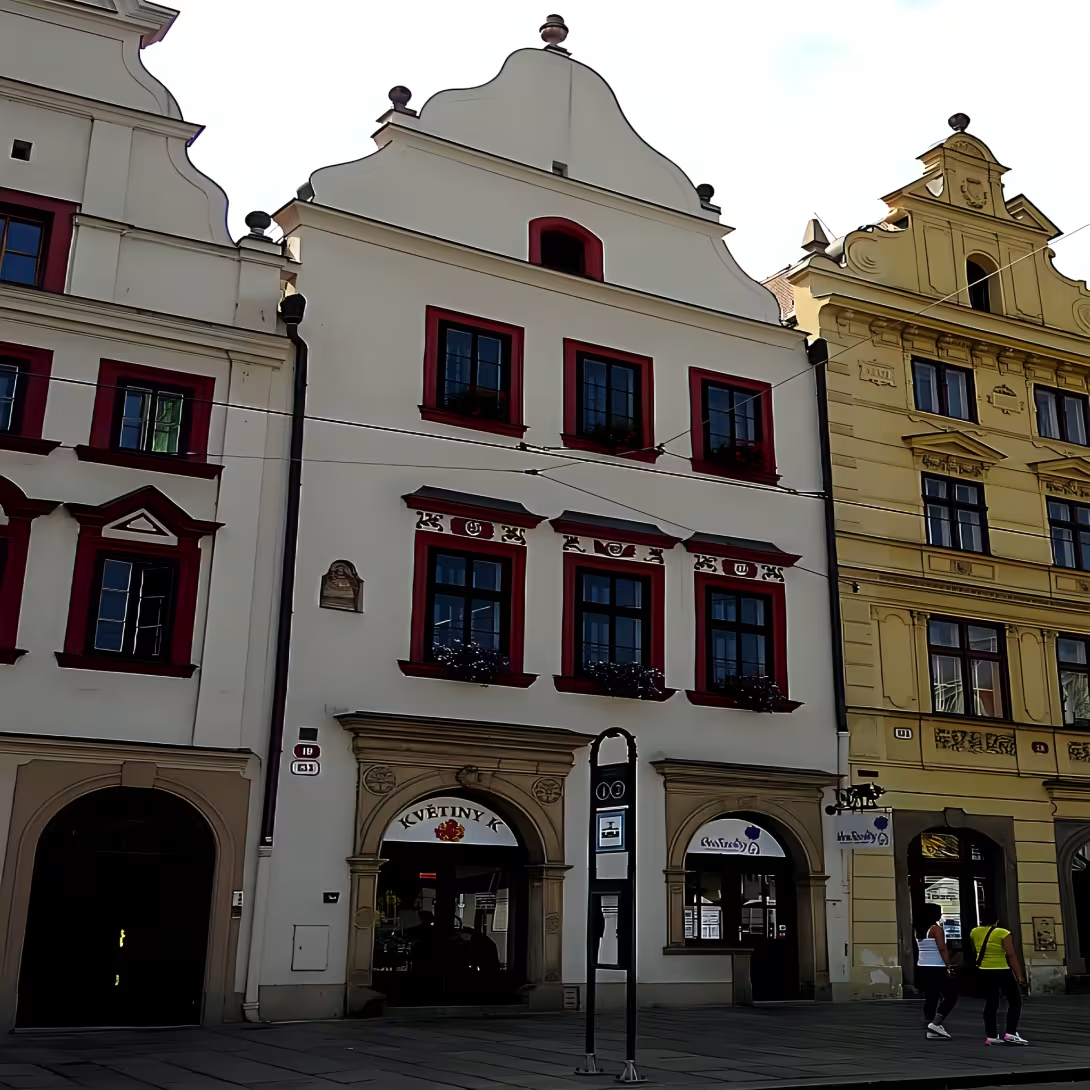
Náměstí Republiky 19 is a notable row house located in Plzeň, situated along the southern front of Náměstí Republiky. This building stands out for its historical significance and architectural evolution, blending Gothic foundations with classical and late Baroque styles. Since 1958, it has been recognized as a cultural monument due to its rich history and distinctive design elements.
The origins of this structure trace back to the Gothic period, evident in preserved basement elements. Over time, particularly during the 18th century, the house underwent significant modifications that introduced Baroque influences, likely alongside adjacent buildings. By 1807, these changes culminated in a new roof and tiled roofing, marking a transition towards its current classical style with late Baroque features.
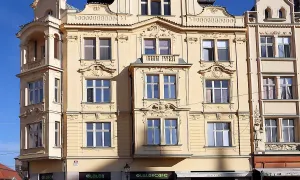
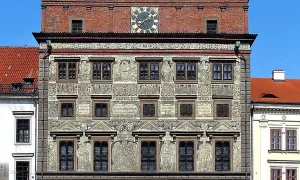
Architecturally, Náměstí Republiky 19 is characterized by its two-story design with a depth-oriented layout. The street-facing façade is three-bay wide, topped with an attic gable that conceals the sloping roof covered in tiles. In the ground floor, there are pairs of portals framed by semi-circular arches, with the left portal being more elaborate, featuring cartouches and relief stone flowers. The windows are rectangular, set within profiled frames, while the first-floor windows boast delicate stucco decorations. A particularly intriguing feature is a folk relief of Madonna with Child, discovered during a 1997 façade reconstruction, positioned entirely to the left on this level. Above the windows sits a fabion cornice, beneath which lies a shield with wavy outlines adorned with a stone vase and cherubs.
Throughout its history, Náměstí Republiky 19 has shared a courtyard with its neighboring building at number 132, reflecting common architectural practices of the time. The house's evolution mirrors broader cultural trends in Bohemia during the late Baroque period when it was part of the Habsburg Monarchy.
Today, Náměstí Republiky 19 stands as an accessible and significant site for visitors interested in exploring Plzeň’s architectural heritage. Its designation as a cultural monument underscores its importance, offering insights into historical design transitions from Gothic to classical styles with Baroque influences. The discovery of the Madonna relief adds a layer of artistic intrigue, making it a worthwhile destination for those keen on understanding the region's rich cultural tapestry.
Náměstí Republiky 19 is not only an architectural gem but also a testament to the historical and cultural evolution of Plzeň. Its preservation as a cultural monument ensures that future generations can appreciate its unique blend of styles and historical significance. Visitors are invited to explore this remarkable site, where history and artistry converge in a single structure.
Then and now
Drag the slider to compare how the landmark may have looked when it was built with the view today.
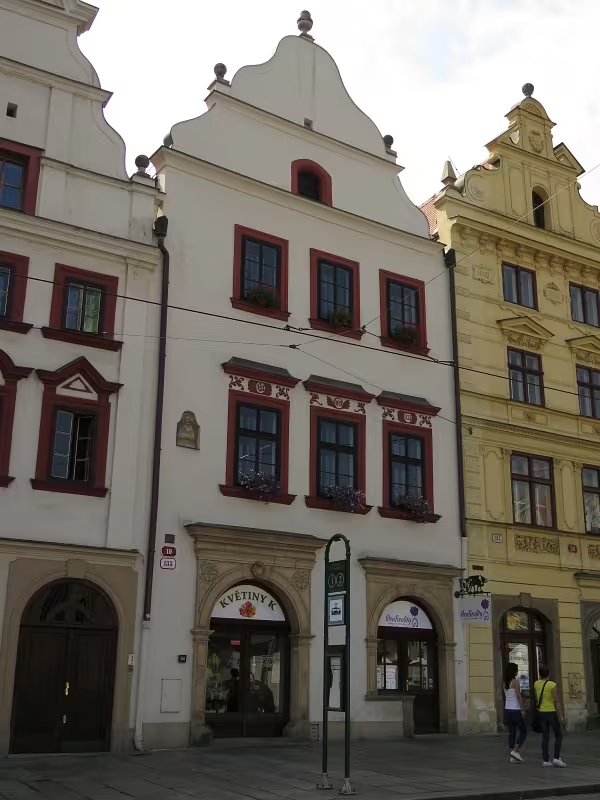
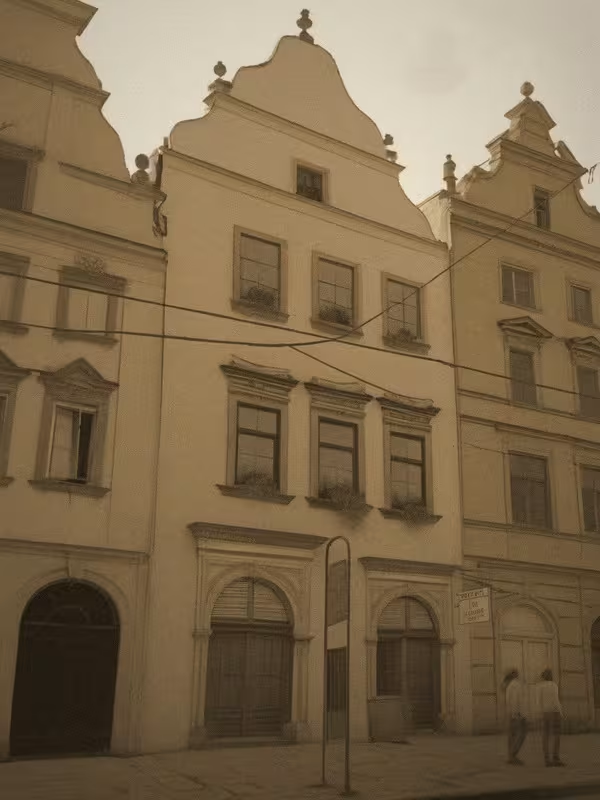
The historical appearance on the left is an AI-generated visualisation and serves as inspiration only.
Historical milestones
- Gothic period
- Preserved Gothic basement elements.
- 18th century
- Significant modifications introducing Baroque influences.
- 1807
- New roof and tiled roofing, transition to classical style with late Baroque features.
- 1958
- Recognized as a cultural monument.
- 1997
- Discovery of Madonna with Child relief during façade reconstruction.
Architectural development
The house originally features Gothic elements in its basement. It underwent Baroque modifications in the 18th century, likely alongside adjacent buildings. The current classical style with late Baroque influences was established by 1807 when it received a new roof and tiled roofing.
Historical events
In 1807, the building received a new roof and tiled roofing.
Since 1958, it has been designated as a cultural monument.
Guide
This guide is narrated by a synthetic voice generated by artificial intelligence.
Show guide text
This text was created by artificial intelligence and has not been editorially reviewed. It may contain inaccuracies.
Welcome to Náměstí Republiky 19, a remarkable city row house nestled in the southern front of the vibrant Náměstí Republiky in Plzeň's Vnitřní Město. As you stand here, take a moment to absorb the atmosphere of this historic site. The building before you is not just an architectural marvel but also a tapestry woven with centuries of history.
Let’s delve into its origins and historical context. This structure boasts a core that dates back to the Gothic period, evident in the preserved elements within its basement—a testament to the craftsmanship of medieval builders. As we move through time, the 18th century brought significant modifications, introducing Baroque influences that seamlessly blended with the existing Gothic framework, creating an architectural hybrid unique to this era.
Now, focus on the architecture and details you can see today. The building's current form is a reflection of classical style with late Baroque features, likely updated in the 18th century alongside its neighboring structures. In 1807, it underwent another transformation, receiving a new roof and tiled roofing that marked its transition to this elegant classical appearance.
As we explore further, let’s reflect on some key stories tied to this place. Although specific architects and historical figures associated with Náměstí Republiky 19 remain unknown, the building itself is part of a broader trend in Bohemia during the 18th century. During this time, many buildings were modified to mirror contemporary styles, often integrating Baroque elements into existing Gothic structures.
Now, here’s an intriguing tidbit that might pique your interest: In 1997, during façade reconstruction, workers discovered a Madonna with Child relief—a hidden gem that adds another layer of mystery and history to this site. This discovery reminds us of the stories embedded in every stone and corner of Náměstí Republiky 19.
As we conclude our tour here at Náměstí Republiky 19, I invite you to continue exploring the surrounding area of Vnitřní Město, where history and modernity blend seamlessly. Thank you for joining me on this journey through time, and I hope you carry with you the stories and beauty of this historic place as you move forward.
Businesses nearby
Do you run a restaurant, accommodation, shop, museum, rental, wellness or other visitor service near this monument? Show yourself directly to the people heading to it — this is how they will see you in the app and on the web:
Events nearby


Zdroj akcí: otevřená data měst a obcí ČR (Národní katalog otevřených dat) a kalendář akcí Národního památkového ústavu.
Accommodation nearby
Trips and activities nearby
Guided tours, tickets and activities nearby from GetYourGuide
Affiliate link: if you buy from the partner, we may receive a commission. The price for you does not change.
Search tours and activities →Themed route
Tematická Výletní Trasa: Historické a Architektonické Perly Náměstí Republiky
1. Náměstí Republiky 19 (dům)
Typ: Historický dům
Proč stojí za návštěvu: Tento významný dům, nacházející se uprostřed Náměstí Republiky, je architektonickou perli s bohatou historií. Poutavé prozkoumání jeho fasády odhaluje detaily barokního a renesančního stylu, které připomínají důležité období v městské historii.
2. Kostel svatého Mikuláše
Typ: Kostel
Proč stojí za návštěvu: Nacházející se nedaleko Náměstí Republiky, je kostel svatého Mikuláše významnou sakrální památkou. Jeho gotická architektura a bohaté interiéry nabízejí pohled na historii náboženského života ve městě, zatímco jeho výhledy poskytují impozantní pohled na okolní oblast.
3. Staroměstské náměstí
Typ: Náměstí
Proč stojí za návštěvu: Toto centrální náměstí je srdcem historického jádra města, známé svou atmosférou a architektonickými památkami. Prozkoumání jeho kamenů odhaluje dlouhou historii obchodu a kulturního vývoje, zatímco okolní budovy jako Staroměstská radnice přidávají dojemný kontext.
4. Kostel svatého Vavřince
Typ: Kostel
Proč stojí za návštěvu: Tento kostel, nacházející se blízko Staroměstského náměstí, je známý svou barokní architekturou a významnými uměleckými díly. Jeho interiér nabízí pohled na historická umělecká díla a zvukové vystoupení, které přitahují návštěvníky hledající kulturní hloubku.
5. Kostel svatého Jiljí
Typ: Kostel
Proč stojí za návštěvu: Nacházející se v blízkosti Staroměstského náměstí, je kostel svatého Jiljí známý svou gotickou architekturou a historickými vazbami. Jeho interiér obsahuje důležitá umělecká díla a poskytuje klidnou útočiště pro odpočinek a reflexi.
Tato trasa nabízí poutavý pohled na historické a architektonické bohatství oblasti Náměstí Republiky, přičemž každá zastavení poskytuje jedinečný vhled do místní kultury a historie.
Seasonal recommendations
Jaro: During the spring season, Náměstí Republiky 19 transforms into a lively floral landscape where newly bloomed flowers and trees offer a green and fresh atmosphere. Sunlight bathes the historic buildings in gentle reflections, creating an attractive aesthetic for photography and relaxation on the square. It's advisable to dress in light clothing as temperatures can be moderate with possible chilly mornings or sunny afternoons. The best time to visit is usually around noon when you can avoid crowds and enjoy the mild spring air.
Léto: In summer, Náměstí Republiky 19 comes alive as days lengthen and the sun bathes the square in long rays. The atmosphere buzzes with energy as people enjoy the outdoor space during sunny afternoons. Due to an increased number of visitors during peak summer season, it's recommended to arrive early to avoid the largest crowds and enjoy a more tranquil environment. Warm clothing, sunglasses, and sunscreen are important for comfort during your visit.
Podzim: Autumn brings colorful foliage and mild air to Náměstí Republiky 19, creating a calm and relaxing atmosphere. Sunlight illuminates the stones of historic buildings in gentle hues, providing ideal conditions for photography. As temperatures decrease, it's advisable to dress in light clothing with an option to add layers if it gets colder at night. Visiting in early afternoon hours can be ideal as there are usually fewer crowds and a more peaceful atmosphere.
Zima: During winter, Náměstí Republiky 19 takes on a quiet and elegant character as cold temperatures and shorter days bring fewer visitors. If available, lighting installations enhance the architectural beauty of the square at night, creating a magical environment for chilly evenings. Warm clothing is essential, with an emphasis on quality leather coats and protective hats against frost. The opening hours of the monument may be shortened, so it's recommended to visit in early afternoon or early evening to fully explore its beauty.
Visualizations and artistic views


The visualisations are generated by artificial intelligence and serve as inspiration.
Photos from the area
Real photos taken near the monument


Zdroj a licence jsou uvedeny u každého snímku.
Tips from visitors
No tips yet. Be the first!
Log in and add your tip.
Sources and literature
Photos: Sovicka169 / CC BY-SA 4.0, rozlišení zvýšeno umělou inteligencí — Wikimedia Commons. The author and licence also appear when you hover over the image.
Faktickým podkladem tohoto textu byl článek na Wikipedii, jehož autory jsou přispěvatelé Wikipedie. Článek je dostupný pod licencí CC BY-SA 4.0.
Location on the map
Příběhy a pověsti
Legendy, pověsti a příběhy spjaté s touto památkou
Fotografie návštěvníků
Zatím žádné fotografie. Buďte první, kdo přidá fotografii z návštěvy!
Log in a přidejte svou fotografii nebo hodnoťte.
Za ověřenou návštěvu v aplikaci získáte víc bodů — poznáme podle GPS, že jste na místě.
Reviews and comments