






Krajský soud v Plzni Courthouse
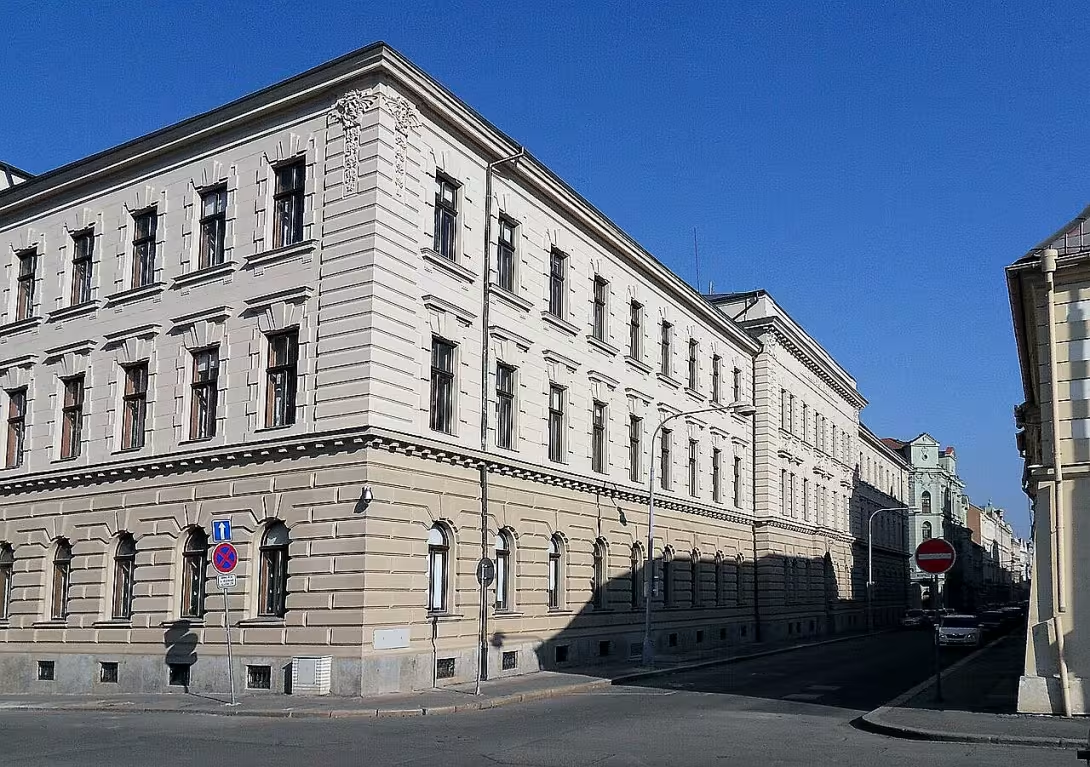
The Krajský soud v Plzni is a historic judicial building located in Vnitřní Město, on Veleslavínová Street. It serves as an important legal institution since its establishment. Originally built to replace an overcrowded facility at the Plzeň town hall, this courthouse reflects the architectural style of Historicism and began operations on November 10, 1902. It oversees appeals from various district courts within the region, making it a central hub for judicial activities.
The court was established on July 1, 1850, following judicial reforms that abolished patrimonial and municipal courts across the Austro-Hungarian Empire. These changes aimed to standardize legal processes and eliminate feudal court systems, marking a significant modernization effort in Bohemia during the mid-19th century. Initially functioning as a zemský soud (landesgericht), it was renamed krajský soud (kreisgericht) in 1855 due to further administrative restructuring.
Construction of the courthouse began with a cornerstone laid in 1900 and completed by 1902, designed by the Plzeň construction company Müller and Kapsa. It replaced an earlier facility at the town hall, addressing space constraints as both judicial and municipal functions expanded. The building's design reflects the Historicism style, characterized by its functional yet stately appearance.
Throughout its history, the Krajský soud v Plzni has undergone several administrative changes. Notably, it was initially housed in the first and second floors of the Plzeň town hall with 29 employees. Due to capacity issues, a decision was made in 1892 to construct a separate judicial building. Over time, various district courts and legal institutions have occupied this site, reflecting its evolving role within the region's judicial system.
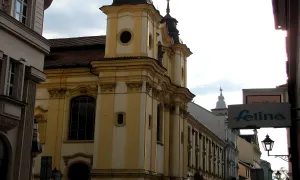
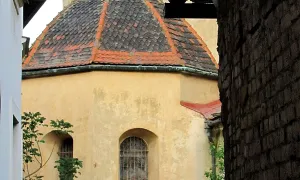
The courthouse is situated near the historical site of a former Dominican monastery and adjacent to Otakar's Gardens. This location retains elements of Plzeň's medieval fortifications, including a semi-circular bastion, adding to its historical significance. The building has been protected as a cultural monument since 1999, underscoring its architectural and historical value.
Today, the Krajský soud v Plzni continues to function as a vital judicial institution, overseeing appeals from district courts across the former Západočeský region. Its rich history and architectural significance make it a noteworthy site for visitors interested in legal history and historicist architecture. The courthouse remains accessible to those wishing to explore its storied past and appreciate its role in the region's judicial landscape.
Then and now
Drag the slider to compare how the landmark may have looked when it was built with the view today.
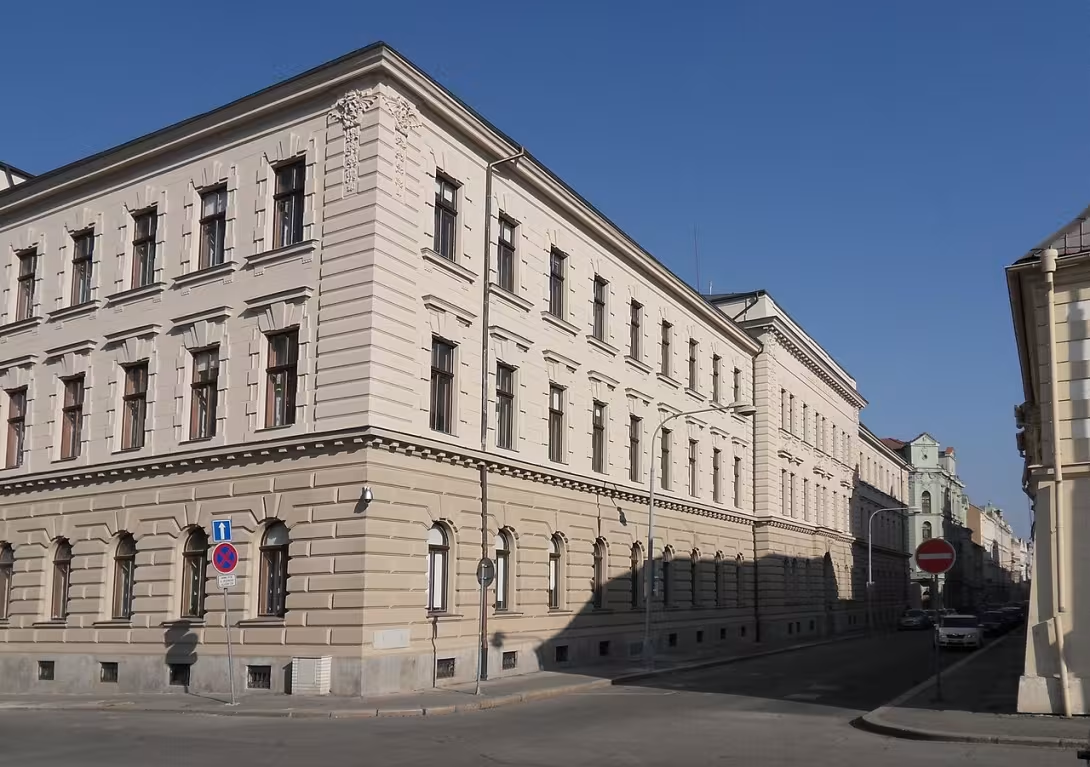
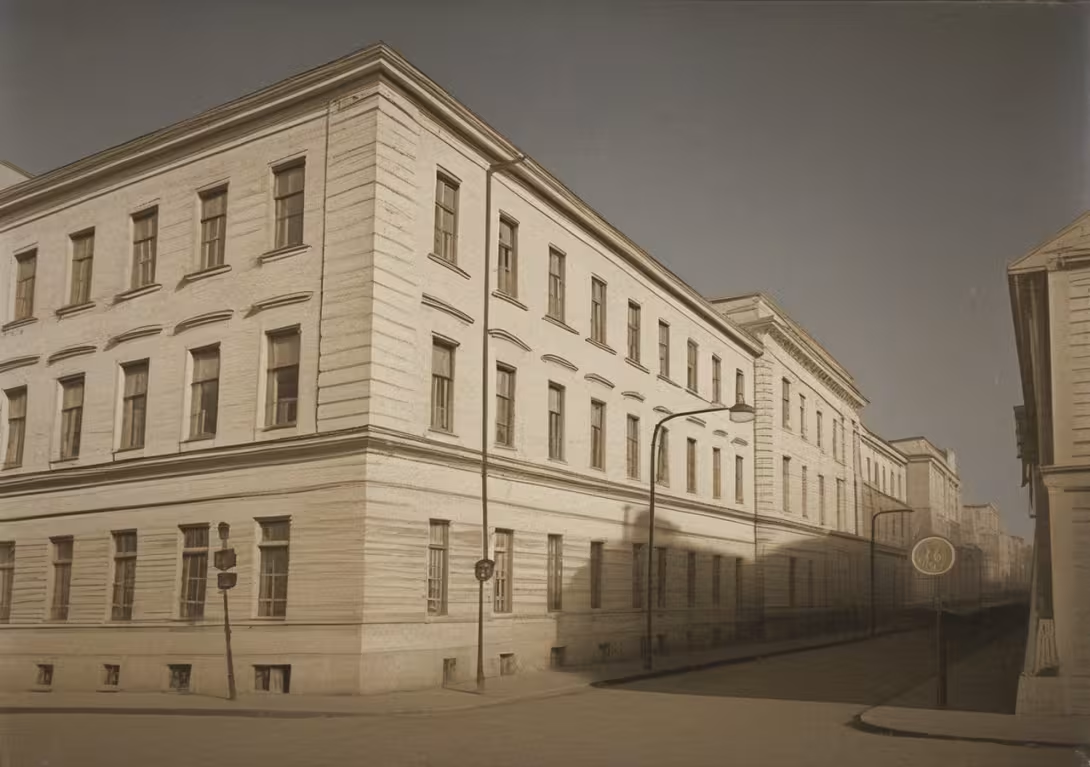
The historical appearance on the left is an AI-generated visualisation and serves as inspiration only.
Historical milestones
- 1850
- Establishment of the court following judicial reforms.
- 1855
- Court renamed to krajský soud due to administrative restructuring.
- 1892
- Decision made to construct a separate judicial building.
- 1900
- Cornerstone for the courthouse laid.
- 1902
- Courthouse began operations on November 10.
- 1999
- Building protected as a cultural monument.
Architectural development
The courthouse was constructed between 1900 and 1902 by the Plzeň construction company Müller and Kapsa. It replaced an earlier facility in the town hall, addressing space constraints as both judicial and municipal functions expanded. The building's design reflects the Historicism style, characterized by its functional yet stately appearance.
Historical events
The court was established on July 1, 1850, following judicial reforms that abolished patrimonial and municipal courts.
In 1892, a decision was made to construct a separate judicial building due to capacity issues at the town hall.
Points of interest
- The courthouse's cornerstone was laid in 1900 by a notable local figure, the then-mayor of Plzeň, who later became involved in a scandal due to financial mismanagement during his term.
- In its early years, the building served as a temporary shelter for refugees from neighboring regions affected by natural disasters, highlighting its role beyond judicial functions.
- A hidden passage once connected the courthouse with an adjacent building, rumored to have been used during political unrest to discreetly move documents and officials between locations.
- During World War II, the courthouse was briefly repurposed as a storage facility for art looted from across Europe, before being reclaimed by local authorities after the war ended.
- The courthouse features a unique clock tower that chimes using bells originally cast in 1603 for another building destroyed during a fire, symbolizing continuity and resilience.
Guide
This guide is narrated by a synthetic voice generated by artificial intelligence.
Show guide text
This text was created by artificial intelligence and has not been editorially reviewed. It may contain inaccuracies.
Welcome to the historic heart of Plzeň's Vnitřní Město, where you stand before the Krajský soud v Plzni—a testament to the city's rich legal and architectural heritage. This judicial building on Veleslavínová Street is more than just a courthouse; it's a narrative woven into the fabric of Plzeň over centuries.
Let’s delve into its origins. The establishment of this court dates back to 1850, following significant judicial reforms that reshaped the legal landscape in the region. By 1855, with administrative restructuring underway, the institution was renamed krajský soud, marking a new chapter in its history. However, it wasn't until 1892 that the decision was made to construct a separate building for this courthouse, aiming to replace an overcrowded facility at the Plzeň town hall.
The cornerstone of the courthouse was laid in 1900 by then-mayor of Plzeň, a notable local figure whose later involvement in financial mismanagement scandals added a layer of intrigue to his legacy. The construction, completed swiftly by 1902, reflects the architectural style of Historicism—a sober and functional design that speaks volumes about its purpose as a place of law and order.
As you gaze upon this building, notice how it stands with quiet dignity amidst the bustling streets of Vnitřní Město. Its facade is unassuming yet elegant, embodying the principles of functionality over ornamentation. The courthouse began operations on November 10, 1902, marking a new era for legal proceedings in Plzeň.
The early years of this building were not just about law; it served as a temporary shelter for refugees from neighboring regions affected by turmoil. This aspect of its history highlights the courthouse's role beyond judicial functions, serving as a beacon of hope and sanctuary during challenging times.
In 1999, recognizing its historical significance and architectural value, the building was protected as a cultural monument—a fitting tribute to its enduring legacy in Plzeň’s civic life.
As we conclude our brief journey through time at this remarkable site, I invite you to explore further. Walk around, feel the history beneath your feet, and imagine the countless stories that have unfolded within these walls. Thank you for joining me on this exploration of the Krajský soud v Plzni. May your visit inspire a deeper appreciation for the layers of history that shape our world.
Farewell, and may your journey through Plzeň's storied streets continue to be filled with discovery and wonder.
Tips for visitors
The best time to visit the Krajský soud v Plzni is during late spring or early autumn when the weather is pleasant, allowing you to comfortably explore both the courthouse and its surroundings. These seasons offer mild temperatures ideal for walking around Otakar's Gardens and appreciating the historical architecture without the discomfort of summer heat or winter cold. Additionally, visiting during weekdays can provide a quieter experience compared to weekends.
Parking near Veleslavínová Street may be limited due to its central location in Vnitřní Město. Public transportation is recommended for ease of access; you can reach the area using various bus and tram lines that serve the city center. For those driving, it's advisable to check local parking facilities or street parking availability beforehand. Always verify current transport options online before your visit.
When visiting the courthouse, consider bringing comfortable walking shoes as there may be some distance between attractions within Vnitřní Město and Otakar's Gardens. A camera is also recommended for capturing the architectural details of the building and the scenic views in the gardens. Since weather conditions can change, carrying a light jacket or an umbrella might be useful.
Photography enthusiasts will find several spots around the courthouse offering excellent lighting, especially during the golden hours of early morning or late afternoon when the sunlight casts soft shadows on the historic facades. Otakar's Gardens provide picturesque settings for capturing both natural and architectural beauty. Be mindful of any photography restrictions in certain areas.
Nearby attractions within a 30-minute walk include the historical site of the former Dominican monastery, which offers insights into Plzeň’s medieval past. The semi-circular bastion remnants are also worth exploring to understand more about the city's fortifications. These sites provide additional context and enrich your visit with cultural and historical depth.
Businesses nearby
Do you run a restaurant, accommodation, shop, museum, rental, wellness or other visitor service near this monument? Show yourself directly to the people heading to it — this is how they will see you in the app and on the web:
Events nearby




Zdroj akcí: otevřená data měst a obcí ČR (Národní katalog otevřených dat) a kalendář akcí Národního památkového ústavu.
Nearby
The courthouse is situated near the historical site of a former Dominican monastery and adjacent to Otakar's Gardens. The area retains elements of Plzeň's medieval fortifications, including a semi-circular bastion.
Accommodation nearby
Trips and activities nearby
Guided tours, tickets and activities nearby from GetYourGuide
Affiliate link: if you buy from the partner, we may receive a commission. The price for you does not change.
Search tours and activities →Themed route
Thematic Walking Tour of Plzeň's Vnitřní Město
1. Krajský soud v Plzni (Courthouse) - Type: Historical Building - Why Visit: The Krajský soud in Plzeň is a remarkable example of Neo-Renaissance architecture, reflecting the city's rich historical tapestry. Its proximity to significant medieval sites makes it an ideal starting point for exploring Plzeň’s architectural evolution.
2. Former Dominican Monastery Site - Type: Historical Site - Why Visit: Just a short walk from the courthouse is the site of the former Dominican monastery, which offers insight into Plzeň's medieval religious and cultural history. The remnants of this once-thriving monastic community highlight the city’s historical significance during the Middle Ages.
3. Otakar's Gardens - Type: Public Park - Why Visit: Adjacent to the courthouse, Otakar's Gardens provide a serene escape with beautifully landscaped paths and greenery. This park is not only a place for relaxation but also offers views of Plzeň’s historical fortifications, including a semi-circular bastion that adds to its charm.
4. Semi-Circular Bastion - Type: Historical Fortification - Why Visit: As part of Plzeň's medieval defenses, the semi-circular bastion is a testament to the city’s strategic importance in historical times. Walking along this structure provides an immersive experience into the past, allowing visitors to visualize how the city was once fortified against invasions.
This tour offers a concise yet enriching exploration of Vnitřní Město, focusing on its architectural and historical landmarks while providing a glimpse into Plzeň’s storied past.
Seasonal recommendations
Spring: Visiting the Krajský soud v Plzni during spring offers a unique experience as nature begins to awaken, bringing vibrant colors and fresh scents that enhance the historical ambiance of the building. The soft, natural light filtering through budding trees creates a picturesque setting ideal for photography. Spring is generally less crowded than summer, making it an excellent time to explore at a leisurely pace. Visitors are advised to wear layers as temperatures can fluctuate, with cooler mornings and warmer afternoons.
Summer: Summer brings the most vibrant atmosphere to the Krajský soud v Plzni, with longer daylight hours allowing for extended visits. The lush greenery surrounding the building is at its peak, offering a delightful backdrop for exploring the site. This season sees higher visitor numbers due to school holidays and favorable weather, so it's recommended to arrive early in the day to avoid crowds. Light, breathable clothing is ideal, along with sun protection like hats or sunglasses.
Autumn: Autumn transforms the Krajský soud v Plzni into a warm tapestry of reds, oranges, and yellows as the leaves change color, creating a stunning visual contrast against the historic architecture. The cooler temperatures make for comfortable exploration without the summer heat. This season often sees fewer tourists compared to summer, providing a more serene experience. Layered clothing is advisable to accommodate varying weather conditions throughout the day.
Winter: Winter offers a unique charm at the Krajský soud v Plzni, with the possibility of snow adding a magical touch to the historic streets of Vnitřní Město. The shorter days mean visits are best enjoyed in the morning or late afternoon when natural light is most favorable for photography. It's essential to dress warmly and wear comfortable footwear suitable for potentially icy conditions. Be mindful that some facilities may have reduced hours during this season, so checking ahead is recommended.
Visualizations and artistic views


The visualisations are generated by artificial intelligence and serve as inspiration.
Photos from the area
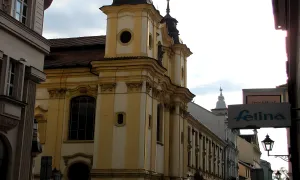
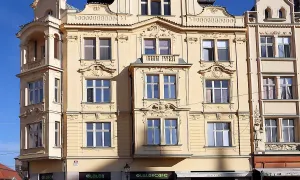
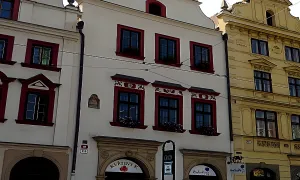
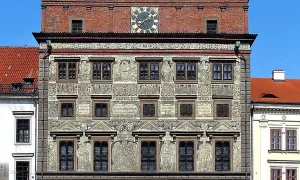
Real photos taken near the monument

Zdroj a licence jsou uvedeny u každého snímku.
Tips from visitors
No tips yet. Be the first!
Log in and add your tip.
Sources and literature
Photos: Jik jik / CC BY-SA 3.0 — Wikimedia Commons. The author and licence also appear when you hover over the image.
Faktickým podkladem tohoto textu byl článek na Wikipedii, jehož autory jsou přispěvatelé Wikipedie. Článek je dostupný pod licencí CC BY-SA 4.0.
Location on the map
Příběhy a pověsti
Legendy, pověsti a příběhy spjaté s touto památkou

Fotografie návštěvníků
Zatím žádné fotografie. Buďte první, kdo přidá fotografii z návštěvy!
Log in a přidejte svou fotografii nebo hodnoťte.
Za ověřenou návštěvu v aplikaci získáte víc bodů — poznáme podle GPS, že jste na místě.
Reviews and comments