



Bývalý špitál při kostele sv. Štěpána Building
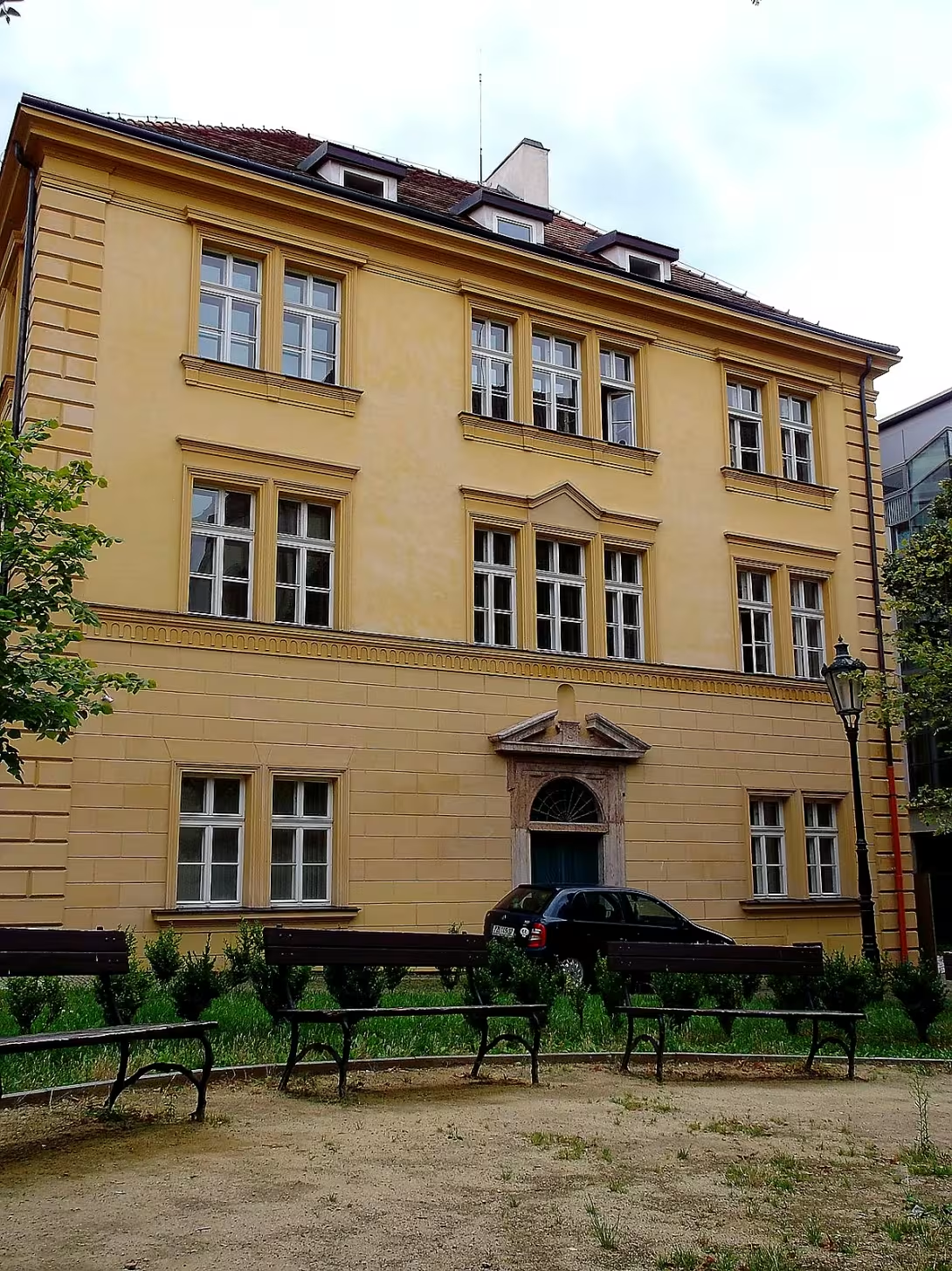
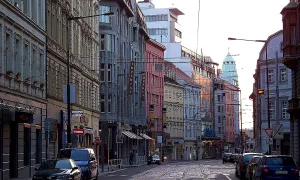
Bývalý špitál při kostele sv. Štěpána is a Renaissance building from 1613. Located in Prague in part Nové Město at the address Na Rybníčku 536 / 6. The building is registered as a cultural monument. It draws its values from the original function and subsequent architectural modifications.
The construction was created in 1613 as a plague hospital. At the time of its inception the building was decorated with a portal with plastic decoration and armoured corners, which are typical elements of Renaissance architecture.
Significant building changes took place in the second half of the 19th century. In 1875 the house was rebuilt according to the plans of Josef Novotný. Within this reconstruction, the building was increased by the second floor, the original staircase removed and a new roof was installed. The facade was subsequently modified between 1878 and 1880. Thanks to these interventions, the object today shows signs of neo-Renaissance.
The building is located in the capital Praha. The current owner is the company Na Rybník Property.
The monument presents a concrete historical testimony about health care and architecture in the early 17th century. Its visit offers the possibility to observe the layering of architectural styles on one of the historical buildings of Prague's New Town.
Then and now
Drag the slider to compare how the landmark may have looked when it was built with the view today.
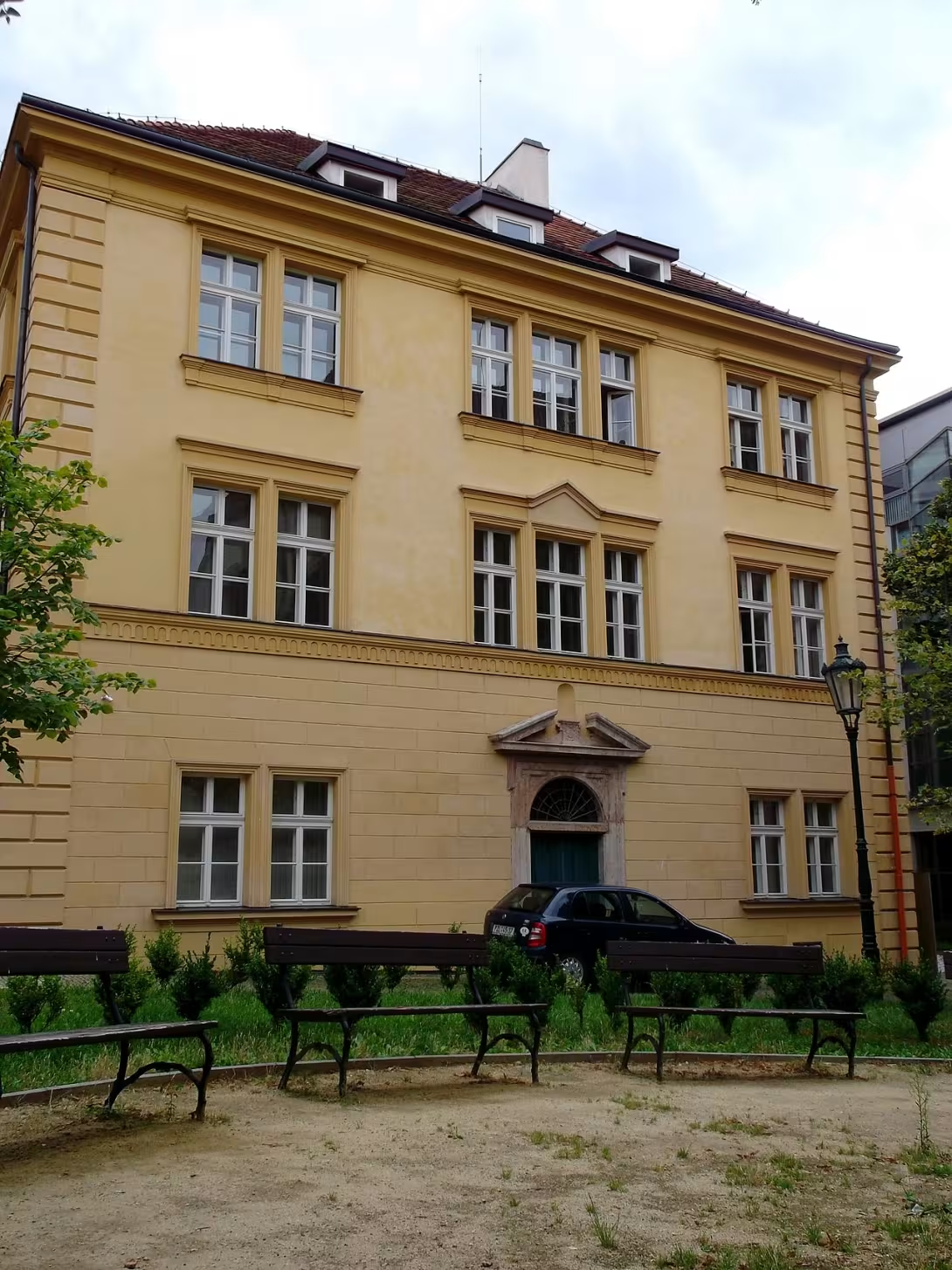

The historical appearance on the left is an AI-generated visualisation and serves as inspiration only.
Historical milestones
- 1613
- The creation of a plague Lazaret with Renaissance architecture.
- 1875
- Reconstruction according to plans of Josef Novotný, building increase by second floor.
- 1878
- Modifications of the facade between 1878 and 1880.
Points of interest
The 1613 building served as a plague hospital at the time of its creation. - Originally decorated by a portal with plastic decoration and armoured corners. - In 1875 the building was rebuilt according to plans by Josef Novotný, and was increased by the second floor. - From 1878 to 1880, there were modifications to the facade, thanks to which the object today shows signs of neo-Renaissance. - The monument serves as a historical testament to health care and architecture in the early 17th century.
Guide
Show guide text
This text was created by artificial intelligence and has not been editorially reviewed. It may contain inaccuracies.
Welcome to the heart of Prague's New Town. Right now, you're standing in front of a building that carries a silent memory of ancient times and helps us understand what the care of others looked like in the past centuries. There's a former hospital in front of you at St. Stephen's Church. If you look at it now, you may be particularly aware of the calm that contrasts with the noise of the surrounding streets, but this building has been a haven for those who have sought help, treatment or shelter over their heads for years.
Stop for a moment and feel the atmosphere of this place. It's a space where the spiritual sphere of a nearby church meets with the practical help that hospitals provided at the time. Although today the building serves other purposes, its status as a cultural monument reminds us that it is an important piece of the history of our capital. This building is not just an ordinary house, it is a testimony of social responsibility that accompanied the community in New Town.
Now let's think about the origin of this place. Although the exact dates of construction and the names of architects remain in the fog of time and are not exactly known to us, the very existence of the hospital in close proximity to St. Stephen's Church is not random. In ancient times, faith and care for the sick or the poor went hand in hand. Churches often founded these facilities to provide comfort to the body and soul. So imagine this place as part of a wider aid system, where the church held spiritual leadership and the hospital cared about the physical needs of people in need.
Now pay attention to the construction itself. Since we do not know the specific details of her architectural plan, I suggest you simply observe its overall form and see how it fits into the rhythm of the surrounding development. Look at the facade, and think about how many generations of people have walked through here. Notice how the building works in New Town space. It is an architecture that is not intended to dazzle with pomp, but rather serve its purpose. It is in this modesty and functionality that its true value lies.
When we think about the people who worked here, we have to acknowledge that history is silent about the specific names of the personalities that would be linked to this very building. And yet it's paradoxically fascinating. This means that there were not only the fates of great masters or well-known builders, but above all the lives of thousands of nameless people. They were poor, sick, pilgrims or old men who found the harbor here. Each one brought his own story, his own pain and his hope. So this building is a monument for ordinary people, for those who often stay in harm's way in history, but without them the city would not exist.
You might be wondering now if there's a big mystery attached to the building. And basically, yes, the biggest mystery is the silence of history. Why don't we know exactly who designed it? Who was the most important person here? This emptiness in the records encourages us to imagine the past ourselves. Try to imagine what sound these corridors filled centuries ago, what calls were made here, and what the atmosphere was today, when people were taking care of their health. It's a quiet dialogue with the past that teaches us humility.
The sight of this memory reminds us that history is not only about data in the books and the names of kings, but about people and their needs. The former hospital at St. Stephen's Church is a silent witness to how our city changed and how access to human suffering changed. It's a place that teaches us empathy and reminds us that caring for others is one of humanity's oldest and rarest values.
Now that you've looked at this building and perceived its silent story, I suggest you continue to explore the area. Nové Město has hidden many other layers waiting for your discoveries. You may now be attracted to the nearby church of St. Stephen, which, with this hospital, forms one historical whole, or you go to the surrounding streets where the border between the present and the ancient times is wiped.
Thank you for a moment together at this cultural monument. I hope you felt the calm and depth of this place. I wish you a pleasant further trip to Prague and many other fascinating encounters with the history of our city. Goodbye.
Tips for visitors
The best time to visit is in the morning or late afternoon when the sun hits the facade of the building at an angle that best excels its historical character. As it is a cultural monument, we recommend focusing on detailed observations of architecture from the outside.
The building is located in the heart of New Town, where transport is very dense.
When visiting, it is not necessary to have special equipment, only comfortable shoes for a walk through the historical centre. We recommend to have a camera or a telephone to capture the details of the construction.
For the best photos we recommend looking for angles that capture the connection of the building with the surrounding environment of New Town. The best light for façade images is during the golden hour before sunset.
Frequently asked questions
Can the monument be visited?
The building is in use (offices, a school, shops and the like). The interior is generally accessible only during operating hours and tours are not usually offered; we have not verified the details. You can see the exterior from the street.
Where is the monument?
Location: Na Rybníčku 536/6, Nové Město, Praha, Hlavní město Praha. The map on this page shows the exact spot.
Why is the monument protected?
It is listed in the Central List of Cultural Monuments of the Czech Republic as a cultural monument (register no. 54792/1-1260).
Businesses nearby
Do you run a restaurant, accommodation, shop, museum, rental, wellness or other visitor service near this monument? Show yourself directly to the people heading to it — this is how they will see you in the app and on the web:
Events nearby

Zdroj akcí: otevřená data měst a obcí ČR (Národní katalog otevřených dat) a kalendář akcí Národního památkového ústavu.
Nearby
➜ Zobrazit interaktivní přehled okolí – restaurace, ubytování, půjčovny a další místa v okruhu 15 km.
Data: OpenStreetMap contributors, okruh 15 km.
🏰 Historické památky
- Hlávkova kolej (0.8 km – Gorazdova 1994/9)
- Gorlice (1.2 km)
- Clam-Gallasův palác v Praze (1.2 km – Husova 156/21)
- Cihelná brána (1.3 km – V pevnosti 46/1)
- Dům U Kohouta (1.4 km)
- Vojenský historický ústav Praha (1.9 km – U Památníku 1600/2)
- Kolovratský palác ve Valdštejnské (2.1 km – Valdštejnská 150/4)
- Galerie Troba (2.1 km – Velehradská 1320/24)
🍽️ Restaurace a stravování
- Legenda (0.4 km)
- McDonald's (0.5 km – Vodičkova 736/15)
- Restaurant River's smokelab (1.2 km – Lidická 2)
- Pizzerie U Tučňáka (1.3 km – náměstí 14. října 1)
- McDonald's (4.9 km)
- Yi Xiang Ge (5.4 km)
- Švejk restaurant U Brázdů (5.7 km – U Svobodárny 18)
- Pizzeria Cerreto (5.7 km)
🏨 Ubytování
- EA Hotel Tosca (1.0 km – Blanická 718/10)
- Old Prague Hotel (1.0 km – Skořepka 421/5)
- The Mozart Prague (1.2 km – Karoliny Světlé 208/34)
- Old Town Jewel Apartments (1.6 km – Elišky Krásnohorské 10/2)
- Hotel AXA (1.7 km – Na Poříčí 40)
- Hotel Olšanka (2.4 km)
- Plaza Prague Hotel (3.9 km)
- Plus Prague (4.1 km)
🚲 Půjčovny a sport
- Kieser Training (0.8 km)
- Centrum volného času Botič (0.9 km)
- Virus Sport (1.8 km – Černomořská 235/5)
- Pavé Cycles (2.0 km – Chvalova 1577/12)
- Velox Sport (2.5 km)
- JUN (2.7 km – Haškova 629/7)
- Florbal expert (2.8 km)
- U Tyrše (3.1 km – Jaselská 464/38)
🥾 Turistika a příroda
- Vyšehrad (1.4 km)
- Informační a rezervační centrum (1.6 km – Maiselova 38/15)
- Petřínka (2.1 km)
- Pražský hrad (2.4 km)
- Masarykova vyhlídka (2.8 km)
- ÚAMK, a.s. (4.0 km – Na Strži 1837/9)
- Vyhlídka Emy Destinnové (6.1 km)
- Odjezdová tabule Nádraží Vysočany (6.4 km – Sokolovská 202/314)
Accommodation nearby
Trips and activities nearby
Guided tours, tickets and activities nearby from GetYourGuide
Affiliate link: if you buy from the partner, we may receive a commission. The price for you does not change.
Search tours and activities →Themed route
Bývalý špitál při kostele sv. Štěpána (tour of the premises)
1. The main building of the hospital - Historical building where you can admire the old masonry and architecture of care for the sick. 2. Tanks - Open space between buildings, which provides peace and space for the perception of the overall layout of the complex. 3. Church of St. Stephen - Spiritual Centre of the complex, which is closely linked to the history of the hospital.
Seasonal recommendations
In spring, the surrounding area of the building awakens to life and fresh greenery complements the historical appearance of the facade. Light is soft in this period, which is ideal for observing architectural details from the outside. We recommend light spring clothes and a visit in the morning when the air is the cleanest. Summer brings intense sun, which greatly highlights the colors of buildings in the city centre. The atmosphere is crispy and full of energy, although the streets can be very crowded with people. It is advisable to choose breathable substances, a sun hat and search for a shadow near the building during the most jealous hours of the afternoon. In autumn, the surroundings turn into golden and brown shades, creating a melancholy and calm mood. The lighting is drier and the shadows extend, which gives the memory a mysterious touch. It is practical to carry a waterproof coat or sweater for colder days and choose around noon for the best visibility. Zimą works in contrast with freezing air and possible snow on the ledge. Evening lighting in advent time creates a cozy atmosphere in an otherwise cold city. Hot clothes, gloves and tight shoes with anti-slip soles are essential to keep the movement on the city pavement safe.
Visualizations and artistic views


The visualisations are generated by artificial intelligence and serve as inspiration.
Photos from the area
Real photos taken near the monument

Zdroj a licence jsou uvedeny u každého snímku.
Tips from visitors
No tips yet. Be the first!
Log in and add your tip.
Sources and literature
Photos: JiriMatejicek / CC BY-SA 3.0 — Wikimedia Commons. The author and licence also appear when you hover over the image.
Location on the map
More monuments – Nové Město
Show all in the municipality


Příběhy a pověsti
Legendy, pověsti a příběhy spjaté s touto památkou

Fotografie návštěvníků
Zatím žádné fotografie. Buďte první, kdo přidá fotografii z návštěvy!
Log in a přidejte svou fotografii nebo hodnoťte.
Za ověřenou návštěvu v aplikaci získáte víc bodů — poznáme podle GPS, že jste na místě.
Reviews and comments