






čerpací stanice Paseky Building complex
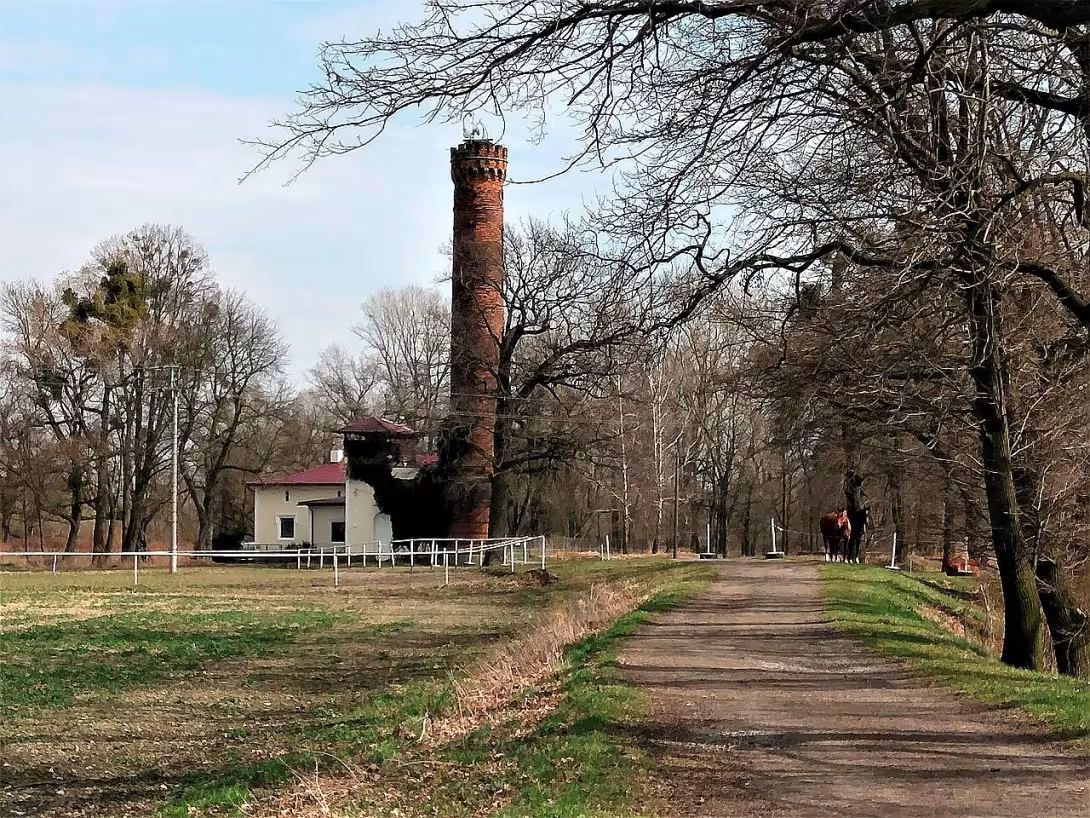
The Paseky Steam Pumping Station, a historicist water structure, is located in Šilheřovice village, Opava district. Built between 1862 and 1863, it's a registered cultural monument of the Czech Republic. This technical remnant serves as a testament to 19th-century estate management.
The Rothschild family commissioned the station to supply water for the Šilheřovice chateau park. During the mid-19th century in the Austrian Empire, industrialization and infrastructure expansion characterized this era. Wealthy families often integrated utility with aesthetic requirements of their private estates.
The complex features a one-story masonry building with a sheet metal saddle roof. A white plastered garage with sheet metal doors is attached to the eastern side. Behind it lies an elevated square turret with a tent roof, covered in boarding and accessible via wooden stairs. A wooden walkway runs along the southeast side of the building.
The 30-meter-high chimney, originally used for boiler house fume exhaust, stands out as one of two similar chimneys in the Czech Republic. Its design features an outer shell and inner body, topped with a battlement on sandstone corbels.
Ownership and use changed significantly over time. Originally built by the Rothschilds, the building was repurposed after 1948 as a socialist apartment. Following the Velvet Revolution, the property was privatized.
During World War II, Soviet aircraft bombed the site under suspicion that it was a factory.
On December 8, 2020, the station was officially declared a cultural monument of the Czech Republic. It stands as a rare example of historicist technical architecture and a testament to industrial ambitions in the 19th century. This site is a worthwhile destination for those interested in the intersection of industrial history and aristocratic estate design.
Historical milestones
- 1862
- Construction of the pumping station began.
- 1945
- The building was bombed by Soviet aircraft during World War II.
- 1948
- The building was converted into a socialist apartment.
- 2020
- The station was declared a cultural monument of the Czech Republic on December 8.
Architectural development
The complex features a masonry building with a sheet metal saddle roof and an attached white plastered garage. It includes a wooden turret with a tent roof and a wooden walkway on the southeast side. The 30-meter chimney is constructed as two concentric cylinders and is topped with a battlement on sandstone corbels.
Historical events
The site was bombed by Soviet aircraft during World War II due to suspicions that it was a factory. After 1948, the building was repurposed as a socialist apartment.
Owners
Built by the Rothschild family; privatized after the Velvet Revolution.
Points of interest
– The Paseky Steam Pumping Station is a historicist water structure located in Šilheřovice village, Opava district.
– Built between 1862 and 1863, it's a registered cultural monument of the Czech Republic, serving as a testament to 19th-century estate management.
– The station was commissioned by the Rothschild family to supply water for the Šilheřovice chateau park during the mid-19th century in the Austrian Empire.
Guide
Show guide text
This text was created by artificial intelligence and has not been editorially reviewed. It may contain inaccuracies.
Welcome to Šilheřovice. As you stand here before the Paseky Steam Pumping Station, take a moment to simply breathe and absorb the atmosphere of this unique location. You are standing at a crossroads of history, where the industrial ambition of the nineteenth century meets the complex, often turbulent, political shifts of the twentieth century. It is not every day that you encounter a site that has served as a vital piece of engineering, a victim of war, a residential home, and finally, a protected treasure of the nation.
As you look around, your eyes are likely drawn to the striking silhouette of the site. Notice the prominent chimney that rises high above the landscape. It stands as a silent sentinel, reaching thirty meters into the sky. This is not merely a decorative structure; it was once the beating heart of the station, used for the boiler house that powered the entire operation. Below it, you can see the one-story masonry building. Even without knowing the names of the architects who designed it, you can feel the intentionality in its construction. The building was designed in the historicist style, a movement that sought to bring a sense of dignity and timelessness to functional structures. It was built to be more than just a utility; it was built to complement the grandeur of the surrounding area.
To understand why this station exists, we must travel back in time to the early 1860s. Imagine the landscape of Šilheřovice during that era. The year was 1862 when the first stones were laid. This project was not a public works endeavor, but a private commission of immense scale, requested by the Rothschild family. As one of the most influential families in Europe, the Rothschilds had a vision for their estate here. They required a reliable, powerful source of water to nourish the magnificent park of the Šilheřovice chateau. The Paseky Steam Pumping Station was the solution to that need. Between 1862 and 1863, this site was a hive of activity, transforming steam power into the lifeblood of the aristocratic gardens.
Now, please turn your attention to the physical textures of the site. Observe the masonry of the building. Though the years have passed, the strength of the original construction remains evident. The historicist architecture you see before you was meant to evoke a sense of permanence and importance. It was a way of saying that even a pumping station, a place of steam and heavy machinery, deserved to be beautiful.
However, the history of Paseky is not solely one of elegance and utility. The twentieth century brought shadows that this station could not escape. As we move forward through the timeline of this place, we encounter the devastating impact of World War II. In 1945, the peace of this area was shattered when the building was bombed by Soviet aircraft. It is a sobering thought to realize that this site, once built to provide life and beauty to a park, was caught in the crossfire of global conflict.
But the story did not end with the war. As the political landscape of the country shifted, so too did the purpose of this building. In 1948, following the rise of the new political order, the station underwent a transformation that would have been unimaginable to the Rothschilds. It was no longer a place of steam and engineering; instead, it was converted into a socialist apartment building. This period represents a fascinating, if somewhat jarring, chapter in the site's biography. A structure designed for the precision of water management was repurposed to house people, blending the industrial with the domestic in a way that defines much of the mid-century history of the region.
For many years, the station lived this dual life, a relic of a bygone era functioning as a modern residence. But history has a way of reclaiming its most important pieces. We move now to the modern era, to a moment of profound recognition. On December 8, 2020, the Paseky Steam Pumping Station was officially declared a cultural monument of the Czech Republic. This designation changed everything. It was no longer just a building or an apartment block; it became a piece of national heritage, a testament to the engineering, the social shifts, and the architectural history of the Opava district.
As you continue your walk, I invite you to look at the station through these different lenses. When you look at the chimney, do not just see a tall structure; see the steam and the power of the 1860s. When you look at the masonry, think of the Rothschilds and their vision for Šilheřovice. When you look at the building as a whole, consider the resilience it has shown—surviving bombs, surviving political revolutions, and finally finding its place as a protected monument.
There is a certain mystery here, too. Despite its importance, the names of the architects who shaped this historicist design remain unknown to us. They left behind a masterpiece of functional beauty, yet their identities have faded into the annals of time, leaving only their work to speak for them.
Please, take your time. Wander around the perimeter, feel the weight of the history surrounding you, and appreciate the quiet strength of this monument. Whether you are drawn to the engineering marvel of the pumping station or the complex social history it represents, there is much to discover in the stillness of Šilheřovice. Thank you for joining me on this brief journey through time. Enjoy the rest of your exploration.
Tips for visitors
Best Time to Visit: The Paseky Steam Pumping Station is a year-round attraction, but the best time to visit is during spring and autumn when the weather is mild and sunny. This allows you to fully appreciate the historicist architecture and picturesque surroundings without the harshness of winter or summer heatwaves. Parking and Transport: The station is easily accessible by car, with parking available on-site. Alternatively, you can take a taxi or ride-sharing service from nearby Šilheřovice village. Please note that public transportation options are limited in this area. What to Bring: Comfortable walking shoes are recommended for exploring the site, as well as sunscreen and a hat for protection against the sun. If you plan to take photos, consider bringing a camera with a good zoom lens to capture the intricate details of the architecture. Photography: The best spots for photography are around the main building, where you can capture the stunning architecture and beautifully manicured gardens. Early morning or late afternoon sunlight is ideal for capturing warm, golden tones in your photos. What to See Nearby (30 minutes away): Visit the nearby Šilheřovice chateau, which was once served by the Paseky Steam Pumping Station. This charming chateau offers stunning views of the surrounding countryside and a glimpse into the region's rich history. Tips for Families with Children: The Paseky Steam Pumping Station is an excellent destination for families, as it offers a unique blend of history and architecture that can be enjoyed by children of all ages. Consider bringing a picnic lunch to enjoy in the surrounding gardens or nearby park.
Businesses nearby
Do you run a restaurant, accommodation, shop, museum, rental, wellness or other visitor service near this monument? Show yourself directly to the people heading to it — this is how they will see you in the app and on the web:
Events nearby
Zdroj akcí: otevřená data měst a obcí ČR (Národní katalog otevřených dat) a kalendář akcí Národního památkového ústavu.
Nearby
The station is located in Šilheřovice and was originally built to serve the nearby Šilheřovice chateau.
Accommodation nearby
Themed route
Thematic Excursion Route: The Heritage of Šilheřovice
This route focuses on the historical and functional landmarks within the immediate vicinity of the main attraction, adhering strictly to the provided local context.
1. Paseky Fuel Station (Waterworks) *Type:* Historical Industrial Structure This is the primary destination of your visit. Originally constructed to serve the nearby estate, this unique waterworks structure stands as a testament to the engineering and logistical needs of the region’s historical nobility. It offers a rare glimpse into the infrastructure that supported the daily operations of the local chateau.
2. Šilheřovice Chateau *Type:* Historical Estate Located in the immediate vicinity of the fuel station, this chateau is the original beneficiary of the waterworks system. Visiting the chateau allows you to understand the social and architectural context in which the Paseky station was built. It serves as the logical anchor for the historical narrative of the area, connecting the industrial utility to the residential prestige of the local gentry.
3. The Immediate Area of Šilheřovice *Type:* Local Village Environment While the specific points of interest are limited to the station and the chateau, exploring the surrounding village environment of Šilheřovice provides essential context. The proximity of these two main sites allows for a short, focused walk that highlights the relationship between the estate’s domestic needs and its supporting infrastructure. This segment of the route emphasizes the compact nature of the historical site, ensuring a coherent and manageable excursion without venturing into unlisted locations.
This itinerary is designed to be concise and focused, utilizing only the specific landmarks mentioned in the source material. By concentrating on the Paseky Fuel Station and the Šilheřovice Chateau, visitors can appreciate the direct historical link between the waterworks and the estate it was designed to serve. The route avoids any speculation about additional natural or cultural sites, ensuring that the experience remains grounded in the verified facts of the location. The logical order begins with the unique industrial artifact, moves to the residential center it supported, and concludes with a brief appreciation of the local setting that binds these two points together.
Seasonal recommendations
Spring
As you visit the historic landmark, čerpací stanice Paseky (vodní dílo) in Šilheřovice during the spring season, you'll be greeted by a vibrant atmosphere. The surrounding nature awakens from its winter slumber, with blooming flowers and lush greenery. The sun shines brightly, casting a warm glow over the entire area.
Practical tips: Be prepared for larger crowds as the weather warms up. Wear comfortable shoes and layers to adjust to the changing temperatures. Visit early in the morning or late in the afternoon to avoid peak hours.
Summer
During the summer months, čerpací stanice Paseky (vodní dílo) transforms into a lively spot. The warm sunshine brings out the best in nature, with lush greenery and colorful flowers in full bloom. The atmosphere is lively, filled with the sounds of laughter and chatter from visitors enjoying the outdoors.
Practical tips: Arrive early to beat the crowds that tend to gather later in the day. Wear light, breathable clothing and don't forget your sunscreen. Take advantage of the longer opening hours to make the most of your visit.
Autumn
As autumn sets in, čerpací stanice Paseky (vodní dílo) takes on a cozy charm. The foliage turns into a kaleidoscope of colors, with golden hues and crimson shades painting the landscape. A crisp breeze carries the scent of ripe fruits and leaves, adding to the ambiance.
Practical tips: Wrap up warm as the temperature cools down. Wear comfortable shoes for exploring the surrounding area. Visit during the week or early in the morning to avoid peak tourist hours.
Winter
During the winter months, čerpací stanice Paseky (vodní dílo) takes on a serene beauty. The snow-covered landscape creates a peaceful atmosphere, with the sound of gentle wind rustling through the trees. The cold air carries the scent of woodsmoke and hot chocolate, making it an ideal spot for a cozy winter visit.
Practical tips: Dress warmly in layers to adjust to the chilly temperatures. Visit during the morning or late afternoon when the sun is lower in the sky, adding warmth and coziness to your experience.
Visualizations and artistic views

The visualisations are generated by artificial intelligence and serve as inspiration.
Photos from the area
Real photos taken near the monument


Zdroj a licence jsou uvedeny u každého snímku.
Tips from visitors
No tips yet. Be the first!
Log in and add your tip.
Sources and literature
Fotografie: Kamil Czaiński / CC BY-SA 4.0 — Wikimedia Commons. The author and licence also appear when you hover over the image.
Faktickým podkladem tohoto textu byl článek na Wikipedii, jehož autory jsou přispěvatelé Wikipedie. Článek je dostupný pod licencí CC BY-SA 4.0.
Location on the map
Příběhy a pověsti
Legendy, pověsti a příběhy spjaté s touto památkou

Fotografie návštěvníků
Zatím žádné fotografie. Buďte první, kdo přidá fotografii z návštěvy!
Přihlaste se a přidejte svou fotografii nebo hodnoťte.
Za ověřenou návštěvu v aplikaci získáte víc bodů — poznáme podle GPS, že jste na místě.
Reviews and comments