






Činžovní dům Josefa Cardy Tenement house
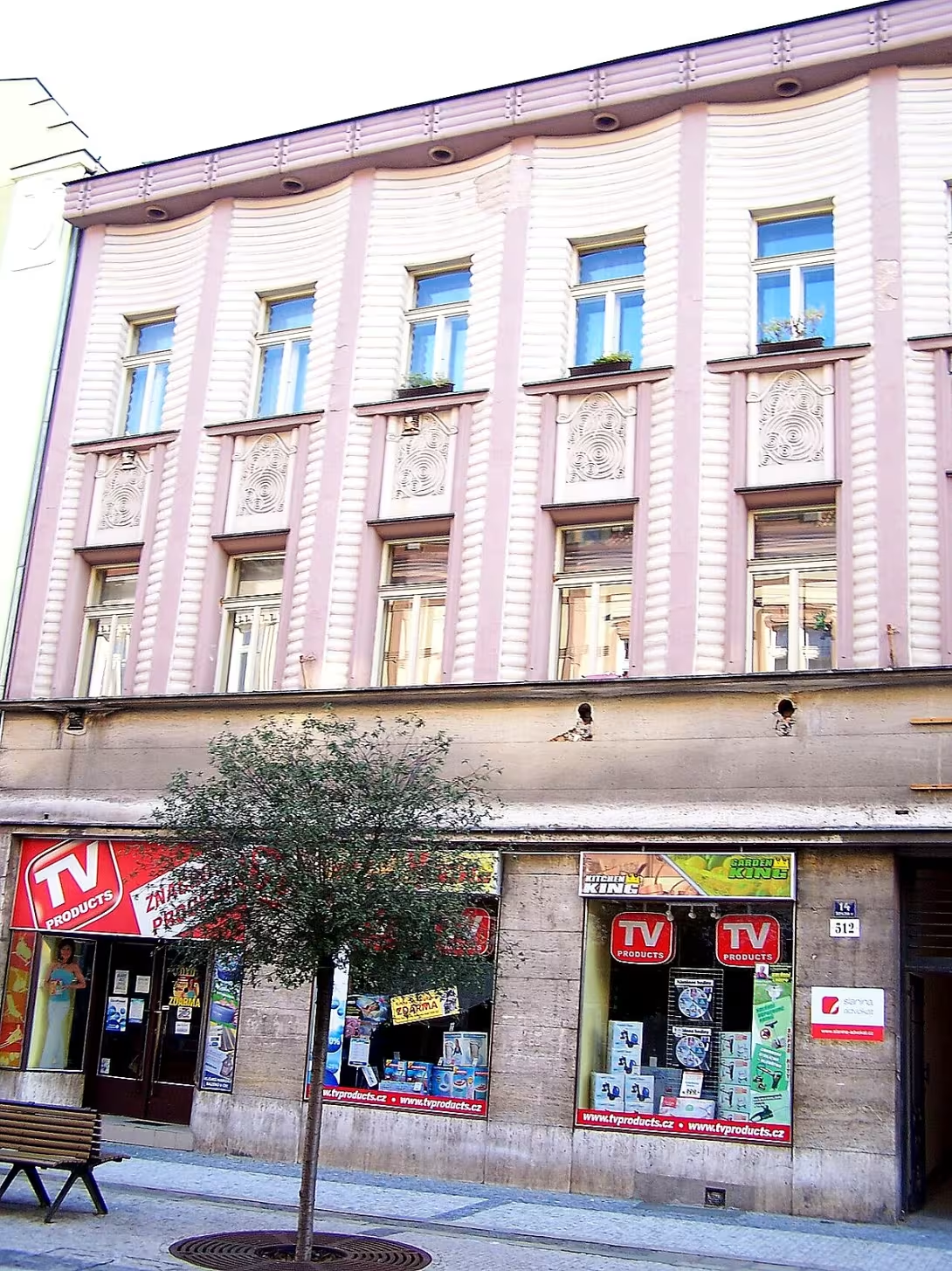
Činžovní dům Josefa Cardy, also known as the house of Card's bakery, is a rental building located in Hradec Kralove on Svehl Street. This object occupies its architectural value and historical context, which reflects European trends of modernization and industrialisation in the first decades of the 20th century. The house is particularly remarkable with its Art Nouveau elements, the work of Prague architects Bohumil and sculptor Antonín Waigant.
The establishment of Josef Cardy's tenement house was linked to the new construction direction of the Art Nouveau in the early 20th century, which was a deviation from traditional design and focused on more decorative elements. In the spring of 1911, Josef Carda's wife obtained permission to build a two-storey building which was intended to serve as a residence for the bakery. The original proposal from Bohumil Waigant had to be revised on the basis of official comments. In the new concept, the ornaments were located not only in the parterre but also in higher floors, which led to the project's approval and implementation in 1911.
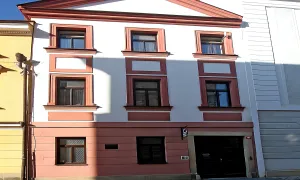
The house is two storey with six window axes. His facade is characterized by deepened nobodies that copy the window axes and resemble the draperies. This effect was achieved thanks to the cooperation of architect Bohumil Waigant with his brother sculptor Antonín Waigant, who created unique decorative elements such as kanelura and spiral reliefs. These elements contribute to the overall "ripple" of the facade, which may resemble the floor of the Reichl house - the further realization of the Waigant brothers.
Over the years the tenement house has undergone several changes. In 1947, when the basement bakery was already run by the sons of Josef Cardy, Karel and Vladimir Card, the ground floor was rebuilt. Decorative elements such as mascarons, illusionary columns and stucco decoration were removed while the cordon ledge was expanded and marked "Card's bakery." Another important event for the building was the acrylic spray of the facade made in the 1980s, which blinded the small details of stucco decorations.
Today, Josef Carda's tenement house stands as a witness to the architectural art and history of the city of Hradec Králové. Its unique design and rich decorations attract the attention of not only historians but also tourists interested in cultural monuments of the region. Visiting this object is a valuable opportunity to explore the heritage of local architecture and understand the influence of European trends on Czech construction.
Then and now
Drag the slider to compare how the landmark may have looked when it was built with the view today.
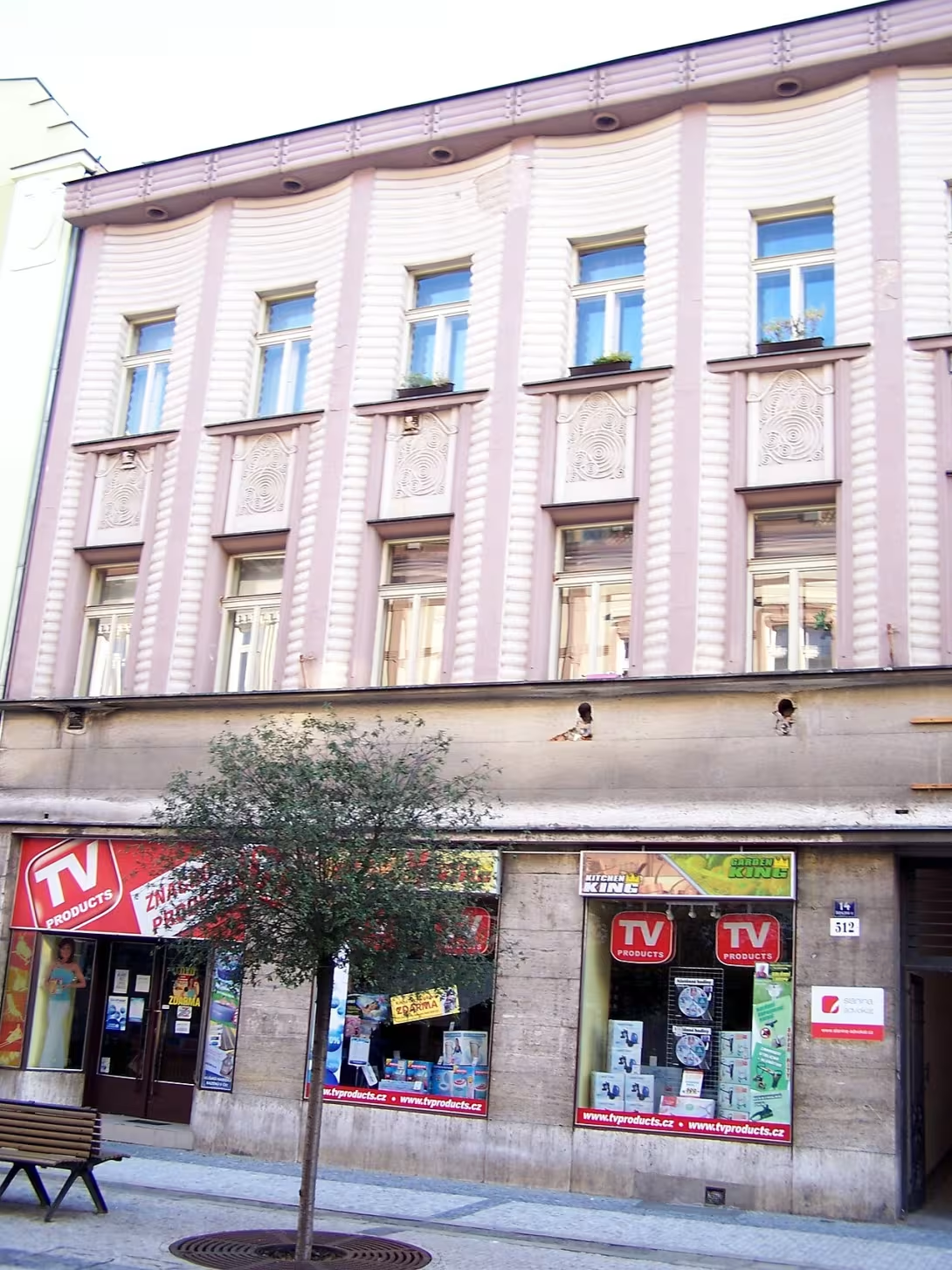
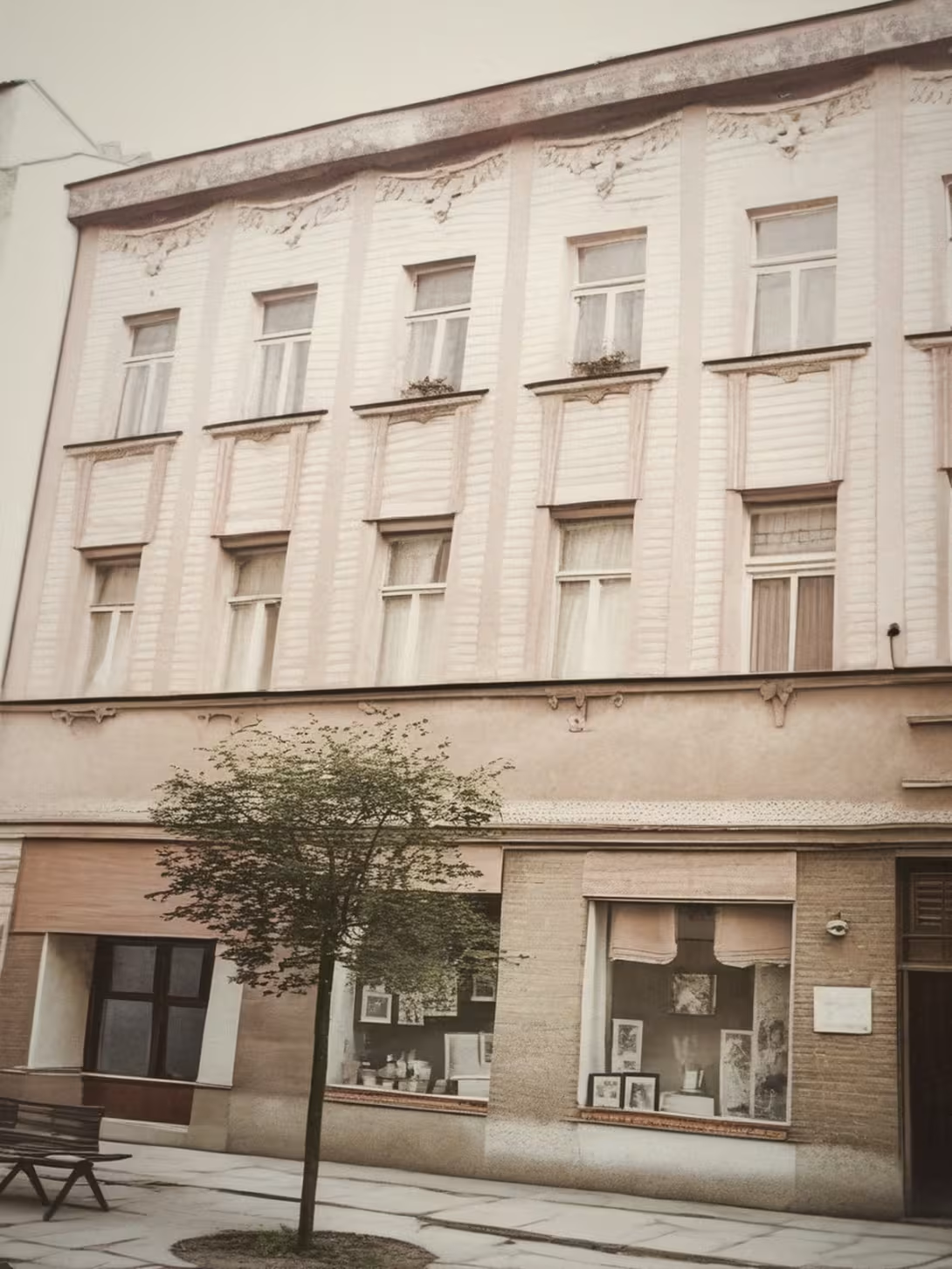
The historical appearance on the left is an AI-generated visualisation and serves as inspiration only.
Historical milestones
- 1911
- Approval and implementation of the new design with decorative elements in upper floors.
- 1947
- Building floor reconstruction.
Architectural development
The house was built in 1911 as a Art Nouveau building with rich decoration. In 1947 there was a reconstruction which involved removing many decorative elements and extending the facade. In the 1980s, an acrylic injection was made, which led to the concealment of small details of stucco decoration.
Historical events
- 1911
- The beginning of the building house according to Bohumil Waigant's design.
- 1947
- Rebuilding ground floor with removal of decorative elements and adding the inscription 'Card bakery'.
Points of interest
- Činžovní dům Josefa Cardy is known for its architectural value and historical context, which reflects European trends of modernization and industrialization in the first decades of the 20th century.
- The house is remarkable with its Art Nouveau elements, the work of Prague architects Bohumil Waigant and sculptor Antonín Waigant.
- In the spring of 1911, Josef Cardy's wife obtained permission to build a two-storey building which was intended to serve as a residence for the bakery. The original proposal from Bohumil Waigant had to be revised on the basis of official comments.
- The ground floor was rebuilt in 1947, when decorative elements such as mascarons and stucco decoration were removed. The cordon ledge was expanded and marked "Card's bakery.".
- Acryl injection of facade made in the 1980s blinded the small details of stucco decorations.
Guide
Show guide text
This text was created by artificial intelligence and has not been editorially reviewed. It may contain inaccuracies.
Welcome to Hradec Kralove. You are standing right in front of a building that is not just an ordinary house, but a living witness to one of the most important épolies in the history of our city. In front of your eyes is Josef Carda's tenement house, a place where history, art and everyday life meet over a century ago. Feel the atmosphere of this street, Svehl, and try to imagine what everything looked like here when the doors of this new, modern house first opened.
Let's go back together to 1911. That was the year that brought about major changes. Europe and our countries were then going through a huge process of modernization and industrialisation. Cities grew, people moved to centers and a new need was created for modern housing. It is in this context that this rental house was created. It wasn't just a housing project, it was a symbol of new age, a symbol of prosperity and urban growth. Josef Card, whose name is inextricably linked to this construction, placed in this realization a desire for quality and aesthetics that would reflect the rising middle class. The house became part of a broader trend, when architecture stopped looking only into the past and started looking for its own, modern language.
Now pay attention to the very form of the building that is surrounding you. Look at her facade. Feel the elegance and rhythm that are so typical of Art Nouveau style. The Art Nouveau was not just about decorating, it was an effort for harmony between man, nature and construction. If you now raise your eyes towards the higher spots, you will see what gives this house its unique character. It is in the higher levels of the facade that decorative elements are located, which break the thickness of the walls and give the building softness and depth. These details are not random, they are carefully thought out shapes that have the eye of the visitor to guide and cheer up. Feel how the architecture changes according to height, how the decoration deepens and how the house tries to communicate with its rich and rich form.
Behind this fascinating form is an extraordinary combination of two talented artists who were brothers. Architect Bohumil Waigant and sculptor Antonín Waigant. This partnership is the key to understanding why this house is so special. While Bohumil had to deal with the structure, space, functionality of rental housing and overall geometry of the building, his brother Antonín brought the soul into the work through sculptures and decorative art. It is this cooperation between pure architecture and plastic art that has created the unique entity that you are observing today. It is proof that at that time architecture was not separate from sculpture, but that these two worlds worked closely together to create a perfect whole.
Perhaps now you may wonder what this house has experienced. You know that architecture changes as well as human destiny. While the house was a symbol of a new era in 1911, in 1947 it had to undergo a major reconstruction of the ground floor to adapt to the new times and needs of the city. So this house is not just a static monument, but an organism that had to adapt to changes in political and social conditions throughout the century.
The interesting thing that can make you look at the building in a slightly different way is that this house is one of many examples of how different directions interconnected in European cities in the first decades of the twentieth century. Činžovní dům Josefa Cardy is not only a local unique, it is part of a wider European story about how people tried to bring beauty and art into everyday life, even into ordinary rental houses. It is a reminder of a time when it was believed that even ordinary housing could be of high artistic value.
Now that you know the story of this house, I suggest you continue your walk around Hradec Kralove. Focus on other facades in the area and look for traces of the same era, the same spirit of Art Nouveau and the same effort of architects and sculptors to make the city beautiful. Each building has its own voice, but this Josef Cardy house has a very strong and elegant tone in this urban singing. Thank you for spending this moment with us and for stopping to see the beauty of this place. We wish you a beautiful continuing journey through the history of our city.
Tips for visitors
The best time to visit is in the morning or late afternoon, when the sun hits the facade of the house at a pleasant angle, which best highlights the details of Art Nouveau architecture.
The building is available by car and public transport. The current connection and parking options in the Hradec Králové centre are recommended to be verified in the current search engine or on the maps.
We recommend taking a photographic machine with us because the house offers beautiful visual features. The best pictures can be taken from the street of Švehlov, where the decorative elements of the facade stand out.
For families with children, we recommend a tour in the form of a search for interesting shapes and ornaments on the house, which will amuse the children while introducing them to the architecture.
In the immediate vicinity, no other specific sights to visit are listed in the available supporting documents.
Businesses nearby
Do you run a restaurant, accommodation, shop, museum, rental, wellness or other visitor service near this monument? Show yourself directly to the people heading to it — this is how they will see you in the app and on the web:
Nearby
XXXHistorical monuments (332)
- Olga Beran 0.1 km
- Vlasta Beranova 0.1 km
- Marie Beran 0.1 km
- Tomáš Garrigue Masaryk 0.1 km
- Mudr. 0.1 km
- Žofie Schrabal 0.1 km
- Petrof muse 0.2 km
- Museum of Eastern Bohemia in Hradec Králové 0.2 km
- Museum of Eastern Bohemia 0.2 km
- Mudr. Emil Herman 0.4 km
- Margit Herman 0.4 km
- Vera Herman 0.4 km
- Josef Liboslav Ziegler 0.4 km
- Memorial to fallen legionaries of Prokop the Great's 4th Rifle Regiment. Jan Gayer (1885 - 1918) 0.4 km web
- P. Stanislav Vydra (Cordatus Bohemia) 0.4 km
- Museum of Eastern Bohemia - building ARCHA 0.4 km Czechoslovak Army 333
- Museum of Eastern Bohemia 0.4 km
- White Tower 0.4 km + 420734711142 web
- Silver casematax 0.4 km web
- Karel Rokitanski 0.5 km
Restaurant and catering (397)
- eggsit cafe 0.0 km Švehl 504 / 16 web
- Fremen on foot 0.0 km + 420 734 726 577 web
- Assenza Caffé 0.0 km
- Atlanta 0.0 km
- Pizzeria Etna 0.0 km Švehl 12 + 420 702 910 666
- Timeplay 0.0 km
- Na Rozny 0.1 km + 420777574444
- Roxy bar 0.1 km
- Chill-Di 0.1 km
- Simple Caffé 0.1 km Švehl 463 / 4 + 420 799 507 767 web
- Café Vozáb 0.1 km Švehl 5 + 420 735 441 659 web
- Good Tchaiovna 0.1 km Masaryk Square 15
- Palacinkarna 0.1 km
- Útulek 0.1 km web
- Pepe Coffee 0.1 km Švehl 307 / 5 web
- District 5 0.1 km
- Murloc bar 0.1 km Tyl waterfront 367 / 10 web
- La Casa De PizzaxZ6ZX 0.1 km + 420 737 737 970 web
- Burgrárna 0.1 km web
- Le Waff 0.1 km + 420 797 813 046 web
Accommodation (52)
- Hotel District House 0.2 km Palacký 6 + 420 495 054 300 web
- Hotel Grand 0.3 km + 420 491 514 999 web
- Hotel Pod Turrets 0.5 km
- U Czech Crown 0.5 km
- Hotel Stadion 0.5 km web
- New Adalbertinum 0.6 km Large square 32 / 40
- Hnezdo sásásá 0.6 km + 420608024616 web
- Hotel U Queen Elishka 0.7 km Small Square 117 / 10 + 420 495 518 052 web
- Guesthouse Amatka 0.8 km Small square 120 / 13 + 420 606 776 795 web
- Guesthouse Pupendo 0.9 km
- Teresian Court 0.9 km + 420495505111 web
- Guesthouse MAR 0.9 km
- Chernigov 1.0 km
- Kolotyuk 1.2 km + 420 774 716 339 web
- Hotel house Academic 1.2 km + 420 495 511 175 web
- Hertz 1.6 km Kydlinovská 335 / 46a
- Alessandria 1.9 km
- Guesthouse UNO 2.0 km + 420 495 535 467 web
- Guesthouse - Hostel U Mlejna 2.1 km Zoblock 261 / 19
- Guesthouse Nad Oborou 2.2 km + 420 733 151 481 web
▶ Rental and Sport (167)
- Hudy Sport 0.1 km
- MOJEKOLO 0.1 km
- Cyclospecialities 0.1 km
- Nextbike 0.2 km web
- Nextbike 0.2 km web
- Equestrian equipment 0.2 km
- Husky 0.2 km
- Nextbike 0.3 km web
- Nextbike 0.3 km web
- Nextbike 0.3 km web
- Nextbike 0.3 km web
- Kostka 0.3 km
- Sokol 0.3 km
- Wheels V. Kullanek 0.3 km
- hezuk sport 0.4 km Cloupe 16
- Nextbike 0.4 km web
- Nextbike 0.4 km web
- City Spa 0.4 km
- City Spa 0.4 km
- Swimming Pool 0.5 km
© Tourism and Nature (199)
- Přecholek batarda 0.2 km web
- Sets architect Lisky 0.4 km
- Town Hall 0.4 km
- Sets architect Lisky 0.5 km
- Jirask sets 0.6 km
- Park Glass 0.6 km
- Žižek sets 0.6 km
- Corridor 0.7 km web
- remains of the pontoon bridge 0.7 km web
- _ 0.7 km web
- Vila Václav and Luisa carpentry 0.7 km web
- Kavcí sláče 0.8 km
- Square Václav Havla 0.9 km
- Přecholek batarda 0.9 km web
- Suk sets 0.9 km
- ŠIMKOV Sady 0.9 km
- XZ1Reinforced pavements 1.0 km web
- Kubišt sets 1.1 km
- Borders of the strength 1.1 km web
- Vošek sets 1.2 km
Accommodation nearby
Themed route
1. Činžovní dům Josefa Cardy, a monument, look at the decorative facade and architectural details of this historic rental house. 2. Internal courtyard , area, explore the space inside the building which reveals details of the original structure of the object. 3. Interior particle , architecture, admire the artistic elements and craftsmanship of indoor spaces and staircases.
Seasonal recommendations
Spring: In spring, Josef Carda's tenement house in Hradec Králové is transformed into a special place where nature begins to live. Flowers and trees on nearby squares and streets are equipped with cold days, which gives historical heritage an attractive spring atmosphere. Sunshine days are an ideal time to explore this architectural treasure, when the lighting is mild and pleasant. Visitors should take light clothes with them because temperatures are gradually increasing, but it may still be cold in the morning or evening. The best time to visit is at noon, when the sun lights up the building and surrounding landscape.
Summer: Summer brings full light and warm atmosphere, which transforms Josef Carda's tenement house into an ideal place for relaxation. Long sunny days allow a long opening time of the sights, which is an opportunity for a warm visitor to explore all its details. Days can be very hot, so we recommend visiting in the morning or evening to avoid the hottest time and crowd of tourists. Hot clothes, sunglasses and UV protection are key for a comfortable stay.
Autumn: In autumn Josef Carda's tenement house in Hradec Králové becomes melancholic but attractive. November leaves and silver lights add a mystical atmosphere that gives historical facades more depth. Sunshine autumn days are the perfect time to visit when lighting is the most beautiful and pleasant to walk. Visitors should take warmer clothes with them because temperatures are gradually decreasing and it may be cold in the morning and evening. The best time to visit is at noon when the sun lights up the building and the surrounding environment.
Winter: Winter brings a completely different atmosphere to Josef Carda's tenement house in Hradec Králové. The light is shorter, which means the opening hours of the monument are usually shorter than in other seasons. Freezing days and snow sheets can add a romantic view of the historic building, but visitors should be prepared for cold temperatures. Hot clothes, wind protection and suitable shoes are necessary for a comfortable stay. The best time to visit is in the morning or in the evening when temperatures can be slightly higher and a crowd of tourists usually smaller.
Visualizations and artistic views


The visualisations are generated by artificial intelligence and serve as inspiration.
Photos from the area
Real photos taken near the monument


Zdroj a licence jsou uvedeny u každého snímku.
Tips from visitors
No tips yet. Be the first!
Log in and add your tip.
Sources and literature
Fotografie: Kixx / CC BY-SA 3.0 — Wikimedia Commons. The author and licence also appear when you hover over the image.
Faktickým podkladem tohoto textu byl článek na Wikipedii, jehož autory jsou přispěvatelé Wikipedie. Článek je dostupný pod licencí CC BY-SA 4.0.
Location on the map
More monuments – Hradec Králové
Show all in the municipality
Příběhy a pověsti
Legendy, pověsti a příběhy spjaté s touto památkou
Fotografie návštěvníků
Zatím žádné fotografie. Buďte první, kdo přidá fotografii z návštěvy!
Přihlaste se a přidejte svou fotografii nebo hodnoťte.
Za ověřenou návštěvu v aplikaci získáte víc bodů — poznáme podle GPS, že jste na místě.
Reviews and comments