



děkanství Nymburk Deanery
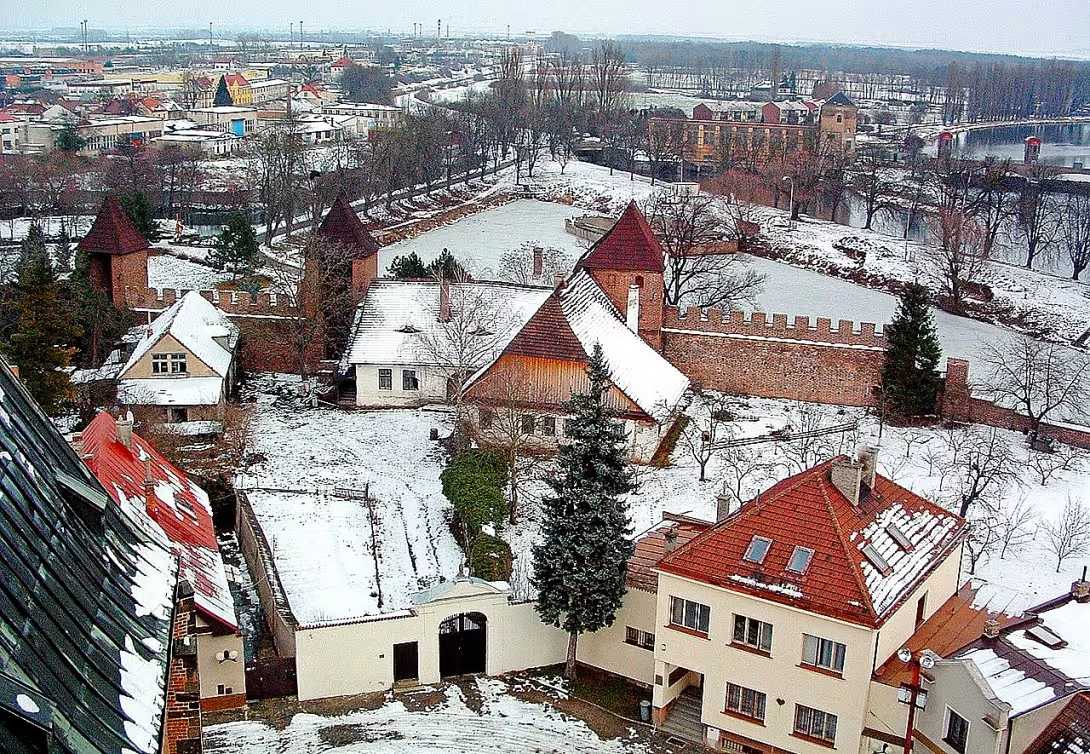
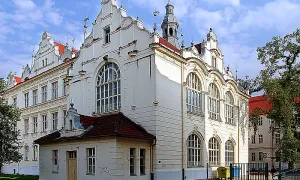
The Old Deanery in Nymburk is a historic Baroque area built near the church of St. Gilya to medieval walls. The Kaplanka Castle Tower is part of this complex. The building from the period from the 13th to 17th century is a remarkable combination of medieval fortifications and Baroque folk architecture. Since 1965, it has been protected as a cultural monument.
The history of the complex dates back to the turn of the 13th and 14th centuries. From 1288 to 1305, the castle tower Kaplanka was built along with the city fortification at the time of the flowering of medieval cities. Next to this tower was the original deanery, which burned down after the Saxon invasion of the Czech lands in 1631. This event falls into a period of 30 years of war, after which there was extensive reconstruction of the country.
After 1631, the tower was repaired and adapted to a residential building with a granary. Her lower room served as a prison. In 1657 a new deanery building was added to the tower, whose construction was completed in 1674. This whole new building was intended to be a provisional, which corresponded to the material used in the form of an uncut round. In the first half of the 18th century, this blasphemous building with the character of folk architecture had a partial nickname. In 1968, tombstones were stored in the premises carried over from the abolished cemetery at the St. John's Church.
A part of the architectural complex is the castle tower from the end of the 13th century and its subsequent deanery. This was created as a baroque ground floor two-wing building in the shape of the letter L of stone and bricks. The Baroque wall gate enters the premises. The roof of the building is halibut and covered with shingles. The facades are smooth and the year 1792 is located above the entrance portal. The interior hides preserved large cuisine and storey Gothic cellars with well.
In 2006, the town acquired the property rights to the monument with the intention to repair and use the building for cultural events. The roof was renovated in 2010. In 2017, it was published that the memory of the collapsing supporting wall was threatened in the long term. Since mid-April 2024 the object undergoes a total revitalisation, resulting in a transformation into a social and cultural centre.
This area in the immediate vicinity of the Elbe River, the church of St. Jilja and the medieval city walls represents a valuable example of historical building development. The visit to this place offers a view into the connection of medieval defence architecture and baroque construction, which is now reviving new cultural uses after ongoing revitalization.
Historical milestones
- 1288
- Beginning of construction of the castle tower Kaplanka
- 1631
- The original deanery fire in the Saxon invasion
- 1657
- Adding a new deanery building to the tower
- 1674
- Completion of the grafted construction of the deanery
- 1965
- Announcement of the Decoration and Tower Kaplanca cultural monument
- 2006
- Purchase of the sights by the city Nymburk
- 2024
- Start of object revitalization
Architectural development
The original wall tower from 1288- 1305 was adapted to a housing with granary after 1631. In 1657, a grafted building of deanery from an unruly round was added to it. In the first half of the 18th century there was a partial nicknames of the building.
Historical events
1631: The fire of the original dean in the Saxon invasion; 1674: Completion of the new grafted construction of the deanery; 2024: Commencing revitalization to the social and cultural centre.
Owners
City of Nymburk (since 2006)
Points of interest
- A part of the historical Baroque deanery complex in Nymburk is a castle tower called Kaplanka, which was built by the Elbe River in the years twelve hundred eighty-eight to thirteen hundred and five. - The original deanery burned down in the year sixteen hundred thirty-one after the Saxon invasion, and after this event, the tower was repaired and modified to a residential building with a granary, with its lower room serving as a prison. - The new building of the deanery was built in 165,557 as a commission of unruly round and in the first half of the eighteenth century it had a partial nickname. - In the interior of the monument there is a preserved large kitchen and storey gothic cellars with well, the year is seventeen hundred ninety-two above the entrance portal. - In nineteen hundred and sixty-eight, tombstones were stored on the premises, carried from the abolished cemetery at the St. John's Church.
Guide
Show guide text
This text was created by artificial intelligence and has not been editorially reviewed. It may contain inaccuracies.
Welcome to Nymburk. Right now, you're standing in a place that is a silent witness to centuries of time. In front of your eyes is a beautiful Baroque area of deanery, which is firmly connected with the historic walls of the city and the nearby church of St. Gilji. Feel this atmosphere that rules here. It's a space where the calm of old walls is mixed with the dignity of baroque architecture. Look around you and let yourself be carried away by the feeling that you have just returned to the time when the city was built, defended and rose again from the ashes.
To understand what you're seeing right now, we need to go back deep into the past together. This whole area isn't just a random group of buildings, it's a living story about endurance. Its oldest parts date back to the end of the 13th century. Notice the tower that's hanging over the perimeter. It's the Chaplain Tower. Her history began to be written already in the year one thousand two hundred eighty-eight, when she began to build as part of the city walls. Imagine that time when protecting the city by the Elbe River was absolutely crucial. This tower was built between the years of a thousand and two hundred eighty-eight and thirteen hundred and five and still reminds us of the stability of the world at that time.
But the history of this place has not always been about peaceful building. We have to remind ourselves of the year 16 1 1. This was a very difficult time when the city faced a Saxon invasion. During these unpleasant events, the original deanery burned down. The fire was devastating, and there was little left of the original buildings. But that's what reflects the power of this place. People didn't get broken. After this fire, the tower was repaired and a new deanery was gradually being built. A new building was added to the tower in 16 hundred and fifty-seven and a construction was completed in 16 hundred and seventy-four, which was originally grafted.
Now pay attention to the details you have right in front of you. Look at the dean's building. It's fascinating to see her face change. Originally it was a construction made of wood, i.e. grafted, but over time it was partially nicknamed to make it more durable and durable. That's how we see this interesting combination of materials and techniques today. Notice the baroque gate that serves as the entrance to the compound. It's a dignified element that welcomes you to this historic space.
Raise your eyes and look at the roof. It's covered with shingles and has the shape of a halibut. This type of roof gives the whole area a very traditional and harmonious look that perfectly matches the surrounding history. If you can look closer to the foundations or lower parts of the buildings, remember that there are also Gothic cellars in this complex. They are part of the entire complex and contain an old well which was absolutely necessary for life in this place. These cellars are a reminder of the old way of life when the water was close to the hands of humans.
Although we do not know the names of the particular architects who designed these structures, their work is evident in every detail. Every line, every shape of the gate, and every sloping roof tells of an effort to create a place that will be both beautiful and functional. Even though we don't know the names of the personalities who lived here, we feel their presence in how this space is maintained and how it still captures us.
I have an interesting thing for you that might interest you. The Kaplanka tower you see was built at a time when the city was still forming at the Elbe stream. It is one of the oldest elements in the whole area and its existence in such a state is a real miracle of time. He is a silent guard who saw Saxon troops, saw fires and built new baroque courts.
This area is very valuable to us. Since the year one thousand and nine hundred and sixty-five, the entire deanery and the Kaplanka Tower have been declared a cultural monument. That means we take care of this place to preserve it for future generations. In the year two thousand and six then the city of Nymburk purchased this inheritance to take further care of its beauty and history.
Now we'll leave you with your thoughts and that beautiful view of this historic area. We recommend you to continue your walk around the walls and pay attention to the nearby church of St. Gilji. Let yourself drift through the atmosphere of this place and enjoy every moment spent in this historic heart of Nymburka. Thank you for spending your time here at the dean's. We wish you a beautiful other part of your wandering history.
Tips for visitors
A tour of the old deanery in Nymburk is recommended for the morning hours, when the sun is ideally lit by baroque facade and adjacent medieval walls. You can use your own car or regular public transport connections to travel to the place, with specific timetables checked in the online connection search engine. Take your comfortable shoes for walking on historic tiles, a camera for capturing picturesque corners and a supply of drinking water in warmer months. The best places for photography can be found in the immediate vicinity of the walls and along the banks of the Elbe River, where the early light creates a unique atmosphere of the ancient city. Within a 30-minute walk you can visit the neighbouring Gothic church of St. Jilje and the preserved part of the medieval city walls Nymburka. The walk around the Elbe River and the historic walls is easy and suitable for families with children who can discover the ancient castle tower Kaplanka from the end of the thirteenth century.
Frequently asked questions
Can the monument be visited?
This is a residential or farm building, not a museum with opening hours. Please view it from public space and respect the owners' privacy. We have no information about access to the interior. According to the heritage register restoration is under way, so access may be restricted.
Where is the monument?
Location: Nymburk. The map on this page shows the exact spot.
Why is the monument protected?
It is listed in the Central List of Cultural Monuments of the Czech Republic as a cultural monument (register no. 1000130404).
Businesses nearby
Do you run a restaurant, accommodation, shop, museum, rental, wellness or other visitor service near this monument? Show yourself directly to the people heading to it — this is how they will see you in the app and on the web:
Nearby
Kostel sv. Jiljí, řeka Labe, středověké městské hradby Nymburka.
Accommodation nearby
Themed route
Design of the theme cruise route in Nymburk:
1.děkanství Nymburk Type: Other monument Why is it worth a visit: This historical building represents an important element of church architecture in the city. Located in the immediate vicinity of other interesting sites of the historical core.
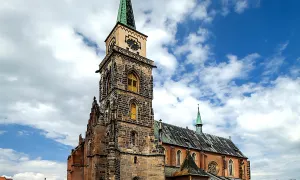
2. Church of St. Gilji Type: Church building Why is it worth a visit: This rare Gothic building that dominates urban space captures its architecture and long history. Its brick wall is a typical feature of the local construction.
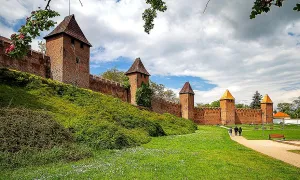
3rd medieval city walls Nymburka Type: Historical fortification Why is it worth visiting: The preserved parts of the ancient defense system resemble the medieval significance of the city. A walk along these walls offers a view of the art of our ancestors.
4. River Elbe Type: Water flow Why is worth a visit: Water flow forms a natural scenery in the immediate vicinity of the historical centre. The surrounding shore provides a pleasant environment for a peaceful walk.
Seasonal recommendations
Spring: In the spring period, děkanství Nymburk is transformed into a live flower park when various kinds of shrubs and trees bloom. The sun's rays illuminated the walls with fine shadow patterns, adding something magical to the atmosphere. Exploring the monument is best at noon, when the sun illuminates its architectural details. It is recommended to wear clothes suitable for mild temperatures and to carry sunglasses or headscarf in order to be able to admire the belfry and surroundings without problems.
Summer: During the summer period děkanství Nymburk is a popular destination for visitors seeking relief from urban life. The sun illuminates the building until evening, allowing long walks around the historic wall. Summer is the time when the most tourists appear, so it is advisable to visit a monument in the early afternoon or evening to enjoy a quieter moment. The important thing is to wear light clothes and plenty of drinking, especially during hot days.
Autumn: In the autumn period the surroundings of děkanství Nymburk gain color during leaf changes. The sunlight falls on the wall in breathtaking shades, which gives the whole picture a romantic atmosphere. The best time to visit is Wednesday week when you can avoid more people. It is recommended to wear warmer clothes and perhaps an umbrella because autumn weather can suddenly be variable.
Winter: During winter děkanství Nymburk is surrounded by snow and ice patterns on the roof, creating a nice landscape composition. The sunlight illuminates the walls in bright shades, which is ideal for photography. The best time to visit is in the morning or in the evening when the temperature is lighter and the sun lights the building in a special way. It is advisable to carry warm clothes, gloves and shoes suitable for snow conditions in order to safely explore the surroundings.
Visualizations and artistic views

The visualisations are generated by artificial intelligence and serve as inspiration.
Photos from the area
Real photos taken near the monument


Zdroj a licence jsou uvedeny u každého snímku.
Tips from visitors
No tips yet. Be the first!
Log in and add your tip.
Sources and literature
Photos: Antonin Foller, http://www.foller.cz (User:Cizinec) / Public domain — Wikimedia Commons. The author and licence also appear when you hover over the image.
Faktickým podkladem tohoto textu byl článek na Wikipedii, jehož autory jsou přispěvatelé Wikipedie. Článek je dostupný pod licencí CC BY-SA 4.0.
Location on the map
Příběhy a pověsti
Legendy, pověsti a příběhy spjaté s touto památkou

Fotografie návštěvníků
Zatím žádné fotografie. Buďte první, kdo přidá fotografii z návštěvy!
Log in a přidejte svou fotografii nebo hodnoťte.
Za ověřenou návštěvu v aplikaci získáte víc bodů — poznáme podle GPS, že jste na místě.
Reviews and comments