



Dělnický dům (Šumperk) Workers' house
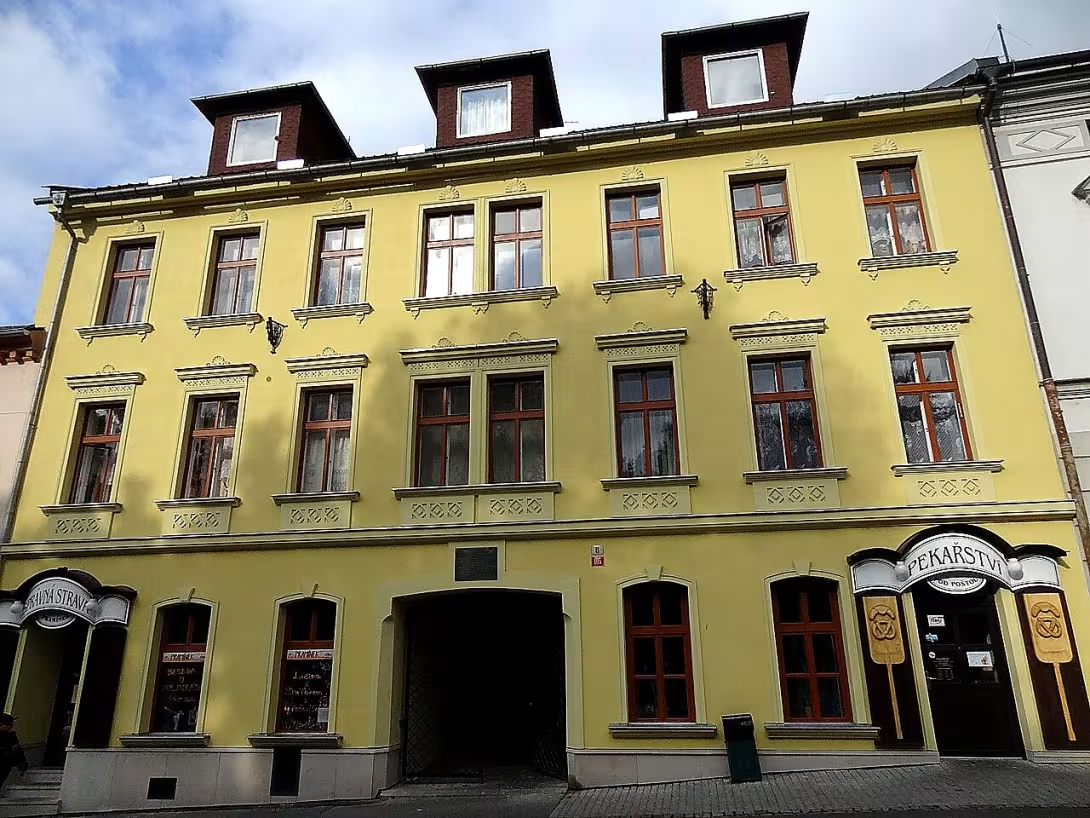
The working house in Šumperk is a two-storey building with baroque and classicist foundation and medieval core. It is located on Langr Street No. 105 / 8. At the beginning of the 20th century, it served as a centre of the political and social life of Shumper workers. Since 1991 it has been protected as a cultural monument.
The construction was created by a combination of two original houses owned by Johann Machanek, Johann Wolf, Franz Felix and Johann Bobitsch in the 18th century. At the end of the 1880s, both houses were purchased by Johann Martin, who probably connected them in a building. The building is in a street called Tiles, later Bismarck and Lessing. At that time there were small craftsmen and merchants. In the immediate vicinity there was a inn at the Blue Star, instead of social democratic meetings, and a working-class consumer.
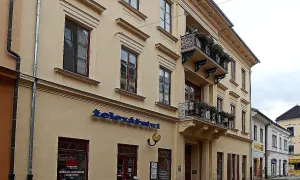
Architecturally, it is a walled object in a narrow terrain with an extensive yard wing over 33 metres long. The street facade is over 17 metres wide, has eight window axes and is symmetrically divided by a central passage. The facade is conceived with emphasis on horizonality. The cordon ledge above the ground floor and the mantelpiece on the first floor defines it. There are passparties around the pass and windows on the floor. The windows above the fifth and sixth axis pass are closely combined. The ground floor openings end with segmental enchantments. The saddle roof was covered with galvanized templates before the last reconstruction; there are three skylights covered by Bono shingles.
The interior on the ground floor contains a passage glassed with Prussian flaps on the segment passports. There is a bronze commemorative plaque from 1976, which resembles the creation of a house and Communist Party of Czechoslovakia. The ground floor parts are glazed with Prussian slices on sandstone columns or segment vaults into steel beams. The floor is led by a spiral staircase with console stone stages and cast iron railing with motifs of acantos and circles. The cellars under the right side of the building have a compressed-down, vaulted brick vault and are probably from the 18th century.
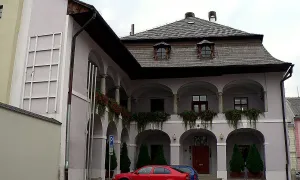
The court wing is set on an elevated basement, its width is between 8.5 and 11 metres. The facade of the wings is headed to the yard with five window axes. The fifth axis is highlighted by risalite with shield and pilasters. In this wing there is a former theatre hall with a fabion ceiling carried by pilasters with Roman heads. There is a three-arm, honest staircase with a steel grid railing.
In the 1920s, the house was owned by Josef and Anton Werner. Ignac Tischer took over in the '60s. Modified the interior, added a camera in the yard and operated rental apartments on floors. At the end of the 19th century, for the possession of Franz Tischer, Rosy Klein's modistic race worked on the ground floor. In 1903, German Social Democratic Party leaders bought the house from Hermina Stehn for the needs of the workers' consumer and savings association. On the ground floor there was a shop of consumption and hospitality, on the floors of the federal room, the editorial of the magazine Volkswacht and the theatre hall.
The creation of the Workers' House was a reaction to the existing Catholic House and the German Federal House. The building became the center of lectures, courses, theatre performances and physical academies. In the spring of 1904, the first conference of social democracy in Moravia took place here. In 1904, the bakery also opened here. In 1921 the district organization of the Communist Party of Czechoslovakia was established in the building.
During World War II, the house was confiscated by the Nazi administration and sold to the baker Josef Tinz. After 1945 the building was taken over by the North Moravian Consumer and Production Co-operative. Subsequently, it was taken over by the state firm of the North Moravian bakery and confectionery factory set up by the Directorate. The operation was modernised in the mid-1960s and the facade was repaired in the 1970s.
Since 1992, there has been a shop in the building again. In 1997 a modern bread bakery was added, where Bakery Pod Pošetou operates. The owners have renovated offices and apartments. In the left part of the house in the former beer house there was a gambling hall, betting office or bar with a shop of clothing. In 2015, the facade underwent a total renewal, which returned home to architectural accessories from the early 20th century.
Since 1995, the monument has been part of the Šumperk urban conservation zone. Its value lies in a combination of baroque and classical building elements. Its role in the political history of the city in the first half of the 20th century is important. The building represents a unique testimony about the social division and social life of that time. Visiting this place allows you to see the history of the workers' movement in the region.
Historical milestones
- around 1785
- Connection of two original houses by Johann Martin
- 1820-1829
- Owning Joseph and Anton Werners
- 1860-1869
- Take over by Ignatius Tischer and adjust the interior
- 1903
- Buying a house for the needs of a workers' consumer and savings society
- 1976
- Installation services of bronze memorial plate
- 1991
- Announcement of the building cultural monument
Architectural development
Originally two houses that were connected by Johann Martin. Interior modified by Ignatius Tischer and added camera. In the first half of the 20th century, the bakery was built, which affected the architecture of the facade.
Points of interest
- The building has a medieval core and a Baroque and classical foundation. - It was created by a combination of two houses, which were probably connected by Johann Martin in the late 1880s. - In the building there is a former theatre hall with a Fabion ceiling and a three-arm honest staircase. - At the beginning of the 20th century, it served as the center of the political and social life of Shumper workers. The creation of the house was a reaction to the existing Catholic House and the German Federal House.
Guide
Show guide text
This text was created by artificial intelligence and has not been editorially reviewed. It may contain inaccuracies.
Welcome to the beautiful city of Šumperk. You're standing right now in a place where time has stopped, but at the same time, every second of history manifests itself in every stone block and every detail of the facade you're watching right now. There's a Workers' House in front of you, a building that's much more than just a summary of walls and windows. He's a living witness to the transformations that shaped this city and its people. You may think it's a simple building at first glance, but believe me, under this superficial form, there's a deep story about trying, working together, and building a better tomorrow. Feel this atmosphere, feel the calm this street radiates, and prepare to travel through time.
Let's go back deep into the past together to understand why this place is so special. To understand the present, we need to look at the foundations that were laid centuries ago. This whole story began in the eighteenth century. Around the year seventy-eight of the end of the eighteenth century, something fundamental began to happen here. A man named Johann Martin decided to unite two original houses into one larger whole. By doing this, he placed the first stone under the building you see now. Since then, ownership and fate of this place have been constantly changing. Between twenty and twenty-nine nineteenth centuries, the brothers Josef and Anton Werner worked here. Later, in the 1960s, Ignac Tischer worked here, which significantly modified the building and changed its inner form.
But the biggest break that has completely transformed this place was in the early 20th century. In the year one thousand nine hundred and three, the building became home to the workers' association. Imagine that time. The people who worked in factories and workshops started to connect. This house was no longer just an ordinary house, it became the center of political and social life. It became a place where people could meet, plan their future, manage their savings and build strength through unity. This building was the heart of the workers' community in Šumperk. It is precisely because of this importance that this building has been protected today as a cultural monument, since the year one thousand nine hundred ninety-one.
Now let's take a closer look at what's right in front of your eyes. Feel the architecture, which is like a layered book. This building is not built at one moment, but every epoch has left its mark. If you look at the foundation of it, you'll find it has a medieval nucleus in it. This is fascinating - you are facing something that is rooted in the ancient times when the city was born. Above this old foundation, a baroque and classicist form has spread, which you see with your eyes right now. It's a two-storey building that looks dignified and stable.
Feel those lines, those shapes that tell us about different times. Even though the building on the outside seems unified, its inner space is full of surprises. Even if you're out now, try to imagine what's inside. Imagine a former theatre hall where laughter, applause and serious speeches were once heard. Imagine the beautiful, richly decorated ceiling that shone above the heads of the people in the hall. Imagine the famous three-arm, honest staircase that welcomes you at the entrance and was designed to create a sense of dignity. This whole building was designed to serve people and give them a sense of belonging.
If you look at this place like that, you might think of who's been through all this. Although the names of many people remain unknown in history, their presence is felt in every stone block. It was thousands of working hands, thousands of votes collected here. This house was not just for the rich or the ruling, it was for those who built the city with their work. That's the greatest force in this place. It is a monument to human efforts for justice and common good.
There is also one interesting thing that may interest you. If you look closely at the walls of the building, you may encounter a bronze memorial plate. It was set here in the year one thousand nine hundred seventy-six. It serves as a silent reminder that this place is not just an empty building, but a place of deep importance to the whole community. It's like the signature of history that tells us that we must not forget those who were before us.
Now I want to invite you to look at this building one more time, but this time in a different way. Don't just follow her size or color, but try to perceive her soul. Imagine the human destinies involved in the history of the city. Imagine the moments of joy and the moments of tension that took place here. This Workers' House is a bridge between the past and the present.
Thank you for sharing this story with us. We hope that this view of Šumperka's history has brought you new insights and that this walk has enriched you. Continue to explore our city, walk through its streets and look at every building with respect to its story. We wish you a beautiful rest of the day and many other experiences in the next survey of this place. Goodbye.
Tips for visitors
The best time to visit the Workers' House is early spring or autumn when there are fewer tourists around and the light hits the Baroque facade favourably. We recommend arriving between 10:00 and 12:00, when sunlight is most favourable for the tour of exterior and interior.
Take comfortable shoes or umbrella or raincoat for the tour, as part of the exterior can be opened. We recommend that you carry a water bottle and a camera or a mobile phone with a good camera to capture historical details.
The best places for photography are in front of the main entrance where you can capture the Baroque portal, and on the second floor where the view of the historic street Šumperka opens. The light is most favourable during the morning when the sun shines from the east and illuminates the facade.
It is advisable for families with children to plan a visit in such a way that they have sufficient time for a tour and possible rest in a nearby park; Baby carriages are allowed in the building, but some parts may have narrow staircases.
Frequently asked questions
Can the monument be visited?
This is a residential or farm building, not a museum with opening hours. Please view it from public space and respect the owners' privacy. We have no information about access to the interior.
Where is the monument?
Location: Šumperk. The map on this page shows the exact spot.
Why is the monument protected?
It is listed in the Central List of Cultural Monuments of the Czech Republic as a cultural monument (register no. 1000147949).
Businesses nearby
Do you run a restaurant, accommodation, shop, museum, rental, wellness or other visitor service near this monument? Show yourself directly to the people heading to it — this is how they will see you in the app and on the web:
Events nearby


Zdroj akcí: otevřená data měst a obcí ČR (Národní katalog otevřených dat) a kalendář akcí Národního památkového ústavu.
Nearby
🏰 Historic sites (62)
- Morový mariánský sloup 0.2 km
- sv. Matouš Evangelista 0.3 km
- sv. Marek Evangelista 0.3 km
- sv. Lukáš Evangelista 0.3 km
- Elsa a Emil Bodanští 0.3 km
- Malvína a Emanuel Kantorovi 0.4 km
- Elsa Guttmannová 0.4 km
- Oskar Guttmann 0.4 km
- Vlastivědné muzeum v Šumperku 0.6 km
- Tomáš Garrigue Masaryk 0.7 km
- rodina Schildová 0.9 km
- Muzeum silnic 2.0 km
- Zámek Třemešek 3.1 km
- sv. Rozálie 3.2 km
- Jubilejní kámen knížete Johanna II. z Lichtenštejnu 3.4 km
- Bludov 4.2 km
- Pomník Adolfa Kašpara 4.2 km
- Pomník obětem 2. světové války 5.1 km web
- Pomník obětem 1. světové války 5.2 km web
- Památník obětem 1. sv. války 6.8 km
🍽️ Restaurants and dining (130)
- Minigolf 0.1 km
- Pikola 0.1 km Polská 80/3 web
- Fabulous Shisha Lounge 0.1 km Gen. Svobody 55
- Cakir's Burger 0.1 km náměstí Míru 23 +420 775100935 web
- Bistro J&J 0.1 km Gen. Svobody 244/9
- Úzká 2 0.1 km
- Na Lok 0.2 km Starobranská 14 +420 777 441 876
- Hotel Hansa 0.2 km
- Kafe Tuli 0.2 km Radniční 19 web
- Bar & Bar 0.2 km Radniční 2
- Mr.india 0.2 km Bulharská 214/2 web
- Restaurant Schiller 0.2 km
- Restaurace Koruna 0.3 km
- U Slovanu 0.3 km
- Pizzeria Istria 0.3 km web
- Pekárnička a café císaře Josefa II. 0.4 km
- Pizzeria Istria 0.4 km
- Taverna Salonica 0.4 km
- Pod Komínem 0.4 km
- Opera 0.4 km
🏨 Accommodation (72)
- Hansa 0.2 km
- Černý havran 0.2 km web
- Hotel Koruna 0.3 km web
- Hotel ELEGANCE 0.4 km
- Korzo 0.5 km
- Rotunda 0.6 km web
- Apartmány Elektra 0.6 km web
- Perk 0.7 km 17. listopadu 413 +420 581 580 000;+420 733 538 082 web
- Penzion G 0.7 km Fialova 3
- Pension Villa Ancora 0.7 km
- Moravan 0.8 km web
- Penzionek 0.9 km web
- Sport 1.4 km
- Pod Hájem 1.8 km
- Penzion D 2.1 km
- Penzion JIRSÁK 2.2 km web
- penzion Na Domkách 2.2 km
- Penzion Trámky 3.6 km web
- Na nové 4.0 km
- Autokemping Krásné 4.4 km
🚲 Rentals and sport (27)
- Dama Sport 0.2 km
- Globe sport 0.3 km
- Polách a syn 0.4 km Žerotínova 1/561
- Sport Centrum Kotelna 0.6 km
- Myší díra 0.9 km
- Sportisimo 1.0 km
- ČD Bike 1.0 km
- HAS bike 1.1 km
- Aquacentrum Šumperk 1.5 km
- baseballové hřiště Šumperk 1.5 km
- Střelnice 1.6 km
- fotbalové hřiště Nový Malín 5.3 km
- Koupaliště Ruda nad Moravou 6.7 km
- skiareal Hraběšice 7.9 km web
- TJ Postřelmov 8.2 km web
- Nava sport 8.8 km
- Therme Losiny 9.0 km web
- Školní tělocvična 10.1 km
- DENALI SPORT 11.6 km Československé armády 651/9
- Sportisimo 11.7 km
🥾 Hiking and nature (190)
- Radniční věž 0.2 km
- Čarodějnické procesy 0.2 km
- Jiráskovy sady 0.3 km
- Smetanovy sady 0.5 km
- Sady 1. Máje 0.7 km
- Park Bohuslava Martinů 0.7 km
- Discgolf Šumperk 1.4 km
- U kapličky 1.8 km
- Holubí vrch 2.0 km
- Chocholík 2.4 km
- Háj u Šumperka 2.7 km
- Háj 2.7 km
- Kokeš 2.8 km
- Korea 3.0 km
- Anděl 2 3.4 km
- Ostředek 3.6 km
- Kokrháč 3.9 km
- Kostelní vrch 4.0 km
- Malínský vrch 4.0 km
- Baba 4.1 km
Accommodation nearby
Themed route
Thematic cruise route from Šumperka
1.Dělnický dům (Šumperk)
Type: Historical monument
Why is it worth a visit: A factory house is an important architectural monument, which represents life and working conditions in the 19th century. It is a unique place where you can explore the history of the industrial period in the region.
2. Šumperk: Old Town Hall
Type: Historical object
Why is it worth visiting: The Old Town Hall is a key architectural monument of the city, which attracts attention with its Gothic-Renaissance building. It is a place full of history and beauty where you can see ancient interiors and architectural label Šumperka.
3. Šumperk: Church of St. Bartholomew
Type: Religious monument
Why is it worth a visit: This church is an important sacral building that represents Baroque architecture. It is a place of peace and beauty where you can enjoy the historical interior and view of the city from the high church tower.
4.Šumperk: Brewery
Type: Cultural monument
Why is worth a visit: Šumperk is famous for its beer tradition, and visiting the local brewery is a great opportunity to explore the history of beer production. Here you can learn about technical processes and enjoy quality Czech beer.
5.Šumperk: Station
Type: Historical monument
Why is worth a visit: Šumperk is an important railway junction, and its historic station represents architectural value. It's a place where you can explore ancient buildings and enjoy the view of the railway line.
This route will guide you through the historically rich and culturally interesting places Šumperka, where each point brings its unique view to the past and present of this region.
Seasonal recommendations
Spring: In spring the awakening nature around the building complements beautifully with its architecture. The light is soft and pleasant in this period for shooting details of the facade. We recommend wearing layered clothes because the wounds can still be cold while the afternoon is already warm. Visit the place in the morning, where it is quiet and you can enjoy the fresh air without much excitement.
Summer: Summer months bring bright sun to the city and long days, which makes the house bright. The atmosphere is alive and full of energy. Due to the increased number of visitors in the main summer season, it is best to arrive immediately after opening to ensure a more peaceful tour. Remember light summer clothes and plenty of water because the sun can be strong.
Autumn: Autumn offers a fascinating view thanks to the golden colours of leaves and foggy morning clocks, which give the monument a nostalgic touch. The light is deep and colorful at this time. It is advisable to prepare stronger shoes and warmer jacket because the weather can change quickly. The ideal time for a visit is afternoon hours when the colors most excel.
Winter: Zimą is the atmosphere around the house quiet and calm, often accompanied by snow that highlights the shapes of the building. The days are short, so the light seems cozy, but darker. The necessity is very warm clothes and high-quality shoes against cold. In advent time or cold days, we recommend watching opening times that are shorter than in other periods.
Visualizations and artistic views

The visualisations are generated by artificial intelligence and serve as inspiration.
Photos from the area
Real photos taken near the monument


Zdroj a licence jsou uvedeny u každého snímku.
Tips from visitors
No tips yet. Be the first!
Log in and add your tip.
Sources and literature
Photos: MartinVeselka / CC BY-SA 4.0 — Wikimedia Commons. The author and licence also appear when you hover over the image.
Faktickým podkladem tohoto textu byl článek na Wikipedii, jehož autory jsou přispěvatelé Wikipedie. Článek je dostupný pod licencí CC BY-SA 4.0.
Location on the map

Příběhy a pověsti
Legendy, pověsti a příběhy spjaté s touto památkou
Fotografie návštěvníků
Zatím žádné fotografie. Buďte první, kdo přidá fotografii z návštěvy!
Log in a přidejte svou fotografii nebo hodnoťte.
Za ověřenou návštěvu v aplikaci získáte víc bodů — poznáme podle GPS, že jste na místě.
Reviews and comments