






Dlažkovice Castle
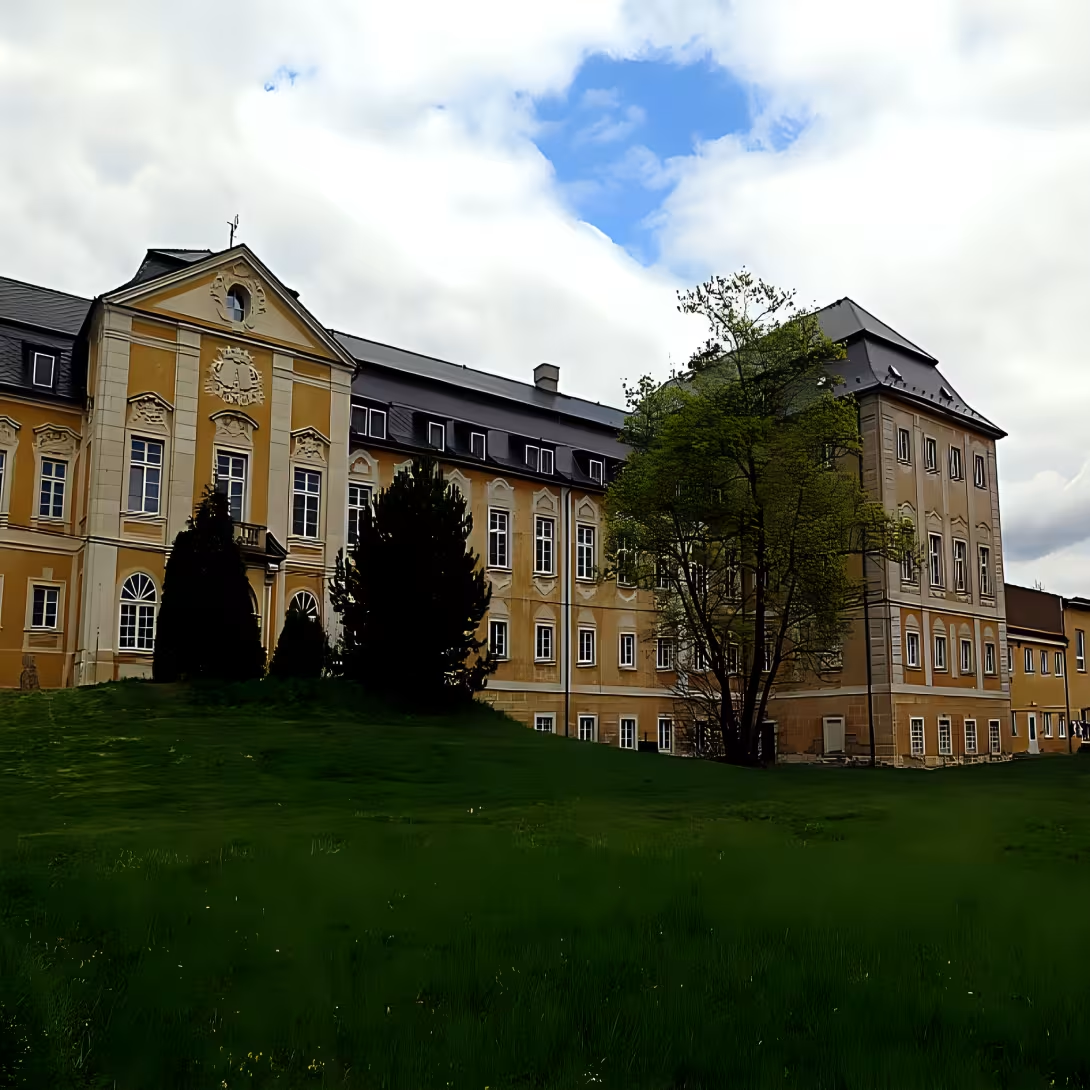
In the small village of Dlažkovice, the castle is characteristic of the Baroque of the North Bohemian Baron's Mansions. Its history begins in the spring of the 17th century, when for the first time there is mention of an older mansion - a fortress that appears in sources since 1630, which belonged to the White Escape estate. The village has changed several owners and its fates have spilt with large family marriages. In 1648, the Winterfeld family became its owner through the marriage of Zbyňka Polyxeny Bezdružický from Kolovrat with Kryšstof from Winterfeld.
The castle in today's form has its origin in the seventies of the 17th century. In 1667 Kryštof Václav of Winterfeld sold the village of František Edmund Putz of Adlersthurn, who held the post of manager of the upper cities. Putz had the castle rebuilt into a Baroque castle around 1673 according to the project of the influential lithomeric architect Giulia Broggio. The expansion and final form of the construction was only created in the early 18th century. Putz's brother Jan Ignác Putz gave the builder Octavius Broggie the extension of the lock between 1713 and 1717. The castle was gradually acquired by new owners - after the Purtz won by Ferdinand Hrzán z Harasova, since 1731 was owned by Count Hatzfeld, who started the extensive production of pyroids. This family held the estate until 1796 when it died out, and the owner became Hugo Damián Ervín ze Schönbornu. He rebuilt the landscape here - he demolished the economic facilities and founded the English park, while the garden facade of the castle expanded in the Empire style. The Schönborn family owned the castle until the land reform in 1924, when they only had the mansion left.
The castle building has adapted to the terrain conditions - it stands on a slope, so the north front is one-storey to two-storey, while the richer garden front on the lower side offers two to four floors. The construction is visually highlighted by two massive side-ridges that appear before both facades. The eastern risalite carries a portal with diagonal pilasters and a balcony over which the stucco mark stands. The most impressive is the risalite on the side of the park - a four-storey unit with high pilasters that optically connect two floors. The rectangular windows are decorated with rococo elements - supraports and post-date fields. The interior architecture has retained a valuable set of terrene with a mirror vault made in lunettes.
Since 1952, the castle has served as a children's home, which has ensured its preservation until today. As a cultural monument to the Czech Republic, everyone who is interested in the development of Baroque construction works in northern Bohemia deserves attention. The castle is an impressive testimony about how noble residences were transformed under the influence of fashion trends and architectural innovations of the 18th century.
Then and now
Drag the slider to compare how the landmark may have looked when it was built with the view today.
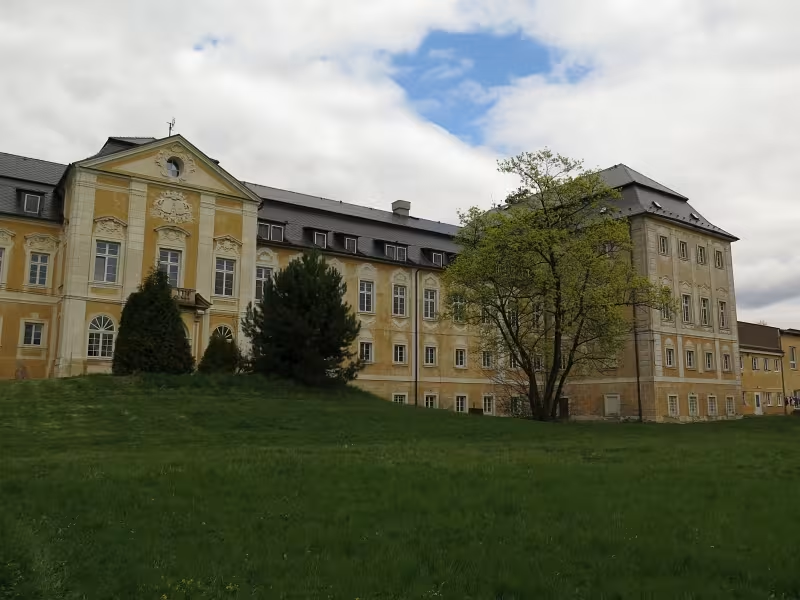
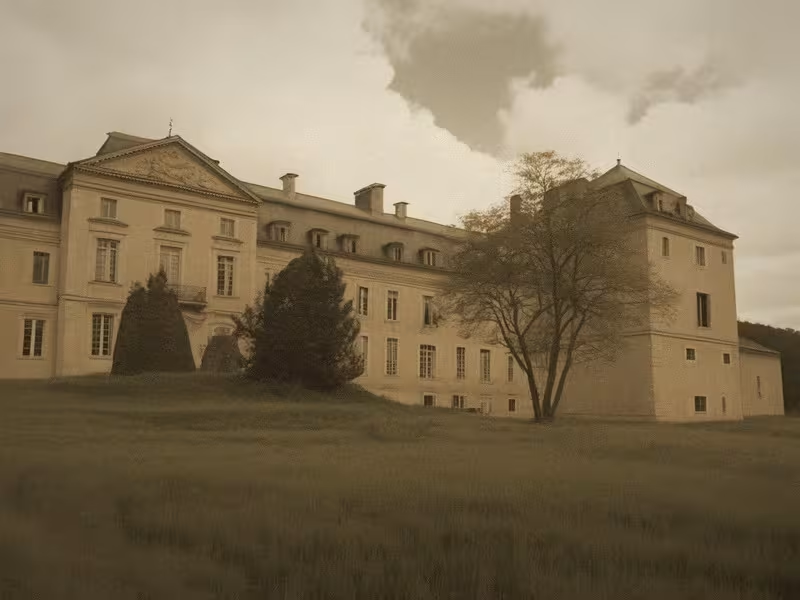
The historical appearance on the left is an AI-generated visualisation and serves as inspiration only.
Historical milestones
- 1673
- Rebuilding the fort to the Baroque castle.
- 1713-1717
- Extension and reconstruction of Octavius Broggie Castle.
Architectural development
The castle was originally rebuilt from a Baroque style fortress by Giulio Broggia. Later, between 1713 and 1717, there was an extension and further reconstruction according to the design of Octavia Broggia. In 1810 an empirical modification of the Hugo Damian Ervina complex from Schönborn was carried out, which destroyed the economic background and created an English park.
Historical events
- 1673
- Rebuilding the fort to the Baroque castle according to the Giulia Broggia project.
- 1713-1717
- Extension and reconstruction of Octavius Broggie Castle.
- 1810
- Empir modification of the Hugo Damian Ervina complex from Schönborn.
Owners
- 1630
- 1648
- 1667
- 1673
- 1713-1717
- 1731
- 1796
- 1810
Points of interest
- The castle in Dlažkovice has its roots in the seventies of the 17th century and was built according to the design of architect Giulia Broggio.
- Between 1713 and 1717, Octavius Broggi expanded the castle on Jan Ignác Putz's instructions, adding new elements to its structure.
- The castle is located in the slope, which leads to the north facade being one-storey to two-storey, while the richer garden facade offers two to four floors.
- The eastern risalite of the castle is carried by a portal with diagonal pilasters and a balcony over which the stucco mark is erected, which adds to its architectural appearance.
- Since 1952 the castle serves as a children's home, which ensured its preservation and allowed it to be recognized as a cultural monument of the Czech Republic.
Guide
This guide is narrated by a synthetic voice generated by artificial intelligence.
Show guide text
This text was created by artificial intelligence and has not been editorially reviewed. It may contain inaccuracies.
Welcome to Tlažkovice, in front of one of the most preserved Baroque castles in our country. You're standing in front of a historic building that has its roots in the seventeenth century. Look up and observe his unique architecture. Notice the rich stucco and complex details that are characteristic of the Baroque style.
Let's move on in time and get back to the beginning. The castle in Dlažkovice was built on the site of an older fortress which was rebuilt according to the design of architect Giulia Broggio. In 1673 the fortress was rebuilt into a Baroque castle, which became a symbol of the power and wealth of the local nobility.
Now pay attention to the extension and reconstruction of the castle, which took place between 1713 and 1717. Octavius Broggi, son of Giulia Broggio, on the instruction of Jan Ignác Putz, extended the castle and added new elements to its structure. This is seen in his complex architecture, which combines elements of different styles and styles.
The castle is located in the slope, which leads to its construction being very specific. Look at the facade and notice how the building adapted to its terrain. The atmosphere that exists here is very unique and stands out for peace and quiet.
The tile castle is full of interesting stories and personalities. Zbyňka Polyxena Bezdružická z Kolovrat, Kryštof z Winterfeldu, Karla Kaplíře ze Sulevic, František Edmund Putz z Adlersthurnu, Jan Ignác Putz, Marie Anna Putzová, Ferdinand Hrzán z Harasova, Hugo Damián Ervín ze Schönbornu - these are just some of the many personalities that appear in the history of the castle. Each of them brought their share to his rich history.
The interesting thing is that the castle in Dlažkovice has its roots in the seventies of the 17th century and was built according to the design of architect Giulia Broggio. Between 1713 and 1717, Octavius Broggi expanded the castle on Jan Ignác Putz's instructions, adding new elements to its structure.
Today the castle in Dlažkovice is used as a children's home, which adds to its historical value and social function. It's an extraordinary combination of history and the present, which makes this place something truly unique.
Thank you for your attention and I hope you have learned something new and interesting during our tour of the castle in Dlažkovice. I hope you can go back to this amazing historical building and explore it in more detail.
Tips for visitors
The best time to visit the castle Dlažkovice is in the spring or autumn season when flowers and trees are in their full beauty. These months also offer more pleasant weather for walking around the castle.
You can verify the current connection using an online search engine or mobile travel app.
When visiting the castle, bring sun protection, water and suitable shoes. If you plan a long walk around the surrounding park, some light food or drink may also be useful.
Photography of the Dlažkovice Castle offers the best possibilities in the early morning or evening when light is softer and shadow effects add beauty to architecture. Don't forget to include a panoramic view of the surrounding landscape.
In the vicinity of the castle you can visit the historic place of Kadák, which is located about 30 minutes by way of the castle. It is an ideal choice for those who like history and architecture. For families with children it is advisable to visit parks nearby where children can play in the open.
Frequently asked questions
Can the monument be visited?
Some buildings of this kind are open for guided tours, others serve another purpose or are privately owned. We have not verified whether and when this monument is open – please ask the operator.
What are the opening hours and admission?
We have not verified the opening hours or admission. Current information is published by the operator. Official website: http://www.dddlazkovice.cz/
Where is the monument?
Location: č.p. 1, Dlažkovice, Ústecký kraj. The map on this page shows the exact spot.
Why is the monument protected?
It is listed in the Central List of Cultural Monuments of the Czech Republic as a cultural monument (register no. 10890/5-1989).
For kids
Imagine going back 353 years to a time when the country was full of secrets and legends. There was a fortress here that was home to many generations. And this is where the Dlažkovice Castle is today.
How did it look here? Who lived here? What happened here? Imagine you're one of them. You were a nobleman with a beautiful wife and children who lived in this playful castle. You were heroes who fought the attacking forces or lived quietly together in harmony.
Businesses nearby
Do you run a restaurant, accommodation, shop, museum, rental, wellness or other visitor service near this monument? Show yourself directly to the people heading to it — this is how they will see you in the app and on the web:
Events nearby

Zdroj akcí: otevřená data měst a obcí ČR (Národní katalog otevřených dat) a kalendář akcí Národního památkového ústavu.
Nearby
The monument is located near Třebenice in Litoměřice district.
Accommodation nearby
Trips and activities nearby
Guided tours, tickets and activities nearby from GetYourGuide
Affiliate link: if you buy from the partner, we may receive a commission. The price for you does not change.
Search tours and activities →Themed route
The route starts in the village Dlažkovice, where it is worth visiting the castle Dlažkovice. It is a Baroque castle from the 18th century, which is now privately owned and occasionally accessible to the public.
Following is the Church of St. Peter and Paul, which stands in the center of the village. It's a parish church built in a late Gothic style at the end of the 15th century.
The next item is Tlažkovická lípa, which is a memorable tree. It's a leprosy tree that grows near the church.
The route ends in Dlažkovický Park, where you will find a quiet area with several trees and seating options.
Seasonal recommendations
Spring: In the spring season Dlažkovice is rich with green flowers, which creates a pleasant atmosphere. Lighting is natural so visitors can perceive the natural beauty of the surroundings. The best time to visit Dlažkovice is between April and May, when the weather is the hottest and most gentle. We recommend preparing for a larger number of visitors who decide to visit the castle at this time.
Summer: In the main summer season Dlažkovice is full of life and energy. The lighting is still natural, but in the evening the castle is slightly lit so that visitors can safely pass through the park. The best time to visit Dlažkovice is in June and July, when the weather is the hottest and driest. We recommend to come earlier to avoid large crowds of tourists gathering here in summer.
Autumn: In autumn the Dlažkovice is surrounded by beautiful leaf color and nature is full of colours. The lighting is still natural, but the castle is slightly lit in the evening. The best time to visit Dlažkovice is between September and November, when the weather is colder but still pleasant. We recommend that we surround ourselves with warmer clothes to avoid cold.
Winter: In winter Dlažkovice is covered with snow and thus creates a pleasant winter atmosphere. The lighting is artificial so that visitors can safely pass through the park. The best time to visit Dlažkovice is in December and January when the weather is the coldest. We recommend besieging ourselves with warmer clothes and coming earlier to avoid shorter opening times.
Visualizations and artistic views


The visualisations are generated by artificial intelligence and serve as inspiration.
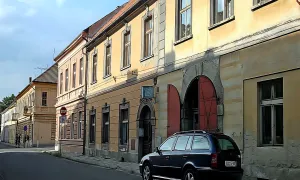
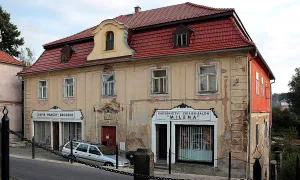
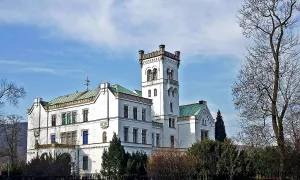
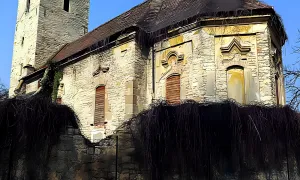
Photos from the area
Real photos taken near the monument


Zdroj a licence jsou uvedeny u každého snímku.
Atmosphere of the place
This atmospheric visualisation of the place and period was generated by artificial intelligence. It is not real footage of the location.
Tips from visitors
No tips yet. Be the first!
Log in and add your tip.
Sources and literature
Photos: Sovicka169 / CC BY-SA 4.0, rozlišení zvýšeno umělou inteligencí — Wikimedia Commons. The author and licence also appear when you hover over the image.
Faktickým podkladem tohoto textu byl článek na Wikipedii, jehož autory jsou přispěvatelé Wikipedie. Článek je dostupný pod licencí CC BY-SA 4.0.
Location on the map


Příběhy a pověsti
Legendy, pověsti a příběhy spjaté s touto památkou
Fotografie návštěvníků
Zatím žádné fotografie. Buďte první, kdo přidá fotografii z návštěvy!
Log in a přidejte svou fotografii nebo hodnoťte.
Za ověřenou návštěvu v aplikaci získáte víc bodů — poznáme podle GPS, že jste na místě.
Reviews and comments