






Dlouhá cesta Trail
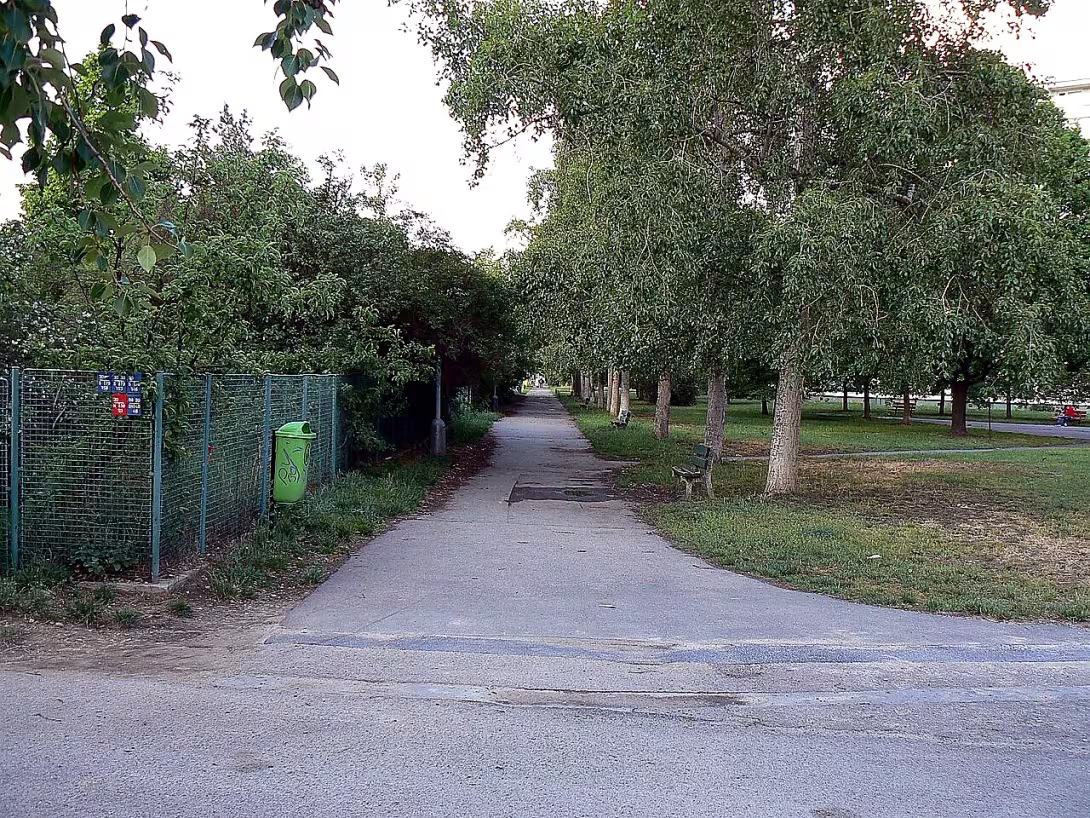
Dlouhá Cesta, also known as Velká Cesta, is a historical path in Prague 4. It connects Nusle, Pankrác, and Braník. This ancient route bypassed Dvorecká brázda and Skalky, linking localities like Ryšánka, Zemanka (Vinice), and Dobeška. Today, remnants of its original course can be found along streets such as Na Pankráci, Na Strži, Zelený Pruh, and Mezivrší. Despite urban development reducing its significance over time, Dlouhá Cesta remains a notable part of Prague's local history.
The origins of Dlouhá Cesta trace back to the 17th century when it was one of several paths crossing densely populated areas on Pankrácké pláně and Kavčích hor. It provided a crucial link between Nusle and other localities, offering an efficient route that either descended into the valley between Branickými skalami to Dominikánským dvorem or connected with Starou cestou near vápenných dolů in today's branické Jezerky area. This path was particularly significant during periods of high water levels, serving as a vital access route from the city center.
Throughout its history, Dlouhá Cesta has undergone various transformations and faced challenges that have altered its prominence. In 1938, a regulatory plan proposed constructing a city boulevard along its axis to facilitate tramway connections between Pankrác and new residential areas on Dobešce. This proposal was part of broader urban planning efforts by the Plánovací komise pro hlavní město Prahu a okolí, which envisioned a high-capacity communication route named Langenweg or Langenweg Straße. However, these plans did not materialize as intended.
The construction of Vyšehradský tunnel in the 20th century significantly reduced Dlouhá Cesta's importance by providing an alternative route through Podolí and Dvorců. Subsequent urban developments further diminished its role; the establishment of a villa district on Dobešce, the creation of Zelený pruh as a communication corridor, and the development of Sídliště Pankrác II and III all contributed to obscuring the original path. By the late 20th century, the area had transformed significantly, with only fragments of the original route remaining.
Today, Dlouhá Cesta is preserved in name only in certain areas like park Sídliště Pankrác III and at specific intersections such as Jeremenkovy and Olbrachtovy ulice. The path's historical significance is recognized by local associations advocating for its official recognition. Visitors can still find remnants of the original route near house number 518 on Zelený pruh and in the northern part of the U Dubu garden, where patkas of the former electrical line serve as a reminder of past urban planning efforts.
Dlouhá Cesta offers a unique glimpse into Prague's historical landscape and urban development. Its story reflects the city's evolving infrastructure and the impact of modernization on traditional pathways. Visitors interested in exploring the layers of history embedded within Prague's streets will find Dlouhá Cesta a compelling site to visit, offering insights into the past while standing amidst the vibrant life of today's capital.
Historical milestones
- 1938
- A regulatory plan proposed a city boulevard along the axis of Dlouhá cesta to facilitate tramway connections.
- 1967
- The last proposal for utilizing the main communication route in the axis of Dlouhá cesta appeared in a regulatory plan after the construction of Nuselský most.
Historical events
In the 17th century, Dlouhá cesta was one of several paths crossing densely populated areas on Pankrácké pláně and Kavčích hor. It provided a crucial link between Nusle and other localities.
The construction of Vyšehradský tunnel in the 20th century significantly reduced Dlouhá cesta's importance by providing an alternative route through Podolí and Dvorců.
Points of interest
- In the 17th century, Dlouhá Cesta was one of several paths that traversed densely populated areas on Pankrácké pláně and Kavčích hor, serving as a crucial link during periods of high water levels when other routes were inaccessible.
- A regulatory plan in 1938 proposed constructing a city boulevard along Dlouhá Cesta's axis to facilitate tramway connections between Pankrác and new residential areas on Dobešce, highlighting its envisioned role in urban expansion as Langenweg or Langenweg Straße.
- The construction of the Vyšehradský tunnel significantly reduced Dlouhá Cesta's importance by providing an alternative route through Podolí and Dvorců, marking a pivotal shift in Prague's transportation infrastructure.
- Despite its diminished role, local associations advocate for Dlouhá Cesta's official recognition due to its historical significance, emphasizing efforts to preserve its legacy amidst modern urban development.
- Visitors can still find remnants of the original route near house number 518 on Zelený pruh and in the northern part of the U Dubu garden, where patkas of a former electrical line serve as tangible reminders of past urban planning efforts.
Guide
This guide is narrated by a synthetic voice generated by artificial intelligence.
Show guide text
This text was created by artificial intelligence and has not been editorially reviewed. It may contain inaccuracies.
Welcome to the historic path of Dlouhá cesta, nestled in the heart of Prague. As you stand here, surrounded by the bustling cityscape, imagine stepping back into a time when this route was a vital artery connecting Nusle, Pankrác, and Braník. Today, remnants of its original course can be traced through streets like Na Pankráci, Na Strži, Zelený Pruh, and Mezivrší.
Dlouhá cesta's story begins as a crucial link during the 17th century, when it served as one of several paths traversing densely populated areas on Pankrácké pláně and Kavčích hor. This path was particularly significant during periods of high water levels when other routes were inaccessible.
As we walk along this historical route, notice how urban development has transformed the landscape around us. The significance of Dlouhá cesta has diminished over time, yet its legacy endures in the streets that follow its ancient line.
In 1938, a regulatory plan proposed constructing a city boulevard along the axis of Dlouhá cesta to facilitate tramway connections. This vision aimed to modernize and integrate this historic path into the growing urban fabric. Later, in 1967, another proposal emerged after the construction of Nuselský most, highlighting its enduring importance as a main communication route.
While specific architects or historical figures associated with Dlouhá cesta remain unknown, the path itself is a testament to the evolving story of Prague. Its history reflects the city's growth and adaptation over centuries.
As you continue your journey along this storied path, let your imagination wander through time. Picture the countless travelers who have traversed these streets, each with their own stories and destinations.
We invite you to explore further, discovering the layers of history that Dlouhá cesta holds within its winding route. Thank you for joining us on this journey through Prague's past.
Tips for visitors
The best time to visit Dlouhá cesta is during the late spring or early autumn months, when the weather is pleasant for walking and exploring without the crowds of peak tourist season. The path offers a serene experience with lush greenery and blooming flowers in these months. Additionally, visiting on weekdays can provide an even quieter atmosphere.
You can access the area using Prague’s extensive tram network or buses that connect nearby neighborhoods like Nusle and Pankrác.
When visiting Dlouhá cesta, it's recommended to bring comfortable walking shoes as you'll be traversing a historical path with varying terrain. A hat, sunscreen, and water are also advisable due to the outdoor nature of the site. If you're interested in learning more about its history, consider bringing a guidebook or downloading information on your phone.
For photography enthusiasts, Dlouhá cesta offers several picturesque spots along its route where natural light enhances the historical ambiance, especially during the golden hours at sunrise and sunset. The path's elevation changes provide unique vantage points for capturing panoramic views of Prague’s skyline.
Nearby attractions within a 30-minute walk or short public transport ride include Braník Castle, which offers stunning views over the Vltava River, and the Pankrác Cemetery, known for its historical significance. Both sites are accessible and provide additional context to the history of the area surrounding Dlouhá cesta.
For families with children, Dlouhá cesta can be a delightful outing as it offers ample space for walking and exploring nature. Consider bringing along a picnic lunch or snacks, and perhaps a small map or guidebook tailored for kids to make the historical aspects more engaging. Keep an eye on your little ones while they enjoy the open spaces.
Frequently asked questions
Can the monument be visited?
This is a structure in a public space that can usually be seen from outside free of charge. We have not verified that this particular one is freely accessible.
Where is the monument?
Location: Praha, Hlavní město Praha. The map on this page shows the exact spot.
Businesses nearby
Do you run a restaurant, accommodation, shop, museum, rental, wellness or other visitor service near this monument? Show yourself directly to the people heading to it — this is how they will see you in the app and on the web:
Events nearby

Zdroj akcí: otevřená data měst a obcí ČR (Národní katalog otevřených dat) a kalendář akcí Národního památkového ústavu.
Accommodation nearby
Trips and activities nearby
Guided tours, tickets and activities nearby from GetYourGuide
Affiliate link: if you buy from the partner, we may receive a commission. The price for you does not change.
Search tours and activities →Themed route
Tematická výletní trasa: "Dlouhá cesta" ve středu Prahy
1. Dlouhá cesta (stezka) - Typ: Historická stezka - Proč stojí za návštěvu: Tato starožitná stezka vede přes historické centrum Prahy, nabízející pohledy na klíčové památky a architektonické perly města. Je to ideální způsob, jak prozkoumat ducha starého města.
2. Staroměstské náměstí - Typ: Historické náměstí - Proč stojí za návštěvu: Nachází se na konci Dlouhé cesty a je domovem slavného Staroměstského orloje, Týnského chrámu a Mariánské kolonády. Náměstí je centrem historických událostí a jeho atmosféra zůstává nezapomenutelnou součástí pražského ducha.
3. Malá Strana - Typ: Historický okres - Proč stojí za návštěvu: Po procházce Dlouhou cestou pokračujte do Malé strany, známé svými romantickými uličkami a přehlédnutelnými zahradami. Tato část Prahy nabízí klidnější prostředí s pohledem na Vltavu a je domovem mnoha kulturních památek.
4. Staroměstské pivovar - Typ: Pivovar - Proč stojí za návštěvu: Nachází se blízko Staroměstského náměstí a nabízí pivo připravené podle tradičních receptů. Je to skvělý způsob, jak si užít místní kulturu a poznat historii pražského pivovarnictví.
5. Široká ulice - Typ: Historická ulice - Proč stojí za návštěvu: Tato ulice je jednou z nejstarších a nejdůležitějších v Praze, spojuje Staroměstské náměstí s Malou stranou. Je známá svými historickými domy a krásným pohledem na Vltavu, což ji činí ideálním místem pro relaxaci po výletu.
Tato trasa nabízí kombinaci historie, kultury a klidného procházení, umožňujíc návštěvníkům zasvětit se do srdce Prahy.
Seasonal recommendations
Jaro: During the spring season, Dlouhá cesta in Prague offers beautiful views of blooming trees and shrubs illuminated by soft sunlight. This period is ideal for walkers who enjoy natural beauty and mild weather without extreme heat or cold autumn winds. Visitors can expect a slight increase in crowds as people often seek out lovely outdoor activities after the long winter season. It's recommended to wear comfortable shoes and light clothing suitable for moderate temperatures, and plan your visit early in the morning or late afternoon to enjoy the path with minimal crowds.
Léto: In summer, Dlouhá cesta is dazzling with sunlight and full of vibrant blooming plants, creating an ideal setting for photography or simply relaxing on the sidewalk. During peak summer months, expect high temperatures and increased tourist crowds, especially during midday hours. Visitors should wear light, long-sleeved clothing for sun protection and always carry a water bottle. It's best to visit early in the morning or later in the evening when there are fewer people, allowing for a more leisurely stroll and enjoyment of the outdoor environment.
Podzim: In autumn, Dlouhá cesta in Prague takes on a magical atmosphere as tree leaves transform into vibrant colors from gold to red. This season is ideal for nature lovers and those seeking quiet moments outdoors, as temperatures are usually mild and tourist crowds decrease. Visitors should wear outer layers suitable for transitional weather and possibly a scarf or hat for protection against chilly winds. The best time to visit is early in the morning when you can enjoy the peaceful environment and beautiful sunset.
Zima: During winter, Dlouhá cesta in Prague offers a completely different view with leafless trees and an overall simpler yet elegant aesthetic. Winter brings cold weather and shorter daylight hours, which may affect the site's visitation rates. Visitors should be equipped with warm clothing, including coats and hats, and possibly an umbrella or protective boots for snow conditions. The best time to visit is usually early in the morning before crowds gather, allowing for a tranquil walk and perhaps enjoying stunning winter light.
Visualizations and artistic views


The visualisations are generated by artificial intelligence and serve as inspiration.
Photos from the area
Real photos taken near the monument


Zdroj a licence jsou uvedeny u každého snímku.
Tips from visitors
No tips yet. Be the first!
Log in and add your tip.
Sources and literature
Photos: Ferri Brodge / CC BY 2.5 — Wikimedia Commons. The author and licence also appear when you hover over the image.
Faktickým podkladem tohoto textu byl článek na Wikipedii, jehož autory jsou přispěvatelé Wikipedie. Článek je dostupný pod licencí CC BY-SA 4.0.
Location on the map
Příběhy a pověsti
Legendy, pověsti a příběhy spjaté s touto památkou
Fotografie návštěvníků
Zatím žádné fotografie. Buďte první, kdo přidá fotografii z návštěvy!
Log in a přidejte svou fotografii nebo hodnoťte.
Za ověřenou návštěvu v aplikaci získáte víc bodů — poznáme podle GPS, že jste na místě.
Reviews and comments