



Domek zahradníka ve Strahovské zahradě Building
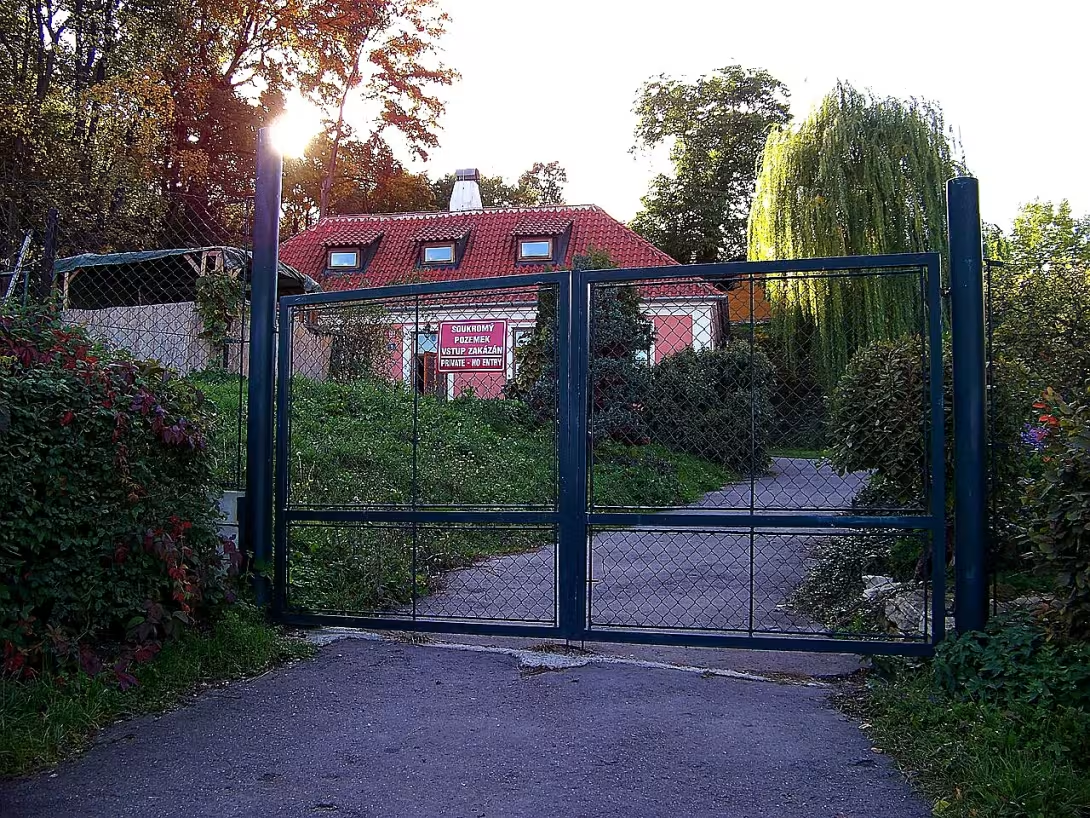
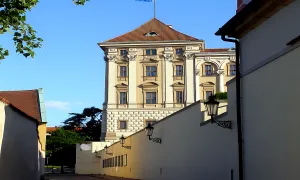
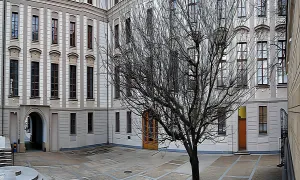
Domek zahradníka ve Strahovské zahradě is a building registered in the register of national cultural monuments. Located in Prague in the cadastral area Hradčany. The building is part of the Strahov monastery and complements this historical complex.
The monument is located at Strahov courtyard 132 / 1 in Prague. In the list of cultural monuments it is registered under the number 162 with the name NKP _ CAST.
The building is connected with a large complex of Strahov monastery. It began gradually from the mid-12th century when he founded it by Prince Vladislav II. The specific dates of the house itself are not specified in the documents available.
The owner is the Royal Cannon of the Premonstrates on Strahov. This institution ensures the management and maintenance of the building within its property.
From the point of view of architecture there is only general information that defines the building as a house in Prague. Details of the construction style or materials used are not specified in official records.
The building represents an authentic part of Prague's historical core and demonstrates the functional structure of the monastery complex. Visiting this place allows you to see into the structure of the spaces accompanying the main monastery buildings. It is a suitable stop for anyone who is interested in preserved elements of Prague Hradčan.
Historical milestones
- half of the 12th century
- The establishment of the Strahov monastery by Prince Vladislav II.
- around 1750
- The period of the flowering of Baroque gardens in Prague monasteries
- 20th century
- Registration of the building into the register of cultural monuments
Owners
The royal canon of premonstrates in Strahov
Points of interest
- The building is listed in the register of state cultural monuments. - It is part of the Strahov monastery complex, which founded Prince Vladislav II in the middle of the 12th century. - The object is owned by the Royal Canon of Premonstrats on Strahov. - The house shows the functional structure of the monastery area and is part of the historical heart of Prague.
Guide
Show guide text
This text was created by artificial intelligence and has not been editorially reviewed. It may contain inaccuracies.
Welcome to the heart of historical Prague. You are standing in one of the rarest and noblest neighborhoods of our city, in Hradčany. It's a place where every step you take along these old paths seems to be laid out stories that go through centuries. Now that you're wearing headphones and listening to my words, let me take you on a little journey through time. You are in a quiet part of Strahov Garden. Can you feel the difference? Once you enter these spaces, the noise of the big city, the rumbling of cars and the constant rush seem to be suddenly gone. All that remains is the roar of leaves, the fragrance of plants and the strange, deep silence that rules here. In front of your eyes is an object that is part of this peaceful world - a house of a gardener.
Stop for a moment, put down your worries and just look around you. Feel the atmosphere surrounding you. It's not just an ordinary building in the garden. He's a time witness. This little object that you are currently observing has a very special position in our national heritage. It is a cultural monument that is officially listed in the register of national cultural monuments. This means that its existence is not random and its value is recognised by the whole state. Although it may seem to us today as a modest and silent companion in green, his presence here is of profound importance for understanding the history of this whole place. It is proof that history consists not only of great palaces and castles, but also of small, quiet places that served people in their daily lives.
Now pay attention to the construction itself. Although history has not given us the name of the architect who designed this building, and although we do not know the exact date when its first foundation stone was laid, you can see in its appearance a certain understanding of space and harmony. Take a look at how this house got wedged into the surrounding countryside. It's not an object that wants to be a dominant object that tries to drown out its beauty in the surrounding nature. On the contrary, it seems like he was trying to work with her. Feel its shapes and its walls floating in this green environment. Look at how light hits its surface. Depending on how you move, it changes how you perceive its structure and character. Even without knowing the specific materials used to build it, you can perceive its firm presence and stability. It's a building that seems natural, like it's always been there, like it's part of the country that it's standing on.
Now let's think together about who once lived here. Imagine being a gardener. He wasn't just a man doing his job. He was the guardian of this peace, the guardian of beauty that you now see around you. Imagine his everyday life. Every morning, perhaps even before the sun fully rose above the castle walls, there was someone who cared for plants, flowers and this whole vast garden. His life was probably closely linked to the rhythm of nature - the rotation of seasons, the arrival of rain and the warmth of the summer sun. This house was his home, his refuge after a difficult job out there. He could sit here at dusk and watch as the colors change in the sky above Hradčany, or here in silence plan what new plant species will plant next season. Even though we don't know his name and his face is lost in time, his work and his care are still felt in this place. It's the kind of human work that gives the garden its soul.
And here comes the most interesting and possibly the most mysterious part of this place. In history, we often look for clear facts, exact numbers and names of great personalities. But this house doesn't replace everything. There is a certain mystery in it that can be very fascinating. We don't know the exact time of its creation. We don't know the faces of the people who built it. We don't know the names of those who lived in it and hid in its shadows from the sun. For some, this ignorance can be frustrating, but for us, it can be the key to a much deeper experience. This emptiness in our knowledge gives us a free hand. It gives us room for our own imagination. We can create images of the past ourselves, we can figure out in our own minds what fate has taken place in these walls. This mystery makes this place more than a memory; makes it a place to dream and to think deeply about what's going down in time and what's left of it as a silent trace in the landscape.
It's a fascinating idea that even though we don't have all the answers, we can still feel the weight of history. This house reminds us that the past is not just a set of data in textbooks, but it's a living thing we perceive in our senses.
Don't waste your time just standing in one place. This house of a gardener is just one of many treasures that they can offer you in this area. Strahov Garden and its surroundings invite you to further explore. Continue your walk, feel the atmosphere of Hradčan, look at the details around you and let yourself drift by the beauty of this place. Every next step can lead you to something new, something that will surprise you again or make you think. Thank you for spending this moment with us and for choosing to pay attention to these small but important parts of our world. We wish you a beautiful and peaceful rest of your tour and many other unforgettable experiences on the road through the history of our beautiful city.
Tips for visitors
The best time to visit is spring and summer months, when the surrounding green is in full bloom and the building in the garden stands out with its atmosphere. The Hradčan area can be reached by car or public transport; We recommend to verify the specific connection in the current search engine.
For the visit we recommend to take comfortable shoes suitable for walking on garden paths and smile, as the building serves as an operated workplace. Photography is best in the morning or late afternoon light, when the sun gently illuminates the facade of the house and surrounding trees.
Families with children can enjoy a walk along the surrounding roads and watching the garden craft in practice, which can be an interesting experience for children from everyday life in the historical environment.
Frequently asked questions
Can the monument be visited?
The building is in use (offices, a school, shops and the like). The interior is generally accessible only during operating hours and tours are not usually offered; we have not verified the details. You can see the exterior from the street.
Where is the monument?
Location: Strahovské nádvoří 132/1, Hradčany, Praha, Hlavní město Praha. The map on this page shows the exact spot.
Why is the monument protected?
It is listed in the Central List of Cultural Monuments of the Czech Republic as a national cultural monument (register no. 162). It is protected as part of a larger listed ensemble.
Businesses nearby
Do you run a restaurant, accommodation, shop, museum, rental, wellness or other visitor service near this monument? Show yourself directly to the people heading to it — this is how they will see you in the app and on the web:
Events nearby

Zdroj akcí: otevřená data měst a obcí ČR (Národní katalog otevřených dat) a kalendář akcí Národního památkového ústavu.
Nearby
➜ Zobrazit interaktivní přehled okolí – restaurace, ubytování, půjčovny a další místa v okruhu 15 km.
Data: OpenStreetMap contributors, okruh 15 km.
🏰 Historické památky
- Jaroslav Vrchlický (0.4 km)
- Kolovratský palác ve Valdštejnské (1.5 km – Valdštejnská 150/4)
- Clam-Gallasův palác v Praze (2.0 km – Husova 156/21)
- Hlávkova kolej (2.1 km – Gorazdova 1994/9)
- Dům U Kohouta (2.1 km)
- Památník trolejbusové dopravy na Hanspaulce (3.0 km)
- Cihelná brána (3.0 km – V pevnosti 46/1)
- Gorlice (3.1 km)
🍽️ Restaurace a stravování
- Pizzerie U Tučňáka (1.8 km – náměstí 14. října 1)
- Restaurant River's smokelab (2.0 km – Lidická 2)
- McDonald's (2.4 km – Vodičkova 736/15)
- Legenda (3.1 km)
- McDonald's (6.8 km)
- Yi Xiang Ge (7.2 km)
- Švejk restaurant U Brázdů (7.4 km – U Svobodárny 18)
- Pizzeria Cerreto (7.4 km)
🏨 Ubytování
- The Mozart Prague (1.7 km – Karoliny Světlé 208/34)
- Old Prague Hotel (2.1 km – Skořepka 421/5)
- Old Town Jewel Apartments (2.2 km – Elišky Krásnohorské 10/2)
- Hotel AXA (3.3 km – Na Poříčí 40)
- EA Hotel Tosca (3.7 km – Blanická 718/10)
- Theatrino (4.4 km – Bořivojova 1216/53)
- Hotel Olšanka (4.7 km)
- Plaza Prague Hotel (4.9 km)
🚲 Půjčovny a sport
- U Tyrše (1.6 km – Jaselská 464/38)
- Florbal expert (1.6 km)
- Bike Gallery (2.2 km – Kladenská 19)
- Cykloservis Richard Eger (2.6 km)
- Centrum volného času Botič (2.7 km)
- Kieser Training (2.8 km)
- JUN (3.1 km – Haškova 629/7)
- Velox Sport (3.3 km)
🥾 Turistika a příroda
- Petřínka (0.6 km)
- Masarykova vyhlídka (0.8 km)
- Pražský hrad (0.9 km)
- Informační a rezervační centrum (2.0 km – Maiselova 38/15)
- Zemní pyramidy (2.5 km)
- Vyšehrad (3.0 km)
- Gabrielka (4.0 km)
- Šestákova studánka (5.3 km)
Accommodation nearby
Trips and activities nearby
Guided tours, tickets and activities nearby from GetYourGuide
Affiliate link: if you buy from the partner, we may receive a commission. The price for you does not change.
Search tours and activities →Themed route
Here is the route design within the area:
1. Domek zahradníka ve Strahovské zahradě - construction. A unique building that serves as part of the care of the green area. 2. Strahov garden - park. A space with diverse plants and a quiet environment for walks near the house.
Seasonal recommendations
In the spring, the surrounding greenery awaken to life and the first flowers bloom, which accompany the view of this small building block. The light is soft and the air is fresh, which creates a feeling of a new beginning. We recommend shoes suitable for wet ground and visit in the morning when the morning dew is the most beautiful.
In the summer months the space is dominated by thick foliage and rich garden colours. The sun shines for the longest time, so the building is well seen in bright daylight. Due to high temperatures it is best to leave early in the morning or late in the afternoon, in light clothes and with plenty of water.
Autumn brings golden and red shades of leaves to the surroundings that match the historical appearance of the building. The atmosphere is quieter and melancholic, with lower sun that throws long shadows. It is advisable to choose layered clothes and visit the place when the colors of nature are most intense.
Zimą is a place of bright and quiet impression, especially if a snow layer covers the building. The lighting is gray and the days are short, which underlines the loneliness of this corner. Hot shoes, gloves and a thick sweater are essential, and it is best to attach a short walk to the ticket before it gets dark.
Visualizations and artistic views


The visualisations are generated by artificial intelligence and serve as inspiration.
Photos from the area
Real photos taken near the monument

Zdroj a licence jsou uvedeny u každého snímku.
Tips from visitors
No tips yet. Be the first!
Log in and add your tip.
Sources and literature
Photos: ŠJů (cs:ŠJů) / CC BY-SA 3.0 — Wikimedia Commons. The author and licence also appear when you hover over the image.
Location on the map

Příběhy a pověsti
Legendy, pověsti a příběhy spjaté s touto památkou

Fotografie návštěvníků
Zatím žádné fotografie. Buďte první, kdo přidá fotografii z návštěvy!
Log in a přidejte svou fotografii nebo hodnoťte.
Za ověřenou návštěvu v aplikaci získáte víc bodů — poznáme podle GPS, že jste na místě.
Reviews and comments