






Drslavice Fortress
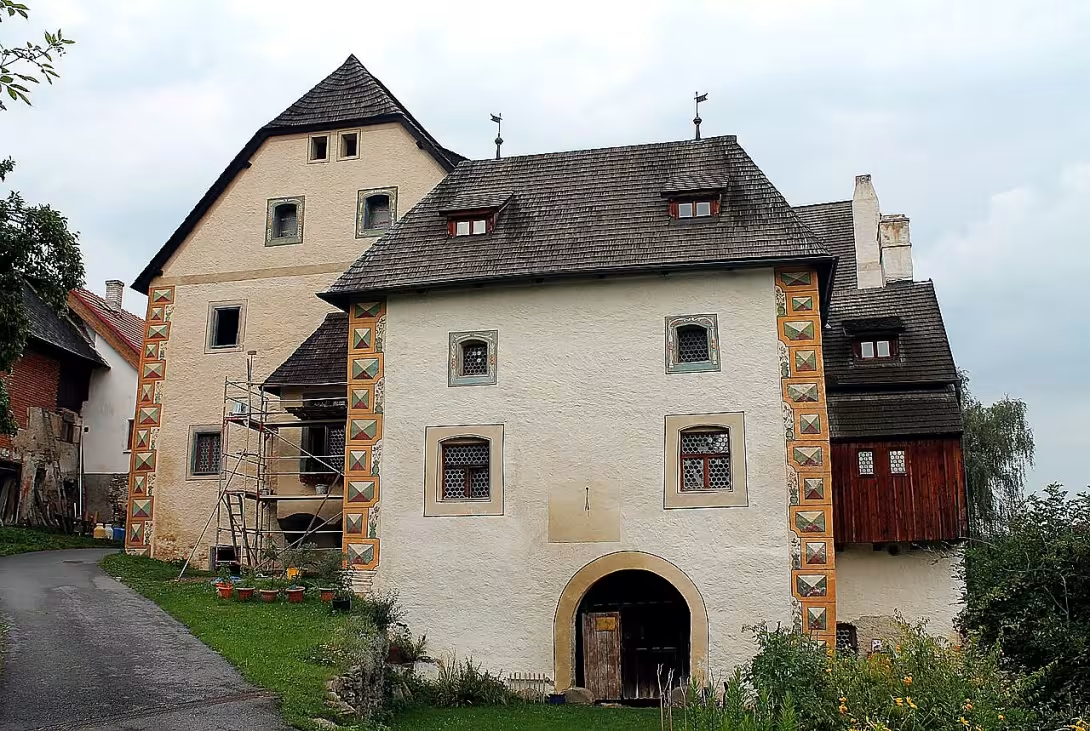
Drslavice are a Gothic-Renaissance fortress in a village of the same name in the Prachatice district. Since 1963, it has been protected as a cultural monument. The construction represents a typical example of medieval fortification, which has undergone radical transformation over the centuries - it has gradually turned from the seat of the nobility into an economic facility, until history itself has finally forgotten it.
The emergence of the fort is preceded by an interesting question. The construction is believed to have been built in the 14th century, but its name suggests deeper roots. The Czech Czech Czech type of name Drslavice points to the creation of an internal colonization at least two centuries earlier, perhaps in the twelfth or thirteenth century. Paradoxically, however, the village Drslavice is documented in writing at the end of the fourteenth century - so the sources of the paper are not in line with the language record of the site.
The first holders of the fort were vladykové z Drslavic. In 1537, however, the fort changed the owner. Wolf Wiennar z Muronu bought it from Diviš from Újezda; with it came into the majority of the property as well as the subordinate villages Dvory, Kratushín and Borek. Wolf Wiennar remained owner until his death. On 26 October 1548 he acquired the last will and testament of Drslavice, along with the house in České Budějovice, his one daughter Maryna, who was still immature at the time.
Maryna became an orphan at a young age. Blood friends - brothers Robmhápové and Petr Sudek - participated in the protection of her inheritance rights. In 1549, however, Zikmund Robmháp ze Suché sold the fortress with all its accessories to the guardians of the mighty Wilhelm of Rožmberk for 1200 kicks of Czech grossly. Later, the fort became owned by Eggenberg and Schwarzenberg, the prominent noble families of southern Bohemia.
Since the Renaissance, the fort gradually lost its original residential function. This was replaced by economic functions. The breaking point came after 1619 when the fort burned down. The farm yard was restored after the fire and served further, but no one had restored the old fort. In 1778, the ruin was adapted to a granular granary and served this purpose until 1803, when it was partially sold to a local subject. So the fort slowly faded and fell into oblivion.
The change came in 1931 when they bought it for husband and wife. Their descendant Zdeněk Švedoda, a former fighter pilot, decided to reconstruct the fort. The reconstruction of the building continues today and represents an attempt to return this important monument to at least part of its original form.
Then and now
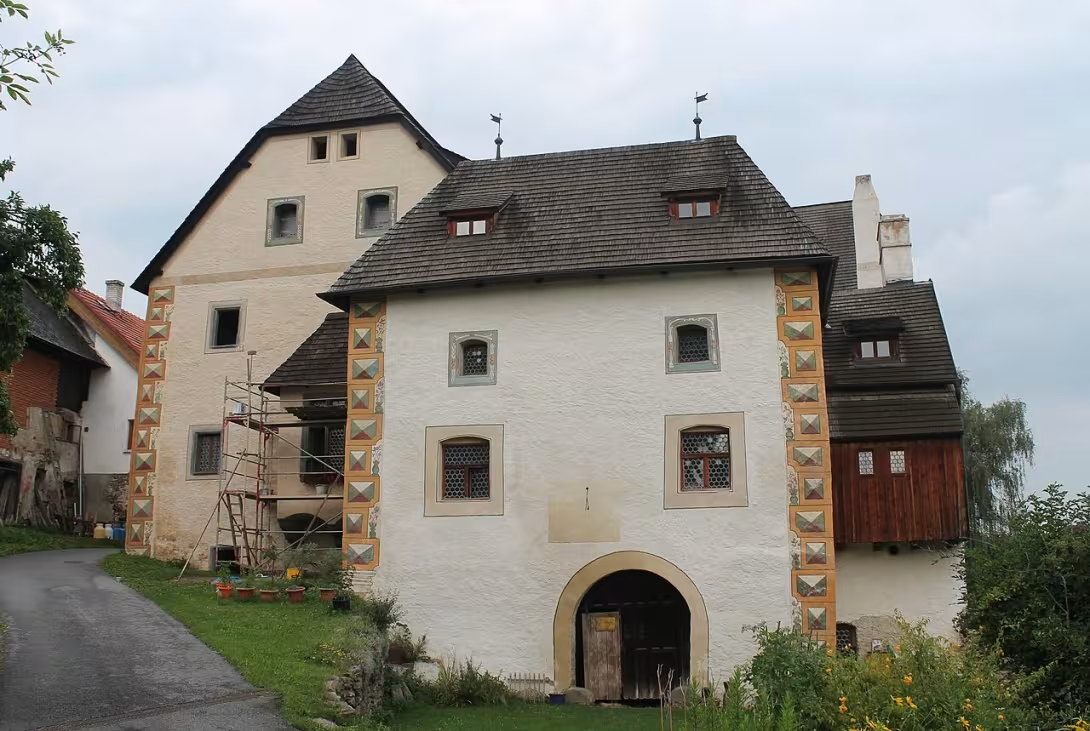
Drag the slider to compare how the landmark may have looked when it was built with the view today.
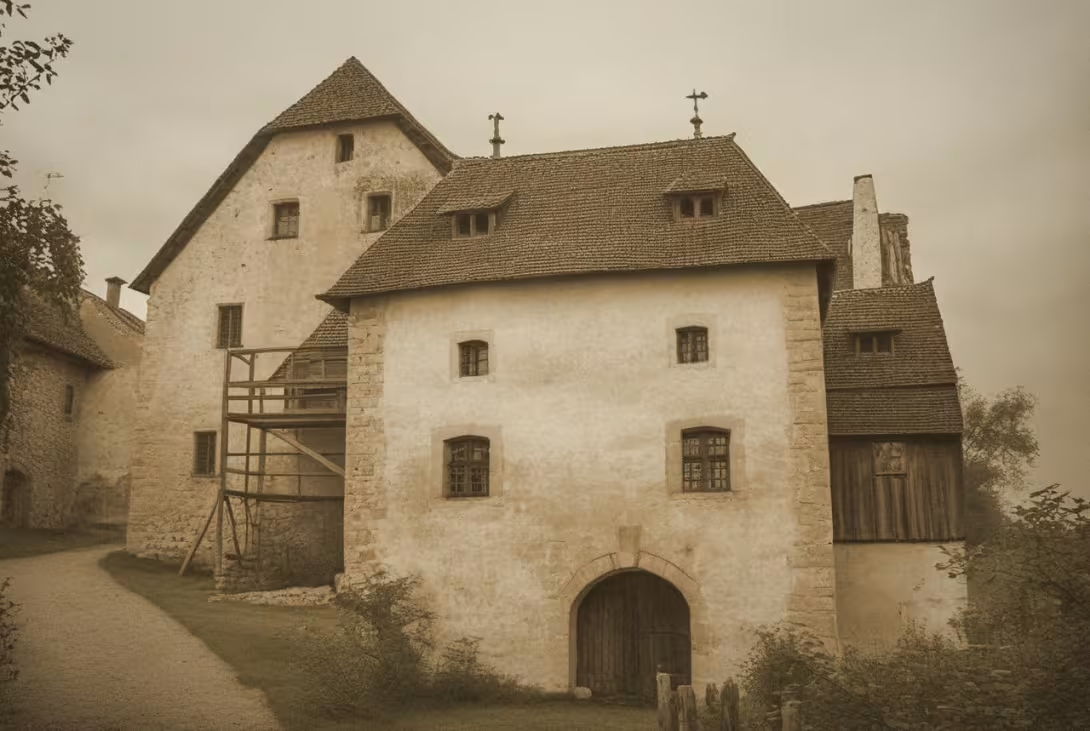
The historical appearance on the left is an AI-generated visualisation and serves as inspiration only.
Historical milestones
- 1400
- Formation of the fort
- 1537
- Wolf Wiennar bought a fort from Divish from the Tribe
- 1549
- Zikmund Robmháp ze Suché bought a fort
- 1778
- The fort has been adjusted to the granary
- 1803
- The fort was sold to the subject
- 1931
- The husband and wife of the Swiss bought a fort
Architectural development
Drslavice originally served as a nobleman's seat, but over time it transformed into an economic court. After the fire in 1619, the fort was adapted to the granary and served this purpose until 1803. In 1931, the husband and wife bought a fort for Switzerland, which is now reconstructed by their offspring Zdeněk Švejda.
Historical events
- 1537
- 1548
- 1619
Owners
vladykové z Drslavic
Wolf Wiennar z Muronu
Points of interest
- Drslavice are a Gothic-Renaissance fortress in a village of the same name in the Prachatice district and since 1963 it has been protected as a cultural monument. - It is assumed that the building was built in the fourteenth century, but its name indicates possible roots in the twelfth or thirteenth century. - The first holders of the fort were vladykové z Drslavic; In 1537 it was bought by Wolf Wiennar z Muronu by Diviš z Újezda. - In 1549 Zikmund Robmháp ze Suché sold the fort with accessories to Wilhelm of Rožmberk for 1200 kgs of Czech grossch, later it became owned by Eggenberg and Sc
Guide
This guide is narrated by a synthetic voice generated by artificial intelligence.
Show guide text
This text was created by artificial intelligence and has not been editorially reviewed. It may contain inaccuracies.
Welcome to Drslavice. You have just stopped before one of the most important points of this village, the fortress that defines this entire region by its presence. You're standing in a place where history touches the present and where every wall you see now tells its own, silent story. Look around you and feel the atmosphere of this place. This building is not only part of the village, it is its heart and dominance. Notice how its massive and picturesque matter controls the entire surrounding structure. It is a building that does not only act as an ordinary house, but as a fixed point, which has been firmly rooted in South Bohemian soil and which has been there for centuries. Feel the weight of the time emanating from this place.
Now let's move further into the past together and understand how this unique whole came into being. Although this Gothic-Renaissance fortress may seem to you as a building from a certain, clearly defined time, its roots are much older than might appear at first glance. Historical sources tell us that the current form of construction is probably based on the 14th century. But pay attention to one important thing - the name of this place itself, Drslavice, gives us the idea that people lived and built here much earlier. It is very likely that the roots of the settlement date back to the 12th or 13th century. So imagine the first foundations that were laid here long before the stone form that you are now observing was formed here.
This fortress was built not only to serve as a shelter, but above all as a mansion. In its beginnings, her function here was residential - it was a home for nobility, a place where important social events took place and decisions about the fate of the families. But with centuries, the world was changing around and with it the purpose of the construction itself. The fortress underwent several transformations and gradually lost its original function of a comfortable residence for economic purposes. This transformation shows us a fascinating process of how the power and representative centre has become a practical part of the agricultural and economic whole. It is proof of how people have adapted to new conditions and how even such solid structures need to change to survive.
Now pay attention to the architecture right in front of your eyes. Although we do not know the names of the particular architects who designed these walls, their championships are evident in how two completely different worlds intersect here. There's a Gothic-Renaissance face in front of you. Feel the rigour and strength of the Gothic style in this building with later elegance of Renaissance elements. Look at the interesting game of matter this building is building. Its breakdown is not random, it is the picturesque structure you see now that gives the fortress its unique character and allows it to excel significantly in the landscape. It is an architecture that is not just about functionality, but about expression of stability and duration. Since 1963, this building has been protected as a cultural monument, which reminds us that you are looking at a rare piece of history that we have to store together.
But in order to really revive this building, we need to look at the people who lived here and who shaped this fortress. Drslavice wasn't just empty walls, it was home to prominent personalities. The first holders were vladykové z Drslavic, who laid the foundations for their power. Over the years, different gentlemen took turns bringing their own traditions into this place. Here we can name Wolf Wiennar of Muron or Divish of the Tribe. Each of these names represents a different chapter in the history of this place. Let us not forget the female figure, Maryna, the daughter of Wolf Wiennar, who was part of this complex noble world.
Later, Robmhápové, a family closely associated with this place, settled here. Among them stands out for example Zikmund Robmháp ze Suché. This family was part of a wider chain of owners who played important roles in the region. In the history of the fortress, there are also names of large and powerful families that dominated the whole Czech countries. In the history of Drslavic, for example, the Rožmberks with their important Wilhelm, or later Eggenbergové and Schwarzenbergové. The presence of these great families here suggests that this fortress has never been just a common residence, but has always had its meaning in a broader political and social context. Although these people may seem to us like figures from ancient legends, their decisions and their lives directly influenced what you see before you today. Even names like Petr Sudek, which give us different memories of art and history, are in this context part of the wider story of the region.
Now, I want to invite you to the little secret that this fortress has in it that can make you think deeper. Think about what the name of this place tells us. As I mentioned, the name Drslavice carries a hint of a much older history than the visible Gothic-Renaissance architecture tells us. It's a fascinating question: what happened here in the twelfth or third century? What were the first buildings that people built here before they became this solid fortress? This ambiguity between what we see and what our traditions and names suggest creates an atmosphere of mystery around Drslavic. It's like a layer of time where every new era builds on the older ones, but the oldest layers remain hidden deep beneath the surface, in the very foundation of this place.
Thank you for spending this moment with us and for choosing to listen to the story of the fortress in Drslavice. I hope that this view of her history, her architecture and the people who lived here helped you better understand her meaning and her unmistakable character. Don't be discouraged by further discovery. See the surrounding village, feel the calm and beauty of the South Bohemian countryside and let yourself be drifted by the atmosphere of this place. History is not only in textbooks, it is right in front of you, in every stone and in every shadow that this fortress throws. I wish you a pleasant walk and other wonderful experiences while exploring our sights. Goodbye.
Tips for visitors
The best time to visit is the late spring month or early autumn when nature is the most colorful and light for shooting the most attractive. For the best pictures of architecture we recommend using the golden hour just before sunset, where the details of the Gothic-Renaissance matter of the fortress are highlighted.
You can reach the memory by car, for parking use the nearest available space in the village. If you prefer public transport, check the current timetable and connections in internet search engines or with the carrier.
We recommend that you take with you enough drinking water and comfortable shoes suitable for uneven terrain. For families with children, walking around the fort within the village is a pleasant way to explore history in a quiet environment.
Photography is ideal to focus on connecting the fortress with the surrounding installation, which is its characteristic feature. The images taken from an angle that captures the entire mass of the building in relation to the municipality will be of the highest value.
Within 30 minutes of the location, no other specific visit points are listed in the available information, so it is recommended to devote all time to the inspection of the fortress itself and its immediate surroundings.
Frequently asked questions
Is Drslavice open to the public?
Yes, the fortress Drslavice is open to the public and can be visited by prior agreement with the owner.
How do I get to the place by car / public transport?
You can get by bus No. 430 from Prachatic or your own car by road III / 1934.
How much is the entrance fee and is it paid on the spot?
Payment shall be made at entry.
Is the tour suitable for children and seniors?
Yes, the Drslavice is suitable for all age groups. There are several information boards and art elements that can be interesting even for younger visitors.
How long does the tour take?
The tour of the Drslavice hardness takes approximately 1 hour.
What are the opening times and booking is required?
The fortress Drslavice is open from 9: 00 to 16: 00. Reservation is not required, but we recommend a previous arrangement with the owner for greater comfort of the visit.
What's interesting in the immediate vicinity?
In the immediate vicinity there are several other historical monuments, such as the castle Rožmberk or the castle Hluká nad Vltavou. You can travel by bus No. 430 or by car.
For kids
Imagine going back to the past, until there were no cars or cell phones in the world. Instead, there were horses and trains that brought people messages from all over the world.
Drslavice was a small fortress in Prachatice County. It was a fortress where they defended themselves from enemy attacks. Who lived there? These were people who cared for the defense of the country and who had their own life - families, jobs and entertainment.
Businesses nearby
Do you run a restaurant, accommodation, shop, museum, rental, wellness or other visitor service near this monument? Show yourself directly to the people heading to it — this is how they will see you in the app and on the web:
Nearby
Ambient landscape
Accommodation nearby
Themed route
Thematic cruise route from Drslavic
1.Drslavice (fortress) * Type: * Historical landmark This fortress is one of the oldest and best preserved Brandenburg strongholds in the Czech Republic. It is an ideal place for those who like the history and architecture of medieval chateaux. Built on a rock above the Otavou River, it offers views of the surrounding landscape and has a rich history dating back to the 13th century.
2. Church of St. Gilje in Drslavice * Type: * Religious object The church is located near the fortress and represents an important religious monument to the village. Its Gothic elements and history, which dates back to the 14th century, make it an interesting destination for all those interested in spiritual architecture and the history of local communities.
3. Memorial of War Victims * Type: * Memorial This monument is located in the centre of Drslavic and serves as a place of respect for those who lived here and fell for their countries. It is a suitable place for a quiet moment when visiting the village where you can remember the historical events that shaped this location.
4. Tanks Fortress Drslavice * Type: * Historical park In front of the fort, the tank offers the possibility to walk around and enjoy a quiet neighborhood, which is planted with trees and traditional flowers. It is an ideal place to relax after exploring historical buildings and seeing the construction of the fortress.
This route offers a combination of history, culture and nature, making it the perfect choice to visit Drslavic.
Seasonal recommendations
Spring: In the spring season Drslavice is revived with green flower and smiling sun days that illuminate the historical fortress in the most beautiful light. Nature is awakening from winter, offering visitors the opportunity to explore quiet and quiet pavements overlooking blooming bushes. Although there are still no large crowds at the sights, it is recommended to arrive in the early afternoon to avoid parking during the weekends. It is advisable to wear clothes with the possibility to add layers because the temperature can change quickly at this time.
Summer: Summer brings Drslavice full of the depth of summer sunlight and long days when the fort is lit up until late afternoon. The atmosphere is full of life, with families and tourists enjoying outdoor activities nearby. In the main summer season it is recommended to arrive early in the morning or late in the afternoon to avoid peak hours with large crowds of visitors. Don't forget to wear light clothes and sunglasses against the sun as well as plenty of water for all day stay.
Autumn: In autumn Drslavice becomes a calm atmosphere with fiery colors falling leaves and the heat of the late sun. This time of year is ideal for those who are looking for mild weather without a significant rush of tourists. The peaks of the autumn season bring beautiful glare to the fortress and surrounding landscape, which is perfect for photography or a peaceful walk. It is recommended to wear clothes suitable for mild cold weather with the possibility to add layers depending on the daily temperature course.
Winter: The winter season offers Drslavice a unique atmosphere where the fort is lit and decorated with light, creating magical moods. Beautiful winter weather with pale sun brings a calm atmosphere where the history of the place can feel even deeper. The opening times of the fort this season are usually shorter, so it is advisable to plan a visit according to the calendar of opening hours. Don't forget to wear warm clothes and protective shoes for cold winter, allowing you to easily immerse yourself in the history and culture of Drslavic.
Visualizations and artistic views


The visualisations are generated by artificial intelligence and serve as inspiration.
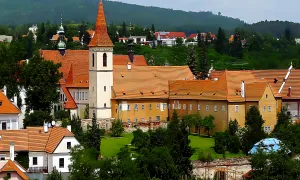
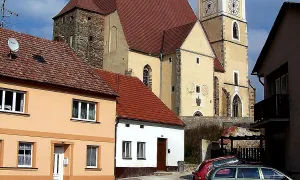
Photos from the area
Real photos taken near the monument

Zdroj a licence jsou uvedeny u každého snímku.
Tips from visitors
No tips yet. Be the first!
Log in and add your tip.
Sources and literature
Fotografie: Harold / CC BY-SA 4.0 — Wikimedia Commons. The author and licence also appear when you hover over the image.
Faktickým podkladem tohoto textu byl článek na Wikipedii, jehož autory jsou přispěvatelé Wikipedie. Článek je dostupný pod licencí CC BY-SA 4.0.
Location on the map

Příběhy a pověsti
Legendy, pověsti a příběhy spjaté s touto památkou
Fotografie návštěvníků
Zatím žádné fotografie. Buďte první, kdo přidá fotografii z návštěvy!
Přihlaste se a přidejte svou fotografii nebo hodnoťte.
Za ověřenou návštěvu v aplikaci získáte víc bodů — poznáme podle GPS, že jste na místě.
Reviews and comments