






Důl Jindřich (Moravská Ostrava) Other
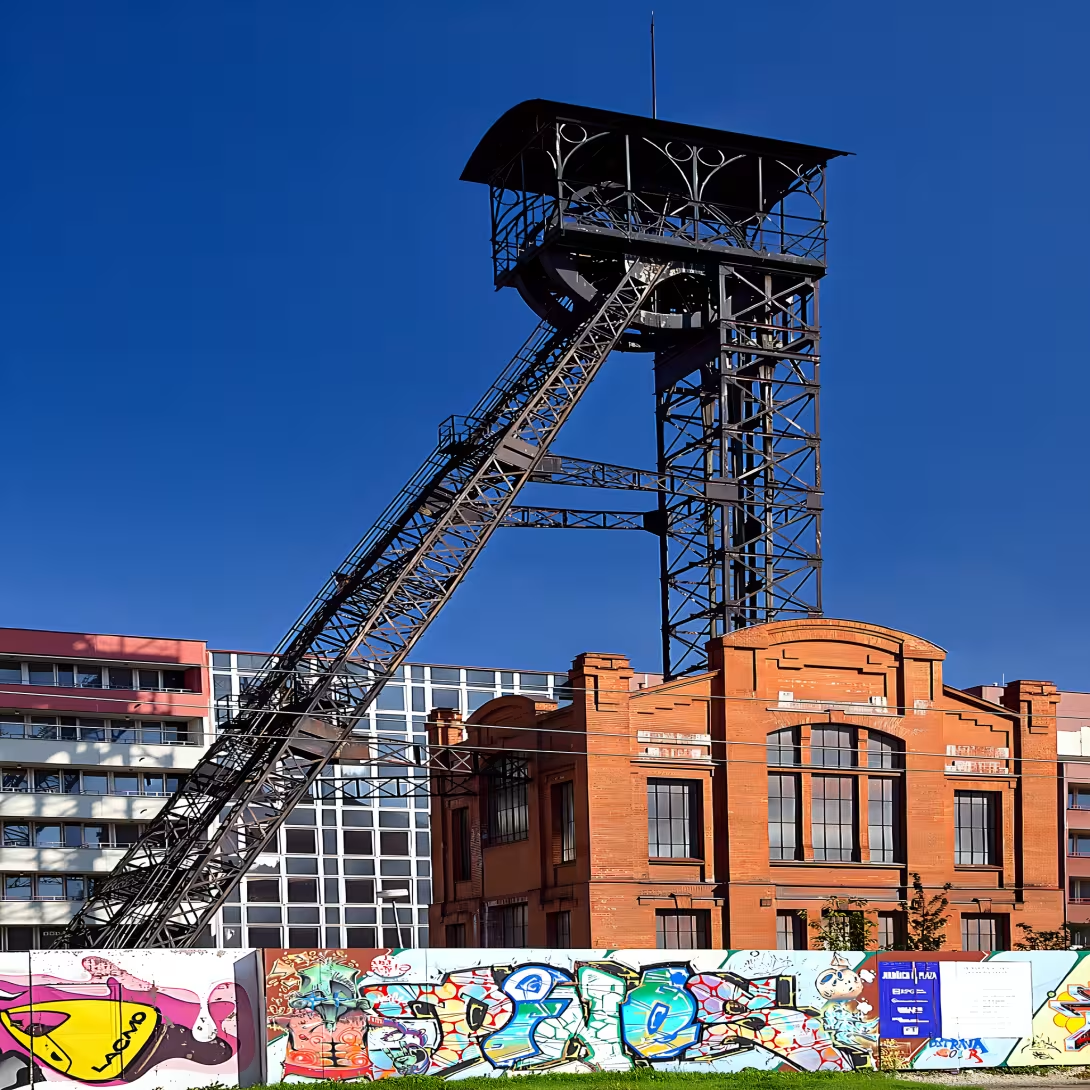
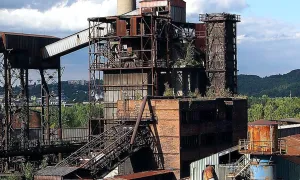
Důl Jindřich in Moravská Ostrava stands as a testament to the region's industrial heritage. Its remaining structures—a shaft building and hoisting tower—mark the site of what was once a deep coal mine integral to the Northern Railway Ferdinand's (SDF) operations. Constructed in 1846, this monument features architectural elements reflecting the Secessionist style, despite its industrial origins. The site offers insights into the mid-19th century industrial boom and railway expansion within the Austrian Empire.
The origin of Důl Jindřich dates back to the mid-1800s when the area was part of the Austrian Empire, experiencing significant industrial growth. Initially, a C. k. kutací and vrtební komise conducted prospecting activities in what would become Důl Jindřich, searching for coal seams through deepening shafts. In 1846, these efforts culminated with the commencement of shaft digging, marking the beginning of a significant mining operation.
Architecturally, the site is distinguished by its Secessionist elements, particularly evident in the shaft building's three-story façade featuring segmented shields and side pylons. The hoisting tower, constructed from wrought iron lattice work, emphasizes structural design over ornamental detail. These features highlight the blend of functionality and aesthetic consideration typical of industrial architecture during this period.
Ownership of Důl Jindřich transitioned in 1856 when it was acquired by Výhradně privilegované dráhy císaře Ferdinanda, marking its integration into broader railway operations. The mine underwent several ownership changes and operational shifts over the years, including being integrated with Dolu František in 1932, before eventually becoming part of OKD-Doprava.
Key events in Důl Jindřich's history include its conversion from a prospecting to a multi-purpose shaft in 1848, a renaming in honor of Heinrich Sychrovský in 1856, and significant damage from a major flood in 1888. These incidents underscore the challenges and transformations faced by industrial operations during this era.
Today, Důl Jindřich is remembered primarily through its surviving structures—the hoisting tower and shaft building—which have been preserved as historical monuments. The site was officially recognized for its cultural significance when it was listed on the state registry of protected monuments in 1958. Visitors to Moravská Ostrava can explore these remnants, gaining a glimpse into the industrial past that shaped the region.
Důl Jindřich offers a unique window into the industrial history and architectural heritage of Moravská Ostrava. Its preserved structures serve as enduring reminders of the area's role in coal mining and railway development during the 19th century. For those interested in industrial archaeology or regional history, a visit to this site provides valuable insights and an opportunity to connect with the past.
Then and now
Drag the slider to compare how the landmark may have looked when it was built with the view today.
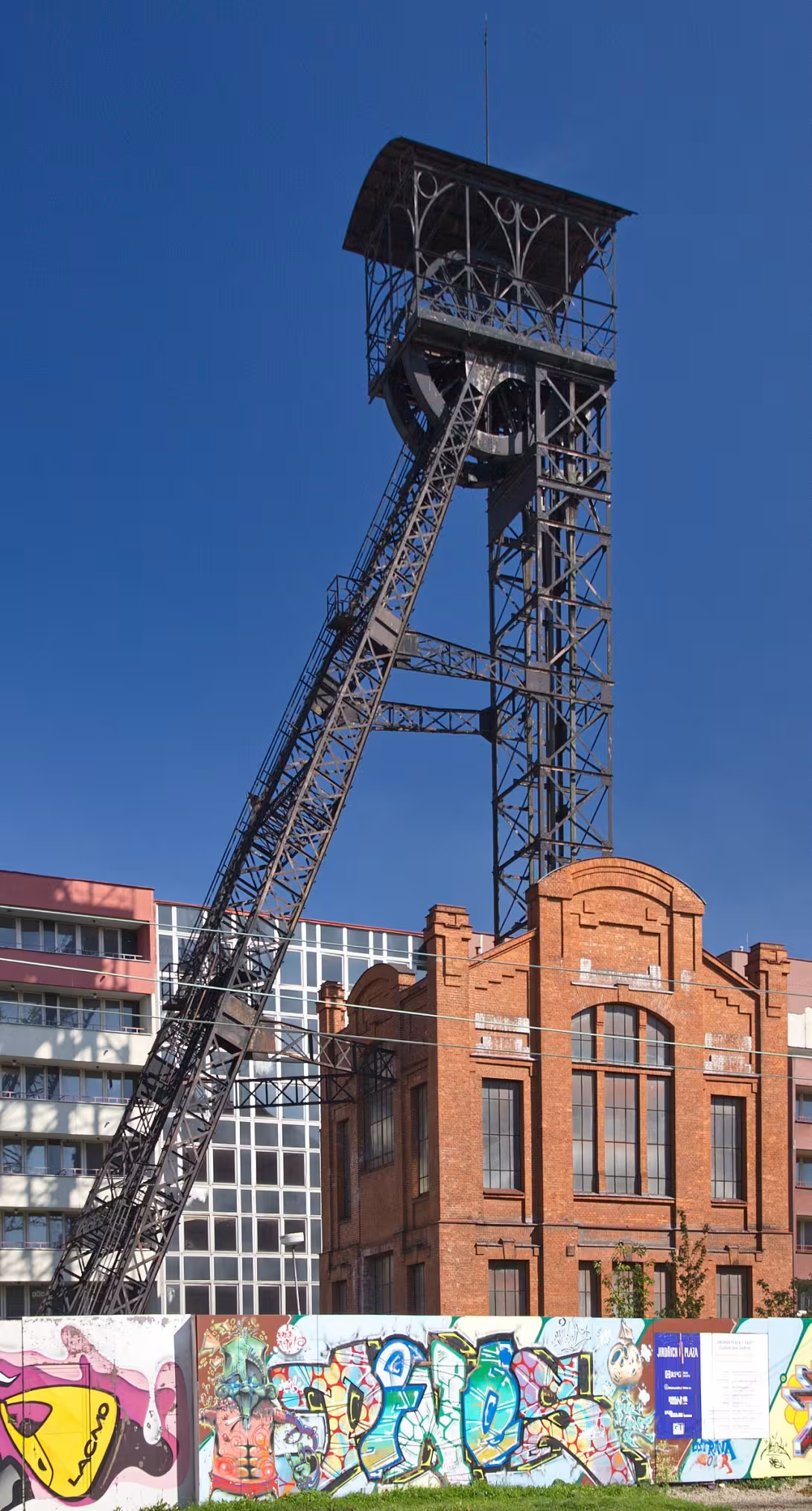
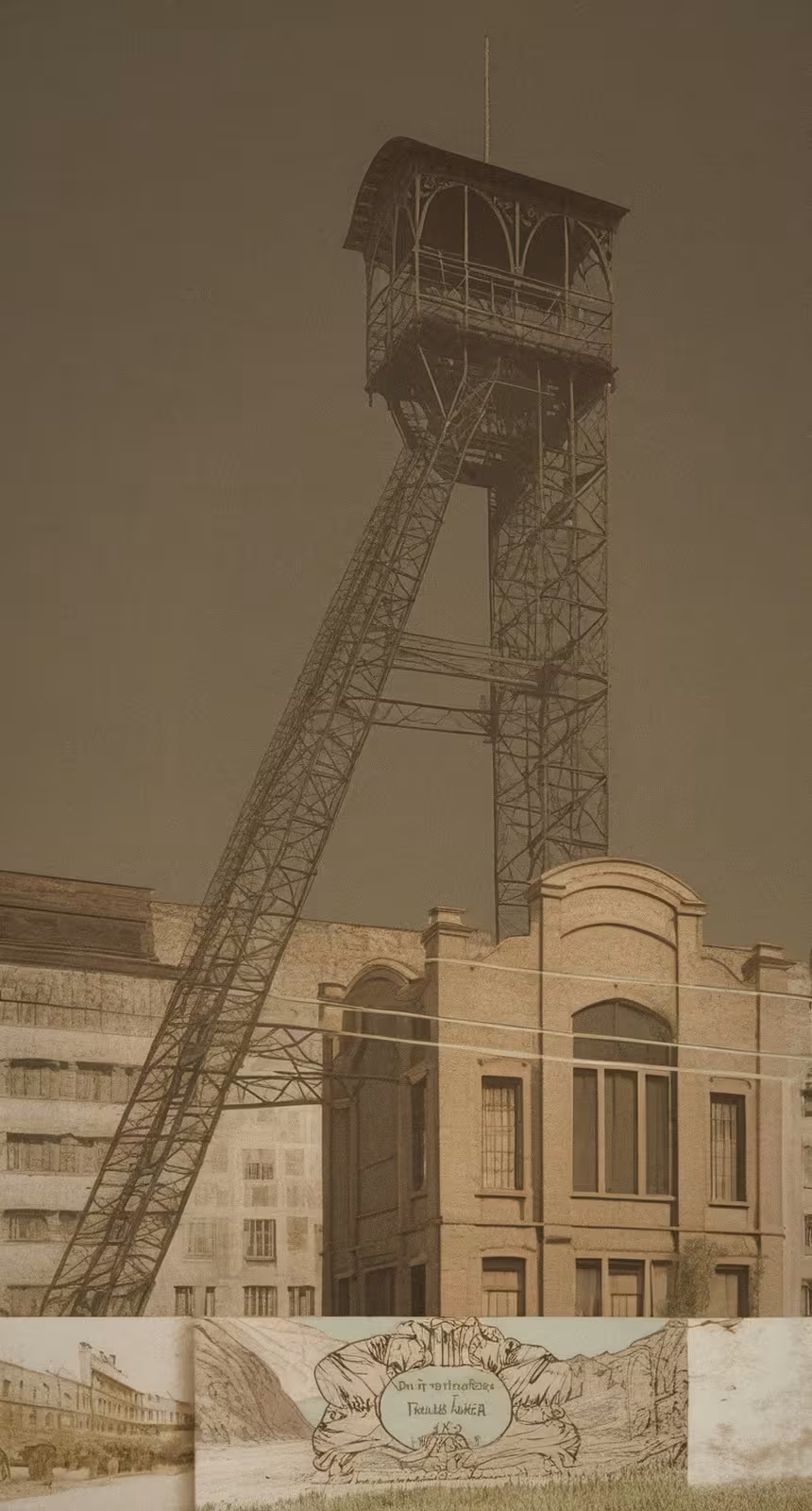
The historical appearance on the left is an AI-generated visualisation and serves as inspiration only.
Historical milestones
- 1846
- Commencement of shaft excavation for Mine Jindřich.
- 1848
- Conversion of the shaft to a multi-purpose use.
- 1856
- Mine renamed to Důl Jindřich and sold to the Privileged Railway of Emperor Ferdinand.
- 1888
- Significant damage caused by a major flood.
- 1932
- Integration with Mine František.
- 1958
- Inclusion in the state list of protected cultural monuments.
Architectural development
The site underwent several phases of development from its initial construction in 1846 to modernization efforts in the early 20th century. The shaft building showcases Secessionist architectural elements, while the hoisting tower emphasizes structural design.
Historical events
1848: The shaft was converted from a prospecting to a multi-purpose mine shaft.
1856: Renamed to Důl Jindřich, possibly in honor of Heinrich Sychrovský.
1888: A major flood caused significant damage and flooding within the mine.
1932: Mining operations ceased, and it was integrated with Dolu František.
Owners
Initially owned by the Austrian state, the mine was acquired in 1856 by the Výhradně privilegované dráhy císaře Ferdinanda. It later became part of OKD-Doprava before its closure and subsequent partial demolition.
Points of interest
- Despite its industrial origins, Důl Jindřich's architecture includes Secessionist elements, a style more commonly associated with art and design rather than utilitarian structures like coal mines.
- The site was named in honor of Heinrich Sychrovský in 1856, although there is limited public information on his specific contributions or why he was chosen to have the mine renamed after him.
- In 1888, Důl Jindřich suffered significant damage from a major flood, highlighting the vulnerability of industrial operations to natural disasters during this period and the challenges faced in maintaining such facilities.
- The transition of ownership to Výhradně privilegované dráhy císaře Ferdinanda in 1856 marked its integration into broader railway operations, reflecting the strategic importance of coal mines in supporting railway infrastructure within the Austrian Empire.
- Důl Jindřich's listing on the state registry of protected monuments in 1958 underscores its cultural and historical significance, preserving it as a site where visitors can explore the industrial past that shaped Moravská Ostrava.
Guide
This guide is narrated by a synthetic voice generated by artificial intelligence.
Show guide text
This text was created by artificial intelligence and has not been editorially reviewed. It may contain inaccuracies.
Jindřich Mine was a hard coal deep mine located directly in the center of Moravská Ostrava. Today it is remembered by a shaft building with a headframe located on the eastern side of Nádražní Street, not far from the intersection with 30. dubna Street. The mine was one of the Ostrava mines of the Northern Railway of Emperor Ferdinand.
Its origins date back to the time when the Austrian state was searching for coal in the Ostrava region. The Ministry of Finance ordered trial mining work to begin in 1842. Based on a mining concession, trial shaft number ten was begun on November 2, 1846, named after the mining district of the same name. In 1853, it was converted into a deep mine. At that time, a new boiler room and chimney were built. A year later, a more powerful steam hoisting engine, a steam pump for water removal, and a fan with an output of six horsepower were added.
In 1856, the mine, which was still under construction at the time, was purchased by the Exclusively Privileged Railway of Emperor Ferdinand Company. They soon renamed it Jindřich, allegedly in honor of the company's general secretary, Jindřích Sychrovský. In 1859, safety lamps were introduced throughout the entire mine. Regular coal extraction began in 1863. The shaft then measured over 200 meters. The mine then underwent repeated modernization. Its largest reconstruction took place between 1913 and 1916, when the shafts reached their final depth.
One of the most severe disasters was the great flood in Ostrava on March 30, 1888. Water broke through the shaft into the mine at that time, and its pumping and removal of the consequences took over two months.
Regular extraction ended in 1932, when Jindřich was connected to the František Mine in Přívoz. Until 1960, it served as an auxiliary facility for ventilation, extraordinary transport of miners, and material transport. Then gradual liquidation began. The shafts were filled in, and work was completed in 1982. Most of the buildings were demolished during the construction of a hotel, including the engine room, which together with the headframe and shaft building formed one unit.
The preserved headframe is a lattice steel riveted structure. Except for the broken arches on the upper floor, it appears purely technical. The shaft building made of exposed brick, on the other hand, shows Art Nouveau stylistic elements. It has a three-axled façade with segmental gables and side pylons. The headframe and shaft building were entered in the state heritage list on May 3, 1958.
Tips for visitors
The best time to visit Důl Jindřich is during late spring or early autumn when the weather is mild, making it comfortable for walking around the site. These seasons also offer pleasant lighting conditions for photography and fewer crowds compared to summer months. Additionally, visiting on weekdays can provide a more peaceful experience as weekends might attract more visitors.
Public transport is accessible, with buses connecting the area to other parts of Moravská Ostrava.
When visiting Důl Jindřich, it's recommended to bring comfortable walking shoes as you'll likely be exploring on foot. A hat and sunscreen are advisable if visiting during sunny days in spring or autumn. Additionally, carrying water is a good idea to stay hydrated throughout your visit. Since the area has an urban setting with limited natural shade, these items will enhance your comfort.
For photography enthusiasts, the shaft building and hoisting tower offer excellent subjects against the backdrop of Moravská Ostrava's skyline. Early morning or late afternoon light provides soft shadows that can add depth to your photos. Exploring different angles around the site may reveal unique perspectives, especially when capturing the contrast between industrial history and modern urban development.
Nearby attractions within a 30-minute drive include other historical sites in Moravská Ostrava, such as the local museum dedicated to the region's mining heritage. For families with children, consider visiting nearby parks or playgrounds where kids can enjoy some outdoor activities after exploring Důl Jindřich.
Frequently asked questions
Can the monument be visited?
We have not verified whether this monument is accessible. Please ask the owner or operator, or the local municipal office.
Where is the monument?
Location: Nádražní, Moravská Ostrava, Ostrava, Moravskoslezský kraj. The map on this page shows the exact spot.
Why is the monument protected?
It is listed in the Central List of Cultural Monuments of the Czech Republic as a cultural monument (register no. 31179/8-2866).
Businesses nearby
Do you run a restaurant, accommodation, shop, museum, rental, wellness or other visitor service near this monument? Show yourself directly to the people heading to it — this is how they will see you in the app and on the web:
Events nearby
Zdroj akcí: otevřená data měst a obcí ČR (Národní katalog otevřených dat) a kalendář akcí Národního památkového ústavu.
Nearby
Located in Moravská Ostrava, the area is characterized by urban development with no significant natural features within a 5 km radius.
Accommodation nearby
Themed route
Tematická výletní trasa: Důl Jindřich a okolí
1. Důl Jindřich (Moravská Ostrava) - Typ: Historické dědictví, průmyslová památka - Proč stojí za návštěvu: Důl Jindřich je klíčovou historickou lokalitou v Moravské Ostravě, která představuje bohatou minulost hornictví v oblasti. Navštívte tento důl a prozkoumejte jeho vybavené expozice, které poskytují poutavý vhled do života horníků a technických aspektů těžby uhlí v 19. století.
2. Nádražní náměstí (Moravská Ostrava) - Typ: Městské centrum, historický prostor - Proč stojí za návštěvu: Nádražní náměstí je srdcem Moravské Ostravy a nabízí pohled na architektonicky zajímavé budovy z období průmyslového rozvoje. Tato lokalita slouží jako výchozí bod pro další prozkoumání historie města, přičemž je ideální místo na odpočinek a návštěvu sousedních obchodů.
3. Památník horníků (Moravská Ostrava) - Typ: Památník, historický symbol - Proč stojí za návštěvu: Tento památník je věnován památce horníků a symbolizuje jejich přínos pro region. Je to místo k zamyšlení nad dědictvím těžby uhlí, které formovalo místní společnost i ekonomiku. Navštívte ho jako součást pochopení historického kontextu Důlu Jindřich.
4. Památný park (Moravská Ostrava) - Typ: Městský park, rekreační prostor - Proč stojí za návštěvu: I když je v blízkosti urbanizované oblasti, památný park nabízí místo pro odpočinek a relaxaci. Je to ideální zastávka na trase pro pohled na místní flóru a faunu a pro krátkou přestávku mezi návštěvami historických lokalit.
Tato trasa vám umožňuje nejen objevit hlavní cíl, Důl Jindřich, ale také pochopit jeho kontext a význam ve společnosti Moravské Ostravy.
Seasonal recommendations
Jaro: During the spring season, Důl Jindřich in Moravská Ostrava transforms into a lively and attractive refuge for visitors. Sunny days and mild temperatures offer ideal conditions to explore historical structures, while the rejuvenating nature around provides a calming atmosphere. The lighting is natural, and sunlight highlights architectural details, allowing visitors to fully appreciate the site's beauty. Those visiting in this season are advised to wear comfortable clothing and perhaps bring an umbrella for sudden spring showers. Despite a slightly increased number of tourists during this period, it is recommended to arrive early in the morning to enjoy a peaceful stroll.
Léto: In summer, Důl Jindřich becomes a popular destination among tourists thanks to long days and warm evenings that allow extensive exploration of the monument. Sunny lighting brings life to historical walls, while surrounding green vegetation offers a beautiful backdrop. However, larger crowds are expected in the summer, especially during school holidays and evenings when people seek cool refuge. It is therefore advisable to visit early in the morning or later in the afternoon to avoid peak times. Wearing light clothing and bringing plenty of water is essential for a comfortable visit during this warm season.
Podzim: Autumn brings a specific, quiet character to Důl Jindřich. The shading leaves and changing colors of trees create a stunning backdrop for the historical monument, while cooler temperatures reduce visitor numbers. Sunny days remain ideal times for strolls, but incoming clouds and rainy periods require preparation with warmer clothing and possibly an umbrella. This season is also suitable for visits during Advent days when the atmosphere offers a gentle prelude to winter.
Zima: The winter season brings Důl Jindřich into complete tranquility with its cold and often snowy conditions. Lighting is slower, but moonlight provides a unique atmosphere for visitors seeking peace and quiet. Wearing warm clothing and appropriate footwear for snowy conditions is essential. Despite the shorter hours, the winter period can be ideal for those looking for a calm visit without long lines and crowd pressure.
Visualizations and artistic views


The visualisations are generated by artificial intelligence and serve as inspiration.
Photos from the area
Real photos taken near the monument


Zdroj a licence jsou uvedeny u každého snímku.
Tips from visitors
No tips yet. Be the first!
Log in and add your tip.
Sources and literature
Photos: Hons084 / CC BY-SA 4.0, rozlišení zvýšeno umělou inteligencí — Wikimedia Commons. The author and licence also appear when you hover over the image.
Faktickým podkladem tohoto textu byl článek na Wikipedii, jehož autory jsou přispěvatelé Wikipedie. Článek je dostupný pod licencí CC BY-SA 4.0.
Location on the map


Příběhy a pověsti
Legendy, pověsti a příběhy spjaté s touto památkou

Fotografie návštěvníků
Zatím žádné fotografie. Buďte první, kdo přidá fotografii z návštěvy!
Log in a přidejte svou fotografii nebo hodnoťte.
Za ověřenou návštěvu v aplikaci získáte víc bodů — poznáme podle GPS, že jste na místě.
Reviews and comments