






Dům čp. 102 (Kadaň) House
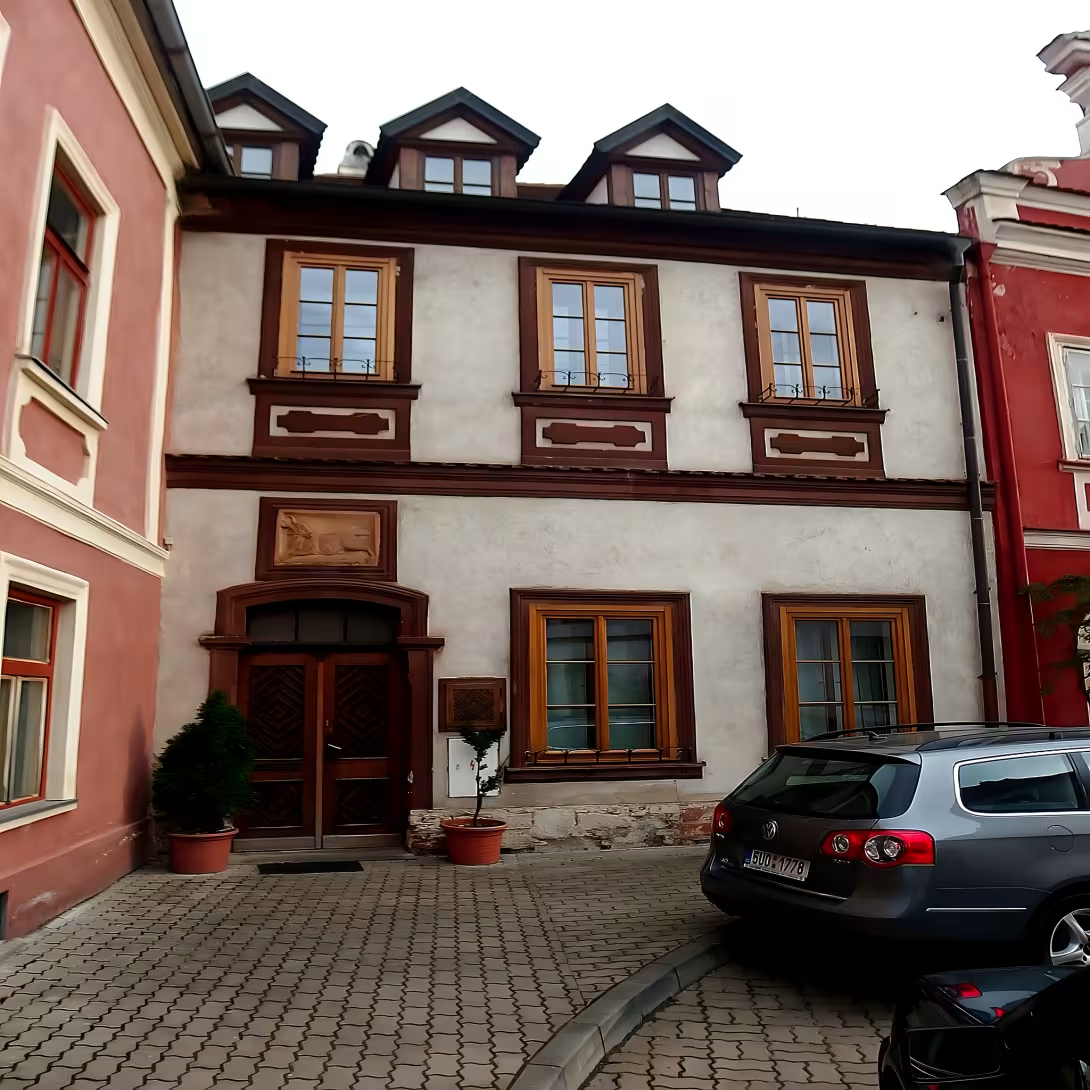
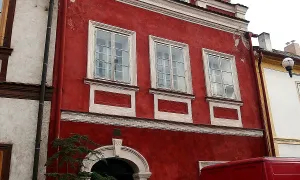
The house U Kozoroha, known as the house No. 102, is a historic township building in Sládkov Street on the Old Town of Kadani. The original Gothic building underwent Renaissance and Baroque modifications over the centuries and was fundamentally reconstructed after the Great City Fire in 1811. The importance of the building is underlined by the sandstone home sign with the motif of the Capricorn, created in the 1970s by the Cadanese Restoration Petr Novotný.
There are very few reports of the oldest history of the house. Its Gothic core, however, refers to the period of urban flowering and the establishment of craftsmanship in Czech countries under the rule of Luxembourg. The township in the royal cities was growing at that time, as was reflected in the more demanding development of houses.
The architectural form of the construction is the result of successive reconstructions. The original Gothic foundation was enriched by Renaissance and Baroque elements. After the devastating fire in 1811 the house underwent a major reconstruction which changed its internal and external disposition. The sandstone sign with the Capricorn above the portal refers to the Renaissance popularity of ancient mythology and horoscopes; Capricorn, for example, was an emblematic animal of Emperor Rudolf II.
The property history of the house has been documented since the mid-19th century. Since 1857, the Heinrich family owned the building, with Wilhelm Heinrich being a well-known cattle trader. Around 1894, Katharina Kowarschik operated the tailor shop. In 1925, the house was bought by married men Raimund and Anna Puntzet, who came from Teplick. Raimund Puntzet was a renowned baker's master, whose pastries were taken by locals and soldiers from the nearby Kadani Castle. The house was briefly housed by Ernst and Rosa- Ruth Michalitschke, whose daughter Ingeborg was born here in 1923. After 1945 and the subsequent redeployment of the German population, the house decayed until the Novotný family reconstructed it in the 1970s.
In the Middle Ages, Sládkov Street, where the house is standing, was called Sladka and was the center of the gingerbread and pastry makers. Products such as Lorentz Pfefferkorn cakes were exported to mining towns in Czech and Saxon Krušnohoří. As of 1612, the name Sweet Hole appeared, which could refer to a deep ditch at Kadani Castle, or to a high concentration of pubs and brothels in this location.
The House U Kozoroha represents a valuable document of the historical development of the Kadani Old Town, which bears traces of transformations from the Middle Ages to the modern era. Visiting this place offers insight into the history of urban life in close proximity to the castle and river Ohře. The building is part of a monument of value, which completes the character of the historical core of the city.
Historical milestones
- 1811
- The house burned down in the great fire of the town of Kadana and was subsequently fundamentally reconstructed.
- 1857
- The house became the property of the Heinrich family.
- 1925
- Raimund and Anna Puntzet bought the house.
- 1970
- In the 1970s, a large reconstruction of the house was carried out by the Novotných family.
Architectural development
The original Gothic house was gradually rebuilt in Renaissance and Baroque style. After the fire in 1811 there was a major reconstruction which changed its internal and external disposition. Above the portal is a sandstone home sign created in the 20th century.
Historical events
The great fire of the city of Kadana in 1811, relegation of the German population after 1945, reconstruction of the house by the Novotny family in the 1970s.
Owners
The Heinrich family (from 1857), married to Raimund and Anna Puntzet (from 1925), the Novotny family (from the 1970s).
Points of interest
- The house has a sandstone home sign with the motif of the Capricorn, created by the restoration Petr Novotný in the 1970s. - The original Gothic foundation of the house has been enriched over the centuries with Renaissance and Baroque elements and after the fire in eighteen hundred eleven he underwent a major reconstruction. - The baker master Raimund Puntzet, who owned the house since nineteen hundred twenty-five, supplied bread to local residents and soldiers from nearby castle. - Sládkova Street, where the house is located, was called Sladka in the Middle Ages and was the center of meth and candy producers. - The name Sweet Hole, which was used for the street in 16 hundred and twelve, could refer to a moat near the castle or to a high number of pubs and brothels.
Guide
Show guide text
This text was created by artificial intelligence and has not been editorially reviewed. It may contain inaccuracies.
Welcome to the beautiful city of Kadaň. Right now you're standing in one of the most important places in the old town, in Sládkov Street. Before we go into the deep investigation of history, just stop for a moment. Feel the atmosphere of this place. Feel the scent of the old walls and the calm that radiates from these historic buildings. In front of your eyes is house number one hundred and two, which is known in this city under a much more poetic name - the house of Capricorn. This object is not just an ordinary building made of stone and mortar. He's a living witness for centuries who survived storms, changes in governments and destructive elements. Look at his facade and try to imagine how many people have been here for the past few hundred years looking for shelter, rest or simply home. To understand what you're seeing right now, we need to go back deep into the past. This house has not only one face, but many layers that have gradually piped into each other. His story began at the time of goth. Imagine those times when architecture was raw, strong and sought stability in the first place. It was at that time that the foundations were created that kept this house in place. But time didn't last. How people's minds changed and how the world changed, so did this house. During the next century he went through modifications during the Renaissance, when emphasis was placed on harmony and new shapes. Later came the Baroque era, which brought a different style and a different aesthetics into its form. Each of these era has left a mark in the architecture of the house, which creates the fascinating mixture that you're seeing right now. However, the greatest test of resistance had to face this house in eighteen hundred eleven. At that time, the city of Kadaň swallowed up a huge and devastating fire that changed the face of the entire site. Many buildings at that time were unable to face such destruction, but this house was born again. After this great disaster, the building underwent a major reconstruction. This event was a key point in its history because that is when today's form began to form in the direction we see it today. CZECH NOTE: The reconstruction after the fire was not just a repair, it was a new life for this historical object. Now pay attention to the details you have right in front of you. Even if we don't know the names of the particular architects who designed the different parts of this house in ancient times, their work is still evident. Feel how different styles mix in architecture. If you look at the surface of the building, you'll notice the material work. The house uses sandstone, which is typical of this area. Sandstone has this special ability to capture light while acting very naturally and organically. Now look at the most important thing. Note the home sign that's carved into the sandstone. It's Capricorn's motive. This sign is the key to the identity of the whole house. It is a symbol that has helped people in the past to navigate the streets when not all houses have been numbered as they are today. This Capricorn is distinctive, understandable and gives the entire facade its unique character. The history of this place is not only about stones, but above all about the people who lived here. Every family that owned this house has left a mark in its history. In a thousand and eight hundred and fifty-seven, the house became part of the Heinrich family. Wilhelm Heinrich was one of those who left their trail at this point in the period after the Great Fire. Later, in the year one thousand nine hundred twenty-five, the house became home to the marriage of Raimund and Anna Puntzet. These people lived their daily lives here, built their fates and were part of the vibrant life of the old town. And we must not forget the Novotny family, who did extensive reconstruction in the 1970s. Thanks to their care and effort, the house has returned to the form that allows us to admire it so beautifully today. Do you perhaps feel that the sandstone Capricorn looks very clean and precise? You're right. And here comes one interesting thing that may surprise you. Although the house itself is very old and its roots date back to the Middle Ages, this particular home sign with the motif of the Capricorn is not as ancient as it might seem. It was created by the Petr Novotný restorer in the 1970s. It was his deliberate act to link history with modern monument care. Petr Novotný showed great respect for tradition in this work, but at the same time created something new that gives the house his name and a clear identity. It is a fascinating example of how modern man can go into history and help preserve them for future generations. So this Capricorn is the link between the old world and our present time. You're standing in front of a building that's a living history teacher. You can see the strength of the Renaissance, the elegance of the Baroque and the resistance of a devastating fire. You see in it the work of masters of sandstone cutting and the care of the families who lived here. I hope this short journey over time has helped you better understand the importance of this place. Kadaň has many other secrets and beautiful views for you. So continue the tour of the old town, walk through its narrow streets and let yourself drift through the atmosphere of this historic jewel. Thank you for spending this moment with us. Goodbye and enjoy the next part of your journey.
Tips for visitors
The best time to visit is in the morning on working days, when the historic centre has a quieter atmosphere and soft light ideally highlights the architectural details of the facade of the house U Kozoroha. You can easily reach Kadana by car or public transport, with the current connections and parking possibilities near Sládkova Street we recommend to check online search engines. With you take comfortable shoes to walk on historic tiles and a camera, as the house offers beautiful views to narrow alleys that best stand out in the sun's side. In the immediate vicinity do not miss a walk to the Ohří River, a visit to Kadaň Castle and a tour of the entire historical city centre. For families with children the location is ideal thanks to the walking availability of all the sights and the possibility of relaxing near the river, where there is enough room for children to move.
Businesses nearby
Do you run a restaurant, accommodation, shop, museum, rental, wellness or other visitor service near this monument? Show yourself directly to the people heading to it — this is how they will see you in the app and on the web:
Nearby
Kadaňský hrad, historické centrum města Kadaně, řeka Ohře.
Accommodation nearby
Themed route
Thematic cruise route Kadaň
1.Dům čp. 102 (Kadaň)
Type: Historical residential houses
Why is worth a visit: This house is an example of the historical architecture of the city of Kadana and offers a view of the lifestyle of past generations. It is the starting point for the cultural heritage of the village.
2. Kadaň Castle
Type: Historical Fortress
Why it is worth a visit: Kadaň Castle is one of the oldest walls in the Czech Republic and offers an amazing panoramic view of the city and river Ohře. Its history dates back to the Middle Ages, making it necessary to explore.
3. The historical center of Kadana
Type: Town Square and street
Why is it worth a visit: Walk through the historic city centre allows you to discover architectural diversity from goth to renaissance to Baroque. There are also other monuments that contribute to the atmosphere of the ancient city.
4. River of the Bend
Type: Natural landscape
Why is it worth a visit: Walk along the Ohre River offers quiet moments for relaxation while looking at the water flow which played an important role in the development of the city. It is an ideal place for short rest during a walk around the historic centre.
This route offers a comprehensive view of the cultural and natural wealth of the village Kadaň while leading you to some of its most famous monuments.
Seasonal recommendations
Spring: In the spring period House No. 102 in Kadana appears in its most beautiful glow when the sun rays illuminate its historic facades and bring life to flowering gardens. The atmosphere is full of hope and renewal, making the visit unique. At this time the weather can be variable, so we recommend wearing layered clothes that allow you to adapt to both warm and cold today. In addition, it is advisable to visit the memory in the early afternoon when crowds are less likely and can enjoy peace.
Summer: Summer brings a long day full of sunshine, which emphasizes the architectural details of Dom no. 102 and the surrounding greener environment in an excellent way. The atmosphere is revived by activities outside and natural colors. This season, more people may visit the memory, especially on Friday afternoons or weekends, so it is good to arrive earlier and get a place in the parking lot. Do not forget to protect against the sun using a hat and cream against UV heat.
Autumn: In autumn House No. 102 turns into a handsome golden grove when leaves on trees receive fine shades of orange and yellow. The atmosphere is calm and quiet, making the visit ideal for relaxation and reflective walks. At this time the weather may be cold, so we recommend wearing warm clothes and perhaps an umbrella in the event of the first autumn rainfall. The best time to visit is in the morning or Wednesday week when the crowds are minimal.
Winter: Winter brings a quiet and less visited atmosphere around Dom no. 102 in Kadana. Cold weather and shorter days result in fewer tourists, which allows detailed exploration of the sights without risk of losing parking space. However, it is important to prepare for cool air and possible snow deposits, so we recommend wearing a warm jacket, gloves and shoes suitable for freezing conditions. The memory is best to visit at noon when the sun provides some heat rays.
Visualizations and artistic views

The visualisations are generated by artificial intelligence and serve as inspiration.
Photos from the area
Real photos taken near the monument


Zdroj a licence jsou uvedeny u každého snímku.
Tips from visitors
No tips yet. Be the first!
Log in and add your tip.
Sources and literature
Photos: Sandelius de Cadano / CC BY-SA 4.0, rozlišení zvýšeno umělou inteligencí — Wikimedia Commons. The author and licence also appear when you hover over the image.
Faktickým podkladem tohoto textu byl článek na Wikipedii, jehož autory jsou přispěvatelé Wikipedie. Článek je dostupný pod licencí CC BY-SA 4.0.
Location on the map
More monuments – Kadaň
Show all in the municipality
Příběhy a pověsti
Legendy, pověsti a příběhy spjaté s touto památkou
Fotografie návštěvníků
Zatím žádné fotografie. Buďte první, kdo přidá fotografii z návštěvy!
Log in a přidejte svou fotografii nebo hodnoťte.
Za ověřenou návštěvu v aplikaci získáte víc bodů — poznáme podle GPS, že jste na místě.
Reviews and comments