

Dům čp. 17 / Havlíčkův dům House
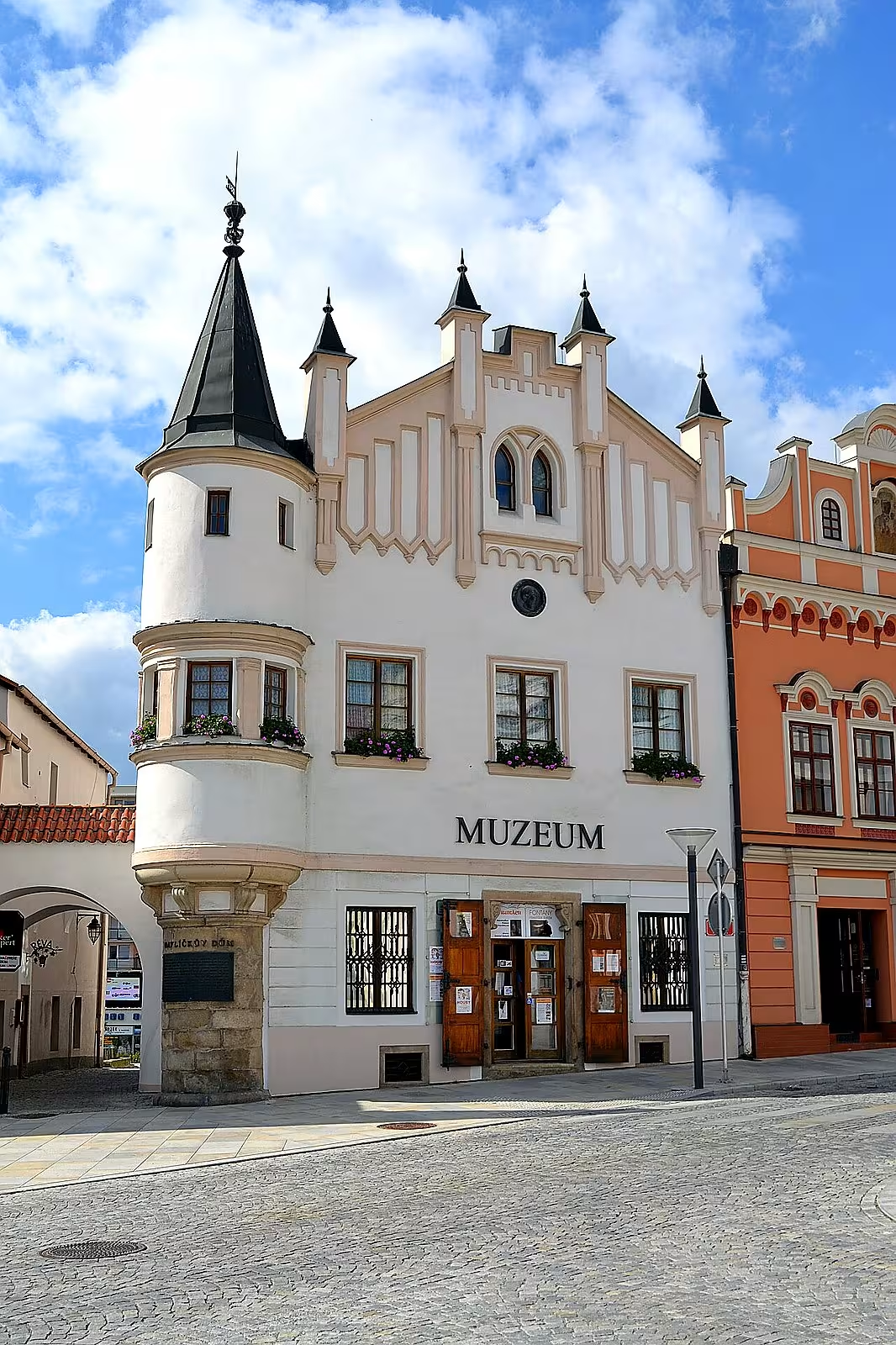
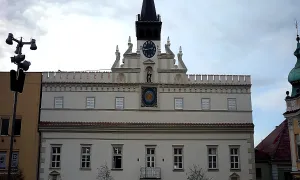
Havlicka's house in Havlicka Broda is a monument-protected Renaissance building, which today serves as a museum. It is particularly remarkable that in 1855-1856 there lived a journalist Karel Havlíček Borovský.
The building was created in the second half of the 16th century by the Hank family, which was originally called the Hankov house. It was built at the time of the renaissance in Czech cities, a period of development of trade and crafts. Since 1581 he was the owner of Jiří Pražán. In the first half of the 17th century the house was owned by Tobias Roland; performed one of the major reconstructions followed by the object's name Roland.
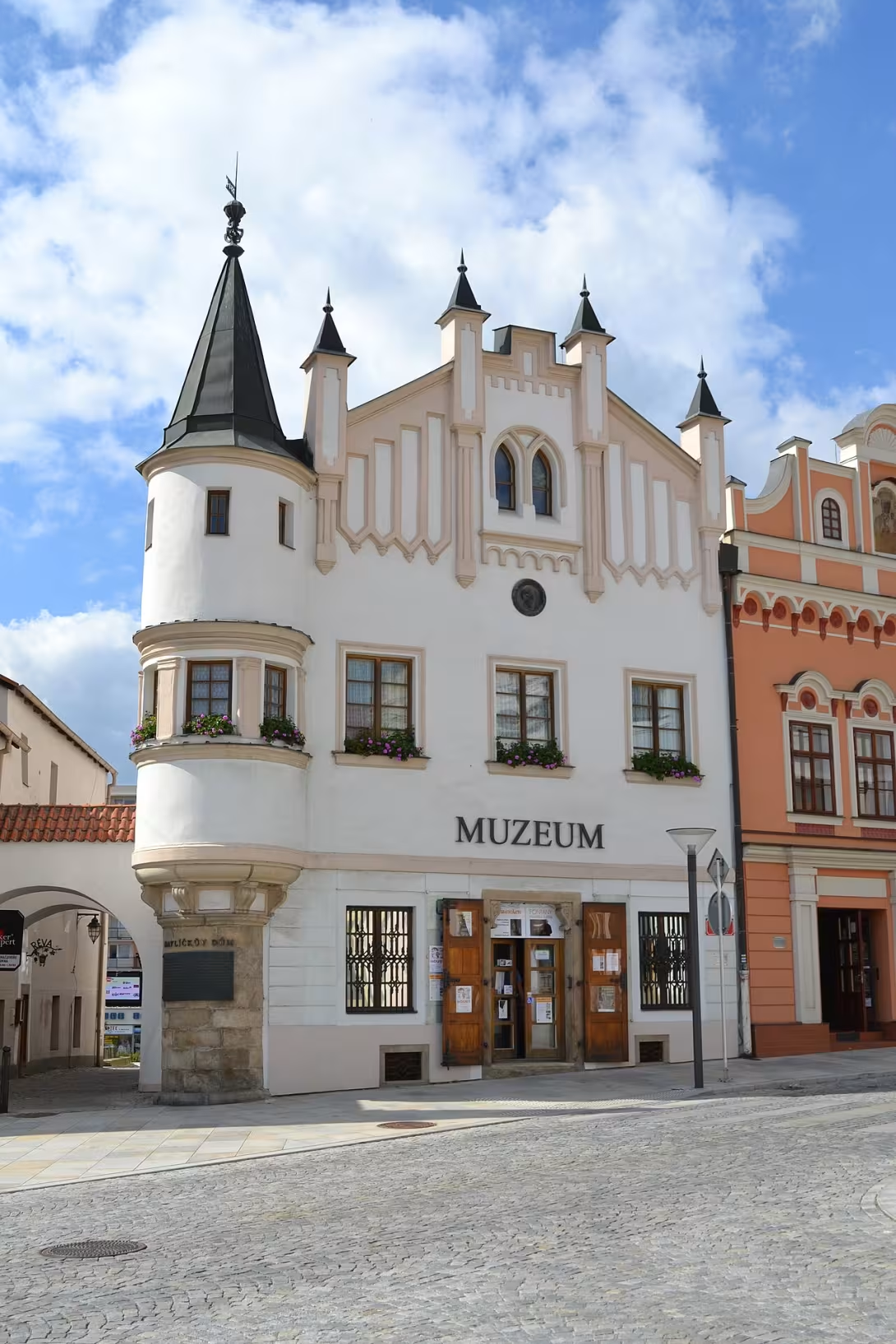
The house developed architecturally in response to several fires. In 1846 it was increased in the western part by one floor according to the project of local builder Jan Rathauski. On the ground floor, a shopping mall was set up in an area called Mázhaus. After the fire in 1860, the shield of the house was Gothic by the masonic master Martin Urban. Later, the facade was newly modified according to the design of architect František Schmoranz older. In 1893, the facade was supplemented by richer ornamentality. In 1956, there was an adaptation for museum purposes, seeking to return to the original design designed by Martin Urban.
In 1832, the buyer from Borová Matìj Havlíček bought the building, which operated the mixed goods store. The house gained significance in 1855-1856, when Karel Havlíček Borovský lived here with his mother Josephine after his return from Brixen. Because of this, the object was perceived as a pilgrimage site. After the death of Karel Havlíček in 1856, the house was sold in 1880 by Josefína Havlíčková City Savings Bank. In the same year, it did not fly into the yard to build a residential building. Since 1918, the house has been the property of the Czechoslovak Republic.
The key event in the history of the monument was 14 August 1871, when a metal medallion was festively revealed on the facade. In this event, the Festive Choir of Bedřich Smetana was heard and the author Karel Sabina gave the opening address.
The Museum and Gallery of Vysočina Havlíčkův Brod are currently in the building. The exhibition rooms take up the cellar, ground floor and first floor. The attic was adapted to offices and jobs in 2007-2008. For the purposes of the institution, the next house no. 18 was also modified. The museum manages thousands of collection items and focuses on the personalities of the region in the field of literature, art and journalism, especially Karl Havlíček Borovský.
Havlíček's house presents a valuable architectural document with Renaissance roots. It is a symbol of regional culture and national identity. Visiting the museum offers the opportunity to meet the history of one of the most important Czech journalists in the environment of his former home.
Then and now
Drag the slider to compare how the landmark may have looked when it was built with the view today.
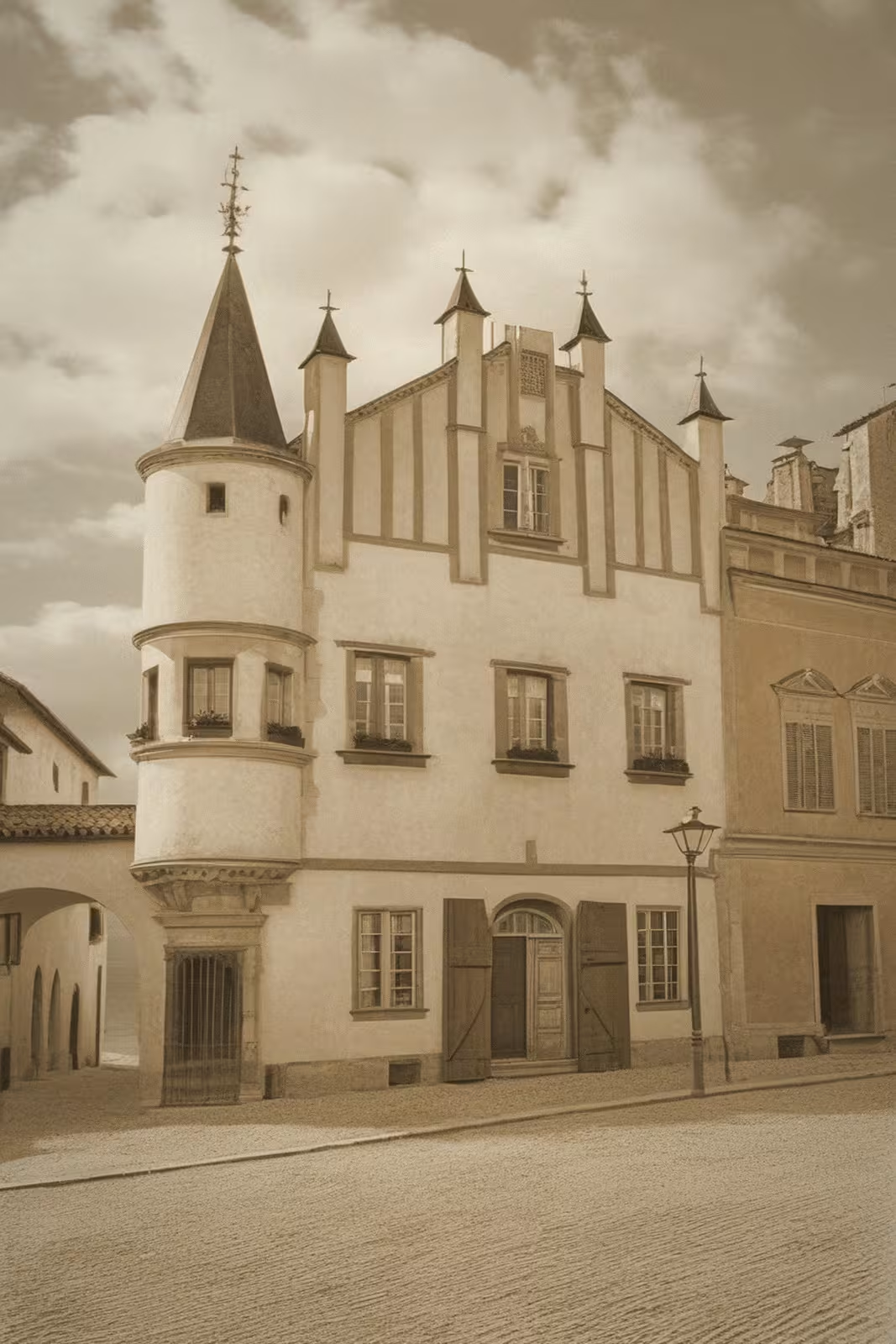
The historical appearance on the left is an AI-generated visualisation and serves as inspiration only.
Historical milestones
- 1581
- The owner of the house was Jiří Prajan.
- 1832
- Matìj Havlíček bought the house and set up a shopping store in it.
- 1858
- The building has been declared a protected monument.
- 1918
- The house became the property of the Czechoslovak Republic and a museum was created there.
Architectural development
The house was built in the Renaissance style, in 1846 it was increased by one floor in the western part. After the fire in 1860, the shield was gotized and later the facade was redesigned in a neo-gothic way. In 1956, adaptation for museum purposes took place with return to the original facade.
Historical events
In 1855-1856 Karel Havlíček Borovský lived here after returning from Brixen. In 1871 a metal medallion was festively revealed on the front of the house. In 1918, a museum space was established in the house.
Owners
family of Hank (2nd half of 16th century), Jiří Pražan (since 1581), Tobias Roland (1st half of 17th century), Matìj Havlíček (since 1832), City savings bank (from 1880), Czechoslovak Republic (from 1918)
Points of interest
- The building was created by the Hank family in the second half of the 16th century and was originally called the Hankov house. - In 1855-1856 there lived journalist Karel Havlíček Borovský together with his mother Josephine. - Due to the whereabouts of Karel Havlíček Borovski, the object was perceived as a pilgrimage. - On August 15th, 1871, a metal medallion was festively revealed on the facade. - The building currently houses the Museum and Gallery of Vysočina Havlíčkův Brod.
Guide
This guide is narrated by a synthetic voice generated by artificial intelligence.
Show guide text
This text was created by artificial intelligence and has not been editorially reviewed. It may contain inaccuracies.
Welcome to the heart of Havlicek Brod. You're standing in front of the house with the number 17 that many of us know as Havlicka's house. When you look at it now, you see a building that carries a layer of centuries. It's a place where the business history of the city meets with a deep sense of national pride. Feel the atmosphere of this place, which long ago stopped being just an ordinary house and became a symbol of the entire region.
Let us now come together to see how this building was created and by whom it was owned over time. The roots of this house go deep into the second half of the sixteenth century. It was built by the Hank family at the time, which is why the building was originally called the Hankov house. So imagine what this place looked like in the early modern era when the first people started living here. In the year a thousand five hundred and eighty-seven, one became owner of Jiří Pražan. The house gradually passed through the hands of different people and adapted to the needs of its time. A significant breakthrough occurred in the year of the thousand eight hundred thirty-two when Matìj Havlíček bought the building. He was the one who set up the store, which made the house the center of business and social relations.
Now pay attention to the very form of the building. Even if you see her present appearance today, remember, the house has Renaissance roots. If you look at the facade, remember that the building has been carrying traces of several reconstructions and devastating fires throughout its history. It was these events that shaped her face today. Architects who participated in the modifications such as Jan Rathauský, Martin Urban or František Schmoranz Sr. left their trail. Notice how the building works in the street space. It's a building that tells the story of survival and recovery. Its value was recognised very soon, as early as a thousand eight hundred fifty-eight, the building was declared a monument protected, which ensured that its history would not be erased.
However, if we ask why this house is so important to us today, we will not talk about stones, but about people. The most important clue the building has is the residence of the famous journalist Karl Havlíček Borovsky. In the years of a thousand eight hundred fifty-five to a thousand eight hundred fifty-six he lived here with his mother Josephine. Imagine Havlíček spending his days here writing his brave articles and thinking about the fate of his country. It is thanks to him that this house has become a place with a very strong charge. Karel Sabina is associated with the house. Staying as an important person as Karel Havlíček Borovský caused the object to be perceived as almost a pilgrimage place. People came here to touch the place where a man lived who fought for truth and freedom with his courage and pen.
Here we come to the part that may interest you. It's fascinating how the functions of one building can change over time. From the family residence of Hank through the shopping shop Matìj Havlíček to the house which became a national symbol. The interesting moment in history is the year one thousand nine hundred and eighteen. This year the house became the property of the young Czechoslovak Republic. That was the moment when the former dwelling and trade definitely became public space. It was this year that the museum was created. Since then, the building has been used to preserve monuments and educate other generations. Today, this house is part of the Museum and Gallery of Highlands, which makes it a key point for anyone who wants to understand the history of this region.
Now, if you look at the building before you again, you don't just see the old walls, but you see the monument to human effort and intellect. It is a place where the Renaissance meets modern times, where commercial practices meet high culture and political struggle. This house is living proof of how one particular place can affect the perception of the whole city and region.
We now invite you to enter and explore the space that has witnessed so many events. Take a look at the inner spaces and try to find the spirit of Karl Havlíček Borovsky. Go through the rooms that once served as a shop or living room, and perceive the quiet dialogue between the past and the present.
Thank you for spending these moments with us outside Havlicek's house. We hope that this brief interpretation has helped you better understand the importance of this construction. We wish you a pleasant rest of the tour and many new discoveries in our beautiful city. Goodbye.
Tips for visitors
The best time to visit is spring or autumn, when the streets of the city are quieter and the architecture of the Renaissance house excels in mild light. The building is available by car and public transport; Check the current connection in the search engine.
During the tour we recommend that you take a notebook with you so that you can write down interesting information about the life of Karel Havlíček Borovský. Since this is a historical object, we recommend soft-sole shoes.
For best photos we recommend focusing on detailed elements of the facade during the morning or late afternoon sun, which will highlight the structure of the old walls. The interior space offers an atmosphere of a shopping house from the past century.
Families with children can appreciate the story of what the life of merchants looked like in ancient times and what role the famous journalist played in Czech writing. There are no other mentioned places to visit in the area.
Frequently asked questions
Can the monument be visited?
Some buildings of this kind are open for guided tours, others serve another purpose or are privately owned. We have not verified whether and when this monument is open – please ask the operator.
What are the opening hours and admission?
We have not verified the opening hours or admission. Current information is published by the operator.
Where is the monument?
Location: Havlíčkův Brod. The map on this page shows the exact spot.
Why is the monument protected?
It is listed in the Central List of Cultural Monuments of the Czech Republic as a cultural monument (register no. 1000133183).
Businesses nearby
Do you run a restaurant, accommodation, shop, museum, rental, wellness or other visitor service near this monument? Show yourself directly to the people heading to it — this is how they will see you in the app and on the web:
Nearby
🏰 Historic sites (81)
- Mariánský sloup 0.1 km
- Obětem komunismu 1948-1989 0.2 km
- Bedřich Smetana 0.2 km
- Tomáš G. Masaryk 0.2 km
- obětem 1. a 2. světové války 0.4 km
- Karel Havlíček Borovský 0.4 km
- rumunským vojákům 2.8 km
- Památník Mistra Jana Husa 4.1 km
- Petrkov 4.6 km
- Rumunský památník 4.7 km
- zámek Pohled 5.2 km
- Zřícenina hradu Ronovec 5.9 km
- Vlastivědné muzeum 6.2 km
- obětem 1. světové války 6.2 km
- obětem 1. světové války 6.5 km
- Památník obětem napoleonských válek 7.0 km
- mistra Jana Husa s pamětní deskou obětí světových válek 7.2 km
- obětem 1. světové války 8.0 km
- Památce radňovských rodáků padlých a zmeřelých ve válce 1914-1918 8.1 km
- obětem světových válek 8.2 km
🍽️ Restaurants and dining (138)
- Kavárna Petrkov 0.0 km Havlíčkovo náměstí 180 +420569421297 web
- Coffee Noll 0.0 km Horní 182
- Čarodějka 0.0 km
- Piombino 0.1 km Havlíčkovo náměstí 178
- Na Rynku 0.1 km Havlíčkovo náměstí 51
- Taste of India 0.1 km Havlíčkovo náměstí 177
- U Zlatého Lva 0.1 km Havlíčkovo náměstí 176
- Bistro Noll 0.1 km
- Rebelův Sklep 0.1 km Horní 6
- Kouzlo domova 0.1 km Horní 196
- Favole di Pizza 0.1 km Havlíčkovo náměstí 165
- Kozlovna 0.1 km Smetanovo náměstí 1975 +420 775 233 187 web
- Rozvoj 0.1 km Smetanovo náměstí 261
- Sklep u Bílého Koně 0.1 km Havlíčkovo náměstí 169
- Asijské Bistro 0.1 km
- Radniční Restaurace 0.1 km Havlíčkovo náměstí 87
- Žolík 0.2 km
- Fíca 0.2 km Havlíčkova 2514
- Hokej Bar 0.2 km Dolní 156
- Kebab house 0.2 km Dolní 97
🏨 Accommodation (24)
- U Zlatého Lva 0.1 km Havlíčkovo náměstí 176
- Penzion Hurikán 0.5 km U Stadionu 2116
- Ariány 0.5 km Nádražní 40
- Penzion Jantar 0.7 km Bezručova 143 +420720522585 web
- Penzion Starr 0.7 km Žižkova 3070
- U Kroupů 0.9 km
- Hotel Brixen 0.9 km
- U Palánů 2.7 km Žďárská 1717
- Hostinec Na Lipce 3.4 km web
- Penzion Pelestrov 4.3 km
- Dočkalův mlýn 5.8 km
- Gerstein 8.7 km
- Penzion 324 11.7 km
- Brixen galerie 11.9 km
- Chalupa Blatov 12.2 km
- Hanesův mlýn 12.2 km web
- Autokemp Kachlička 12.3 km
- Chateau Herálec 12.4 km web
- Penzion 104 14.0 km
- Vysočina 14.1 km
🚲 Rentals and sport (25)
- ROAD Outdoor centrum 0.1 km Smetanovo náměstí 3290 web
- Velo Servis 0.3 km Havlíčkova 3305
- Elektrokola 0.3 km K Aleji 3977
- Cyklo Centrum 0.3 km Dolní 141
- Velo Servis 0.4 km Jihlavská 9
- Krytý plavecký bazén 0.5 km U Stadionu 3000
- Sportovně relaxační areál a zimní stadion Kotlina 0.5 km U Stadionu 2777 web
- TJ Jiskra Havlíčkův Brod 0.7 km
- Sport studio 0.7 km Humpolecká 257
- Miroslav Matějka 0.7 km Humpolecká 1395
- lezecká stěna Wolkerova 0.8 km Wolkerova 2941
- Sportovní areál Plovárenská 0.9 km
- Bowling Club Bar 1.0 km Sídliště Pražská 2970
- Koupaliště Havlíčkův Brod 1.0 km
- Sportisimo 1.3 km
- Střelnice 1.5 km
- Highland Sport 3.1 km
- Rekreační zařízení Ředkovec 9.9 km
- Koupaliště Přibyslav 11.9 km
- Sportovní areál Kámen 12.4 km
🥾 Hiking and nature (75)
- Park Budoucnost 0.2 km
- Haškovy sady 0.4 km
- Tři kříže na Kalvárii 0.5 km
- Park Budoucnost 0.6 km
- Replika středověké sklářské pece 1.6 km
- Šlapanka 2.9 km
- Pramen Herlify 3.0 km
- Na veselickém kopci 3.2 km
- Stříbrná studánka 5.3 km
- Vadínský kopec 5.9 km
- Pfafenberk 6.0 km
- Králova studánka 6.0 km
- U svaté Anny 6.3 km
- Prdlavka 6.7 km
- Horní Chlum 6.8 km
- Ločarův kámen 7.4 km
- Květnovský kopec 7.8 km
- Lochneska 8.1 km
- Ločarův kopec 8.7 km
- Pod Pejchalovým mlýnem 8.9 km
Accommodation nearby
Themed route
Havlickek's house (museum) - Main destination. Walk through the exhibition dedicated to the life and work of the famous writer.
Tanks and premises - Outdoor area by the house. A place for a short rest and a view of the architecture of the building.
Seasonal recommendations
In spring the city wakes up in fresh green and the light is fine, creating a pleasant atmosphere for walks around the house. We recommend shoes suitable for wet terrain and light coating of clothing, because morning cold can still be felt. The best time to visit is late afternoon hours, when the sun gently illuminates the facade.
Summer brings intense sunlight and hot air, which the city covers up in lethargy. It is advisable to choose light, breathable substances and not forget the sun protection. Due to high temperatures, it is best to leave early in the morning when the air is the cleanest and nearby parks offer the most shade.
In autumn, the surroundings of the monument are coloured in golden and brown tones, while the air is becoming flat. The atmosphere is calmer and melancholy, which matches the historical character of the building. It is practical to carry a waterproof coat or sweater and plan your way to the morning hours to make use of enough daylight.
Zimą dominates the city with a freezing calm and a possible layer of snow that will dampen the noise of the streets. The lighting is gray and the days are short, which creates a strict but impressive mood. Hot clothes, solid winter shoes and gloves are essential. The ideal is a visit in Advent times, when the city gets a more cozy look.
Visualizations and artistic views


The visualisations are generated by artificial intelligence and serve as inspiration.
Photos from the area
Real photos taken near the monument


Zdroj a licence jsou uvedeny u každého snímku.
Tips from visitors
No tips yet. Be the first!
Log in and add your tip.
Sources and literature
Photos: Poutník Jiří / CC BY-SA 3.0 — Wikimedia Commons. The author and licence also appear when you hover over the image.
Faktickým podkladem tohoto textu byl článek na Wikipedii, jehož autory jsou přispěvatelé Wikipedie. Článek je dostupný pod licencí CC BY-SA 4.0.
Location on the map


Příběhy a pověsti
Legendy, pověsti a příběhy spjaté s touto památkou
Fotografie návštěvníků
Přidat fotografiiZatím žádné fotografie. Buďte první, kdo přidá fotografii z návštěvy!
Máte k místu vzpomínku nebo zajímavý příběh?
Log in a přidejte svou fotografii nebo hodnoťte.
Za ověřenou návštěvu v aplikaci získáte víc bodů — poznáme podle GPS, že jste na místě.
Reviews and comments