






Dům čp. 9 House
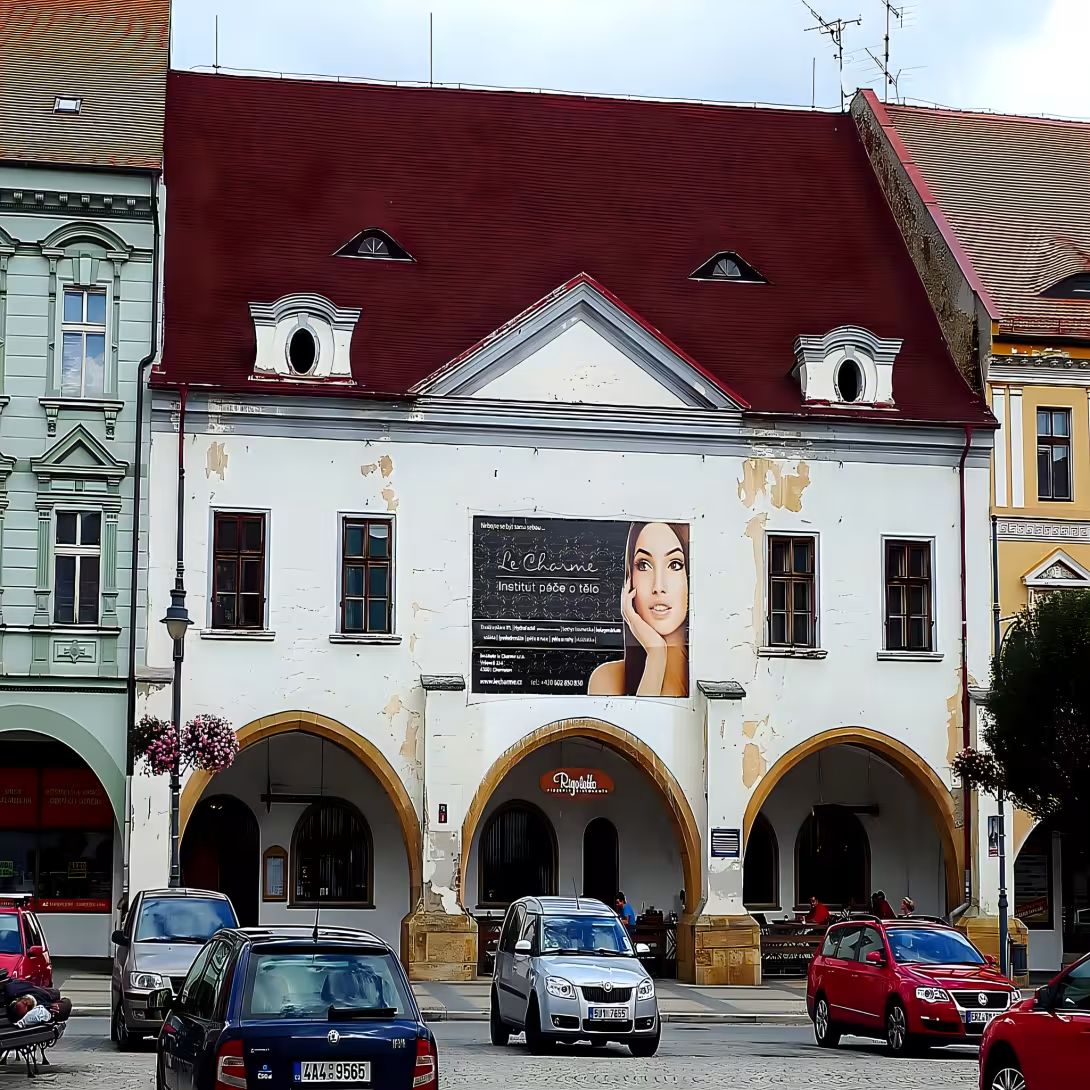
House No. 9, also known as the Kollin House, is a significant late Gothic burgher house with a neoclassical façade located on 1st of May Square in Chomutov. Reportedly built after 1450, the building has been protected as a cultural monument since 1963, and its interior bears architectural traces dating back to the fourteenth century. This property stands out for its rare diamond vaults and has served over the centuries not only as a residence, but also as an inn and military quarters.
The history of the house dates back to the period following the Hussite Wars, when Chomutov burghers repaired the inflicted damage as part of the overall reconstruction of Czech towns. The construction was initiated by the Kollin family, who traded wine and owned extensive lands in the surroundings, including numerous vineyards. The building and its subsequent modifications took place under the influence of local nobility and flourishing burgher families.
The oldest preserved part of the house consists of the barrel-vaulted cellars on the right side, which already belonged to older fourteenth-century houses. The building itself occupies two original construction plots, reflected in two partially preserved ground-floor halls and passageways. The most significant architectural feature is the diamond vaulting in the arcade, two ground-floor halls, and part of the corridor, most likely constructed between 1480 and 1495 by the builder Hans Schaffer from Cheb. The vault webs feature a repeating eight-pointed star pattern, and a large central hall is supported by a central pillar with eight flutes corresponding to the vault springings. The layout of the first floor with timber-beamed ceilings originates from modifications carried out from 1525 to the end of the eighteenth century, while the exterior appearance was completed by a neoclassical façade, with further structural alterations taking place in the mid-twentieth century and after 1991.
The ownership structure of the house changed among prominent entities over the centuries. After the Kollin family, who held it from the period after 1450 until 1530, the house was purchased by Daniel Reinhard. In 1556, Reinhard obtained permission from Jan of Veitmile to establish an inn in the house for the nobility and other respectable people. Daniel Reinhard sold the building in 1558 to Mikuláš Volf. After 1590, members of the Kollin family acquired it once again, owning it until the family line died out, whereupon the city of Chomutov took it over.
Recorded historical events include the year 1618, when mercenaries of the estate army stayed in the house. Historical sources also mention the interesting detail that the local innkeeper was obliged to provide refreshments even to people accommodated in other inns.
In modern times, the property was adapted for restaurant operations. The main entrance was relocated during modifications after 1991, and the ground-floor windows were fitted with new arched jambs in the mid-twentieth century. The building stands on the historical square in Chomutov, close to other municipal monuments.
House No. 9 represents a valuable example of late Gothic burgher architecture featuring unique diamond vaults and deep historical roots reaching back to the fourteenth century. Visiting this site on 1st of May Square offers a direct glimpse into the structural development and economic background of Chomutov's historical center.
Historical milestones
- 1450
- The house was allegedly built after the damages caused by the Hussite wars.
- 1530
- Daniel Reinhard purchased the house from the Kollin family.
- 1556
- Jan z Veitmile granted permission to establish a noble tavern in the house.
- 1618
- Mercenaries of the Estates' army were quartered in the building.
- 1963
- The building was officially registered as a cultural monument.
Architectural development
The oldest parts of the house are the barrel-vaulted cellars on the right side originating from 14th-century houses. The core structure spans two original building parcels, featuring late Gothic stellar and stellar-ribbed (skpípkové) vaults constructed between 1480 and 1495 by the Cheb master builder Hans Schaffer. The first-floor layout and timber ceilings date back to modifications carried out from 1525 through the end of the 18th century, while the exterior acquired a Classicist facade. Further adjustments took place in the mid-20th century and after 1991 to accommodate a restaurant.
Historical events
1618: Mercenaries of the Estates' army stayed in the house. 1963: The building was designated as a cultural monument.
Owners
Kollin family (after 1450–1530, and again from 1590 until the extinction of the family), Daniel Reinhard (1530–1558), Mikuláš Volf (from 1558), and later the city of Chomutov.
Points of interest
– House No.
Guide
Show guide text
This text was created by artificial intelligence and has not been editorially reviewed. It may contain inaccuracies.
Welcome. You are standing right in front of House No. 9, also known as the Kollin House, a remarkable late Gothic burgher house located on 1st of May Square in Chomutov. Take a moment to look at the building right in front of you and take in its presence on the square. While the structure is defined by a classical facade today, it holds centuries of history within its walls. Official recognition came in 1963, when the building was registered as a cultural monument, ensuring that its rich past remains preserved for those who walk through the city today.
Pojďme se posunout... Let us step back in time to understand how this building came to be. The history of the house stretches back to the mid-fifteenth century. Around the year 1450, the Kollin family, who made their living trading wine, decided to construct the house as a replacement for property and damages that had been suffered during the turbulent Hussite wars. It was a time of rebuilding and new beginnings for the town, and the Kollin family established their presence firmly on the square with this ambitious construction.
As you observe the building, think about the master builders and hands that shaped it centuries ago. The architecture of the house is truly exceptional, standing out above all for its rare diamond vaults. These intricate architectural features were most likely constructed between 1480 and 1495 by the builder Hans Schaffer. While you cannot see the interior vaults from your current spot on the square, knowing they are hidden just behind the stone walls adds a layer of depth to what you are looking at. The building combines its sturdy late Gothic foundations with the later classical facade, showing how generations adapted and modified the structure to fit changing times and tastes.
Nyní věnujte pozornost... Now let us turn our attention to the fascinating historical figures and stories that have brushed against these very walls. Over the centuries, House No. 9 passed through the hands of notable owners and bore witness to shifting historical tides. In 1530, a man named Daniel Reinhard purchased the house from the Kollin family, bringing a new chapter to the property. A few decades later, in 1556, Jan z Veitmile granted permission to establish a noble tavern in the house, transforming the atmosphere of the building into a lively gathering space.
The walls of House No. 9 have sheltered more than just merchants and tavern guests. Imagine the year 1618, at the dawn of a massive conflict, when mercenaries of the Estates' army were quartered right in this building. One can only wonder what conversations echoed through the rooms, what tensions filled the air, and how the residents of Chomutov coped with soldiers taking up space in their town square. Among the figures connected to the history of this place is also Mikuláš Volf, adding yet another thread to the rich tapestry of lives that touched this address.
There is something deeply captivating about a building that has stood through wine merchants, noble taverns, military occupation, and centuries of quiet transformation on the square. House No. 9 has watched Chomutov grow, change, and modernize around it, anchoring the historic square with its quiet dignity.
Thank you for stopping by and taking the time to uncover the layers of history hidden in plain sight at House No. 9. We hope you enjoy the rest of your exploration of Chomutov, and may your journey through the streets bring even more fascinating stories to light. Farewell, and enjoy your continued walk through the city.
Tips for visitors
Best Time to Visit: The best time to visit Dům čp. 9 is during the spring and summer months when the weather is mild and sunny, making it ideal for photography and exploring the surrounding area. Why: The building's unique architecture and historical significance make it a must-see attraction in Chomutov's historic centre. What to Bring: Comfortable shoes for walking around the city, a camera for capturing the stunning architecture, and a map of the area to help you navigate. Photography: The best spots for photography are from the main square (náměstí 1. máje) and along the adjacent streets, where you can capture the building's intricate details and the surrounding urban landscape. What to See Nearby: Within a 30-minute walk, you can visit other urban heritage sites and local monuments in Chomutov's historic centre. Tips for Families with Children: Bring a picnic lunch to enjoy in the nearby park or square, and consider visiting during the morning or early afternoon when the area is less crowded.
Businesses nearby
Do you run a restaurant, accommodation, shop, museum, rental, wellness or other visitor service near this monument? Show yourself directly to the people heading to it — this is how they will see you in the app and on the web:
Nearby
Located on the main square (náměstí 1. máje) in the historical centre of Chomutov, close to other urban heritage sites and local monuments.
Accommodation nearby
Themed route
1. Dům čp. 9 Type: Architectural landmark Why it is worth visiting: Located directly on the main square in the historical centre of Chomutov, this building serves as the main focal point and anchors the historical character of the area.
2. náměstí 1. máje Type: Public square / Urban heritage site Why it is worth visiting: Situated right outside the main destination, this bustling historical square forms the heart of Chomutov's urban heritage zone and offers a great view of surrounding local monuments.
Seasonal recommendations
Spring brings a fresh perspective to House No. 9 in Chomutov, as the surrounding nature awakens and early greenery softens the historic architecture. The morning sunlight casts gentle shadows across the well-preserved facade, offering a quiet and peaceful atmosphere for photography and leisurely exploration. Practical advice for this season includes dressing in layers, as spring weather can be unpredictable with sudden breezes or brief showers. Crowds are generally sparse, making the morning hours the best time to visit for a tranquil experience without rush.
Summer transforms the area into a vibrant and lively spot, featuring bright daylight that highlights the architectural details of House No. 9 against clear blue skies. The atmosphere is warm and energetic, ideal for combining your historical sightseeing with a longer walk around the town. Since this is the main tourist season, visitor numbers peak during the afternoons. To avoid the midday heat and larger tour groups, the best time to arrive is early in the morning right after opening. Breathable clothing, comfortable walking shoes, and sun protection are essential.
Autumn at House No. 9 is defined by a romantic and melancholic mood, set against a backdrop of falling leaves in rich shades of orange, yellow, and brown. The low afternoon sun creates a golden illumination that gives the historic stone and masonry a warm, photogenic glow. Temperatures can drop significantly, especially later in the day, so visitors should wear a warm windbreaker or coat and sturdy shoes for damp pavement. Crowds thin out considerably after the summer months, allowing for a peaceful visit at any time of day, though late morning offers the most comfortable temperatures.
Winter blankets Chomutov in snow, lending House No. 9 a quiet, fairytale-like charm, particularly during the festive evening hours when early street lighting illuminates the historic surroundings. The atmosphere is serene and contemplative, perfect for those who appreciate historical sites in a subdued setting. Practical preparation is crucial: heavy winter coats, thermal layers, hats, gloves, and non-slip footwear are mandatory due to icy paths. Because of the shorter daylight hours and winter operating schedules, plan your arrival for the early afternoon to fully enjoy the daylight before dusk sets in.
Visualizations and artistic views


The visualisations are generated by artificial intelligence and serve as inspiration.
Photos from the area
Real photos taken near the monument


Zdroj a licence jsou uvedeny u každého snímku.
Tips from visitors
No tips yet. Be the first!
Log in and add your tip.
Sources and literature
Fotografie: H2k4 / CC BY-SA 3.0, rozlišení zvýšeno umělou inteligencí — Wikimedia Commons. The author and licence also appear when you hover over the image.
Faktickým podkladem tohoto textu byl článek na Wikipedii, jehož autory jsou přispěvatelé Wikipedie. Článek je dostupný pod licencí CC BY-SA 4.0.
Location on the map


Příběhy a pověsti
Legendy, pověsti a příběhy spjaté s touto památkou
Fotografie návštěvníků
Zatím žádné fotografie. Buďte první, kdo přidá fotografii z návštěvy!
Přihlaste se a přidejte svou fotografii nebo hodnoťte.
Za ověřenou návštěvu v aplikaci získáte víc bodů — poznáme podle GPS, že jste na místě.
Reviews and comments