

Dům dělnické kolonie Larische-Mönnicha (č.p. 1412) House
Objekt se nedochoval — na místě dnes nestojí. Následující text popisuje jeho historii, ne současnou návštěvu.
Dům dělnické kolonie Larische-Mönnicha (č.p. 1412) was part of a hostel for deep-sea mine workers in the extinct part of Karvinná, now the urban part of Doly. The construction was built in the second half of the 19th century during a period of intense industrial boom in the region. It was subsequently demolished in the 1950s.
The creation of the building is closely linked to the industrial revolution and massive development of mining in Silesia. After 1850, Larisch-Mönniche and Teschen Chamber started deep mining of coal. This process was transformed into a mining and industrial city by the original farming community, known for sheep breeding. A sharp increase in population has triggered the need for new infrastructure. Shops, schools, baths, and large workers' colonies were built, where this house belonged.
Detailed information on architecture and specific building design of the house was not kept in the available records. The building was, however, a typical installation designed to accommodate people attracted to mining within the development phase of the city.
The fate of the house was bound to the stability of the subsoil. Intensive coal mining began already in the 1930s in the form of declines of the territory and cracking of buildings. After the February coup in 1948, it was decided to move the city centre and dispose of the old buildings. In the 1950s, a demolition was launched as a result of the undermining, which brought down this house as well.
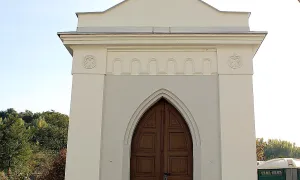
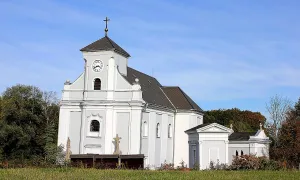
The house was part of a city that had virtually completely disappeared. While in the 1950s most of the buildings were destroyed, including the new Solca Castle or later the church of St. Henry, in Doly today only selected monuments remained. These include the evangelical cemetery with chapel from 1906 and the church of St. Peter of Alkantara, known as the Leaning Church. There is also a cargo railway station Karviná-Doly near the former location of the house.
Although House No. 1412 no longer exists physically, its history documents the transformation of the landscape and fate of thousands of people into post-industrial space. Visiting the Doly area and the remains of the extinct Karvina makes it possible to understand the impact of intensive mining on urbanism and the life of the inhabitants.
Historical milestones
- 1850
- The start of deep coal mining and the subsequent increase in population and construction of worker colonies.
- 1948
- Decision to liquidate the old Karvina plant.
- 1950
- Commencing demolition of the building as a result of submining.
Architectural development
The buildings of the workers' colonies were built as a dedicated installation for miners during the industrial expansion of the region. The subsequent submining of the territory resulted in home cracking and their gradual demise in the second half of the 20th century.
Historical events
1850: Commence of deep-sea coal mining by Larisch-Mönniche and the Teschen Chamber. 1948: Decision to move the city and dispose of old buildings.
Owners
The company Larisch-Mönnich and the Teschen Chamber.
Points of interest
- The house was built in the second half of the 19th century as part of a hostel for deep-sea mine workers. - The building was demolished in the 1950s as a result of undermining and the decision to liquidate the old building. - The building is linked to the industrial revolution and development of coal mining in Silesia. - Intensive mining caused declines of territory and cracking of buildings in the 1930s. - The house belonged to a part of the city that practically completely disappeared.
Guide
This guide is narrated by a synthetic voice generated by artificial intelligence.
Show guide text
This text was created by artificial intelligence and has not been editorially reviewed. It may contain inaccuracies.
Welcome to Karvina, a place where history has deeply burrowed into the country and into human lives. You are standing in the very place that once formed a house with the number fifteen hundred twelve, part of the workers' colony Larische-Mönnich. You might wonder at this point what exactly you see here, because the space in front of you is no longer filled with walls or roofs. But feel the atmosphere of this place. Imagine going back more than 150 years in time. Imagine a series of similar houses that made up the whole neighborhood, the noise of people rushing into the shift and the smell of black coal, which then passed through the air.
This house didn't get up by accident. Its creation is closely linked to a period known today as the Industrial Revolution. In the second half of the nineteenth century Karvinná turned into one of the most important coal mining centres in Silesia. Just in the year of a thousand and eight hundred and fifty, deep mining began, which brought the city's rapid boom, but also a huge need for accommodation. Thousands of people from different regions were attracted to mining hopes for a better life and stable work. For these workers to have a place to live, there were large colonies, one of which was one of many building blocks.
Now, if you look around you, try to reconstruct the shape of the building at the time. Even though the building is missing today, its existence was a symbol of a new era. Notice the surrounding terrain and think about how powerful the construction must have been in order to contain this huge number of workers. The architects of these houses remained in oblivion, their names are not recorded, but their work served thousands of people as a safe haven after heavy hours in the dark underground.
The key character associated with this place was František Wilhelm Larisch. He was one of the main drivers of the development of the mining industry. Under his leadership, the area turned into an industrial giant. Larisch didn't just build shafts and machines, he had to solve the housing issue for his people. The house you're standing at right now was part of this big system. It was a space where the private lives of families with strict mining traffic intermingled. Imagine the alleys here, where the kids were playing in the dust and adults were discussing mining and what the depths of the earth would bring.
Now we come to the part that is perhaps the most fascinating and sad at the same time. It's a story about how what brought people into this city has also caused their homes to die. Look under your feet. This is where, deep down, intensive coal mining took place. Miners drove out of the depths with black gold, but by removing millions of tons of material from the underground, they gradually weakened the stability of the entire territory. The earth began to move, the layers sat, and the houses began to crack.
In the mid-twentieth century, namely in the year one thousand nine hundred forty-eight, there was a decision that changed the face of the old Karvina. It was determined that the old installation must be destroyed. The reason was precisely the destabilization of the terrain as a result of the submining. It was too dangerous to live here. In the 1950s, demolitions began. The house you're standing at now was brought together at this time. Imagine the feeling of the people who had to leave their homes because the ground beneath them simply disappeared or became unpredictable.
It's a strange paradox that the very things that built the city also started to destroy it. This house is a silent witness to this process. It is not just an ordinary building that was demolished, but a symbol of the entire period when industrial progress was perceived as the highest value, even at the cost of losing the historical tissue of the city.
Stay here for a while and feel the silence. It is fascinating to think that beneath you lies still layers of history and empty spaces after coal that once powered factories and trains throughout Europe. This space teaches us that nothing is eternal and that man's relationship with nature and country can be very fragile.
Now invited to further explore the surroundings. Follow the tracks left by the mining architecture and think about how many other stories remain hidden in the depths of the earth or in forgotten archives. Thank you for taking this short trip in time with us. We wish you a pleasant journey along Karvina and its historic places. Say goodbye to this place and embark on the next secret of this fascinating region.
Businesses nearby
Do you run a restaurant, accommodation, shop, museum, rental, wellness or other visitor service near this monument? Show yourself directly to the people heading to it — this is how they will see you in the app and on the web:
Nearby
Kostel svatého Petra z Alkantary, Evangelický hřbitov s hřbitovní kaplí, postindustriální krajina Karviná-Doly.
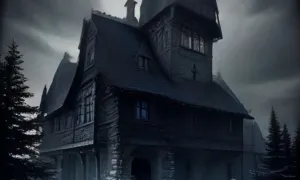
Visualizations and artistic views

The visualisations are generated by artificial intelligence and serve as inspiration.
Tips from visitors
No tips yet. Be the first!
Log in and add your tip.
Sources and literature
Faktickým podkladem tohoto textu byl článek na Wikipedii, jehož autory jsou přispěvatelé Wikipedie. Článek je dostupný pod licencí CC BY-SA 4.0.
Location on the map
Příběhy a pověsti
Legendy, pověsti a příběhy spjaté s touto památkou
Fotografie návštěvníků
Přidat fotografiiZatím žádné fotografie. Buďte první, kdo přidá fotografii z návštěvy!
Máte současnou fotku tohoto místa?
Log in a přidejte svou fotografii nebo hodnoťte.
Za ověřenou návštěvu v aplikaci získáte víc bodů — poznáme podle GPS, že jste na místě.
Reviews and comments