






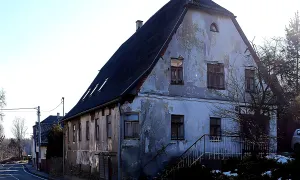
Dům dělnické kolonie Larische-Mönnicha (č.p. 1425) House
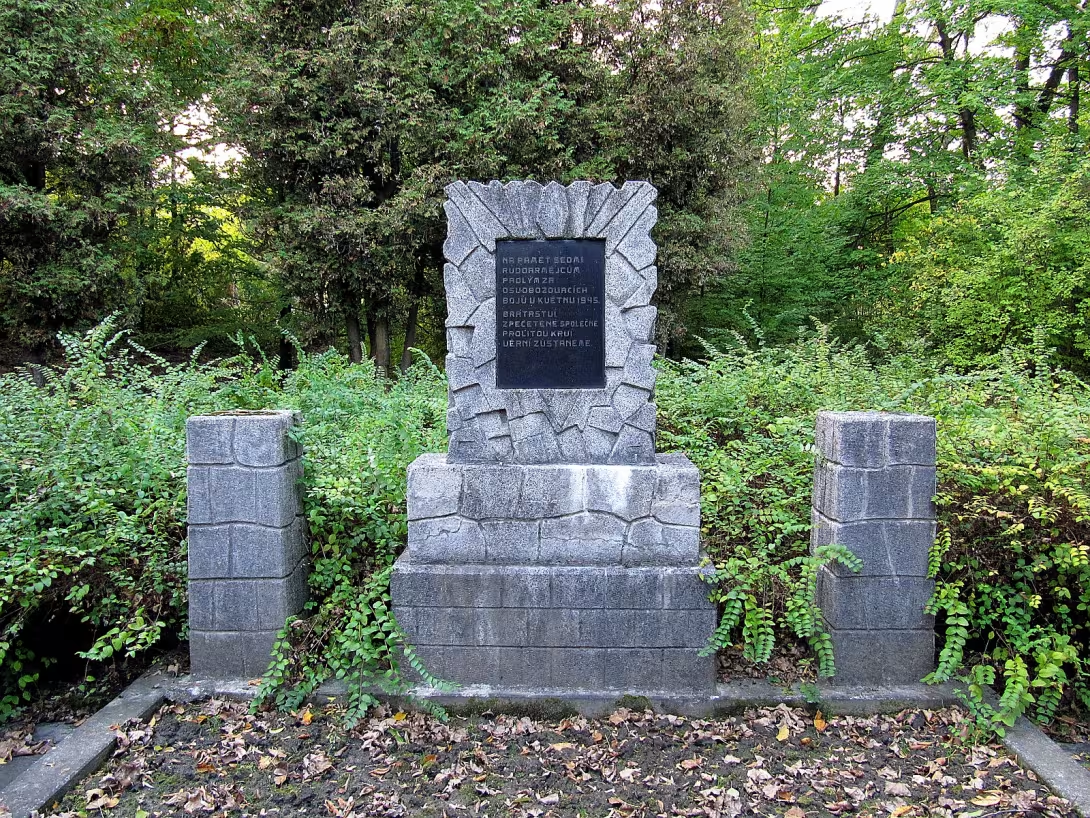
The Dům dělnické kolonie Larische-Mönnicha, a historic monument in Karviná-Doly, was once a thriving industrial town. Dating back to the early 20th century, it was part of the Larisch-Mönnich family's estate.
Little is recorded about its earliest history, but rapid industrialization and urbanization during this period significantly impacted the local population and economy.
The building style and materials used in construction are unknown, but it likely accommodated the needs of industrial workers who lived and worked nearby.
The Larisch-Mönnich family owned the property from construction until the mid-20th century. During this time, the region experienced significant changes, including the decline of the industrial town and eventual abandonment of the dwelling colony.
Key events include the building's construction as part of the estate and rapid industrialization and urbanization in the early 20th century.
Today, the Dům dělnické kolonie Larische-Mönnicha is a historic monument surrounded by post-industrial landscape and remnants of former industrial activities. Visitors can still see the remains, offering a glimpse into the region's industrial past.
In conclusion, this historic monument offers unique insight into the region's industrial past. Its significance lies in its role as part of the Larisch-Mönnich family's estate and connection to rapid industrialization and urbanization during the early 20th century. Visitors are invited to visit and learn more about its history and significance.
Historical milestones
- early 20th century
- Construction of the Dům dělnické kolonie Larische-Mönnicha as part of the Larisch-Mönnich family's estate
- early 20th century
- Rapid industrialization and urbanization in the region, impacting local population and economy
Historical events
- 1909
- The building was constructed as part of the Larisch-Mönnich family's estate.
Owners
The Larisch-Mönnich family owned the property from its construction until the mid-20th century.
Points of interest
– The Dům dělnické kolonie Larische-Mönnicha was once a thriving industrial town in Karviná-Doly.
– Little is recorded about its earliest history, but rapid industrialization and urbanization during this period significantly impacted the local population and economy.
– The building likely accommodated the needs of industrial workers who lived and worked nearby.
– The Larisch-Mönnich family owned the property from construction until the mid-20th century, when the region experienced significant changes, including the decline of the industrial town and eventual abandonment of the dwelling colony.
– Today, the Dům dělnické kolonie Larische-Mönnicha is a historic monument surrounded by post-industrial landscape and remnants of former industrial activities.
Guide
Show guide text
This text was created by artificial intelligence and has not been editorially reviewed. It may contain inaccuracies.
Welcome to Karviná-Doly. As you stand here, taking in the surroundings, you are looking at more than just a structure of stone and mortar. You are standing directly in front of the Dům dělnické kolonie Larische-Mönnicha, a building that serves as a silent witness to one of the most transformative periods in the history of this region. Take a moment to simply observe the building in its current setting. Feel the atmosphere of this area, which, while perhaps quieter now, was once the beating heart of a massive industrial engine. The scale of the building and its presence in the streetscape tell a story of a time when the world was changing at a breathtaking pace.
To understand why this building exists, we must travel back in time to the early 20th century. This was an era of unprecedented movement and change. During this period, the region underwent a process of rapid industrialization and urbanization that reshaped the very landscape you see around you. What might have once been a different kind of countryside was being rapidly transformed into a bustling, smoky, and energetic industrial hub. This building, the Dům dělnické kolonie Larische-Mönnicha, was born from that very momentum. It was constructed as an integral part of the vast estate owned by the Larisch-Mönnich family, a name that was synonymous with the economic and social development of this territory.
The Larisch-Mönnich family played a central role in the life of the region, managing extensive lands and resources that fueled the industrial boom. As the mines and factories expanded, so did the need for a structured community. This building was not just a house; it was part of a worker colony. In those days, the concept of a colony was essential. It was a way to provide housing and a sense of order for the massive influx of people arriving from different places to work in the local industries. When you look at the Dům dělnické kolonie Larische-Mönnicha, you are looking at a piece of social engineering from the early 1900s, designed to support the workforce that powered the local economy.
As you stand here, I invite you to turn your attention to the building itself. While the specific architect who drafted these plans remains unknown to history, the architectural intent is palpable. Please, take a closer look at the facade. Notice the rhythm and the proportions of the structure. Even without knowing the specific stylistic name, you can sense the era in which it was built—a time when functionality had to meet a certain standard of dignity for the residents. Observe how the windows are arranged and how the building occupies its space. There is a sense of permanence here, a feeling that this structure was built to endure the rigors of an industrial life. Examine the details of the exterior, the way the light hits the surfaces, and try to imagine the building when it was brand new, standing as a symbol of the modern, industrial world that was being built around it.
The history of this place is deeply intertwined with the lives of the people who once called it home. While the specific names of the workers who lived within these walls may not be recorded in the grand chronicles of history, their presence is felt in the very existence of this colony. These were the individuals who drove the urbanization of Karviná-Doly. They were the ones who moved into these spaces, creating families, building friendships, and participating in the daily grind of an industrial society. The Larisch-Mönnich family provided the framework, but it was the workers who provided the lifeblood. The transition from a traditional way of life to a modern, urbanized existence was a profound shift, and this building was a primary setting for that human experience.
There is a certain mystery to be found here, a sense of the unknown that often accompanies such historic sites. Much of the earliest history of the Dům dělnické kolonie Larische-Mönnicha remains shrouded in the fog of time. We know the dates, and we know the families involved, but the small, intimate details of its earliest years are largely lost to us. We see the results of the rapid industrialization—the massive shift in population and the economic explosion—but the individual stories of those very first residents remain a puzzle. It makes you wonder: what were their first impressions of this new, industrial life? How did they feel as the quiet landscape was replaced by the sounds and sights of a growing town? The lack of detailed records creates a space for your own imagination to fill in the gaps of the past.
As you continue your journey through Karviná-Doly, keep this sense of transformation in mind. Every corner of this area tells a story of how humanity reshapes the earth to meet its needs, and how those changes, in turn, reshape the lives of the people. The Dům dělnické kolonie Larische-Mönnicha is a vital piece of that puzzle, a tangible link to the early 20th century and the families and workers who built the foundation of this community.
Thank you for listening to this part of your tour. I encourage you to keep walking, to keep looking, and to continue exploring the layers of history that lie beneath the surface of this fascinating place. There is so much more to discover in the streets and structures of Karviná-Doly. Enjoy your walk and your exploration.
Tips for visitors
The best time to visit the Dům dělnické kolonie Larische-Mönnicha is during spring or autumn when the weather is mild and sunny, allowing you to fully appreciate the monument's architecture and surroundings.
Visitors can park their vehicles in the designated parking area near the monument. Alternatively, public transportation options are available, including buses that stop nearby.
When visiting the Dům dělnické kolonie Larische-Mönnicha, be sure to bring comfortable walking shoes and clothing suitable for the weather.
The best spots for photography at the monument include the surrounding industrial landscape and remnants of former industrial activities. The golden hour around sunrise or sunset provides a unique and captivating light.
For those interested in exploring nearby attractions, the Karviná-Doly area offers a glimpse into the region's industrial past. Within a 30-minute radius, you can visit other historical sites and landmarks that showcase the area's rich history.
Businesses nearby
Nearby
The monument is situated in the Karviná-Doly area, surrounded by post-industrial landscape and remnants of former industrial activities.
Accommodation nearby
Themed route
Route: "Industrial Heritage and Surroundings"
Stop 1: Dům dělnické kolonie Larische-Mönnicha (1425) - This historic workers' colony house stands as a testament to the region's industrial past. Explore its unique architecture and learn about the lives of those who lived here.
Distance from previous stop: Approximately 0 km, as this is our main destination!
Stop 2: Post-industrial landscape - Take a stroll through the surrounding area and get a glimpse into the region's post-industrial transformation. Observe how nature has reclaimed some of the former industrial sites, creating an intriguing contrast between past and present.
Distance from previous stop: Approximately 1 km
Stop 3: Remnants of former industrial activities - Visit one of the remaining industrial structures in the area to gain a deeper understanding of the region's industrial heritage. Learn about the history and significance of these sites, which played a crucial role in shaping the local economy.
Distance from previous stop: Approximately 2 km
This route offers a unique blend of industrial heritage and post-industrial landscape, providing insight into the region's transformation over time.
Seasonal recommendations
Spring
As you visit the Larische-Mönnicha Labor Colony House (1425) in the spring, you'll notice the beautiful blooming flowers and lush greenery surrounding the property. The atmosphere is filled with the sweet scent of blossoms and the gentle chirping of birds. During this time, the sun shines brightly, casting a warm glow over the area.
Practical tips: Try to visit early in the morning or late in the afternoon to avoid the crowds that gather during peak hours. Wear comfortable shoes and clothing suitable for walking outdoors. The best time to visit is from mid-March to early May when the weather is mild and pleasant.
Summer
In the summer, the Larische-Mönnicha Labor Colony House (1425) takes on a lively atmosphere. The sun shines brightly, and the lush greenery provides shade from the heat. The air is filled with the sounds of children playing and birds singing their sweet melodies.
Practical tips: Be prepared for larger crowds during peak summer months. Consider visiting early in the morning or later in the evening to avoid the midday rush. Wear light-colored clothing, a hat, and sunscreen to protect yourself from the sun. The best time to visit is from June to August when the weather is warm and sunny.
Autumn
As you visit the Larische-Mönnicha Labor Colony House (1425) in the autumn, you'll notice the vibrant colors of the changing leaves and the crisp, cool air. The atmosphere is filled with the scent of ripe fruits and the sound of leaves crunching beneath your feet.
Practical tips: Visit during the weekdays to avoid the weekend crowds. Wear layers as the temperature can drop significantly in the evening. The best time to visit is from September to November when the foliage is at its peak.
Winter
In the winter, the Larische-Mönnicha Labor Colony House (1425) takes on a serene and peaceful atmosphere. The snow-covered grounds create a beautiful winter wonderland, and the cold air is filled with the sound of snowflakes falling gently to the ground.
Practical tips: Visit during the weekdays to avoid the weekend crowds. Wear warm clothing, gloves, and a hat to keep you cozy in the cold weather. The best time to visit is from December to February when the winter scenery is at its most magical.
Visualizations and artistic views


The visualisations are generated by artificial intelligence and serve as inspiration.
Photos from the area
Real photos taken near the monument


Zdroj a licence jsou uvedeny u každého snímku.
Tips from visitors
No tips yet. Be the first!
Log in and add your tip.
Sources and literature
Faktickým podkladem tohoto textu byl článek na Wikipedii, jehož autory jsou přispěvatelé Wikipedie. Článek je dostupný pod licencí CC BY-SA 4.0.
Location on the map

Příběhy a pověsti
Legendy, pověsti a příběhy spjaté s touto památkou

Fotografie návštěvníků
Zatím žádné fotografie. Buďte první, kdo přidá fotografii z návštěvy!
Přihlaste se a přidejte svou fotografii nebo hodnoťte.
Za ověřenou návštěvu v aplikaci získáte víc bodů — poznáme podle GPS, že jste na místě.
Reviews and comments